I love my current home for many reasons, but one thing sets it apart from anywhere else I’ve lived: a creek runs across the backyard. It’s just a small creek, but I am constantly amazed by all the life it brings to the yard.
Some of the creatures I see—or at least see signs of—are regular neighbors. The footprints of raccoons and opossums frequently appear in the soft, muddy banks and with good reason. They can find all kinds of food there, from berries and insects to minnows, frogs and even crayfish. I haven’t yet seen a crayfish down at the creek, but I often see their burrows, with cone-shaped entrances sculpted from clay.
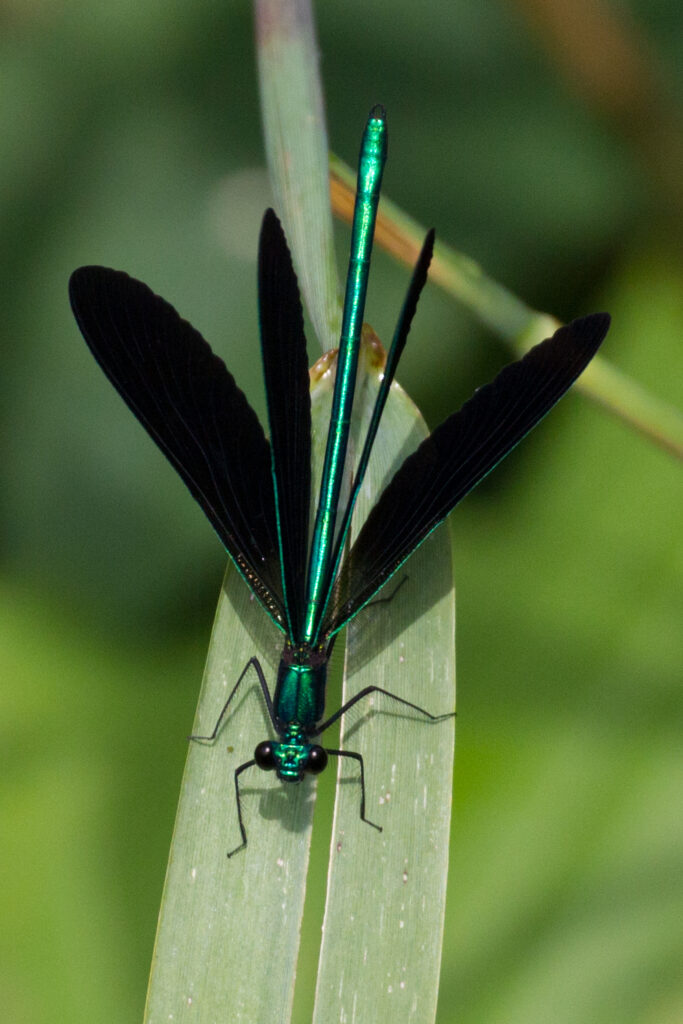
In summer, black-winged damselflies perch near the water, their iridescent bodies shining like emeralds in the sun. Sometimes, these graceful insects venture uphill to my garden.
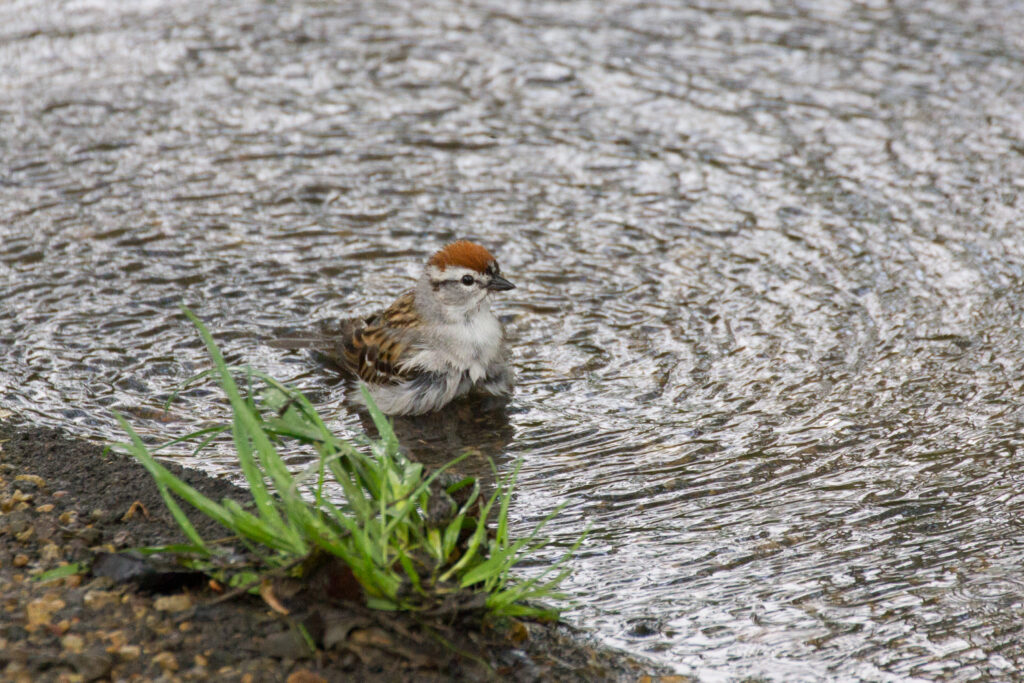
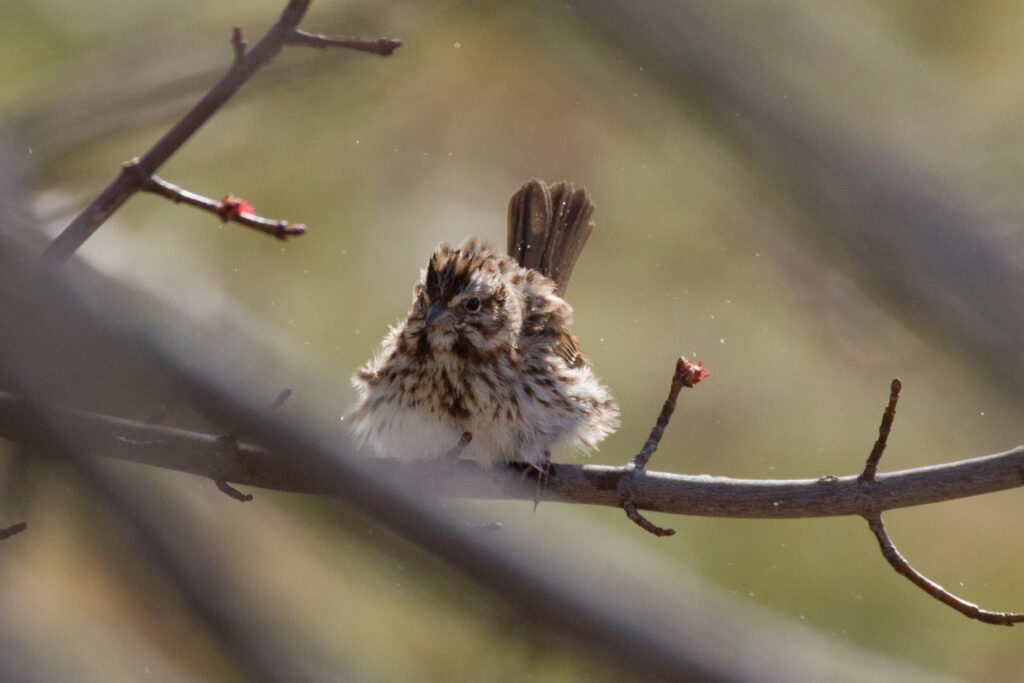
In one section of the creek, the branches of a large silver maple tree form a green roof over the water. Below, all is shady and cool, even in summer. Birds bathe there, in a pool where the creek widens and the current slows. If I approach quietly enough, I can catch a glimpse—or even a photo—of them with their feathers fluffed and wild, water droplets in a spray around them. I’ve seen several types of sparrows, blue jays, cardinals, robins, blackbirds and others enjoying a bath.
Once, as a male rose-breasted grosbeak splashed in the shallows, a shaft of sunlight fell on him. His black, white and raspberry-pink feathers glowed like a stained-glass window.
Even six years later, I still kick myself for not recharging my camera battery that day!
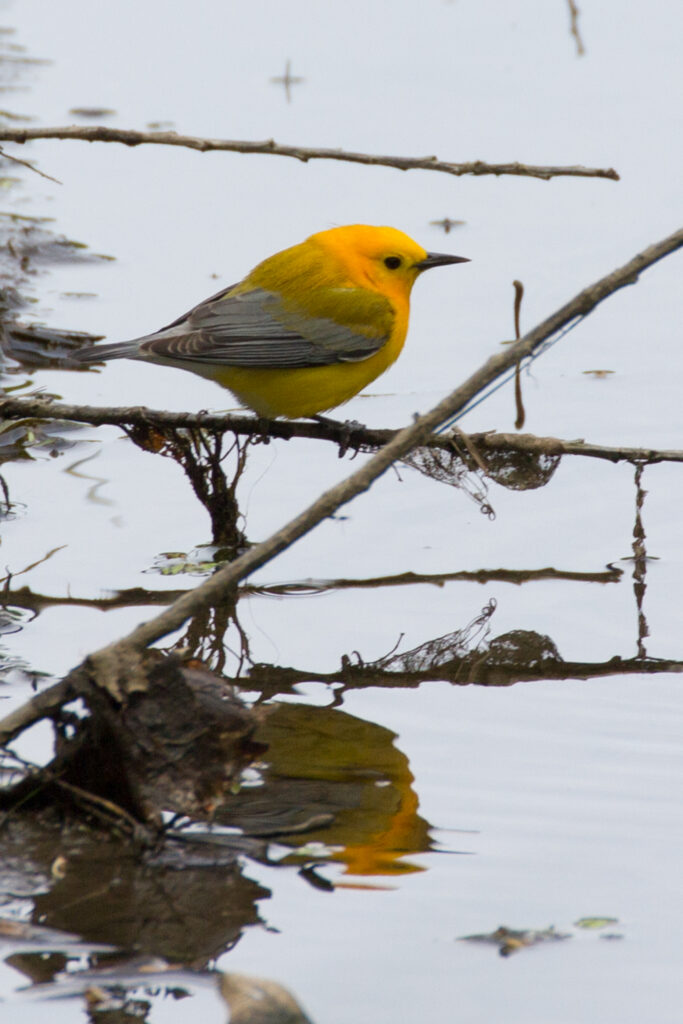
I’ve been luckier on other occasions when surprise visitors came. In May 2020, I was out watering some newly planted trees when a vivid gold flash caught my eye. I froze in disbelief. It looked like a prothonotary warbler, a bird I’d only seen in photos, and who nests in swamps of the southeastern United States. What was it doing near my creek? I sprinted to the house for my camera, then dashed back down the hill without giving Marc an explanation (fortunately, he’s used to this sort of behavior from me). I was hoping I could find the warbler again—if in fact, I’d seen it at all! To my delight, when I looked closer at the trees and vegetation near the creek, I found a dozen or so different warblers, including the gorgeous prothonotary.
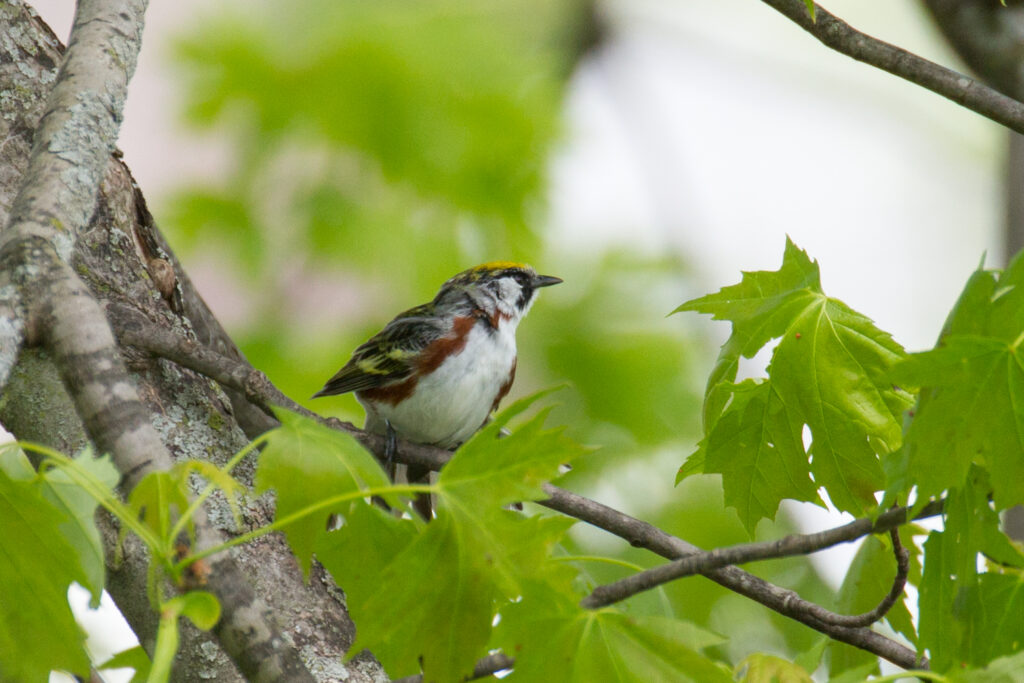
All of them spent time gleaning insects from the trees, but many also enjoyed a bath. The wetland specialists—a northern waterthrush, a common yellowthroat, and the prothonotary warbler—lingered closest to the water. They waded in the shallows or flitted through the overhanging branches of the silver maple.
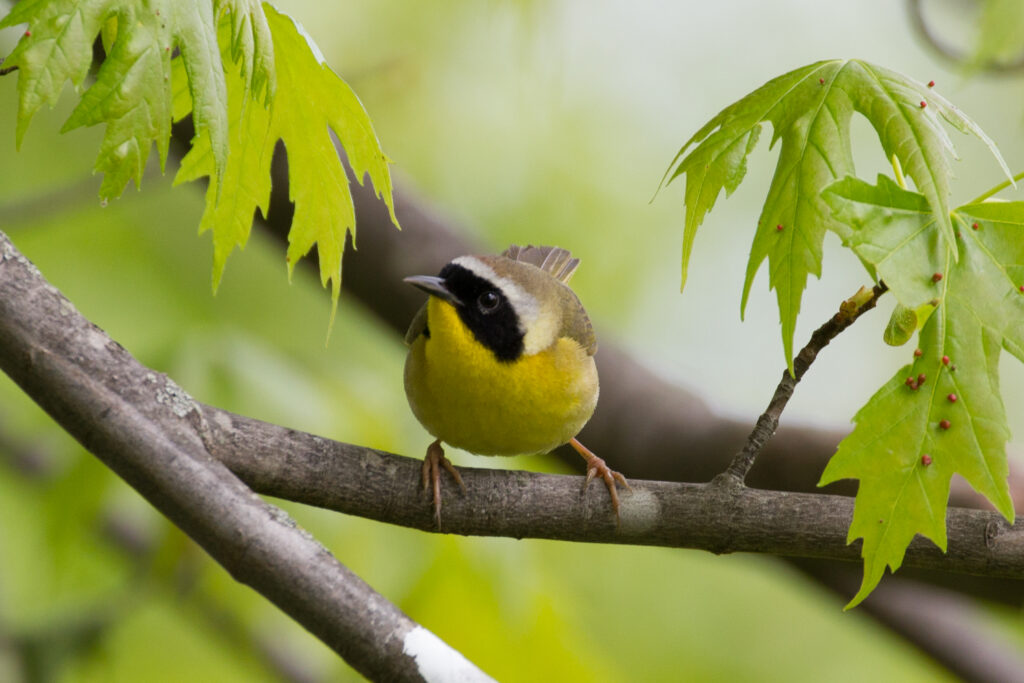
This small flock of warblers had spent the winter in Central or South America and were migrating north for the summer. An overnight storm had forced them to land in my yard—and had blown some, like the prothonotary warbler, quite far off course. Near my little creek, they found rest and refreshment. They were gone the next day, but I was happy and honored to have hosted them!
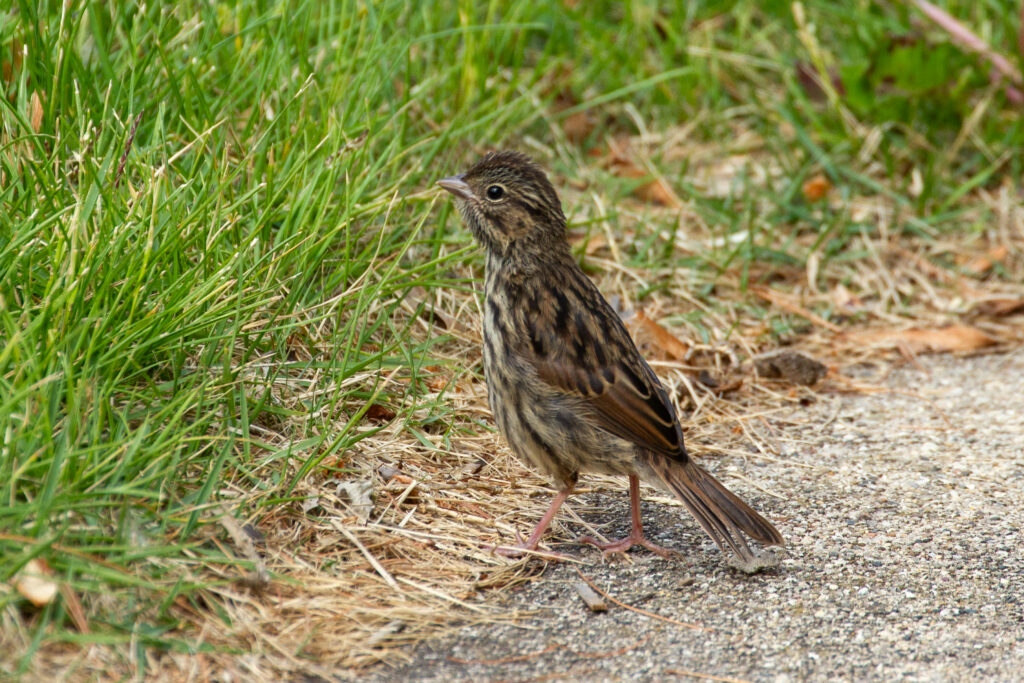
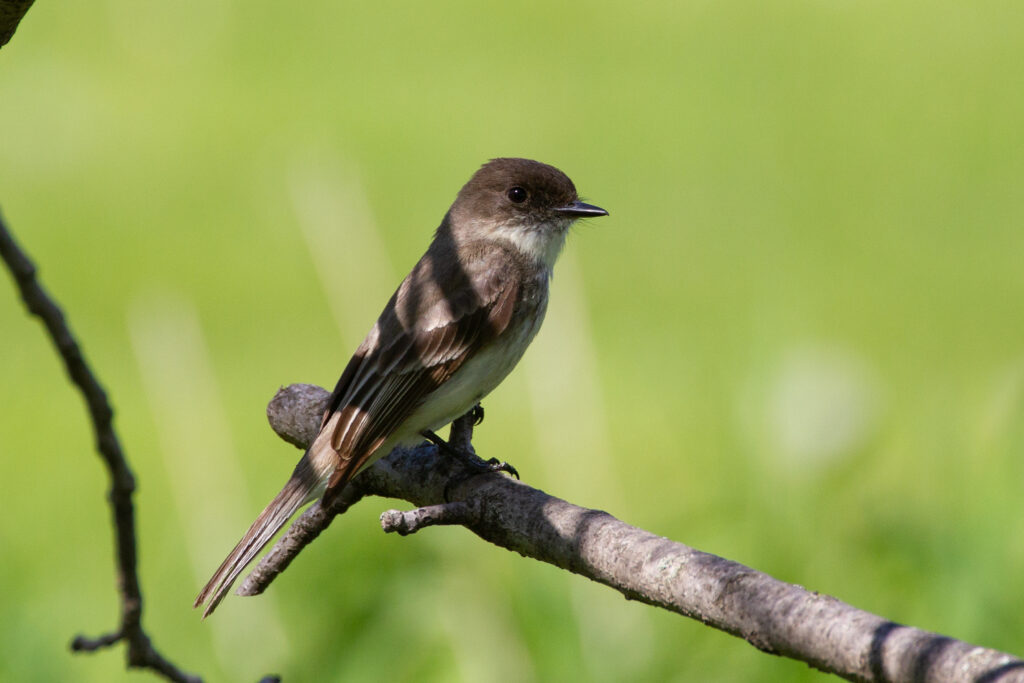
I never expected any of the warblers to stay and nest by my creek. The habitat isn’t quite right for them. Some birds, however, find it a nice place to raise their families. For the past several years, I’ve had nesting song sparrows. They fill the mornings with their trilling songs and sometimes bring their adorable fledglings up near my house to forage. This year, the song sparrows have been joined by a pair of Eastern phoebes. I don’t know exactly where the phoebe nest is, but one of the parents regularly sits on patrol on a branch jutting over the creek.
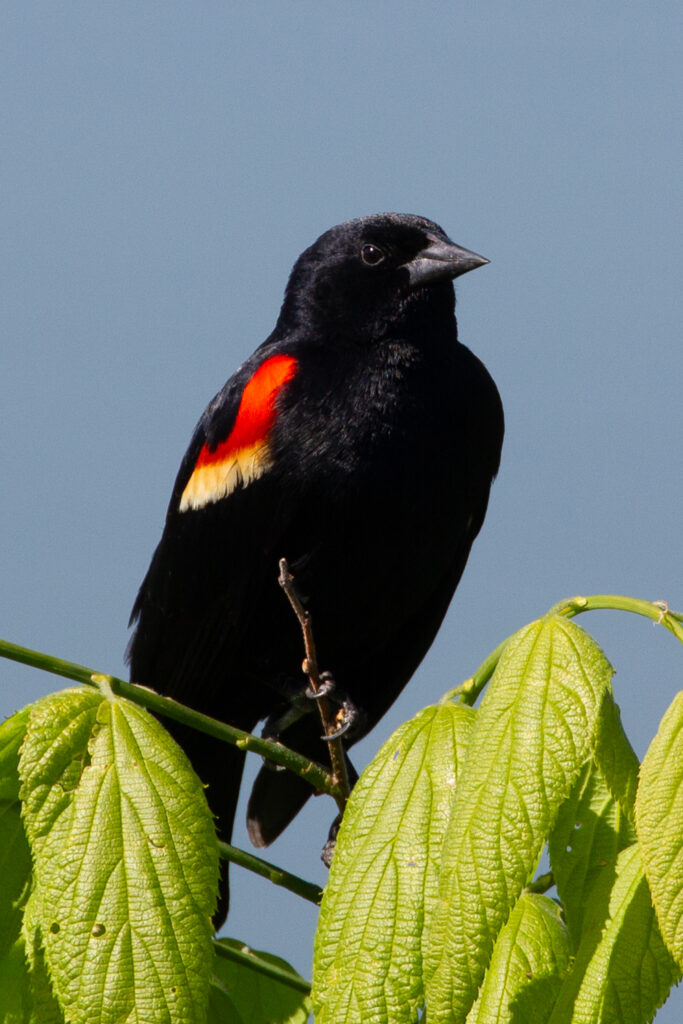
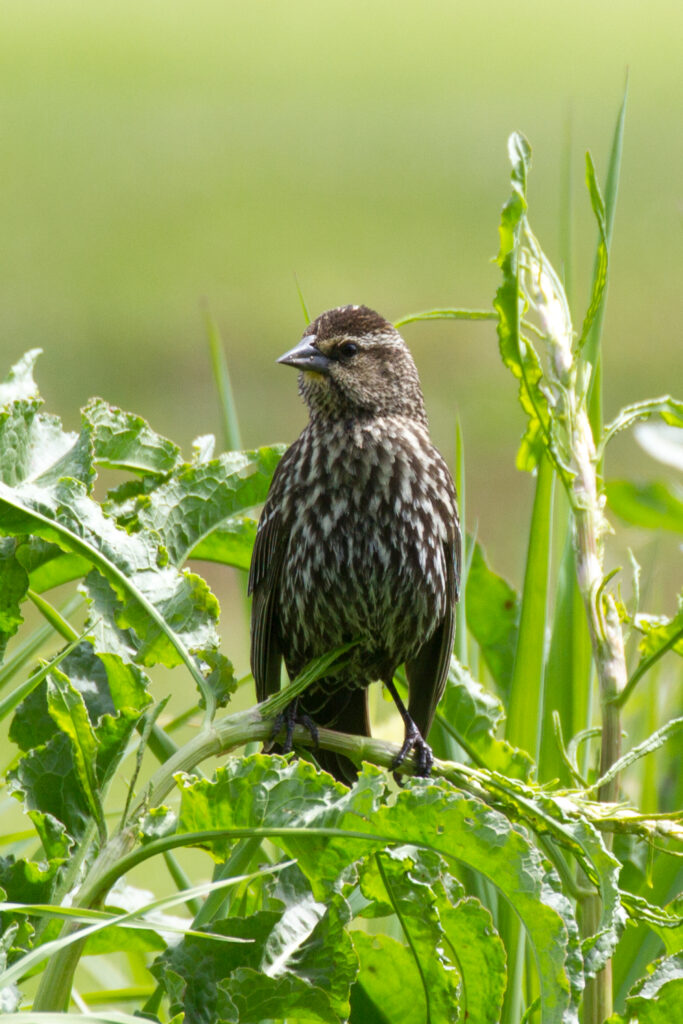
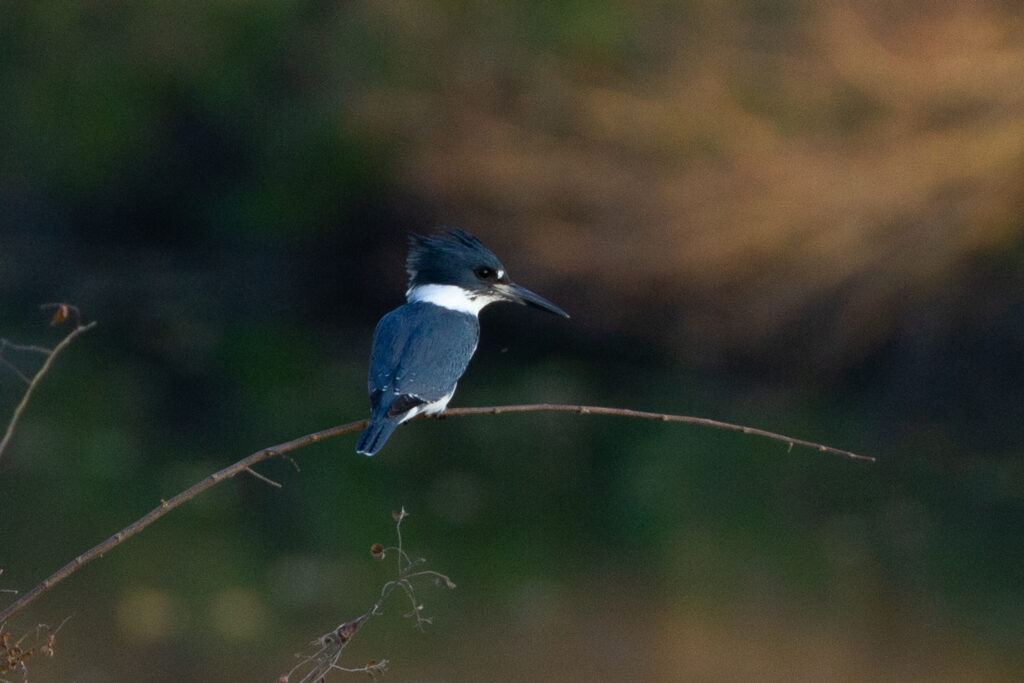
And then there are the blackbirds, true wetland birds who need to nest near water. They are so much fun to watch all summer long! In early spring, male red-winged blackbirds arrive to claim territory along the creek. The jet-black males sport crimson epaulets, which they flare to intimidate rivals and attract a mate. The females have a more subtle, dappled-brown coloring that serves to camouflage them among the long stems of wetland plants. They build cup-shaped nests several feet off the ground, in small trees or tall grasses. Blackbirds defend their nests fiercely, chasing off anyone who comes too close—cats, humans, even eagles. Once, I saw a belted kingfisher barreling down the creek, with a male red-winged blackbird in pursuit.
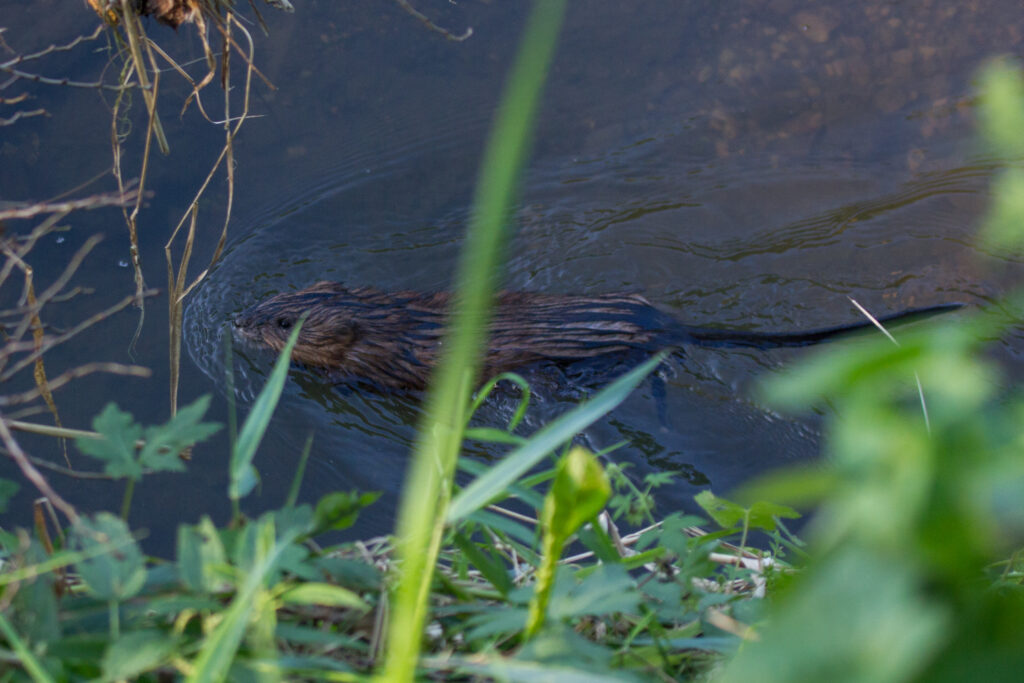
Incidentally, I never would have seen a kingfisher in my yard if not for the creek. Like blackbirds, kingfishers live near the water. I can say the same for the muskrat who swam past one day, after a summer rain, and the stately great blue herons who occasionally stop by to fish.
In the summer months, when drought sets in, the creek shrinks to a trickle, although I’ve never seen it dry up completely. It’s not pristine, either. Invasive plants like poison hemlock, garlic mustard, and hooked hair hops spread all over the banks, and it takes a lot of work to keep them in check. Trash blows in from nearby streets or washes down from upstream: the inevitable plastic bags, soda cans, and food containers along with other, stranger items. Collecting this rubbish is a never-ending chore.
Even so, I’m grateful every day to live beside a waterway. My little creek is not perfect, no—but it doesn’t have to be perfect to be invaluable.