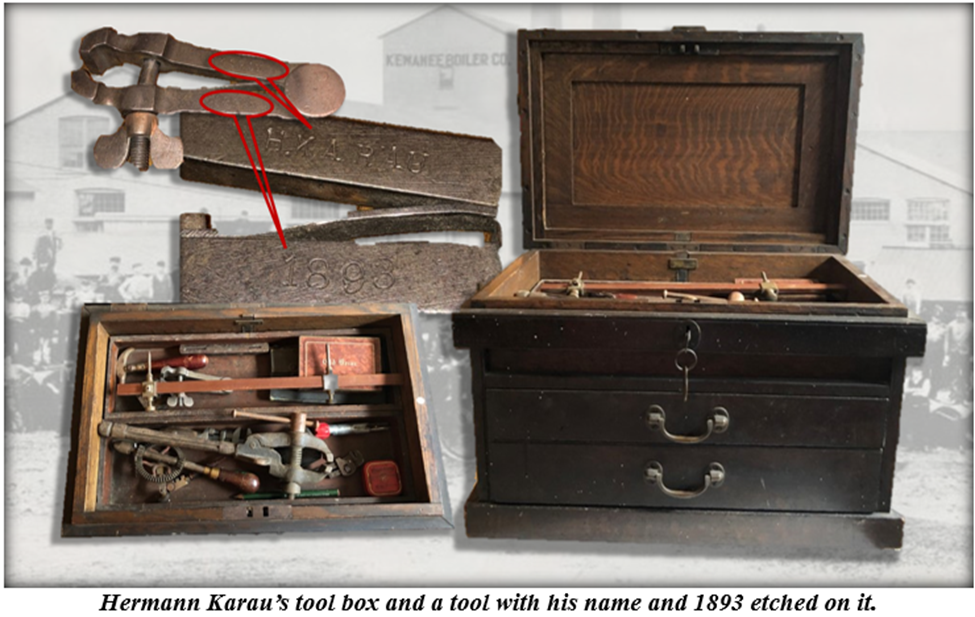
The loss this weekend of the last of the buildings of the Kewanee Boiler Company removed another tangible touchstone of our hometown’s past. But perhaps there are intangibles upon which we can rely – stories we can read, pictures we can look at, memories we can listen to as shared by relatives and friends – to keep alive an understanding of the importance to Kewanee of the company and, maybe even more so, its workers.
This is a story I learned about the Kewanee Boiler Company and one of its employees, my great-grandpa.
As Prussia devoured Poland at the end of the 18th century, Hermann Ernst Karau’s German grandfather, a wheelwright, and his family migrated eastward into the newly-obtained lands. Hermann’s father, Johann, born and raised in what soon became known as East Prussia, married and then moved his wife and their children around the land trying to find a better life. After Hermann was born in 1855, Johann continued chasing after work, but only finding enough to keep a bare roof over the family’s head and a scant amount of food on the table for his wife and children.
Somehow, Johann found enough money to pay a concessionaire to arrange transport to America, and the family of seven soon found themselves in Geneseo in 1866. Hermann briefly attended Concordia Lutheran Church’s new school, but when Johann died in 1872, Hermann had to quit school to help his family survive. By 1880, Hermann was working as a hired hand and boarding with a family on a Western Township farm.

Hermann met his wife, Marie Binno, also a German immigrant whose parents were founding members of the Church of Peace. They were married in late 1883 at the parsonage house of St. Peter’s Lutheran Church. Hermann and Marie established themselves in Kewanee and soon began a family.

Herman had learned working with tools from his father, who had learned from his father, and Hermann eventually became a patternmaker. He likely began working at Haxtun Steam Heater Company, then Kewanee’s largest employer. The company had its beginning when Valerius D. Anderson invented a steam cooker for warm and nutritious cattle food, and sales took off. In 1868, Anderson moved his small plant from Janesville, Wisconsin, to Kewanee. Then, William E. Haxtun entered the picture in 1871.
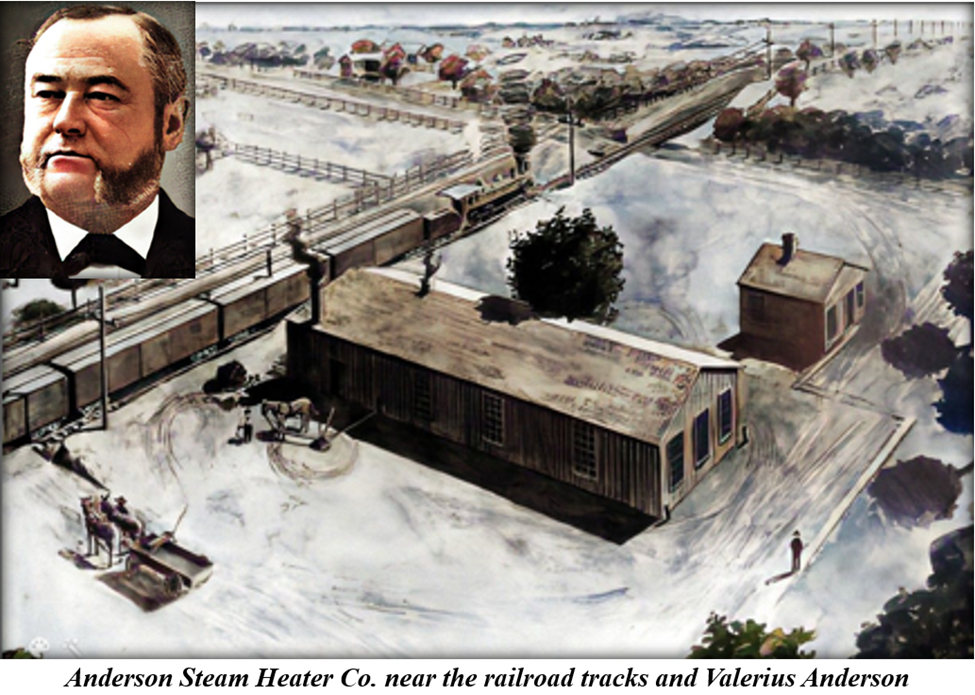
In 1875, after working for Anderson for four years, Haxtun purchased the company, and it was renamed after him. By 1881, Haxtun Steam Heater employed 200 men. The company soon began making valves, fittings, pipes and radiators, producing all the main components of its steam heating systems.
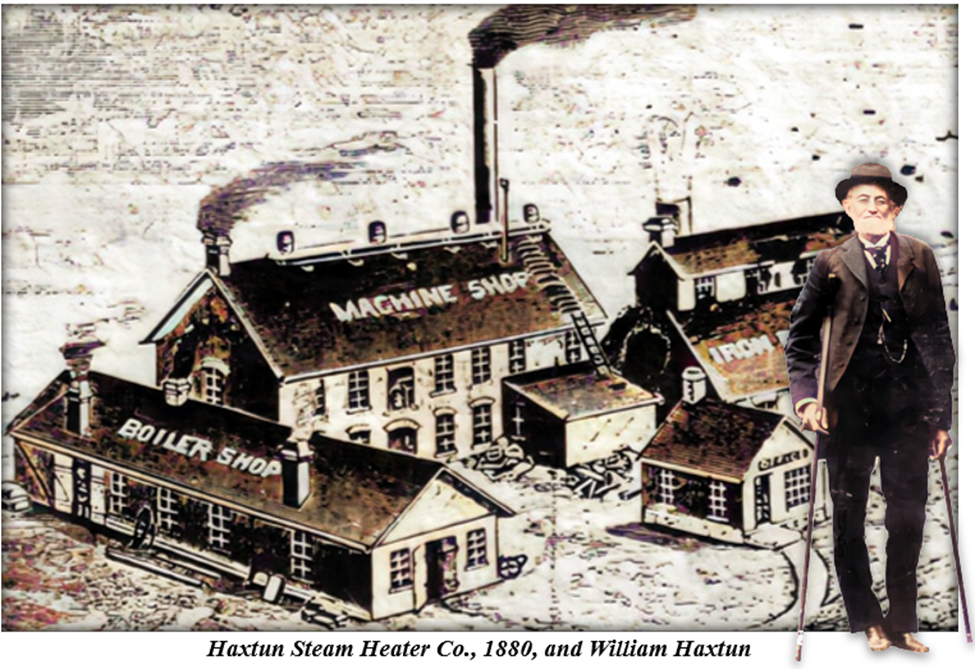
In 1883, the boiler shop covered about 27,000 square feet, six times that of Anderson’s entire 1871 footprint. That year, Haxtun announced that work would begin on a major expansion with the building of a rolling mill and pipe mill plant. The company continued to flourish, and in 1890 employment reached 1,000 workers.
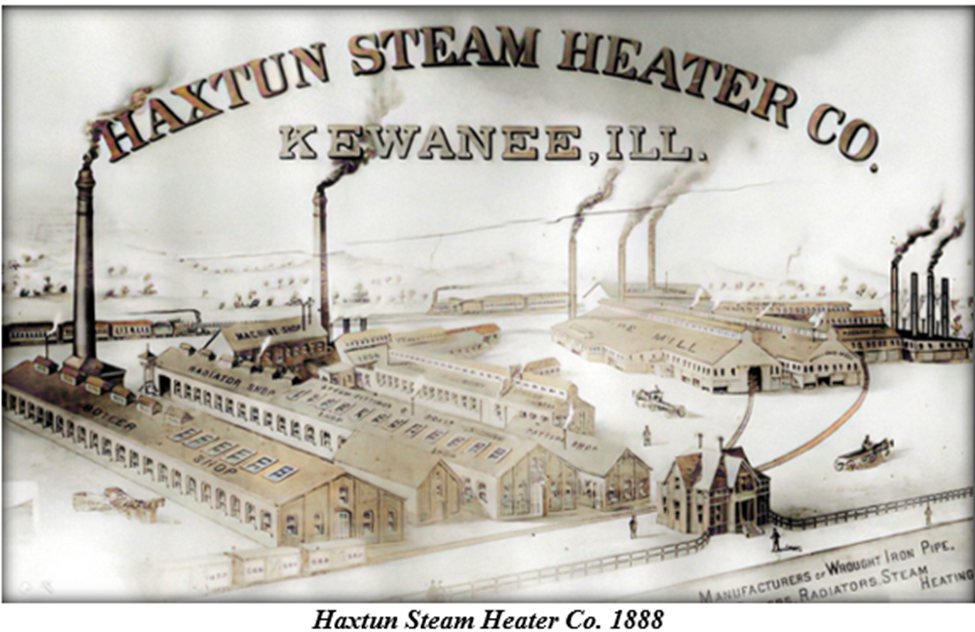
In 1890, Haxtun sold his interest in the company to the National Tube Co. of McKeesport, Pennsylvania, and the next year the name of the company changed to the Western Tube Co.
In 1892, Western Tube decided to divest its boiler business to focus on the production of tubes, valves, and fittings. It sold its boiler shop to the Kewanee Boiler Company, incorporated by E. E. Baker, Horton Vail, and J. P Dugger.
Hermann had worked in the boiler shop, so naturally he joined the new company.
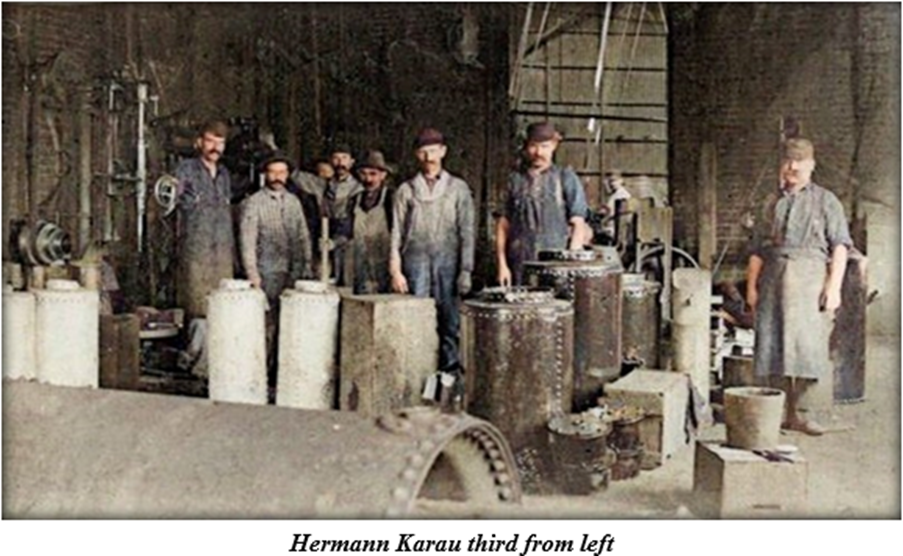
Kewanee Boiler initially continued operating in its shops on the Western Tube campus. But it wasn’t long before it built its new factory north of the railroad tracks and to the west of Franklin.
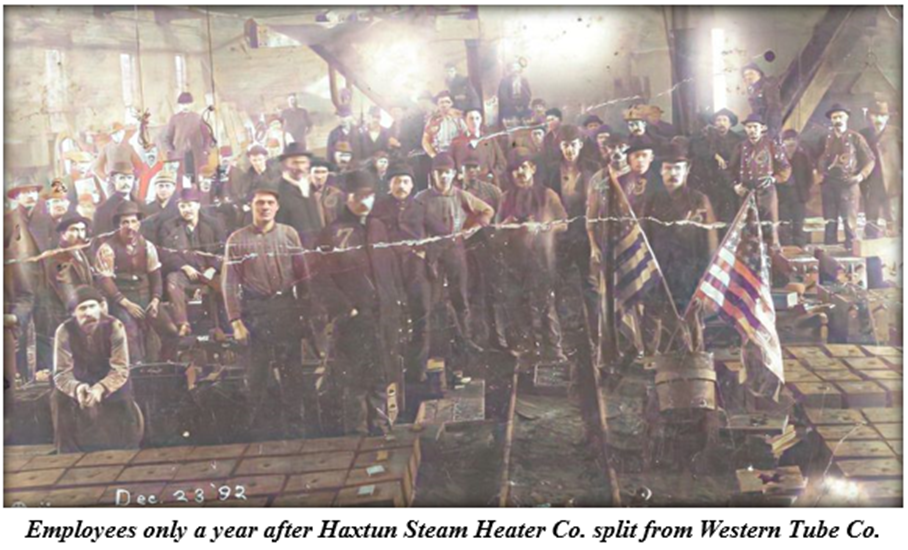
Thanks to loyal Kewanee Boiler employees with strong work ethics such as Hermann, the company grew a national and international reputation. And, like Hermann, those employees raised families which helped Kewanee grow to a thriving city of over 20,000 residents by the second decade of the 20th century.
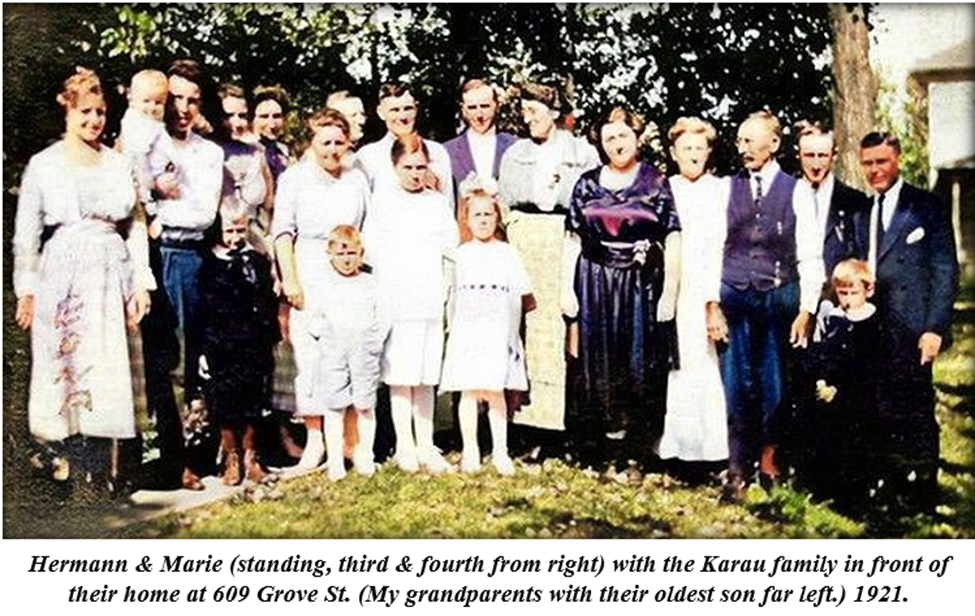
Hermann worked for over 35 years for Kewanee Boiler. In 1922, he and a group of employees who had been with the company since its inception were honored at the 30th anniversary celebrations.
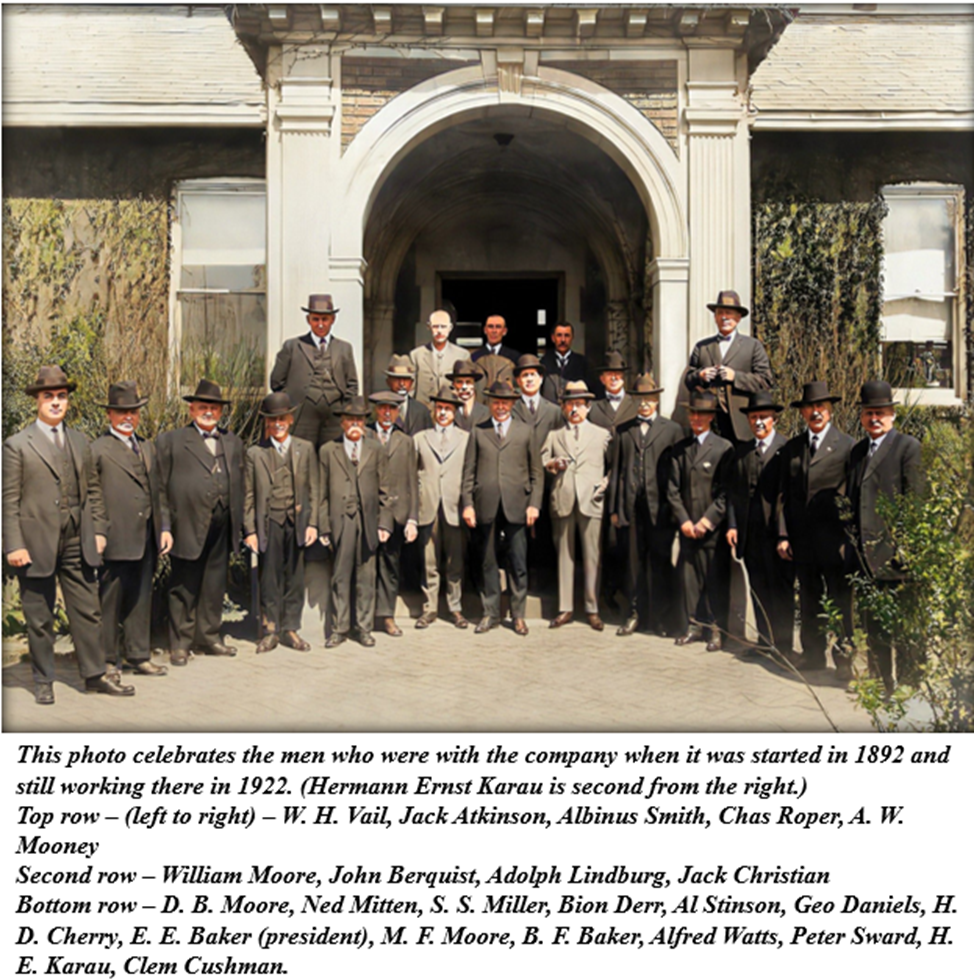
While there were times which tried the relationship between the company and its workers over the ensuing years, the Kewanee Boiler Company and employees like Hermann Ernst Karau helped put Kewanee on the nation’s map as many companies in the U.S. and in countries around the world purchased and installed boilers made in our hometown.
Many, whether living in Kewanee or now living elsewhere, still have memories of the workers who made the Kewanee Boiler Company a crown jewel on the Illinois prairie. With the last building no longer standing to serve as a reminder of the past, the memories of those who passed before us are what can remind us of what was accomplished in the past, and perhaps serve as a guide for the future.
(My cousin Kevin Karau gave me an in-depth look at our great-grandpa’s tool chest and his tools, an amazing legacy to remind us of him and his times.)