I suspect everyone has had those moments where they think, “Well, there’s an hour of my life I’ll never get back!” Frustrating conversations, boring movies, unexpected construction zones on the highway—no one can escape these soul-depleting, energy-sapping fissures in time. But then, as if to balance things out, along come those moments that just glow. They leave your heart fuller, your step lighter, and they stay with you forever.
I had an afternoon like this back in early May. The whole first part of spring had been busy, with various appointments and special events on top of my normal work schedule and routine chores. Those activities were important, and most were enjoyable, but they left me with precious little downtime.
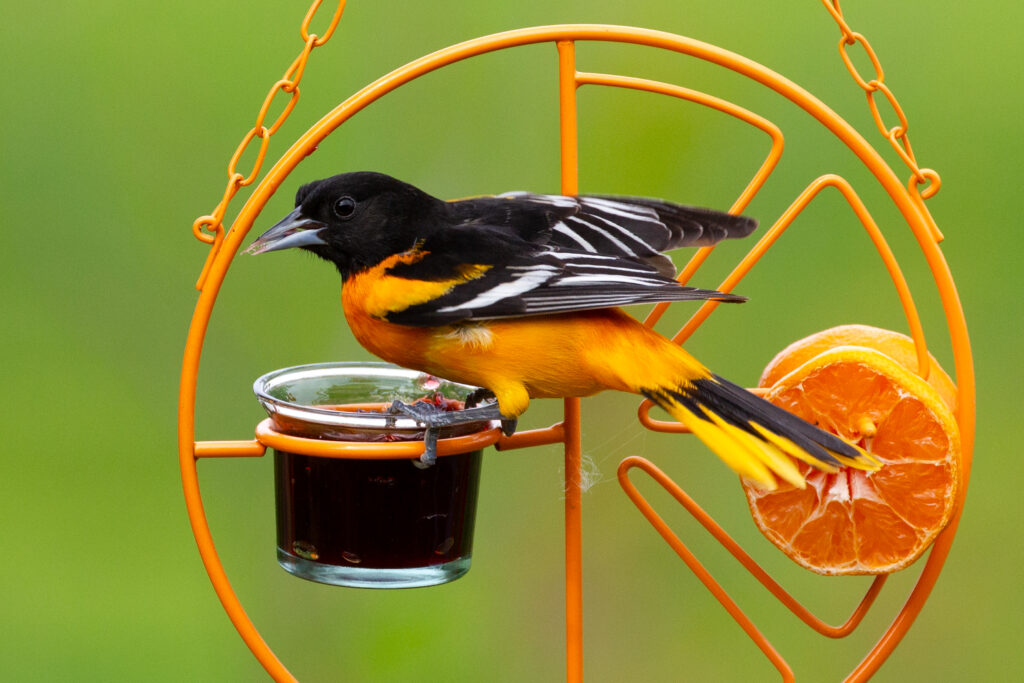
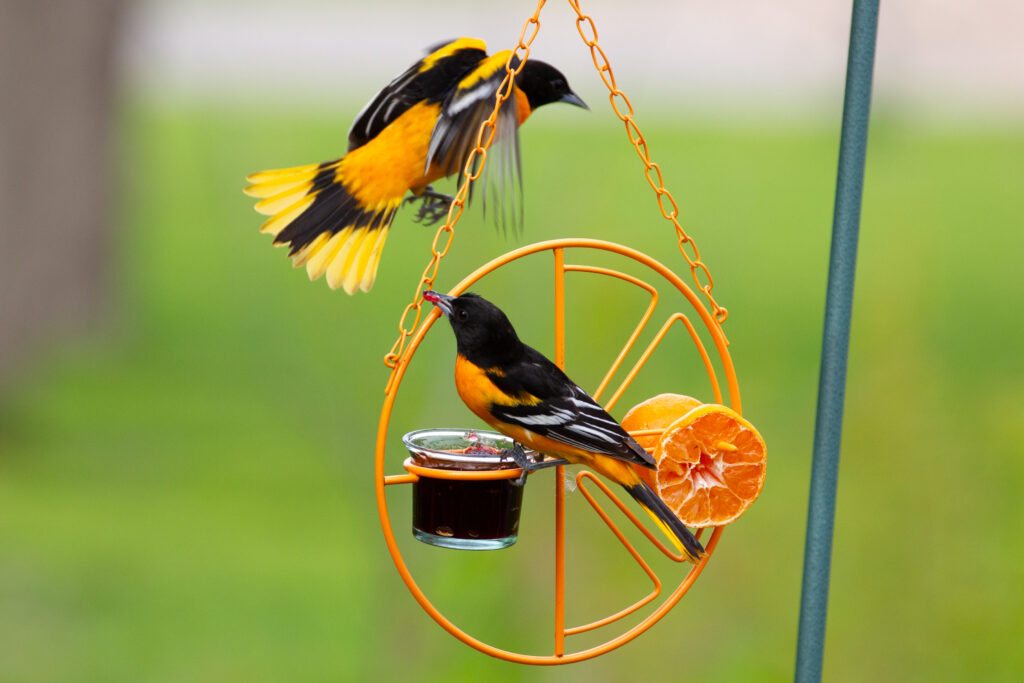
To me, the worst part about the situation was the time of year. Every spring, Baltimore orioles visit my yard. I love taking photographs of these vivid, orange-and-black birds as they perch in my trees or slurp grape jelly from the oriole feeders. The catch is that they only stay for a week or two before moving on to wilder spaces to nest. If I want oriole photos, I have to jump on the chance as soon as they arrive in my yard. They can quite literally be here today, gone tomorrow.
This year, I saw my first Baltimore oriole visitors on April 27, a Sunday. Between one thing and the next, I never found time to photograph them. I tried to content myself by thinking, “I still get to see them. I still get to hear them singing. I have oriole photos from past years. I’ll have more time next year.” All of that was true, but it wasn’t enough. Light is always changing; individual birds are born, then die. A moment, once lost, can never be replicated.
The following Sunday, May 4, the orioles were still in my yard, but I knew they wouldn’t stay much longer. And I knew I wouldn’t forgive myself if I missed them. By then, I had caught up on some of my responsibilities and decided to sacrifice others. The floor would go unswept, despite my dog’s relentless shedding. The sink would go unscrubbed, the laundry unfolded, but the lives in my backyard would not go unappreciated.
I spent two hours that afternoon sitting on the threshold of our sliding patio door. Some birds would tolerate me if I sat on the patio itself, but I worried that the orioles, being such short-term guests, would not. I thought that my place inside the door frame would make them feel safer.
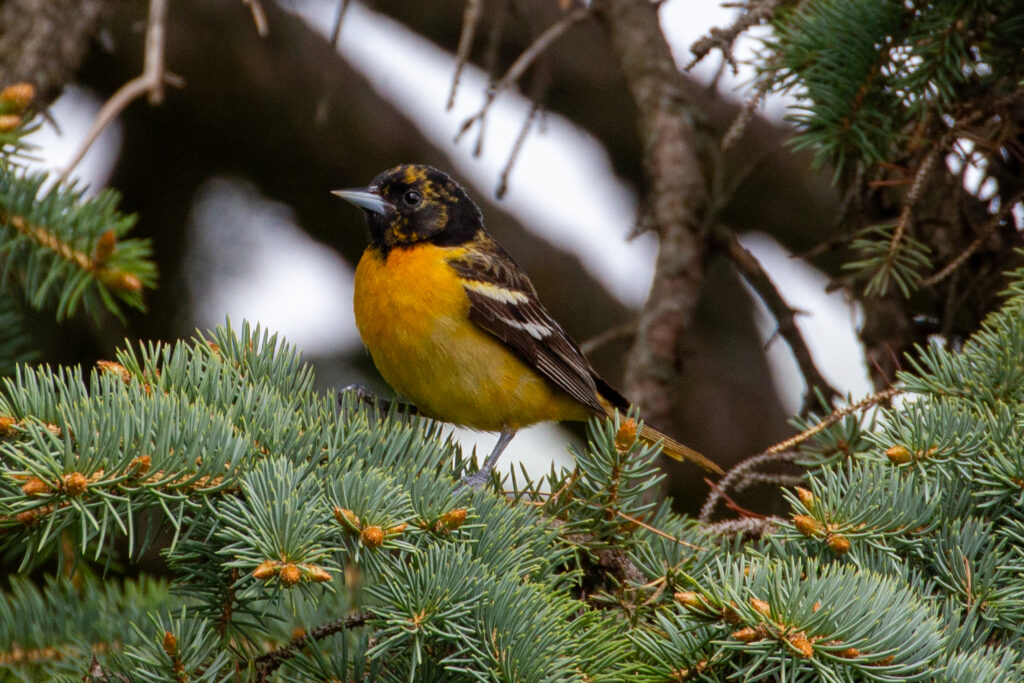
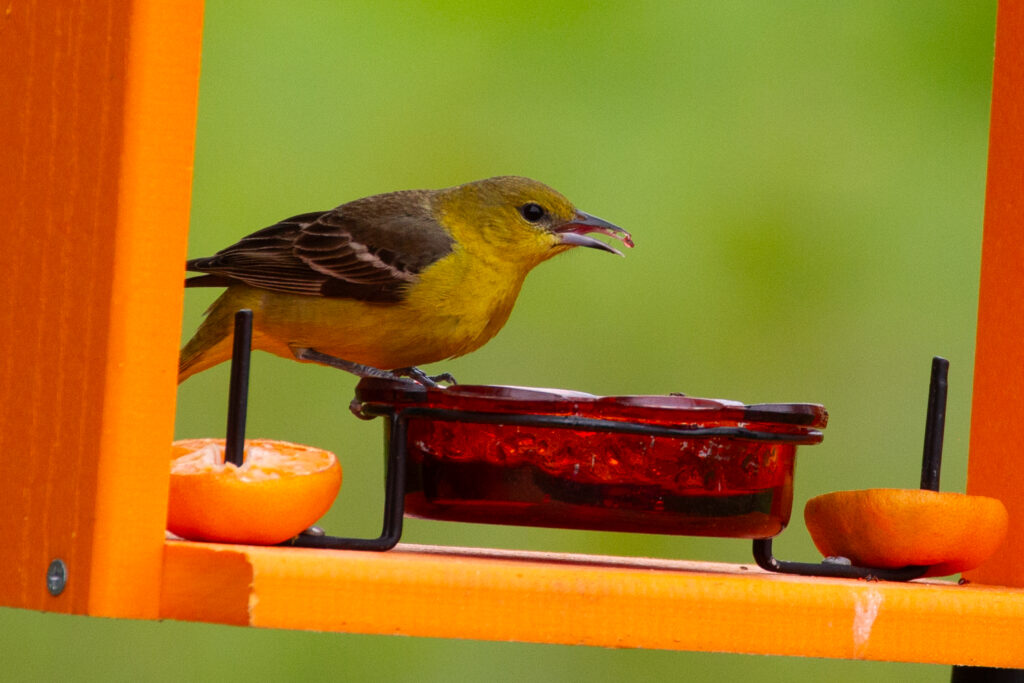
The plan worked. All throughout the afternoon, flashes of brilliant orange cascaded from the nearby trees down to my two jelly feeders. Most were adult male Baltimore orioles, sometimes several at once, vying for prime position at the jelly cup. Chattering erupted as they tried to drive each other away. I also saw a young male, his dark feathers smudgy and mottled rather than sleek black. He tended to defer to his elders. On the other hand, a female orchard oriole boldly faced down the larger Baltimore males in order to secure her share of the jelly feast.
I snapped photo after photo, resting my camera in my lap between acts at the oriole dinner theater.
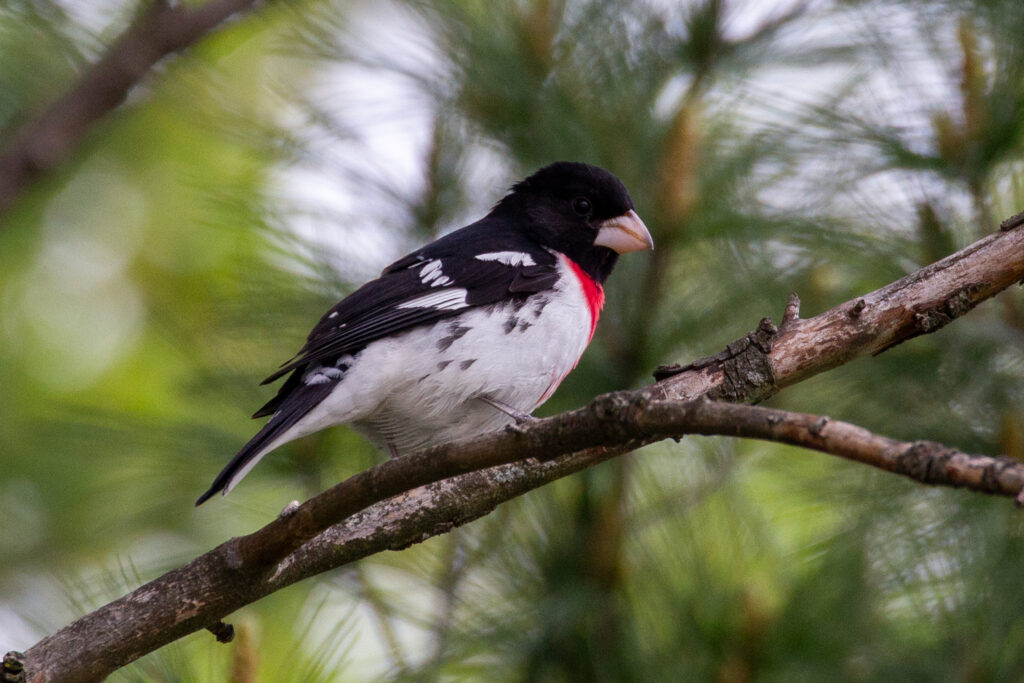
Inevitably, other creatures caught my eye. A male rose-breasted grosbeak, with a coat of glossy black, a white belly, and a bib the color of raspberry juice sang from his perch in a spruce tree. I was thrilled to see him there. Like the orioles, rose-breasted grosbeaks are migratory birds that spend the winter in Central or South America and the breeding season in parts of eastern North America. In between, on the way to nesting grounds (such as out at Johnson-Sauk Trail), the grosbeaks usually spend about a week in my yard, overlapping the orioles. Rather than jelly, though, the grosbeaks eat seeds. Their songs are sweet, like a robin’s, but fancier.
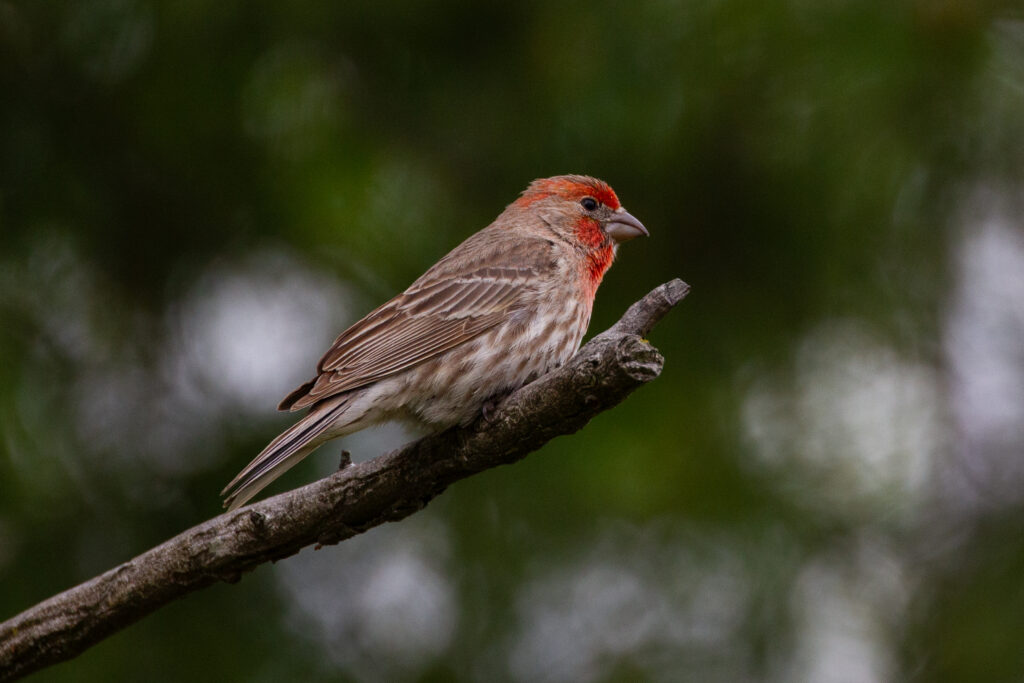
I noticed another lilting, cheerful song from the same tree—not a grosbeak, this time, but a house finch, his cherry-red throat resplendent in the sun. Below his perch, a blue jay seized a peanut from the squirrel feeder and hurriedly gulped it down. The feathers on the jay’s back were an intricate mosaic of black, white, and all shades of blue. What a startling pattern! Meanwhile, peanuts that had fallen to earth—perhaps kicked there unwittingly by the jay—drew the eye of a passing fox squirrel. Perhaps it was the one who had taken peanuts from my hand, the week before. I inched out onto the patio; unruffled, the squirrel kept nibbling its prize.
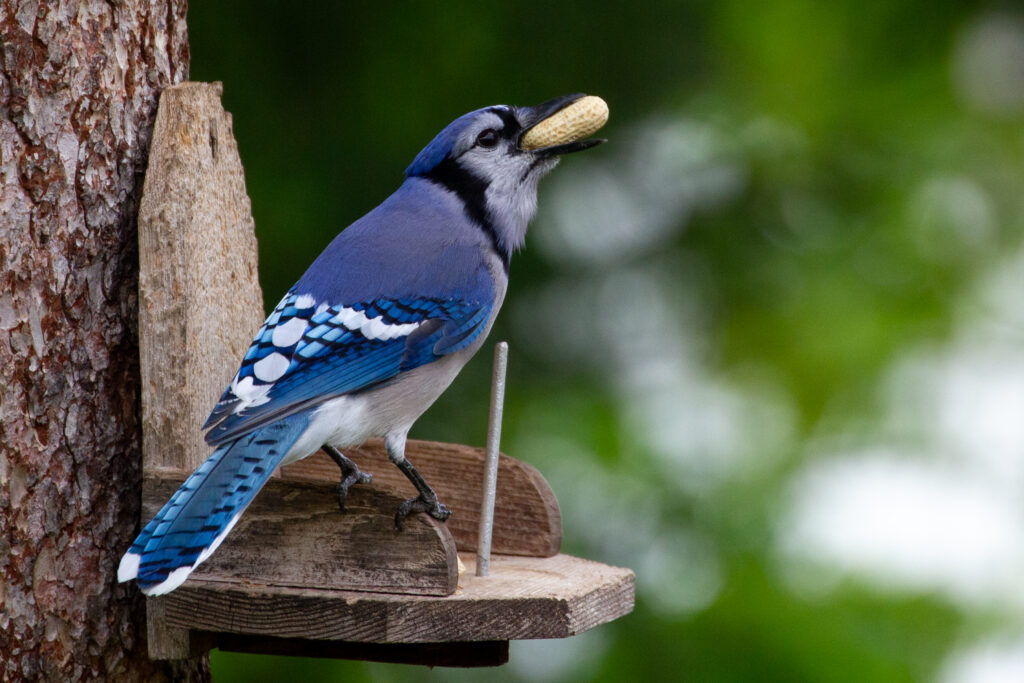
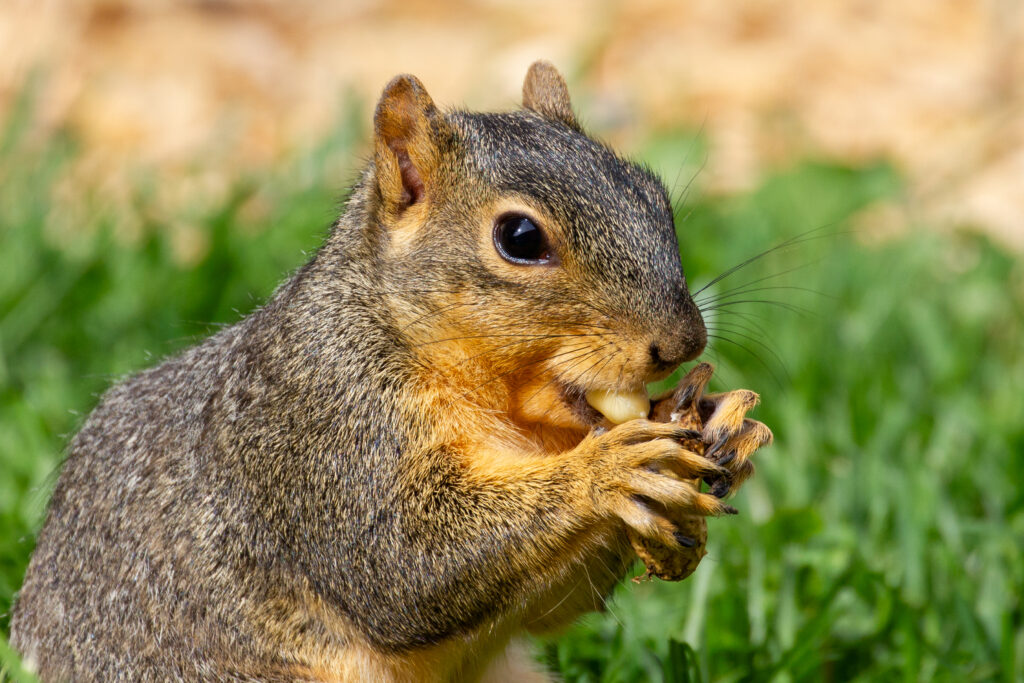
Unlike orioles and grosbeaks, the house finches, blue jays, and squirrels visit my yard year-round. On any given day, I could almost certainly take photographs of them…but not these photos.
May 11 was the last day this spring that an oriole came to my feeders. The grosbeaks had left even sooner. I always miss these beauties when they leave my yard, but I’m so grateful that they came. I’m so grateful to have them, along with the finches, jays, and squirrels, woven in amongst the memories of those two golden hours in May.