The director of the Henry County Office of Emergency Management (OEM) said he will recommend that the Henry County Board approve a moratorium on the injection of carbon dioxide in the county.
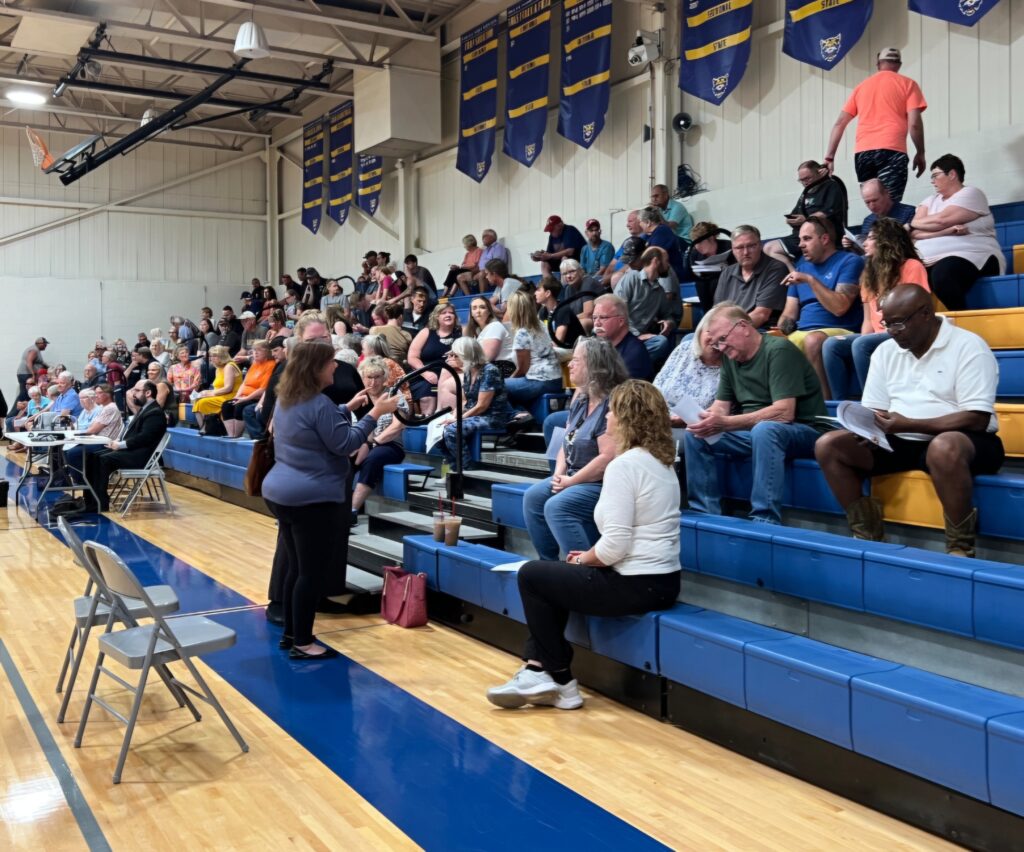
Mat Schnepple addressed about 150 Galva residents who gathered for the Galva City Council meeting Monday in the high school gym, focused on one issue — Lapis Carbon Solutions and Big River Resources’ plan to store hundreds of thousands of metric tons of carbon dioxide beneath Galva.
Schnepple said that while details of the moratorium, including its length, will need to be decided by the board, he will suggest specific objectives to be met by Lapis and Big River before any project moves forward.
Explaining his role as principal adviser to chief elected officials, Schnepple said he made the decision that day because he wanted to act “at the 11th hour.” He said he will recommend that the county board pause the carbon injection until it has the necessary data and plans.
The meeting agenda included comments from both Dustin Williams, a Galva resident and project opponent, and Amanda Stodgel, a registered nurse who told the council she had performed a forensic audit of the city’s emergency response system.
Stodgel noted a 131% rise in ambulance service costs and stated that the audit confirmed that the city has no plan, no oversight and no coordination with emergency services.
“Effectively, taxpayers are funding what can only be described as a ghost ambulance,” she said.
According to Stodgel, she found emergency and financial discrepancies and presented the audit to the board.
“This is not just opinion,” she said, adding that she had documented safety failures and fiscal mismanagement. “We will not accept ‘trust us,’” she said.
Stodgel requested a formal written response from the council about the audit findings by its next scheduled meeting.
Williams also spoke, saying many Galva residents were “blindsided” by the project and that the technology involved wasn’t “something that was tried and true.”
“It failed a couple of times,” he said.
Williams pointed to the subsurface agreement City Administrator David Dyer made with Lapis last year to put carbon into the ground.
“I hope the council has researched it,” he said, criticizing city officials who signed the agreement without knowing enough about it.
“It’s irresponsible,” he said.
Williams said the Lapis and Big River plan calls for injecting pressurized CO₂ underground into Mount Simon Sandstone.
“It’s not worth the risk,” he said, noting that while Lapis and Big River would reap financial benefits from tax incentives — $62 million a year or $85 a metric ton — the project wasn’t worth the risk for Galva residents who depend on clean air, water and food.
“They know that it can affect the water source,” he said. “That’s not something we should mess with.”
Williams asked the board to approve a nonbinding resolution to show the community where the city stands on the project.
“This is not something the community wants,” he said. “There is no gain for the community,” saying that the board had made a mess.
“You blindsided the community and now we want to see where you stand,” he said.
Residents also spoke out, with several offering comments. Lance Smith commended Alderman John Wirth for being the only council member with the “intestinal fortitude” to speak out against the project at the recent Henry County Board meeting.
One woman told the council, “I don’t know who you think you are,” urging residents that it was time for electoral change. “You work for us,” she said. “You’re deciding on our health, our future and our safety, and you don’t have a right to do that.”
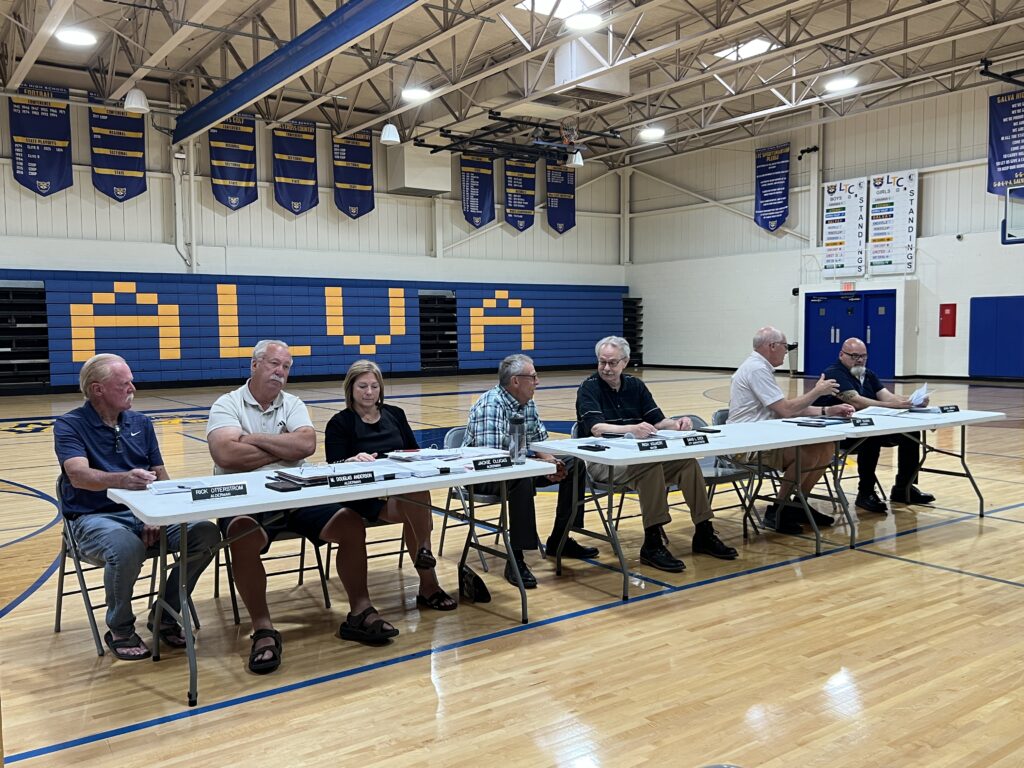
Alderman Rick Otterstrom said he agreed with the woman, adding that the city — not the council — should vote on the issue.
Alderman Doug Anderson said he would be in support of a moratorium.
“I still have a lot of questions,” Anderson said, telling the residents that the approval process could take another two to four years. Having worked with the EPA for years, Anderson said that in the event of a disaster or leak, Big River Resources — as the generator of the carbon — would be liable, not Lapis.
Alderwoman Jackie Clucas thanked Williams and Stodgel, applauding Williams for his relentlessness and professionalism.
Alderman Wirth, who took an early position against the project, called it “stupid, ridiculous and absolutely unnecessary,” saying he hadn’t found one person in the community who supported it.
“It’s absolutely ridiculous that they (Big River) think this is a solution. It’s a money-making scheme,” Wirth said, noting he was scheduled to meet with Lapis officials Tuesday. He added that if the meeting was confidential, he would get up and leave.
Wirth urged residents to continue speaking out.
Administrator Dyer told residents he would work with the OEM on the moratorium.
Marshall Jones, a member of the Henry County Board, also attended the meeting and said he will need more information and data about the project, but supported Schnepple’s moratorium recommendation.
“I wouldn’t have a problem saying no to injection,” Jones said, adding that if a moratorium comes before the board, he will vote yes.