One warm, breezy day in late February 2022, my dad, Marc, and I decided to take a walk together. All of us yearned for fresh air, sunshine, and the vibrancy of wildlife after a winter spent cooped up indoors. We met at one of our favorite places, the Sue and Wes Dixon Waterfowl Refuge, which is located some forty-five minutes east of Kewanee, near the Illinois River, in Putnam County.
Dixon, as the three of us affectionately call this place, is quite literally a world-class wetland. That wasn’t always true. In 2001, an organization called the Wetlands Initiative began restoring what was then a degraded landscape. By 2012, Dixon was so transformed that it received official designation as a Ramsar Site. This means that under the 1975 Convention on Wetlands treaty, it is considered a “Wetland of International Importance.” The United States Fish and Wildlife Service website notes that such sites are chosen “and protected for their rarity, uniqueness, or their importance for conserving biological diversity” (see the link below). The name “Ramsar Site” comes from the fact that this treaty was adopted in the city of Ramsar, Iran.
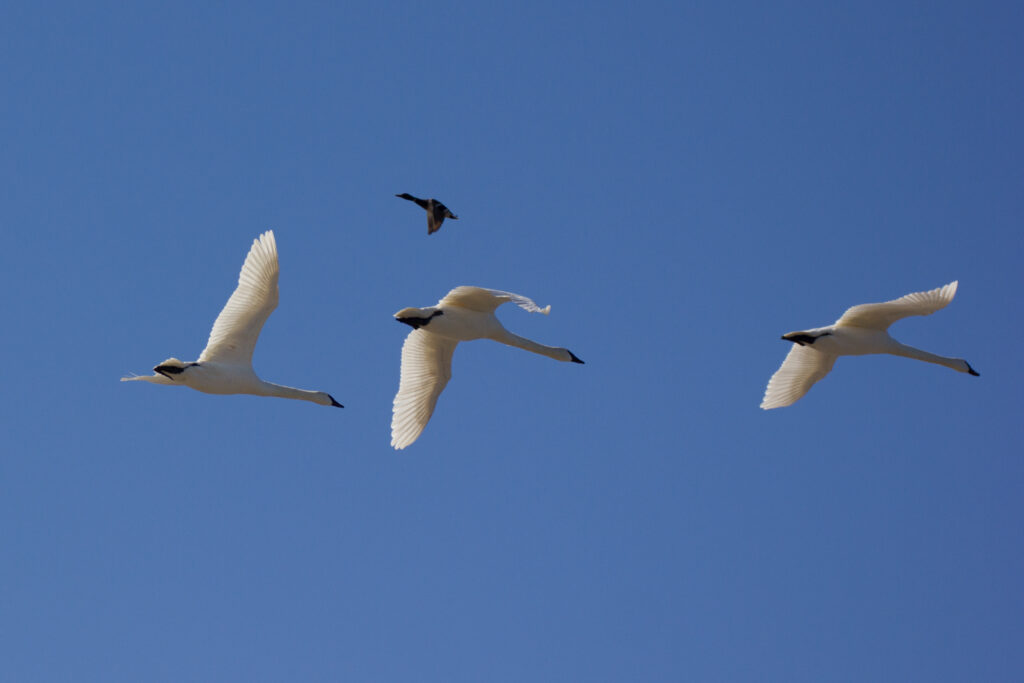
Dixon is a wonderful place for birdwatching in all seasons of the year, as many species either nest there in summer or stop through during spring and fall migration. Some even overwinter, when conditions are right. On any given day, a visitor might see Sandhill cranes, white pelicans, bald eagles, or a variety of ducks, geese, shorebirds, and swans. The mix of birds is never quite the same, but there is always something amazing.
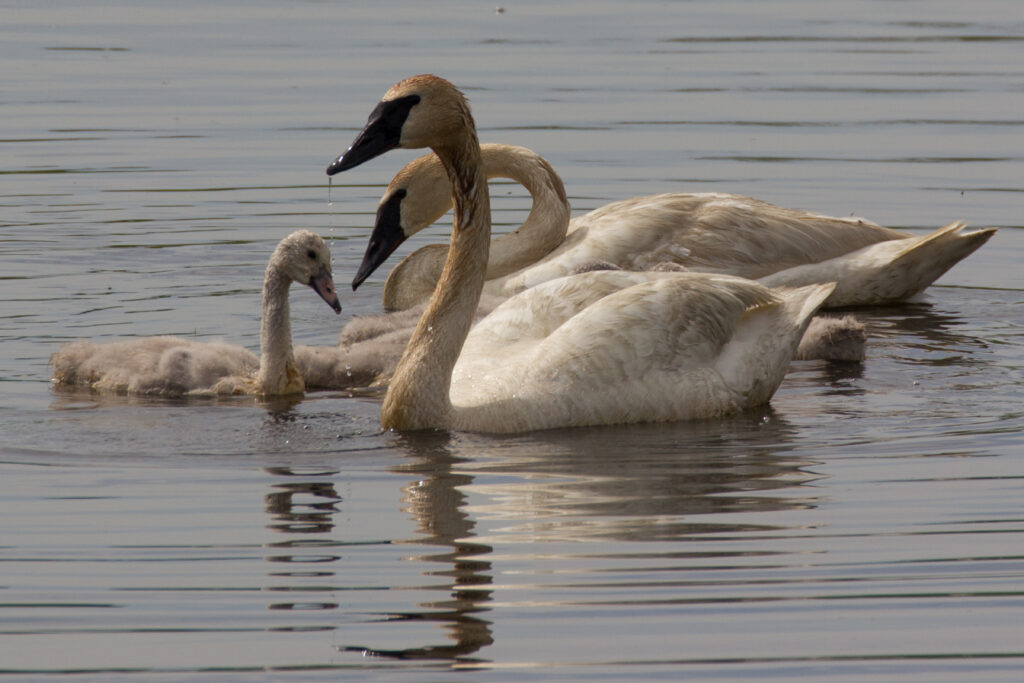
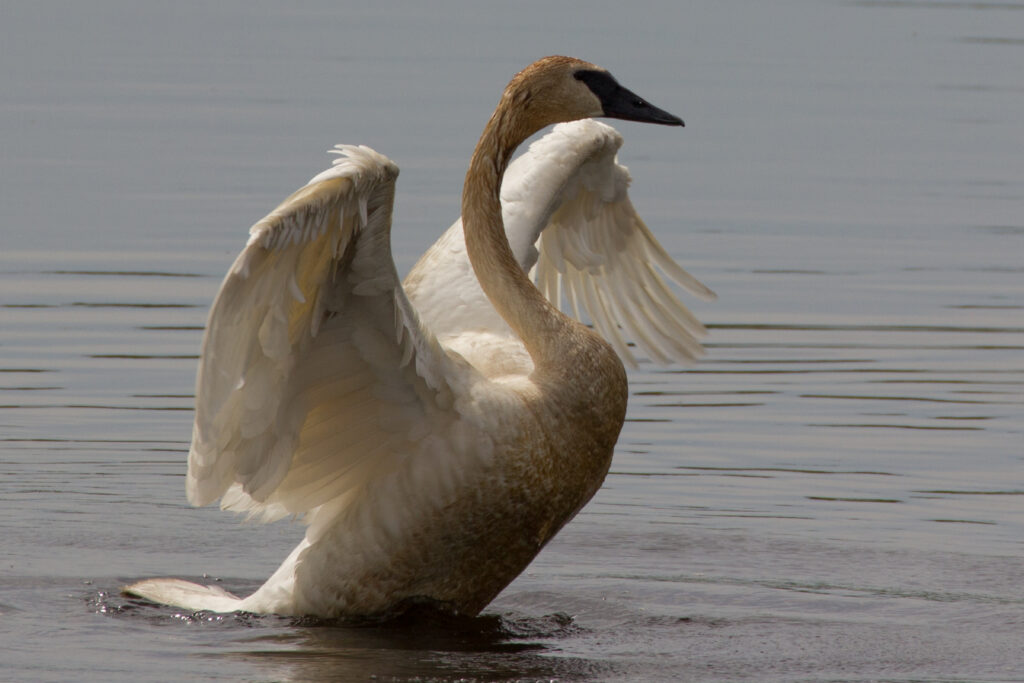
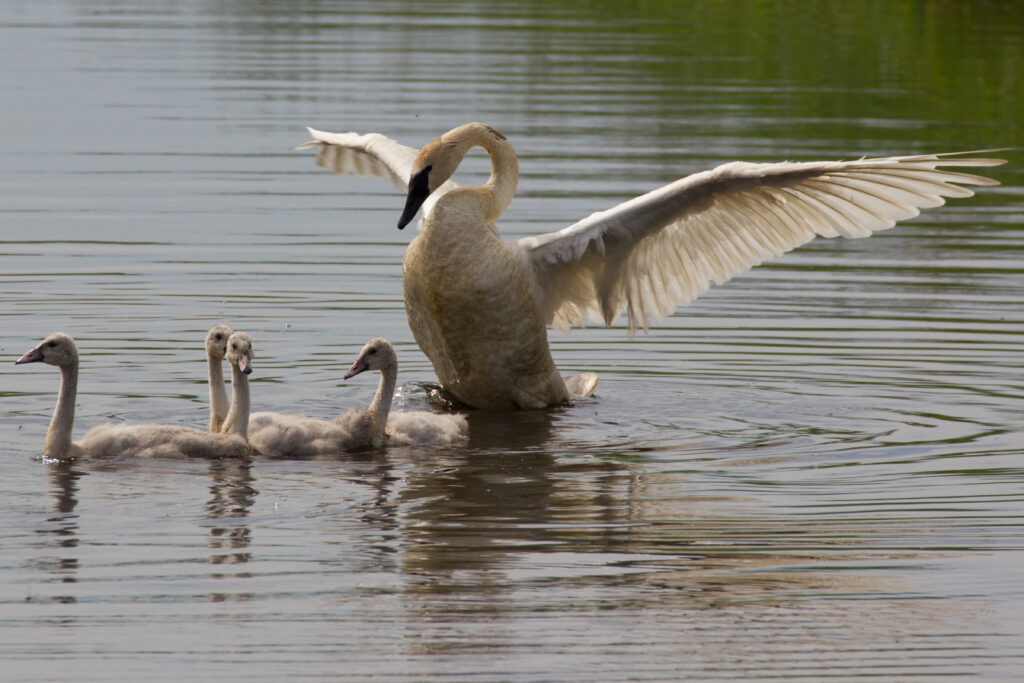
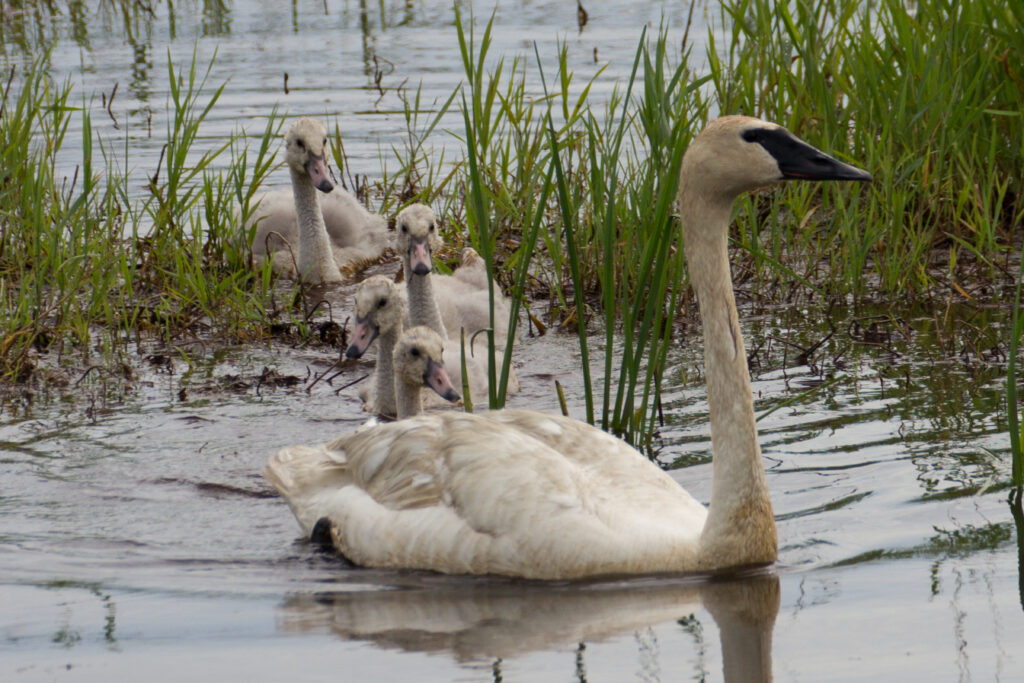
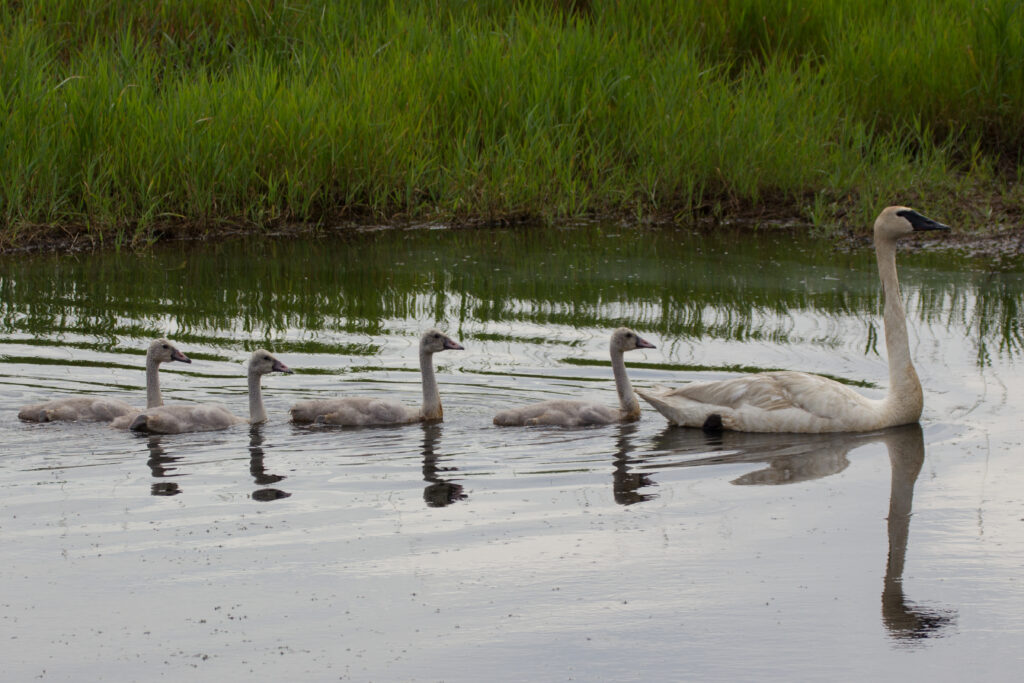
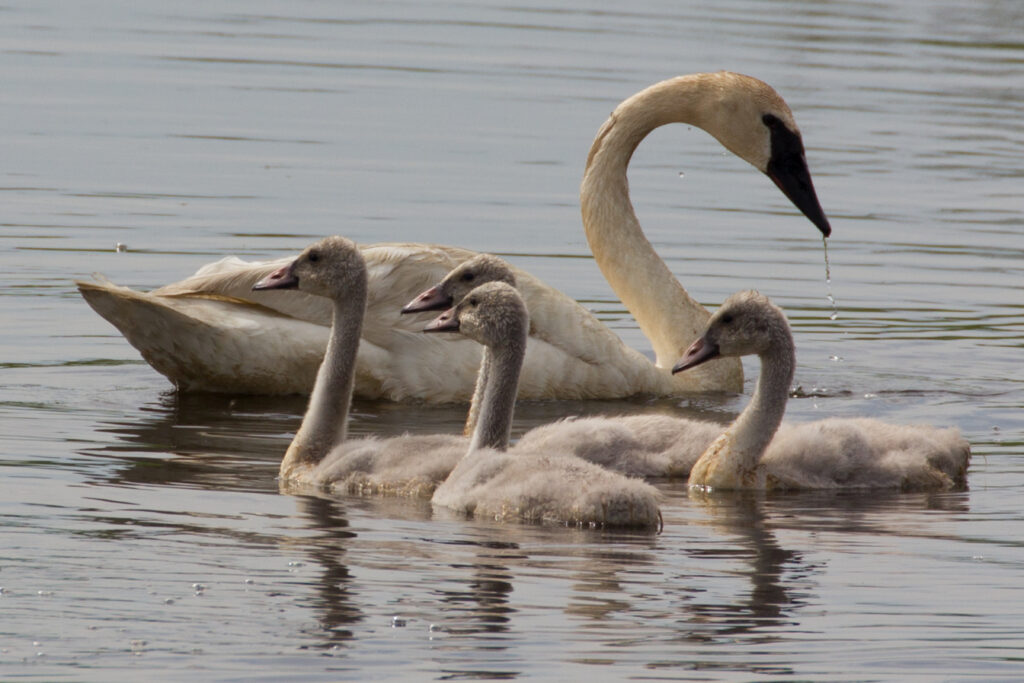
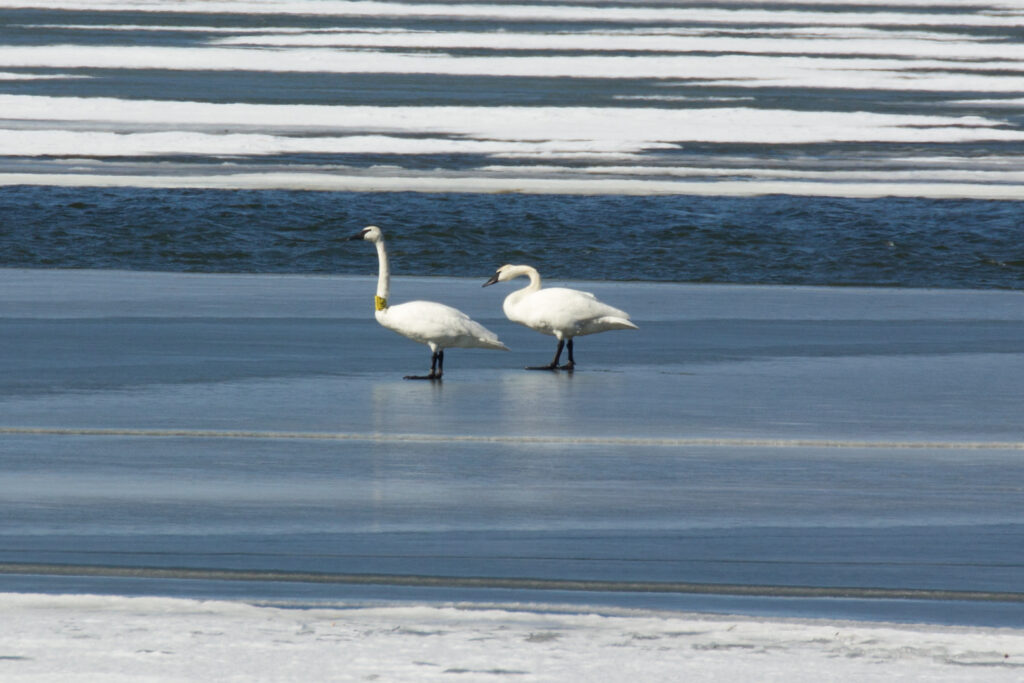
Even by the high standards of Dixon, though, one bird that I saw that day in 2022 was unusual. I was looking through the long lens of my camera when I noticed a swan with distinctive traits. The black bill meant that it was a trumpeter swan, the largest waterfowl native to North America (mute swans, which are slightly smaller and have orange bills, are native to Eurasia). This sighting was a thrill for me, because I had fallen in love with trumpeter swans years earlier. In flight, they are ethereal, their outstretched ivory wings gleaming with hints of gold and violet in the sun. On the water, they glide with perfect grace and elegance. They are devoted mates and tender parents, guiding and protecting their fluffy gray cygnets through the perils of life as a young, wild swan.
Trumpeter swans also pull at my heart because of their history. By the late 1800s and early 1900s, trumpeter swans had been hunted nearly to extinction. Some had been taken for meat, while many others had been taken for their skins, which were made into powder puffs, and for their feathers, which were used to decorate hats. What an appalling thought, that these incredible living creatures were made into beauty products—and even worse, at such a rate that they nearly disappeared! Scientific surveys in the 1930s found fewer than seventy trumpeter swans alive in the lower forty-eight states.
The story could have ended there, in tragedy, but it didn’t. Instead, caring people, including scientists and other conservation-minded individuals, worked incredibly hard to protect the remaining trumpeter swans and to restore their populations. Their efforts have been so successful that today, trumpeter swans number more than 63,000.
Trumpeter swan conservation and restoration is still very much an on-going project, however. Swans still face threats such as habitat loss and lead poisoning (from fishing tackle and ammunition).
Scientists closely monitor swan populations and migration patterns, to know where these birds are thriving, where they might be in trouble, and which specific habitats they use at different times of the year. All of this information helps them determine the best ways to protect the swans and their habitats. But how on Earth can scientists collect such data on wild birds?
One part of the answer comes from something strange I noticed about “my” swan that February day—it wore a broad, yellow collar around the neck. Someone, somewhere had banded this swan! In the United States, bird banding is administered by the Bird Banding Laboratory, under the US Geological Survey. People who see banded birds in the wild are encouraged to report these sightings to the Bird Banding Laboratory, so that data can be collected on how long wild birds live, where they go, and so on. In the case of trumpeter swans, reports can also be made to The Trumpeter Swan Society, an organization dedicated to the welfare of trumpeter swans in the wild.
I reported my sighting to both of these places. The online forms asked for the date, specific location data (including latitude and longitude), and the number on the swan’s collar (H57). I also submitted a photo. I wasn’t sure what would happen after that, but in time I heard back from both organizations.
The US Geological Survey sent a certificate of appreciation with much information about “my” swan, including the name of the person who banded it, as well as where and when the banding happened—Wood County, Wisconsin, on July 25, 2001—and the approximate age of “my” swan when it was banded (at least one year old). Margaret Smith, the executive director of The Trumpeter Swan Society, called me and left a message in response to my sighting. She was especially delighted to hear about “my” swan because of its age. At over twenty years old, H57 was something of a rarity for the wild swan reports that TTSS receives. What a joy it was for me to hear the happiness in Margaret Smith’s voice, and to contribute even in a small way to the welfare of trumpeter swans!
In the end, my walk that memorable day showed me the convergence of two restoration stories: wild trumpeter swans, and the high-quality wetlands that swans need to survive. Their intertwined story is one of life and healing, of challenge, and above all, of hope.
The Wetlands Initiative. https://www.wetlands-initiative.org/dixon-waterfowl-refuge-hh
The US Fish and Wildlife Service. https://www.fws.gov/program/international-affairs/ramsar-convention-wetlands
The Ramsar Convention. https://www.ramsar.org/
The Bird Banding Laboratory. https://www.usgs.gov/labs/bird-banding-laboratory
The Trumpeter Swan Society. https://www.trumpeterswansociety.org/