Sometime in late winter each year, as I’m walking out at the park or letting my dog outside, I hear a strange, wild call in the sky. The rhythm is reminiscent of Canada geese, but the pitch is much higher. I look up to see the familiar vee-shape of migrating waterfowl, and my eyes confirm what my ears had already told me: snow geese are passing overhead.
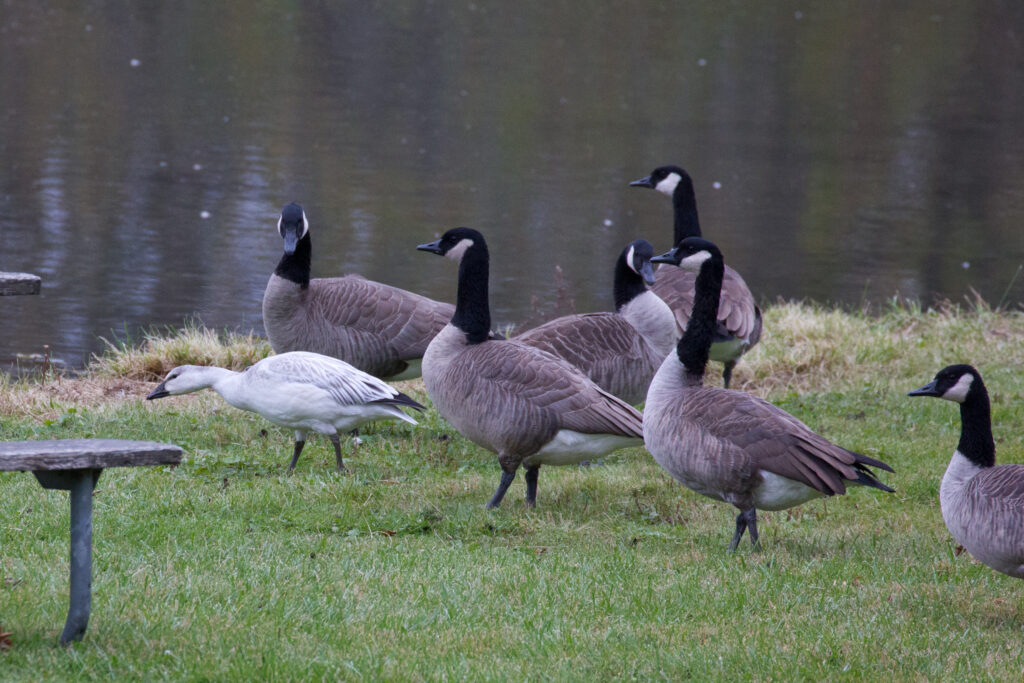
I always look forward to these sightings. Snow geese bring an early hint of springtime, the excitement of a season changing.
Snow geese are only transient visitors to our part of Illinois. They winter in the south-central United States or eastern Mexico, then migrate north to the Arctic for the breeding season. There, out on the tundra, they build their nests and spend the summer.
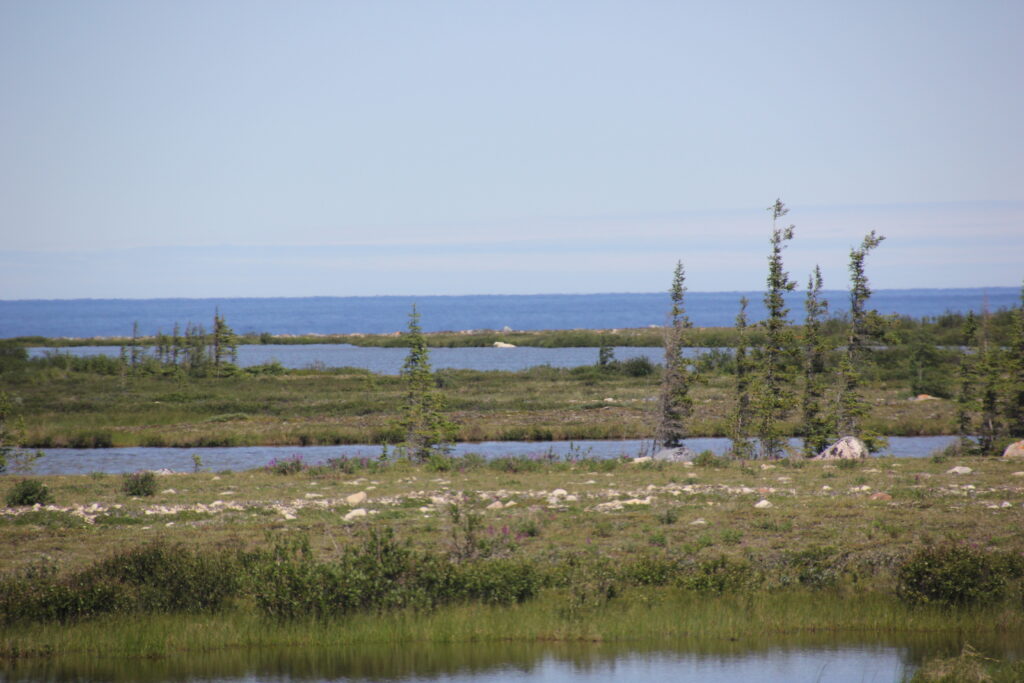
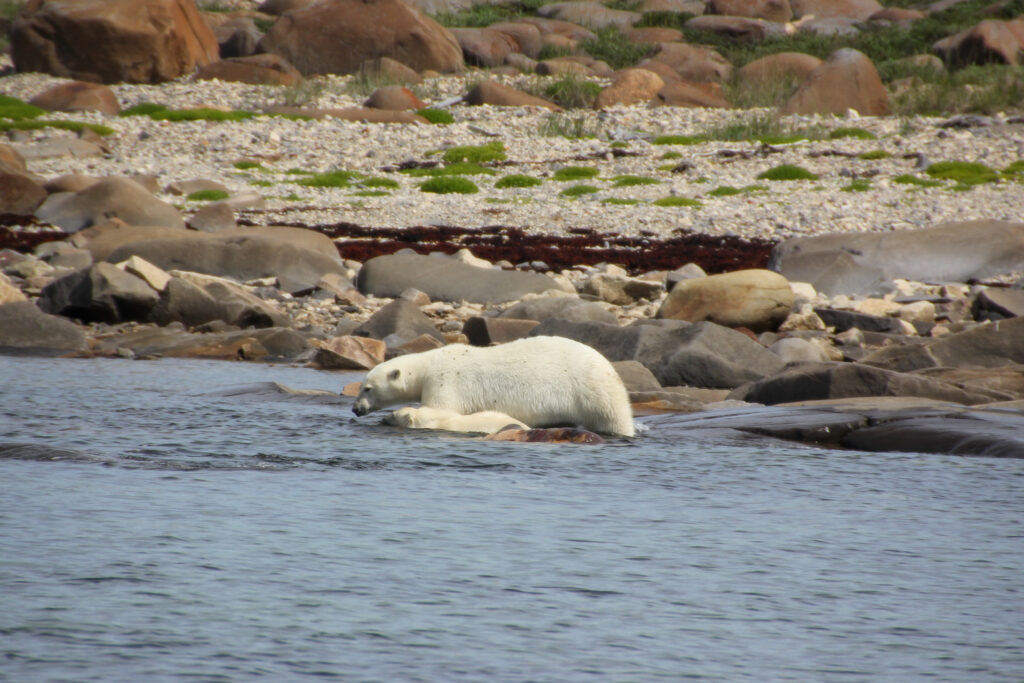
Back in 2015, my husband, Marc, and I visited Churchill, Manitoba, Canada, along the shores of Hudson Bay. It was a chilly, windswept place, even in late July. Sitting at about 59°N latitude, Churchill is technically subarctic but hosts many iconic arctic animals: polar bears, beluga whales, arctic foxes and nesting snow geese. Whenever I see snow geese now, I think of how they connect far-flung places—how the needs of their life cycle stretch all the way across North America. I think of how their survival depends on humans’ cooperation with each other.
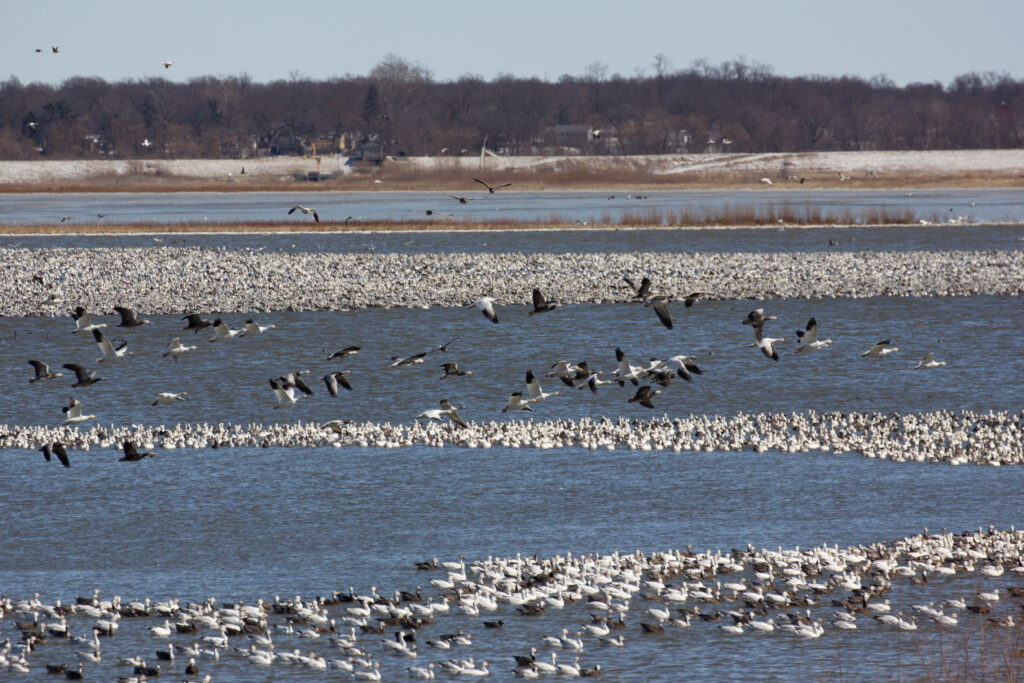
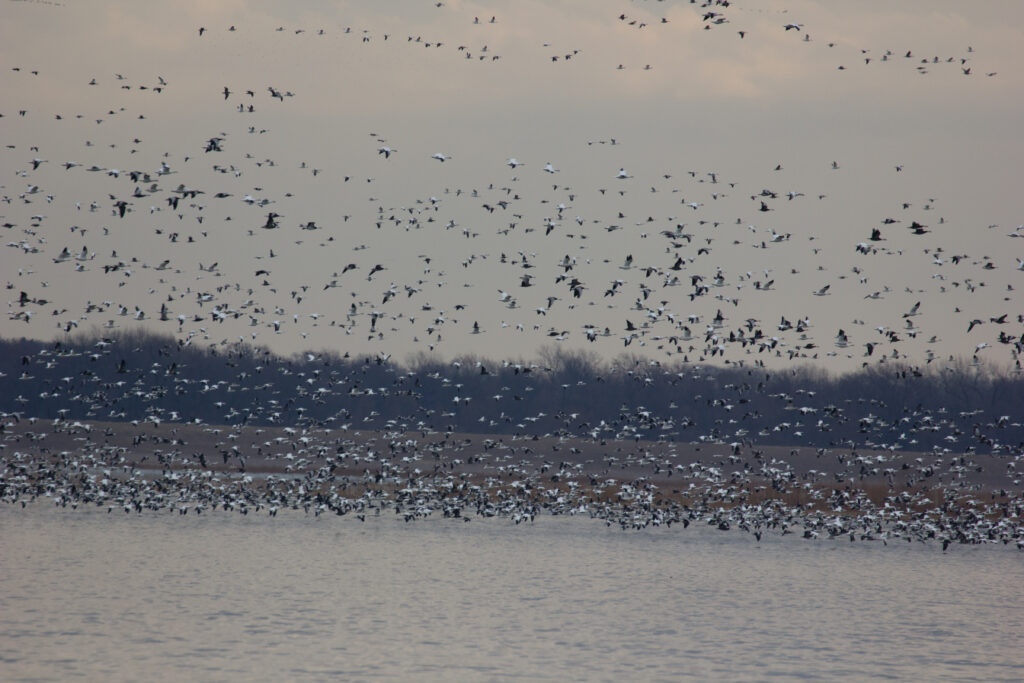
Along the migration route, snow geese stop to rest and eat. Sometimes they stay for weeks in plum locations, such as Emiquon Preserve and National Wildlife Refuge near Havana, Illinois. In early 2022, I saw tens of thousands of snow geese down there. Ice covered great sections of the Illinois River, causing the geese to congregate. In some places, they came close to shore. At rest, they looked almost like a sheet of ice themselves, there were so many of them packed so tightly together. Their gathering was beautiful and richly textured, with darker, blue morph snow geese sprinkled in among the others, mostly white. They sat peacefully on the river.
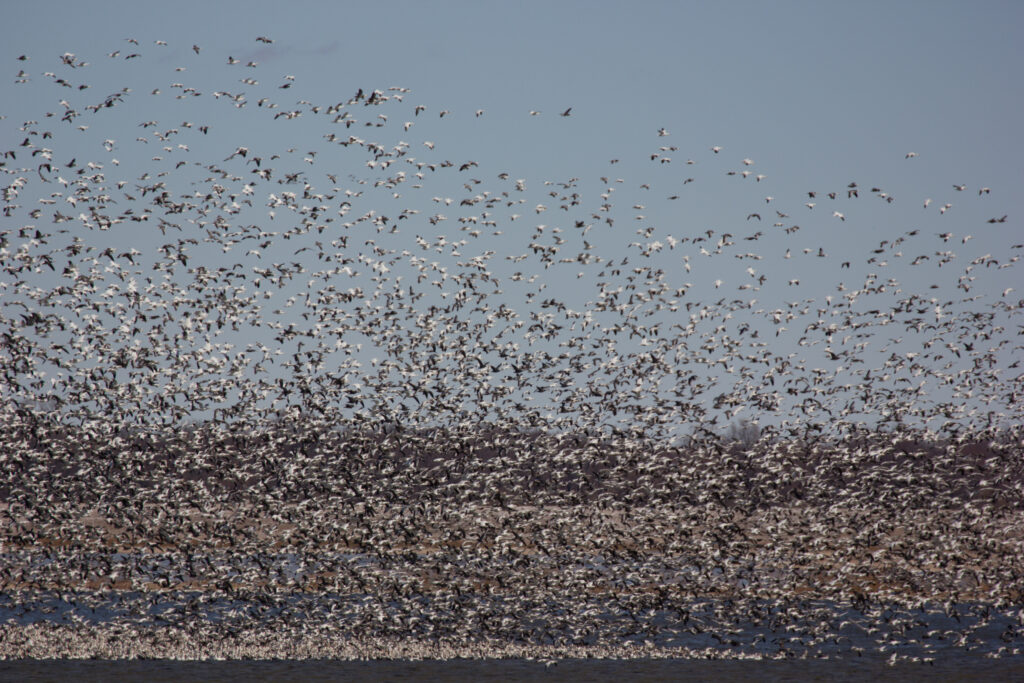
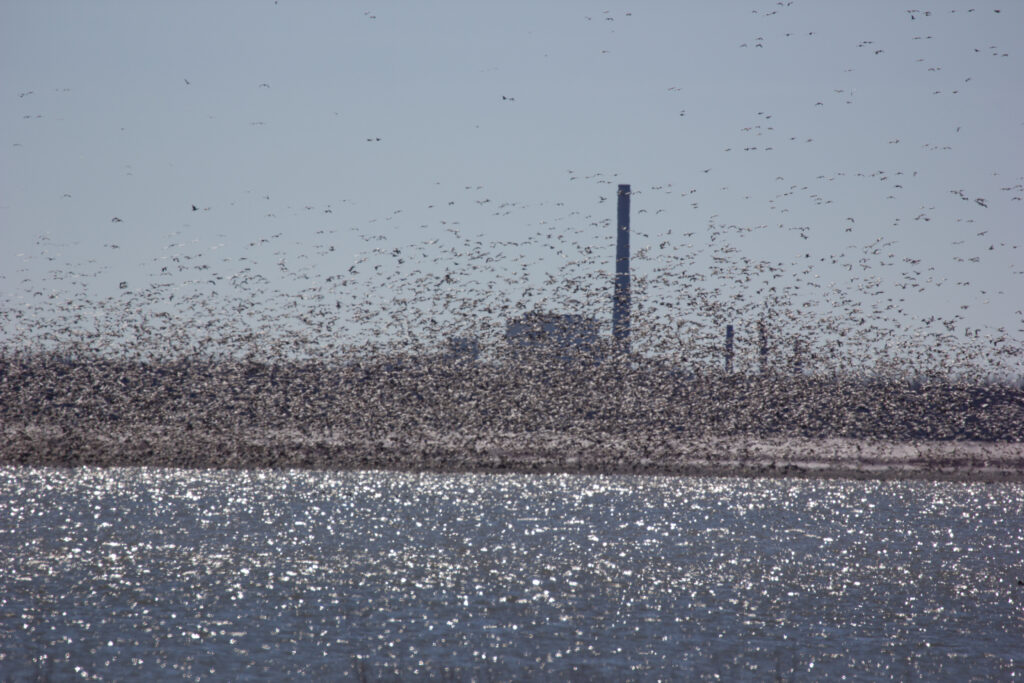
Then suddenly, at some cue known only to them, the geese would rise en masse from the water, spiraling about in the air. I stood on the riverbank as if inside some massive snow globe that had just been shaken. At times, the geese blocked the sky, blocking the scene behind them. I had never seen such a pure abundance of any creatures.
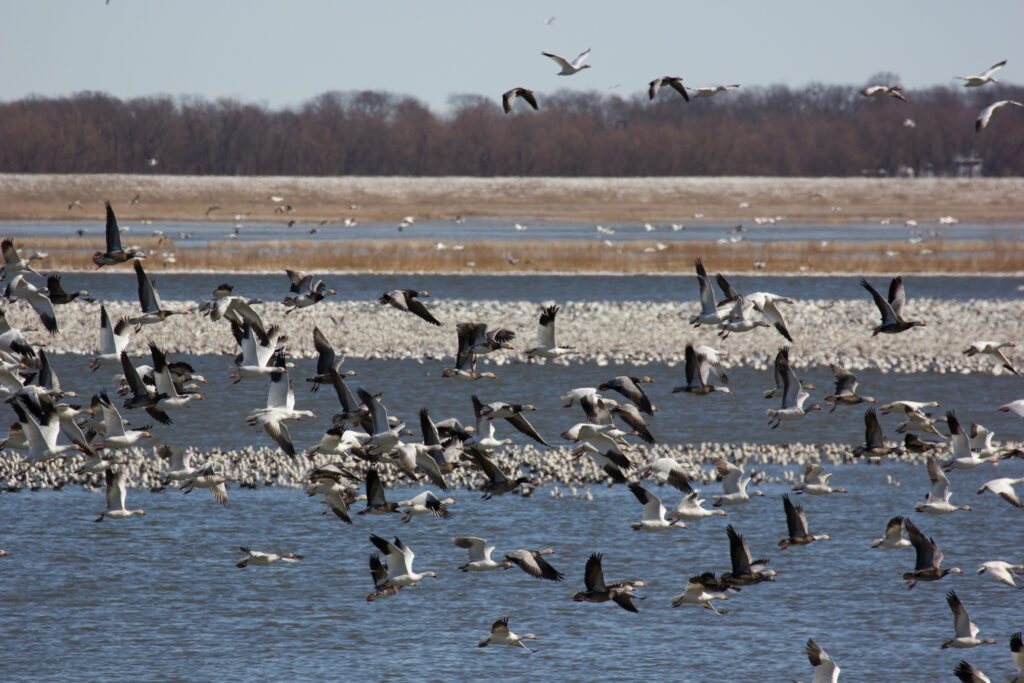
Eventually, they returned to the water, a river of geese flooding in from the sky. Somehow, they never jostled each other. Was it through complex mathematics, I wondered, or through some form of avian magic?
However they did it, they left me enraptured, and eager for the next time I see them.