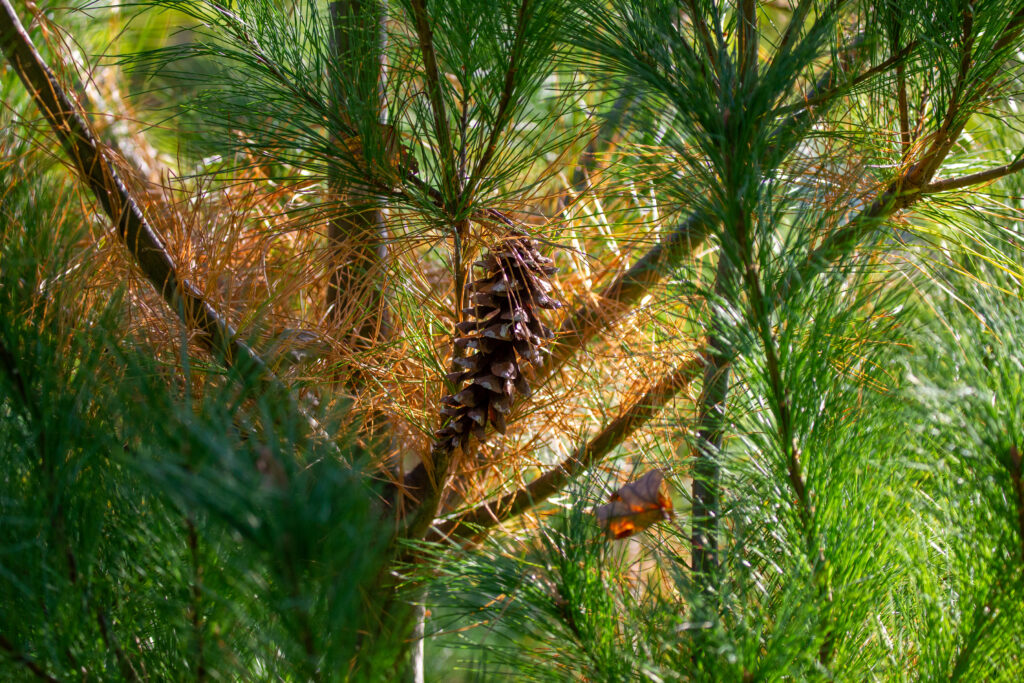
The other day, I saw a pinecone. Not just any pinecone—this one was special. It held a story within.
Back in 2020, I planted a number of white pine seedlings in my yard. They came from my old family home, out in the country near Washington, Ill. When I was about 10 years old, my parents had purchased property there and built a house. The site of the house was an old apple orchard several acres in size. While my parents made an effort to tend the apple trees, especially at first, little by little our “yard” changed. As apple trees died, they were replaced with forest trees.
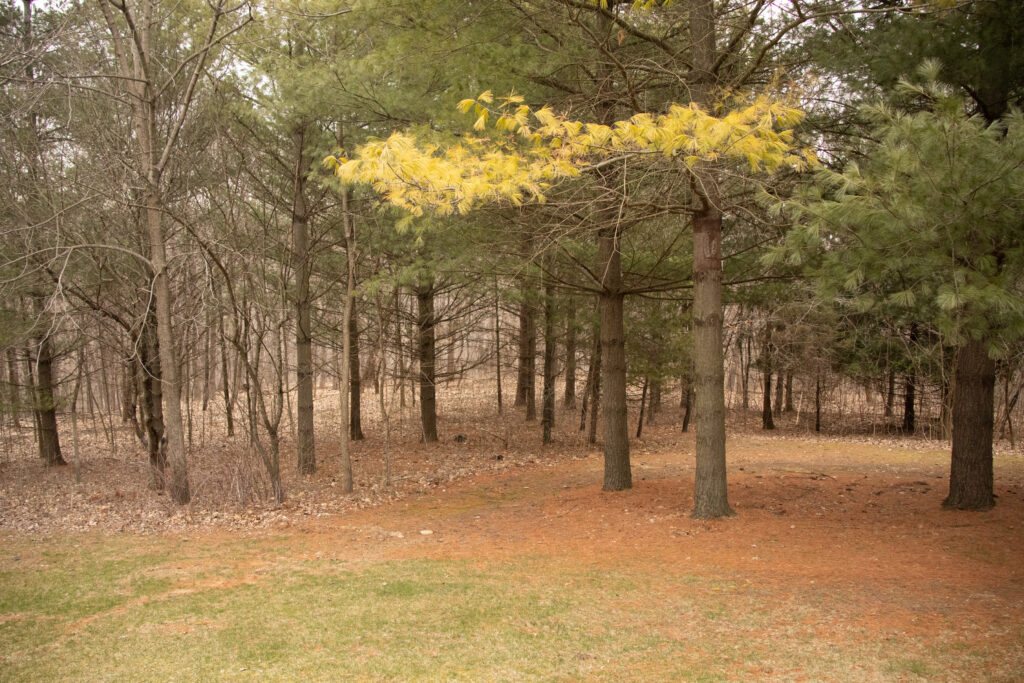
Some of the first trees my parents planted were white pines. They were babies, just sprigs, a foot or two tall, and in their first summer, they needed a lot of watering. This was a job I first helped my parents with, then eventually took over. What made it challenging was that the pines were scattered throughout the orchard, none (or at least very few) near enough to reach with a hose. Instead, I filled old laundry detergent jugs with water, loaded them into a wheelbarrow, and gave each pine its drink—three jugs per tree. As space in the wheelbarrow was limited, I had to make many trips back to the hose near our garage, to refill the jugs before watering the next tree, and the next, until all twenty-odd had had their fill.
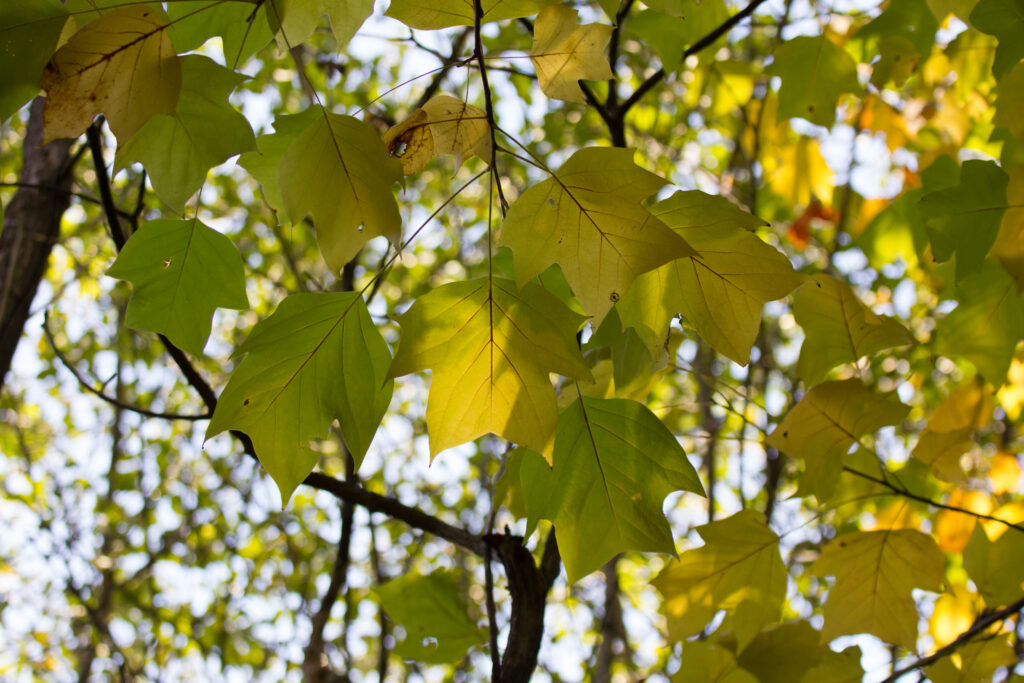
Each watering session took hours to finish, and it was hard work. I don’t remember if I accepted the job cheerfully or if I complained about it (although I have my suspicions). Either way, I wound up feeling strongly connected to the little trees. I marveled at their growth—sometimes several feet per year! I mourned when we lost one, to deer or other causes. They were, to some extent, my trees.
Over time, more trees joined those first white pines. Some were volunteers from the surrounding woodland—wild cherries, oaks, sassafras and ash. Others were intentionally planted. While working on a spring-cleaning project at a local community building, my dad found four tiny tulip tree seedlings growing in a basement window well. They were no larger than twigs, each sporting a few distinctive leaves. My dad rescued the baby trees and brought them home, planting them where we could see them from our back porch. Tulip trees grow fast. By the time I headed off to college, they were towering over me. So were the white pines I had watered in their first summer.
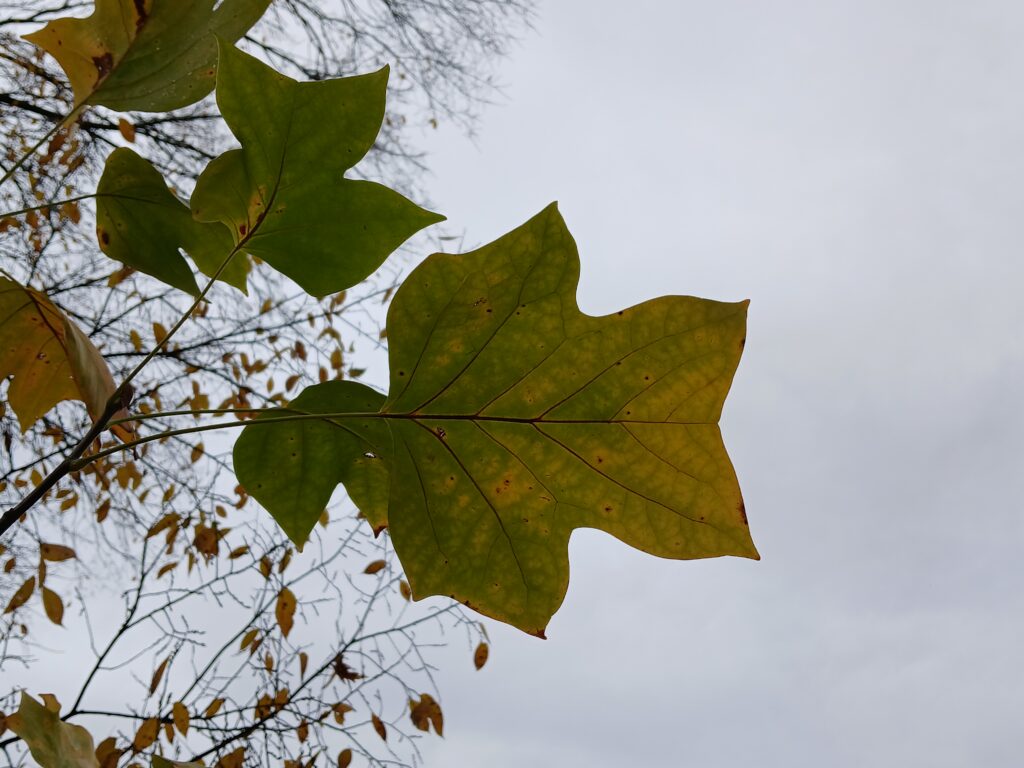
The trees grew taller. I invited my college sweetheart for a visit; years later, I married him. In the meantime, the trees kept growing, and they even launched a new generation. My parents found white pine, tulip tree, and other seedlings all throughout the woodland that had once been an apple orchard. Some even sprouted in the garden beds.
More years passed, and the trees I could still picture as tiny sprigs grew impossibly tall. My puppy, Luke, chased squirrels up onto their trunks. My nieces and nephew scooped fallen pine needles into buckets as they played beneath the soaring branches. In autumn, the tulip trees brushed the sky with golden leaves. They were now giants.
In 2020, my dad asked if I wanted to transplant some baby trees from his yard to mine. The timing was perfect. I had just planted twenty-odd young oaks (obtained from Living Lands and Waters) earlier that spring, so I was already in a rhythm of caring for baby trees. More importantly, my dad’s little trees would bring with them a feeling of history, family and home.
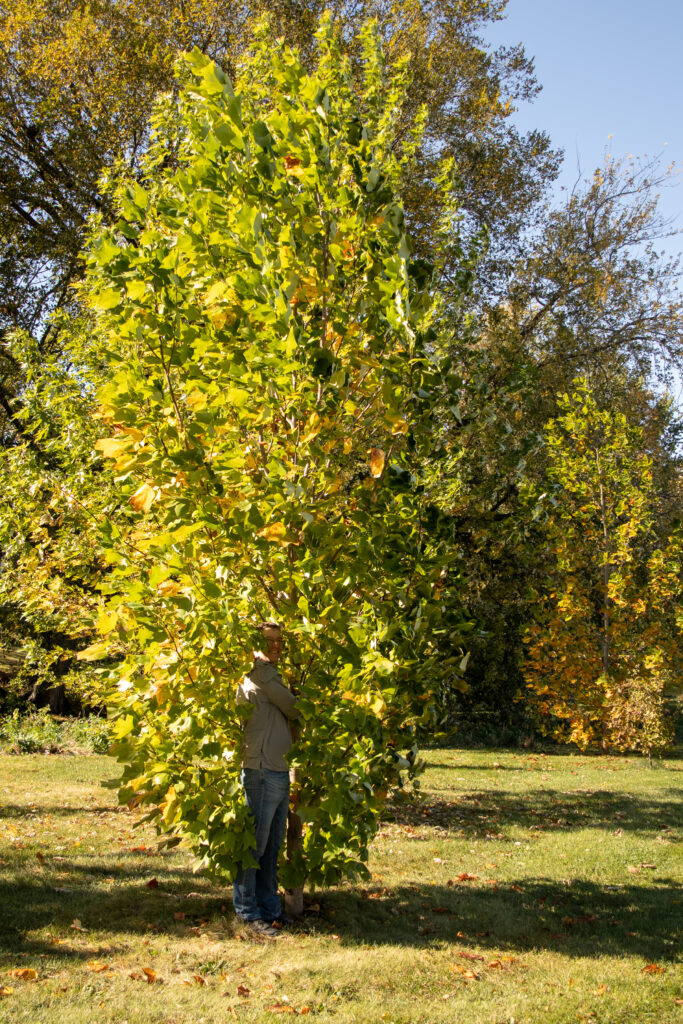
Over the course of several visits, my dad and I dug more than a dozen seedlings from his property—mostly white pines, but also a few sassafras, sugar maple, ash and tiny tulip trees. As we dug our shovels into the earth, we reminisced. We talked about how much the landscape had changed in the past 30 years, and about what had remained constant.
The tallest tree I transplanted was two feet tall, the shortest just a few spindly inches. I watered them carefully. My system involved several lengths of hose and two watering cans instead of a wheelbarrow and detergent jugs, but the labor was similar. The results were similar. Because of those hours I’d spent watering trees as a child, I knew how to tend my little seedlings in 2020.
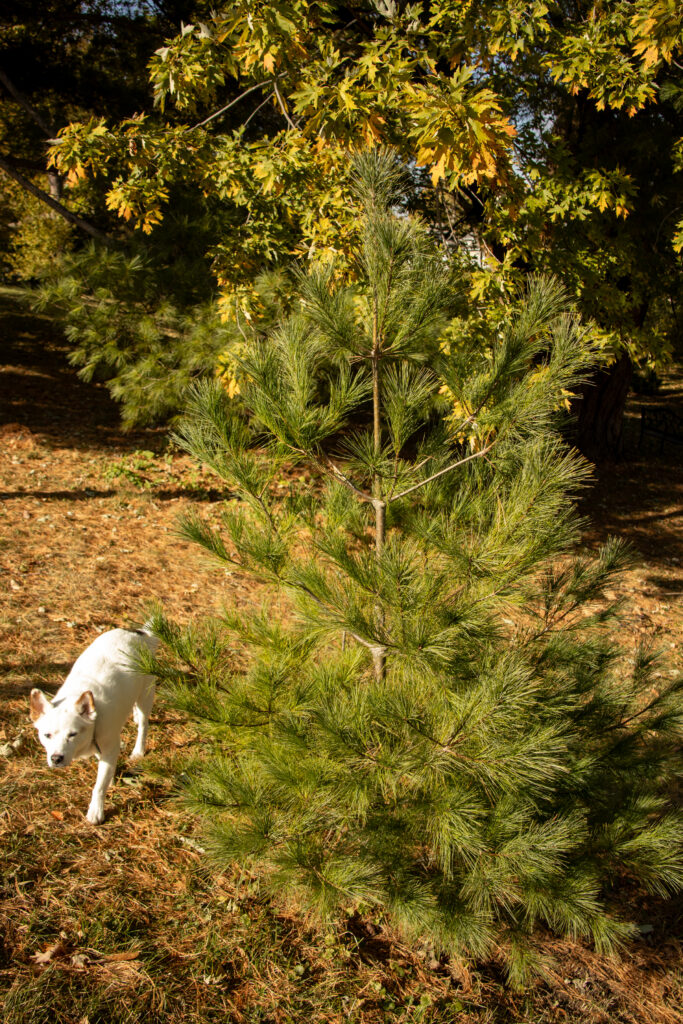
Over these past five years, my yard has changed significantly. A few of the little trees didn’t make it for one reason or another, but most are growing well—thriving—flourishing. The tiniest of my white pines and all of my tulip trees started out six inches tall. Now, the pine stands six feet tall, and the tulip trees double or triple that!
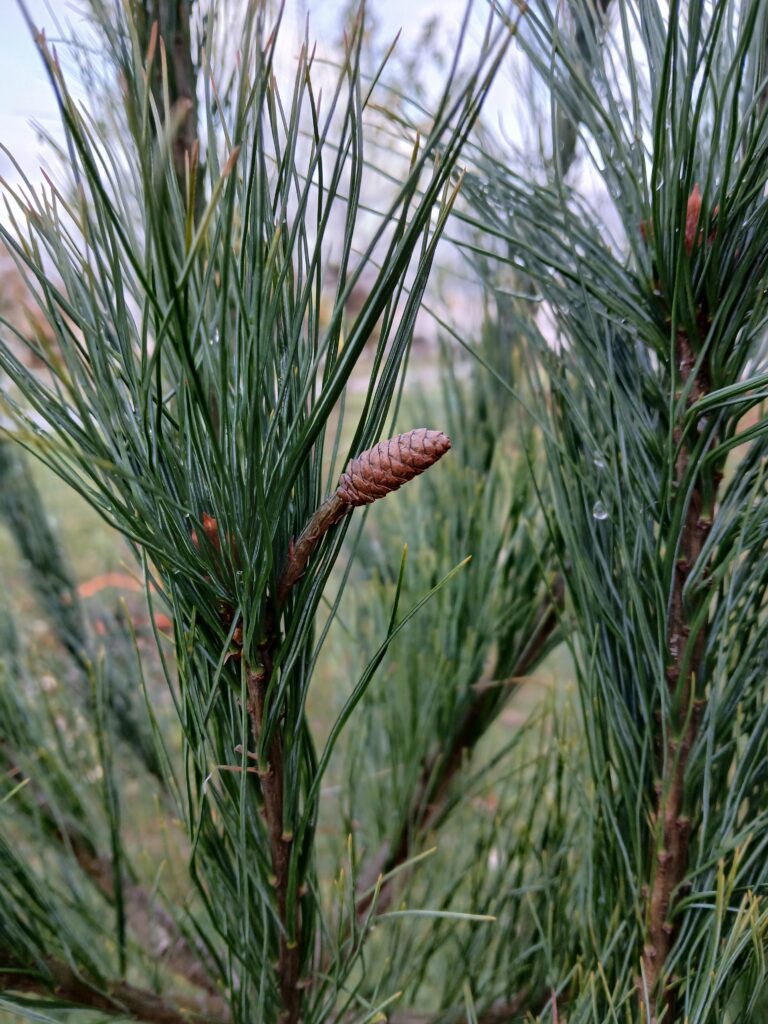
Best of all, some of these trees have begun producing the next generation. Last fall, I found a nascent pinecone, and then this year, the first full-sized one. I touched it with a sense of awe, this living link between future and past, memories and hopes. Any trees that sprout from it will be grandchildren of the seedlings planted by my parents.
As I look around my yard in autumn of 2025, I wonder what the place will look like in thirty years. I wonder how my trees will have changed—what changes they will witness—and the constants that will remain.