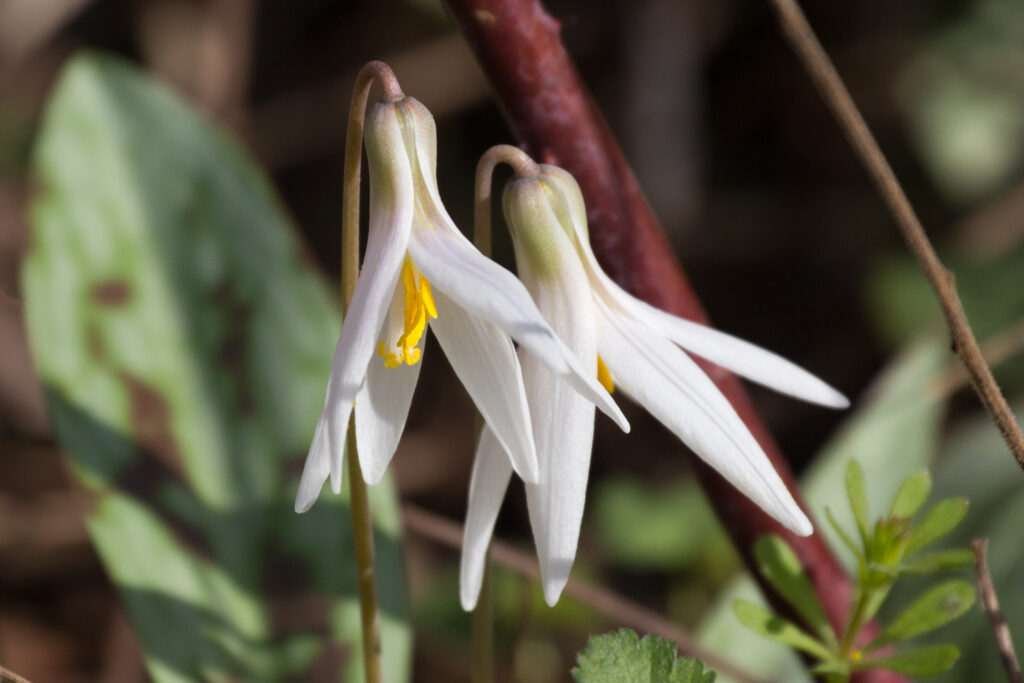
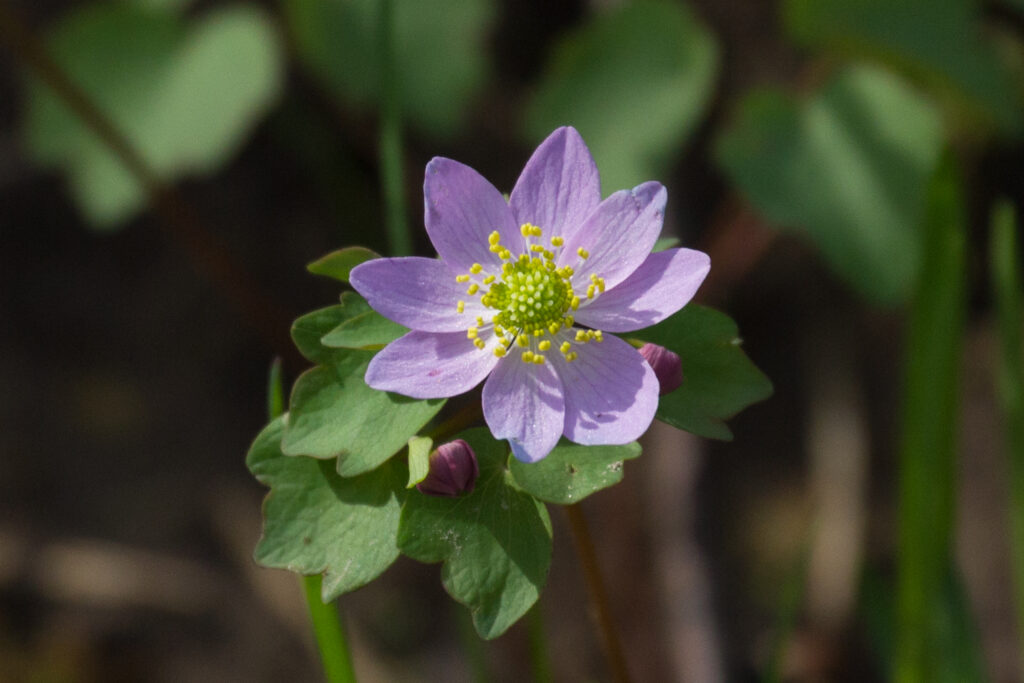
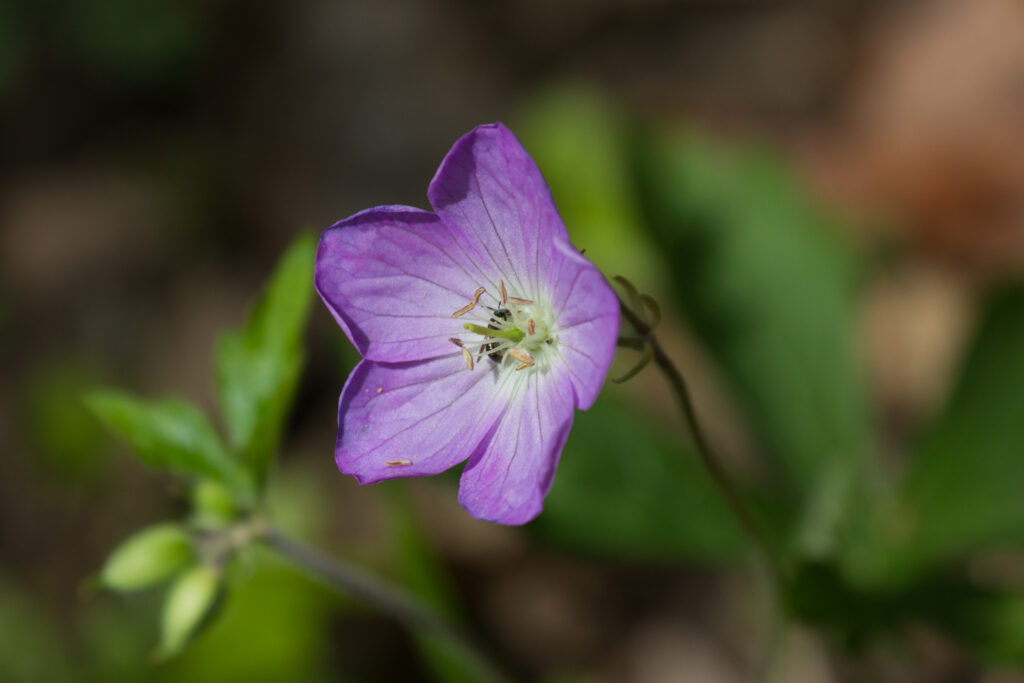
The most marvelous thing happens in the eastern woodlands each spring. From a layer of dry, brown fallen leaves, new life emerges. Tender leaves poke through, unfurling in the cool, fresh air. They are among the loveliest of all leaves, some feathery or shaped like umbrellas, others dappled with spots like birds’ eggs. Soon, blossoms in soft shades of pink, white, yellow, and violet form a carpet on the forest floor. The wildflowers known as spring ephemerals have arrived.
Their very names are poetry: wake-robin, hepatica, mayapple, bluebell, Dutchman’s breeches, snow trillium, Jack-in-the-Pulpit, spring beauty, and so many others. They feel like old friends. I’ve known them ever since my family moved to Illinois when I was six, and my parents introduced me to them.

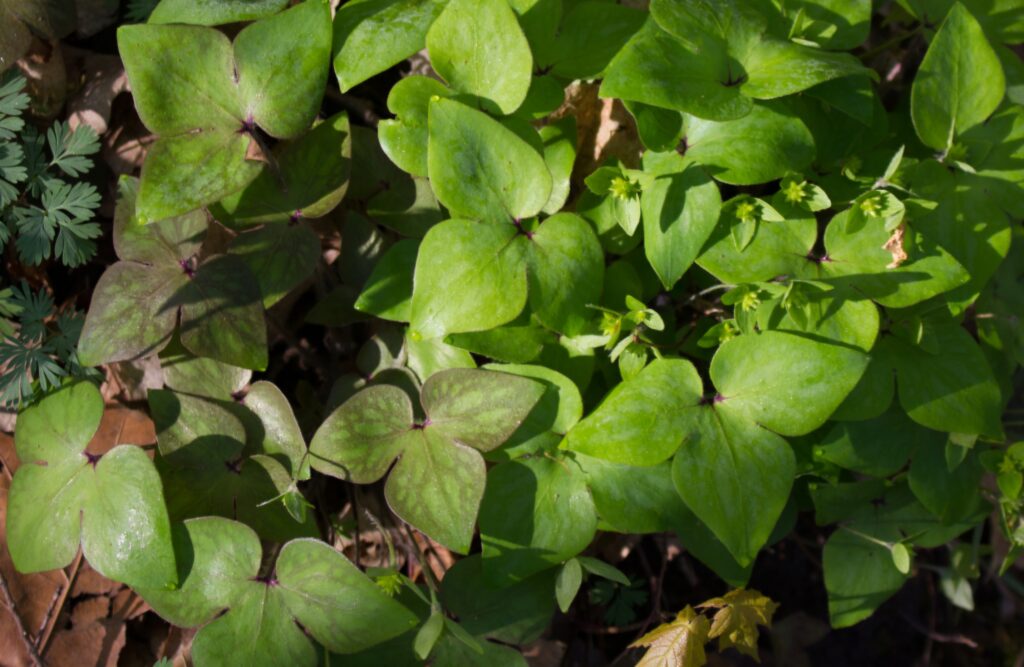
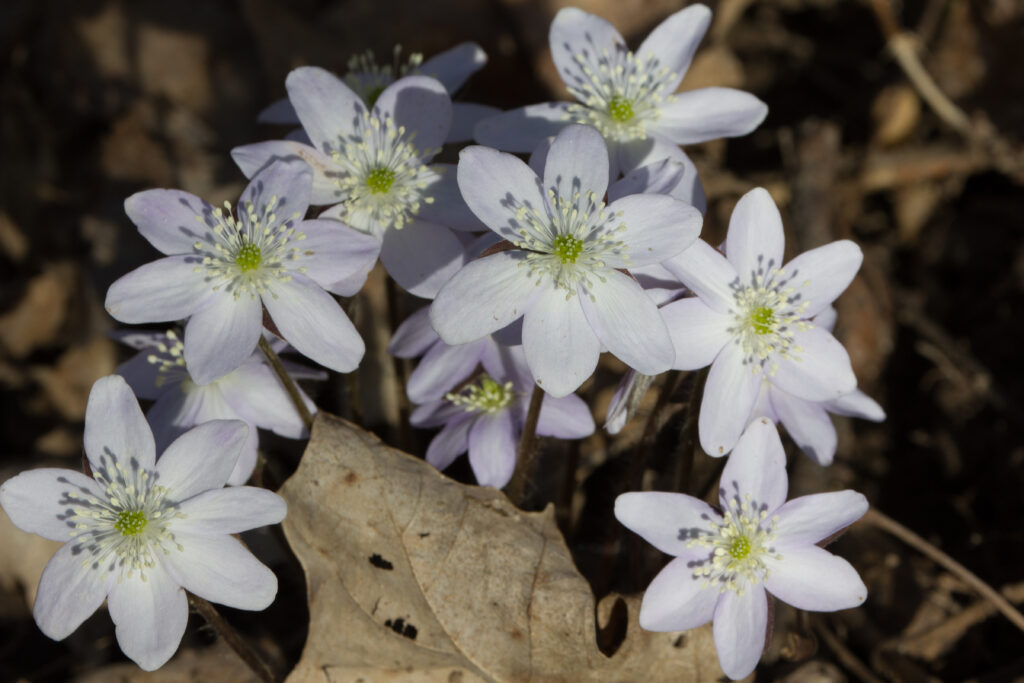
Each spring, we would hike through the woodlands of Central Illinois, watching for the first signs of the wildflowers. As we searched, my brother and I even made up songs about them. When we moved to a house out in the woods, near a park now called Spring Creek Preserve, I came to know them even better.
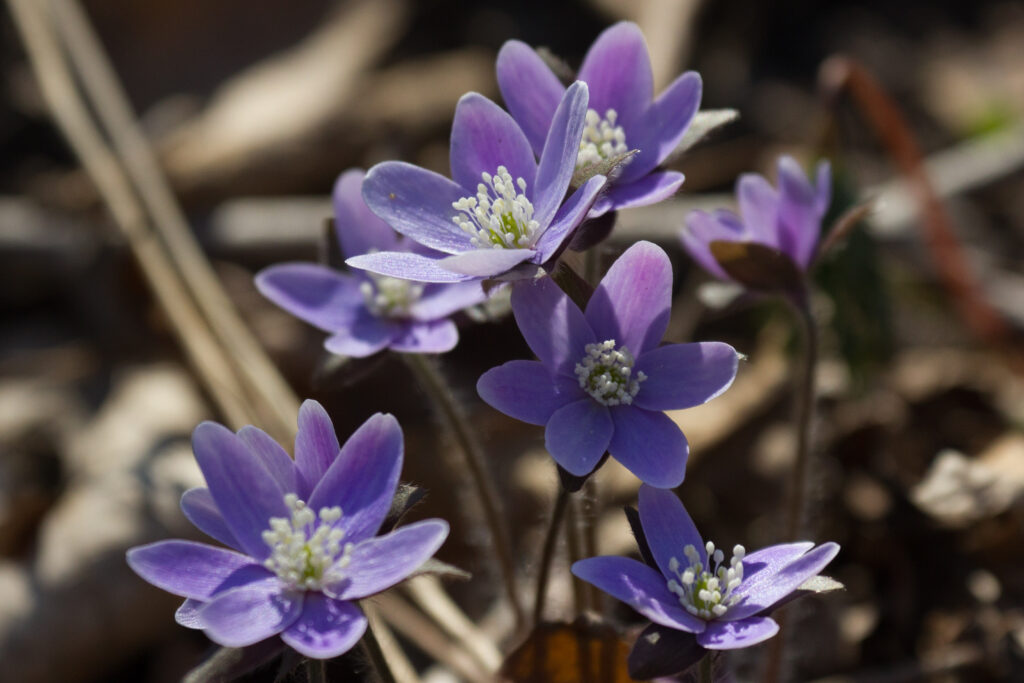
To this day, their appearance each spring brings me a feeling even deeper than joy. They are essential. Life simply does not feel right until I’ve seen these wisps of color in their old, familiar places—and sought them out in new ones.
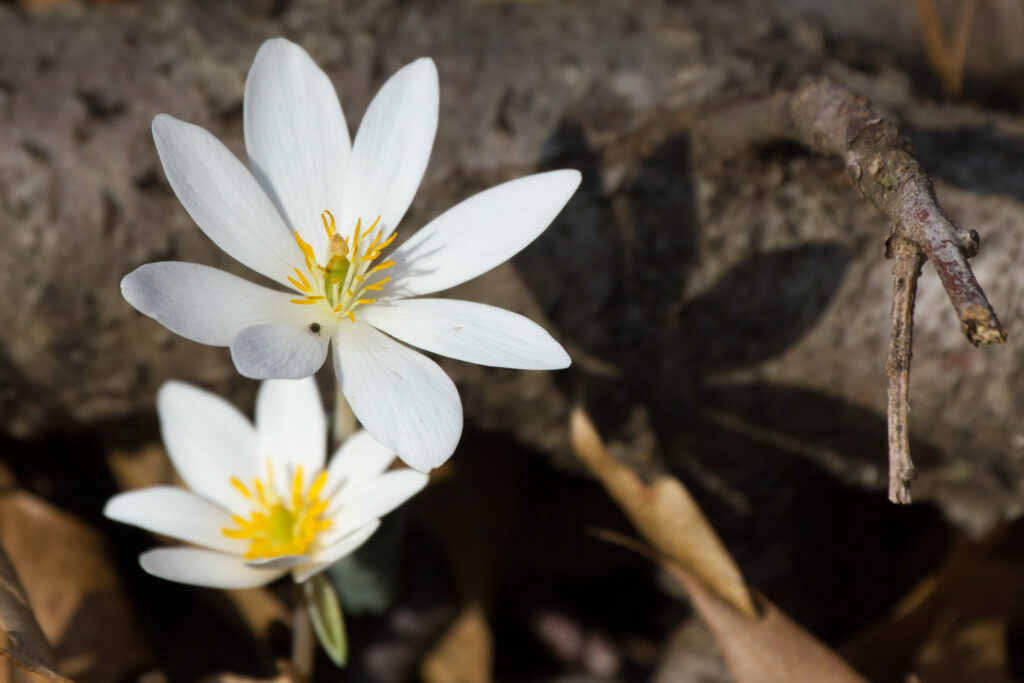
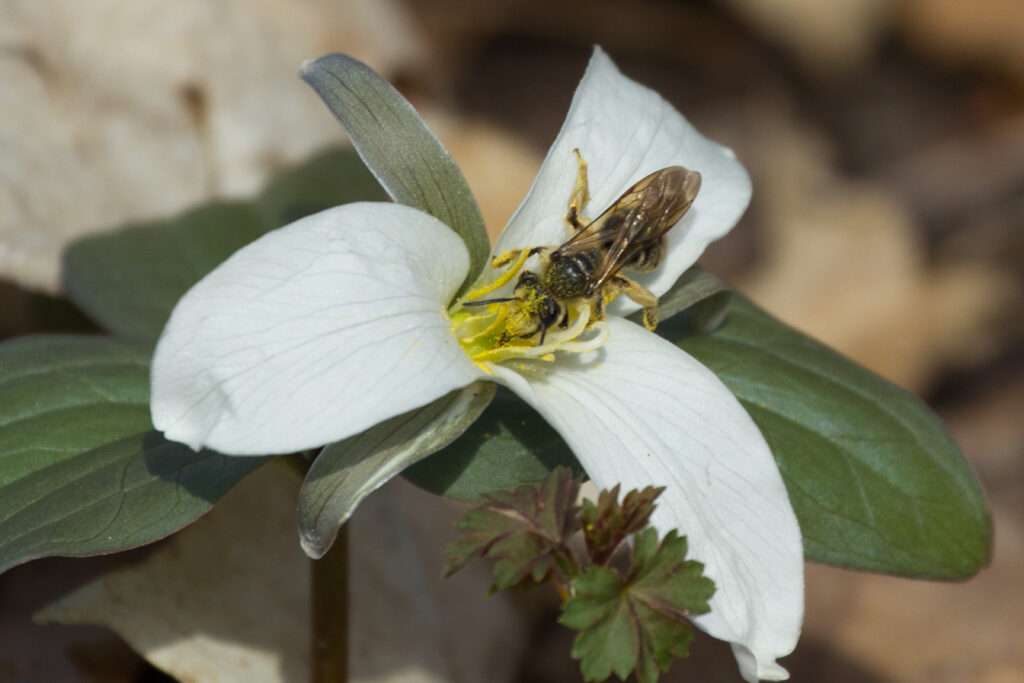
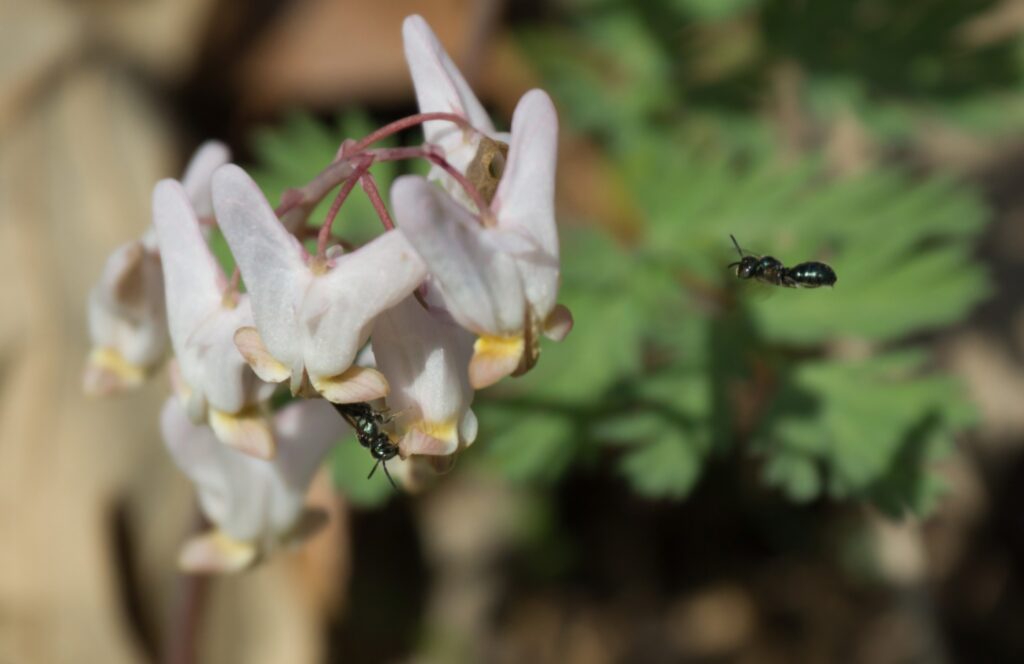
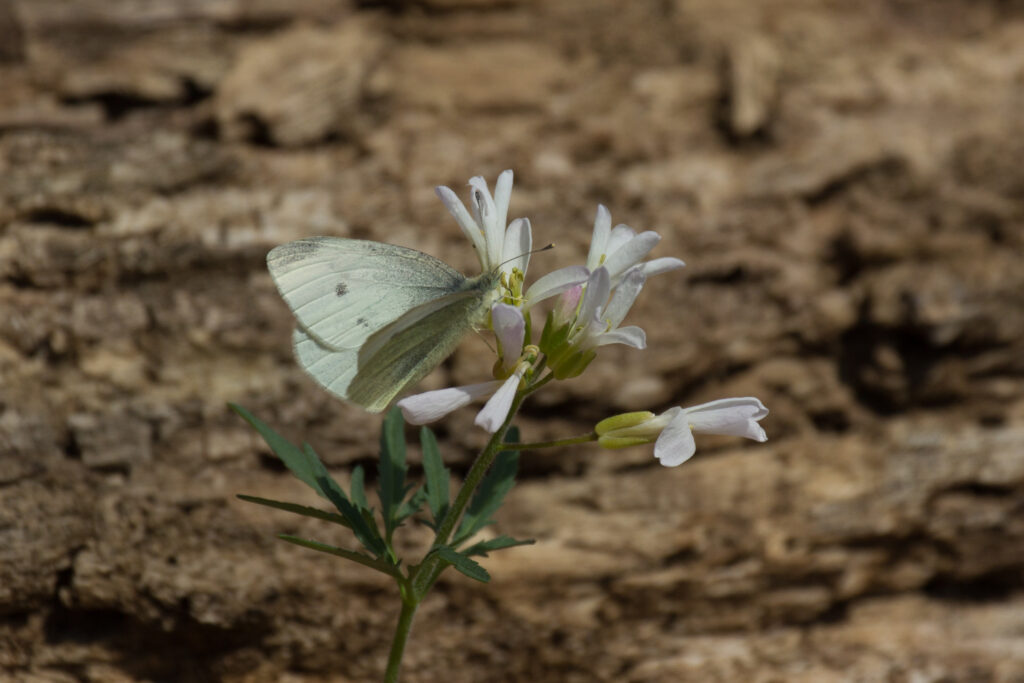
As if the flowers themselves weren’t beautiful enough, they are joined by bees, beetles, moths, flies, and butterflies in an exquisite springtime dance. These insects depend on spring ephemerals for an early source of nectar and pollen, just as the wildflowers depend on insects for pollination. Their fates are intertwined.
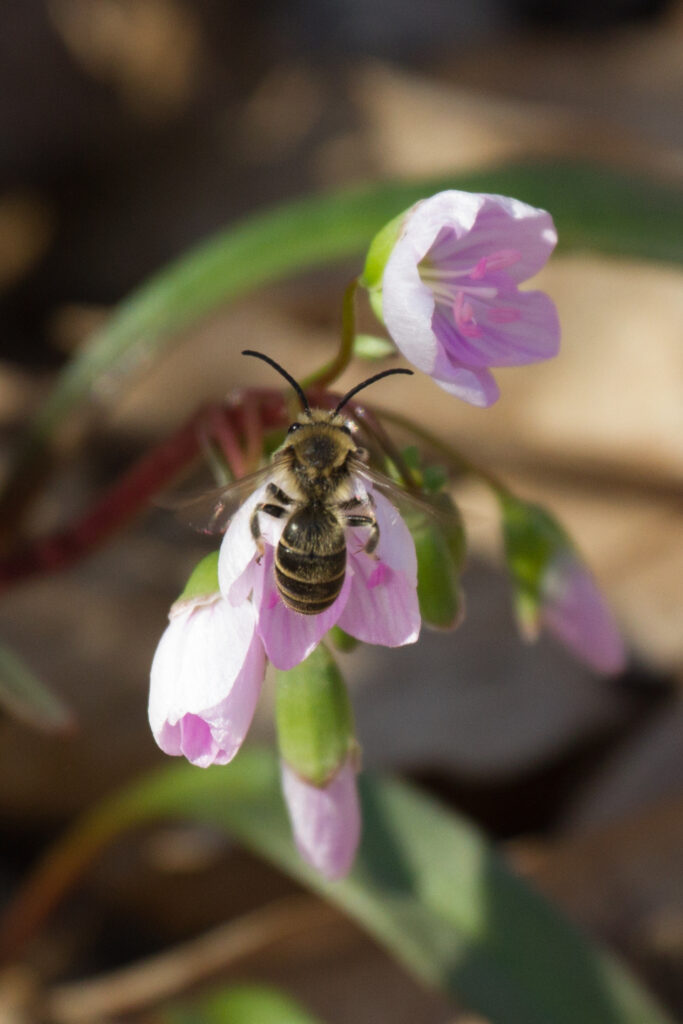
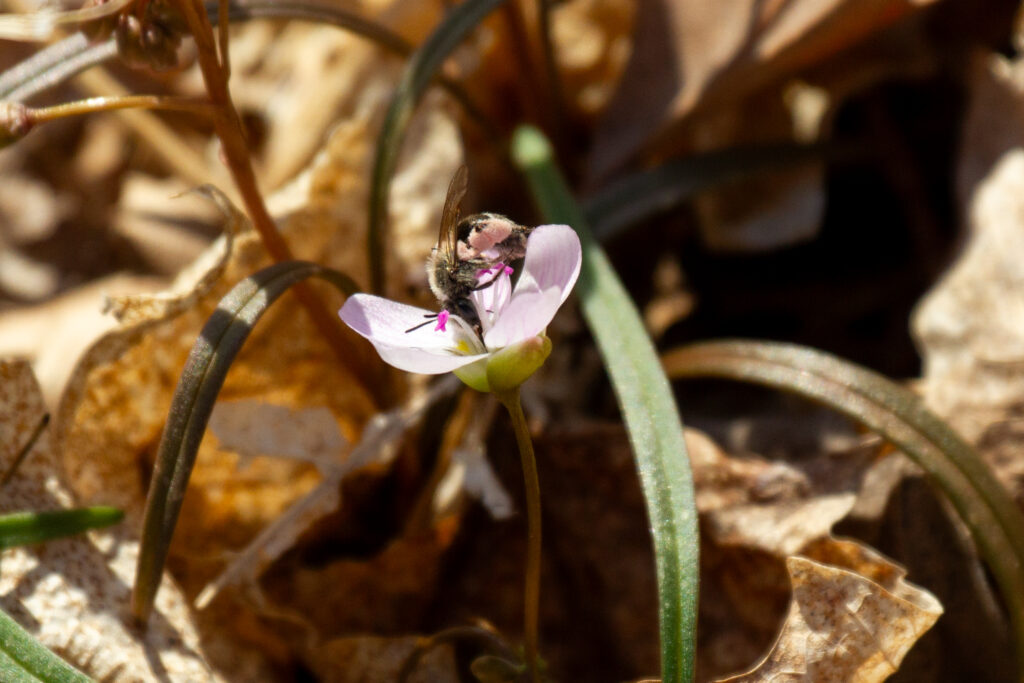
The more photographs I’ve taken of woodland wildflowers, the more insects I’ve noticed. Last April, I was snapping photos of some candy-striped spring beauty flowers when a tiny bee caught my eye. Its legs were covered in pink pollen rather than the more familiar yellow.
A quick internet search taught me about the spring beauty miner bee, a native species that collects only the pink pollen of spring beauty flowers (although they will take nectar from other species). How many times had I passed by these little bees without even realizing it? What other wonders have I missed? And what will I discover next year? With each reprise of the dance, I see something new.
As the name suggests, spring ephemerals don’t last long. After blooming for just a few short weeks, they fade—but what an exquisite few weeks! What a lovely time, when soft petals line the woodland paths, and insects float from flower to flower on spring breezes.
Sadly, both spring ephemerals and their pollinator partners face significant threats.
• Of particular concern for wildflowers is the spread of non-native invasive plants. Amur honeysuckle is one of the worst and most tenacious. This woody shrub can rapidly take over wide swaths of woodland, crowding out native plants in the process. Honeysuckle is also difficult to eradicate. Other invasive plant species include autumn olive, garlic mustard, multiflora rose, and Japanese barberry. If you have been visiting the same stretch of woodland for years, you may have noticed the spread of these plants.
• When woodlands are cleared for development, the loss of habitat harms native wildflowers.
• Climate change is also a threat. Shifts in temperature and rainfall patterns can harm these plants and can even affect when the flowers bloom, which in turn affects the insects who depend on them.
• Insects who specialize on particular plants (such as the spring beauty miner bee) are especially sensitive to disruptions in natural ecosystems. However, all insects are threatened by habitat loss and climate change.
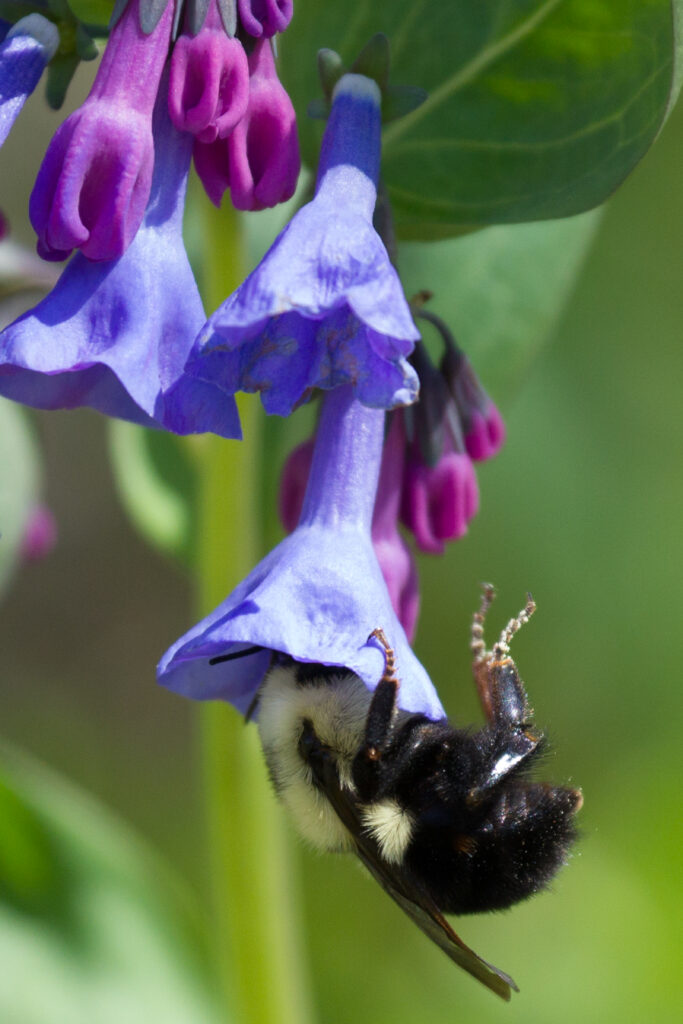
• Insects also suffer from the widespread use of insecticides, pesticides, and other chemicals. A recent report (published in the journal Science) notes that butterflies have declined by over twenty percent in the past twenty years, and gives pesticide use as one important cause. Many other insects, including the American bumblebee and other native bee species, have also been declining in recent decades.
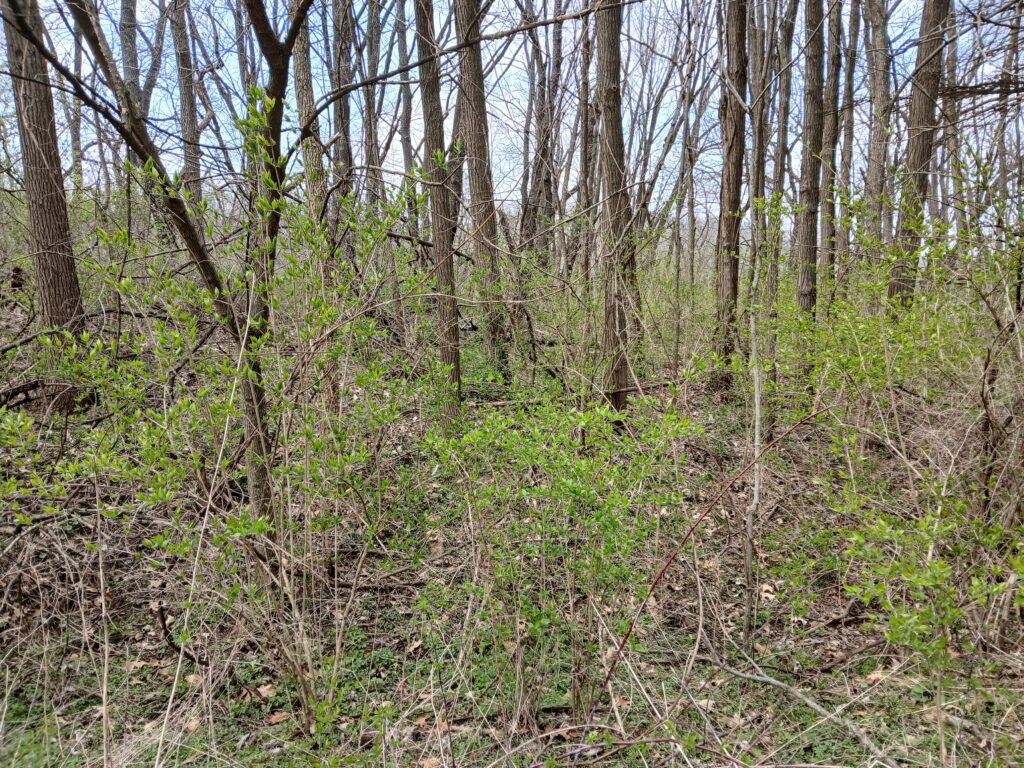
There are ways large and small to help protect native wildflower species, insects, or both. For example, removing invasive plant species is a powerful way to help wildflowers thrive. I can speak personally to this, as my dad, Bob Bartelt, has worked for years to clear invasives at Spring Creek Preserve (near East Peoria and Washington, Illinois). He and other volunteers, especially Lynn Carl and Mike McGraw, have dedicated themselves to battling honeysuckle, multiflora roses, and other invasives there. It’s no coincidence that this park has among the most beautiful displays of spring ephemerals in the area!
• If you’d like to join in the effort to remove invasive species, first educate yourself on these plants. University of Illinois Extension offices have a wealth of information on which plant species are invasive and how best to control them. They also offer a Master Naturalist program. The Illinois Department of Natural Resources also has extensive information on invasive species.
• If you own property, that’s a good place to start looking for invasive species to remove.
• Some area park districts and other organizations such as The Wetlands Initiative have volunteer events focused on clearing invasive species. These are excellent opportunities to connect with groups that already have invasive removal programs.
• If the park you most enjoy visiting does not have such a program yet, consider starting one! Invasive plant species affect all parks in our area.
• Donate to organizations and groups that work to control invasives.
Helping insects thrive is even easier than helping spring ephemeral wildflowers. Often, it’s a matter of what we DON’T do.
• Don’t use chemicals on lawns or gardens.
• Don’t “clean” last year’s leaves and stems out of the garden until temperatures are consistently warm. Insects (including some bees) overwinter in this vegetation. The Xerces Society has excellent advice on this topic.
• Don’t remove all of the dandelions from lawns and gardens. You may not have spring ephemerals on your property to nourish early pollinators, but many insects also visit dandelions.
• Don’t mow lawns too short or too often.
• There is also an important “DO.” Do plant native species on your property. The Illinois Department of Natural Resources can provide information on which species of plants are native to our area, as well as the types of soil and light conditions these plants need.
• Lastly, you can donate to groups that support pollinators, such as the Xerces Society and the North American Butterfly Association.