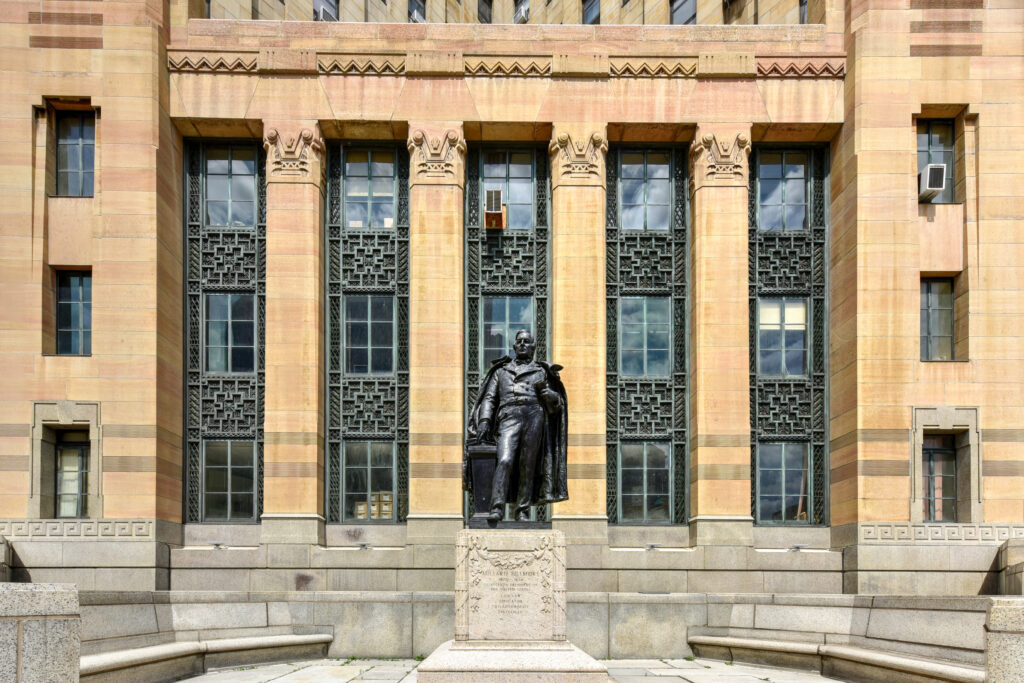
The “Last of the Whigs,” Millard Fillmore, our 13th president, had a life that some consider to be anything but stellar. But is there more to the man than we’ve been led to believe?
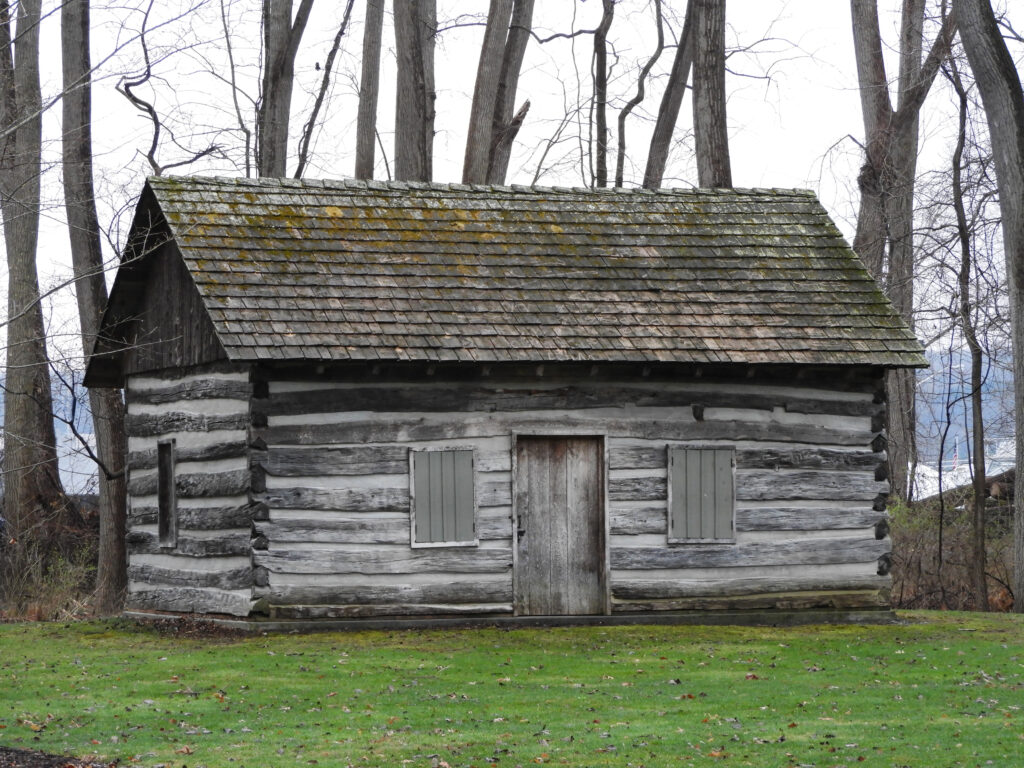
Born in a log cabin located on New York’s Finger Lakes on Jan. 7, 1800, his family worked as tenant farmers, with his father getting a job now and then as a teacher. His early years were marked with great poverty, but his willingness to work and emulate his employers sparked a hunger for learning. With no formal education, he taught himself to read and write, passed the bar exam at age 23, and practiced law rather successfully before entering politics.
Bumped to the top spot when President Zachary Taylor died, he managed to inflame both the North and the South with his middle of the road agenda. Although he professed to be anti-slavery, he didn’t feel the issue needed to be politicized. This made those above and those below the Mason-Dixon line unhappy.
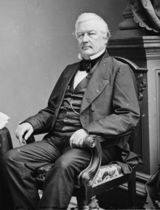
His Compromise of 1850 is remembered as especially dubious. Although it deemed California a free state, settled the Texas boundary and recognized New Mexico, it allowed escaped slaves to be returned to their owners, using federal officers if necessary. His support for the Fugitive Slave Act has been cited as his greatest downfall.
Bypassed for the nomination for another term as POTUS by his own party, he, along with the rest of the Whigs, slowly faded away. Some years later, the “Know Nothing Party” gave him a nod, but even then, he came in third.
While many have linked his name with the term “mediocracy,” he did have more than a few political and philanthropic successes. He kept France from taking over Hawaii (or we might be eating baguettes while we did the Hula). He sent Commodore Perry and his expedition off to Japan to negotiate trade, using “gunboat diplomacy” (sound familiar?), thus creating a pivotal chapter in American and Japanese history.
Often criticized for staying in the middle, he felt compromise was the best way to settle issues. His detractors used this to claim he was indecisive and a poor leader. Others felt he tried to prevent unnecessary friction among the differing sides.
He was able to keep the Spanish American War from resurging, peacefully resolved disputes with several European countries, and won the respect of colleagues such as Daniel Webster, Winfield Scott, Dorothea Dix and Steven Douglas. He met with the Pope, and Queen Victoria called him “the handsomest man she ever saw.” Not bad for a man who was a young teen before he could read.
After he left politics, his philanthropy helped found a university, a general hospital and the renowned Albright-Knox Art Gallery, all in his native Buffalo.
Aside from any of his political pros and cons, one of his most frequently cited acts was his installation of the first bathtub in the White House. Historians note that the appearance of the bathtub not only marked a milestone in the history of the White House, but it also reflected broader changes in American attitudes about personal hygiene and home comforts.
The presidential bathtub was considered a notable part of the evolution of plumbing and living conditions in the White House. Until that time, large tubs and frequent bathing were not the norm. People were slow to accept such “immersions,” and doctors were quick to warn of such an activity. Fillmore changed that.
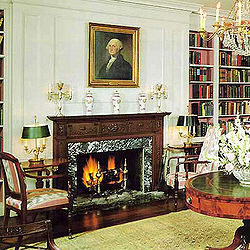
In addition to the bathtub, Fillmore also installed the first library in the White House. Over the years, many of the volumes were lost or fell into disrepair. To preserve what was available, the National First Ladies’ Library began working with the Library of Congress and the Bibliographic Society of America to reconstruct the original Fillmore collection.
Fillmore was married twice. His first wife, Abigail Powers, gave him a son and a daughter. She was two years his senior and had been his teacher at one time. While husband Millard added a bathtub, she had a stove placed in the kitchen, so staff did not have to cook meals in the fireplace. Abigail died from pneumonia and daughter, Mary, died young from cholera. Their son, “Powers” Fillmore, followed in his father’s footsteps and became an attorney.
His second wife, Carolyn McIntosh, helped him in many of his philanthropic causes, most of them in Buffalo. She outlived Fillmore and was caught in an adversarial situation with stepson Powers over his will. Apparently, the son did not inherit his father’s sense of compromise.
Many of the original deeds to farm ground in West Central Illinois bear his seal, as he parceled much of Illinois’ land to Civil War captains. Those who own farm ground and have an original deed to the land will likely find #13’s name in the margins.
Whatever your thoughts on Fillmore, he did make history and changed the course of the US a bit here and there. So, drink a toast (or enjoy a bath) in honor of Millard today.
Happy 226th, Mr. President!