Several years ago, the tiny house movement caught fire. People were shedding their conventional housing and moving into structures like shipping containers, garden sheds, and school buses. I admit the idea, at least in practice, appealed to me.
Who wouldn’t want to rid themselves of all the accumulated junk, downsize and only worry about the upkeep, maintenance and cleaning of essentially a closet? Of course, I imagine the reality is very different, and perhaps why, in the ensuing years, the movement has lost a little of its appeal.
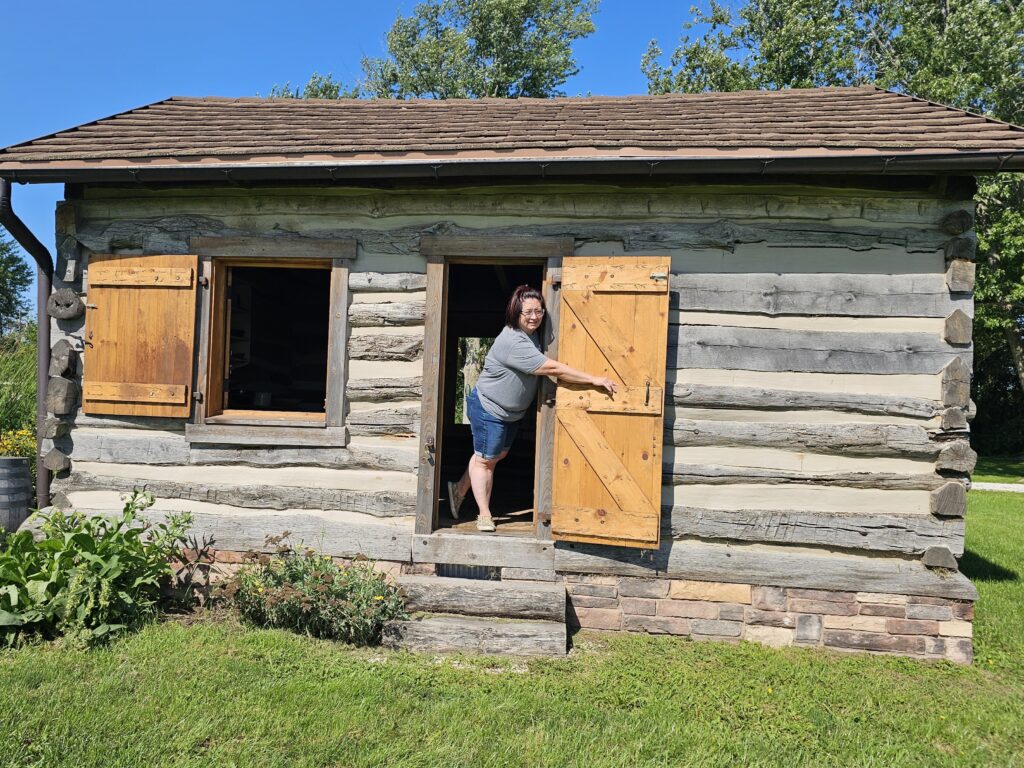
Each time I go down South Street, I am reminded of Kewanee’s original tiny house- the Little Cabin, constructed in Wethersfield in 1837 by Abner Little. I had never been inside but I could only envision the close quarters, and I wondered how many people lived at one time there?
So being curious, I visited one of the members of the Kewanee Preservation Society, Lee Bailleu at her business, B&B Printing, and asked for a peek inside. On a Saturday morning, Lee arrived before me to give the inside a good sweep and throw open the windows for some light.
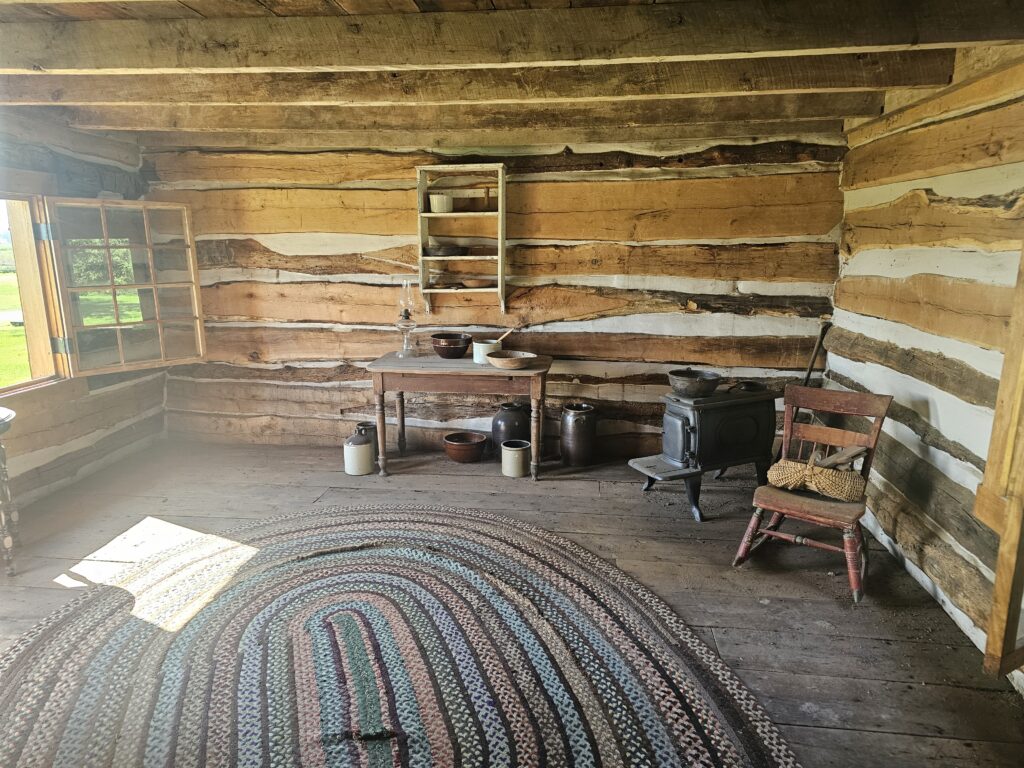
The cabin is as little as you might expect at just 350 sq. ft, according to Mark Mikenas, the executive director of the Kewanee Chamber of Commerce and a member of the society. There is room enough for a table and a place to prepare meals and a place to sit by the stove, but aside from that, elbow room is not abundant.
So I was shocked to learn from Lee that one winter, 14 people shared that cabin, which only led me to more questions? How? And of course, how?
Lee pointed to the stairs that led to a loft area over the main space of the cabin and so I carefully but not gracefully climbed them to peer into the darkness above, and only momentarily was startled by an object wrapped in plastic. (In my defense, it looked like a wasp nest and it wasn’t well lit up there.)
It would have been impossible to stand up in the loft and it’s not considered usable living space, which is fine, since the menfolk were only relegated to sleep up there in the rafters alongside spiders. And as Lee pointed out, can you imagine being towards the back of the space and needing to use the bathroom at night? The arrangement did not seem ideal unless you were one of the lucky ones with quick access to the stairs.
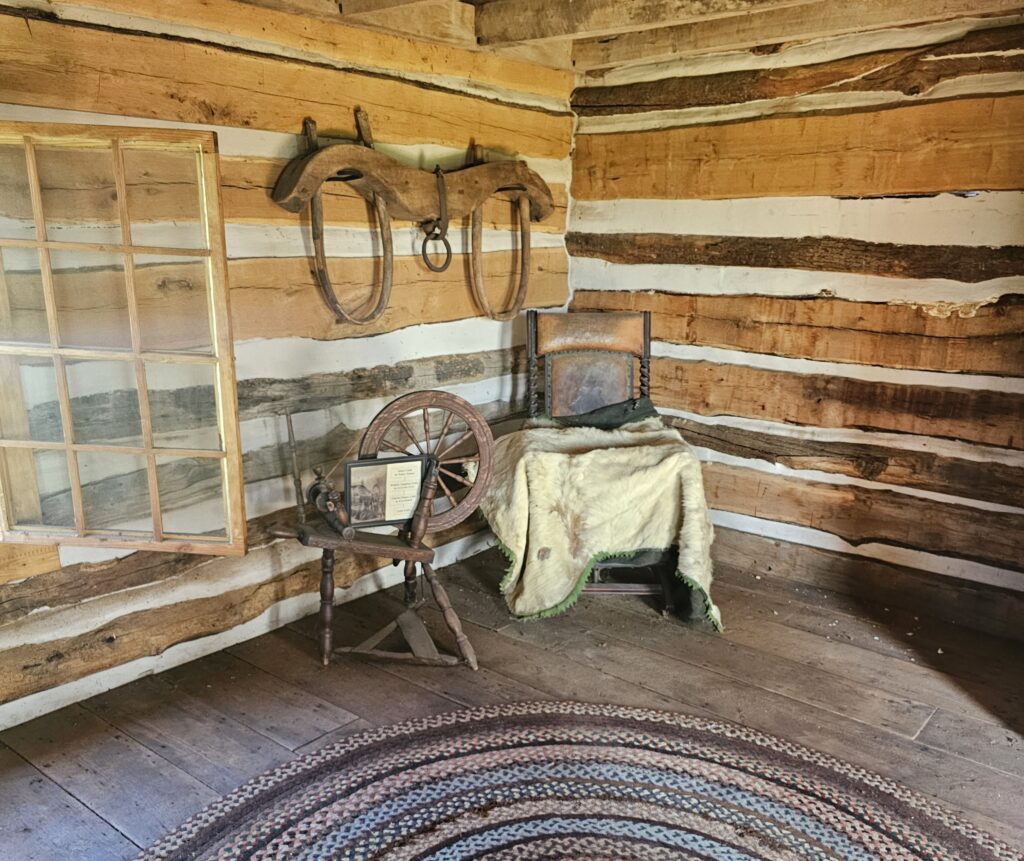
Downstairs on the main floor is where the women slept. Lee pointed out the holes in the walls where they used pegs perhaps to hang hammocks for sleeping. It was either that or the floor and I am not sure anyone was the winner there.
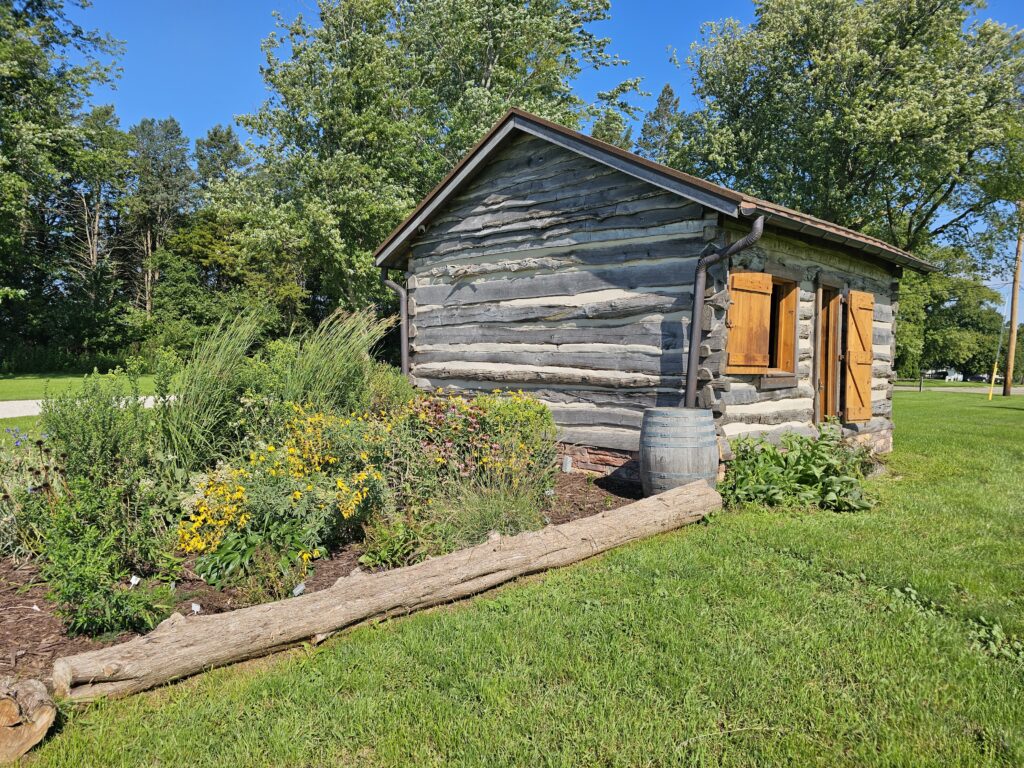
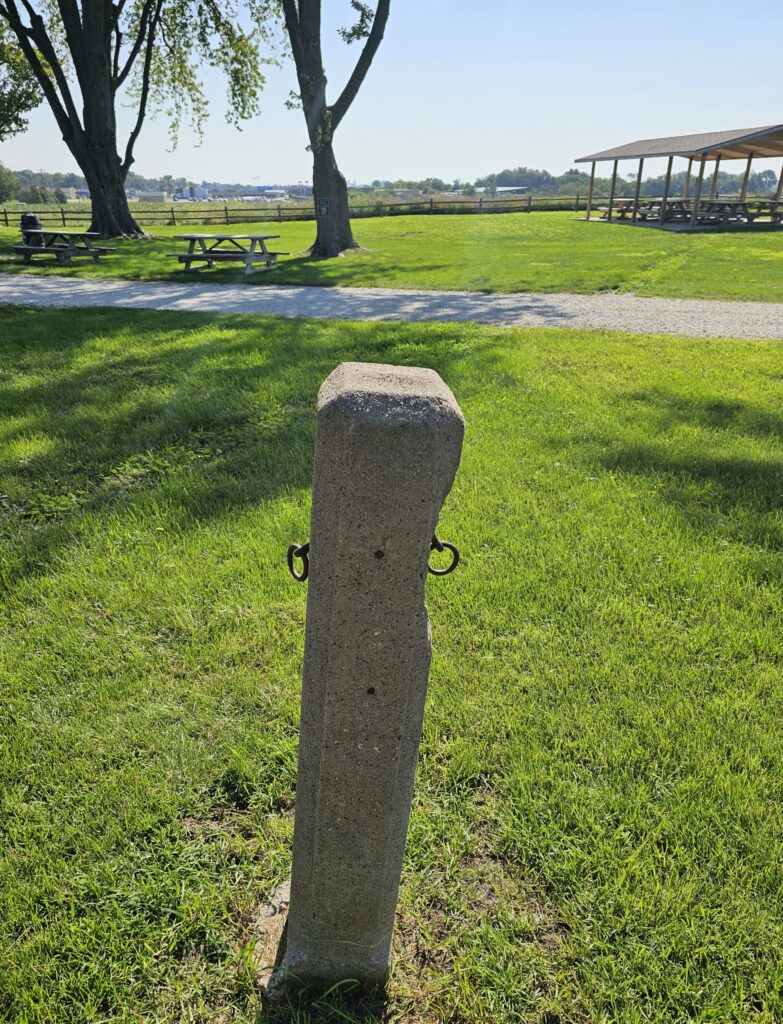
The Little Cabin is a gem though. Gifted to the Kewanee Preservation Society in 2015 by Louis Little, the great-grandson of Abner, the cabin was restored and set on two acres of the Little Family Homestead. Its parklike atmosphere, with native prairie grass and flowers growing wildly to the south, makes it an ideal location for many residents to enjoy their lunch while eating in their cars.
A pavilion was built last year and occasionally the Girl Scouts and farmers hold meetings there, but Lee said there will never be a bathroom placed on the property, so meetings or get-togethers aren’t able to last too long.
The Girl Scouts Troop 4444 planted a pollinator garden on the south side of the cabin. And most of the items on display inside and outside the cabin, with the exception of the oxen yoke that hangs on one wall, aren’t original to the cabin, but they are authentic enough that they certainly could have been.
The Littles moved on to bigger homesteads, and the cabin was sided over, and used later as a cooking area. While serviceable at the time, the tiny house was most likely outgrown by the family. It stands as a testament to what could be endured out of necessity.
So how little is too little when it comes to houses? It’s a personal preference I imagine. Most tiny house owners choose to live small and so the movement continues. But for me, too little would be 14 people stuck inside for the winter in just 350 sq. ft. Did I mention they kept their chickens in the crawl space?