For two and a half centuries the big bur oak tree stood in the timber in what was to become western Bureau County.

Growing about halfway between Neponset and Mineral, the tree was a landmark both for the Native Americans who lived in this area and for the white settlers who came in the early 1800s. It came to be known as the Witness Tree.
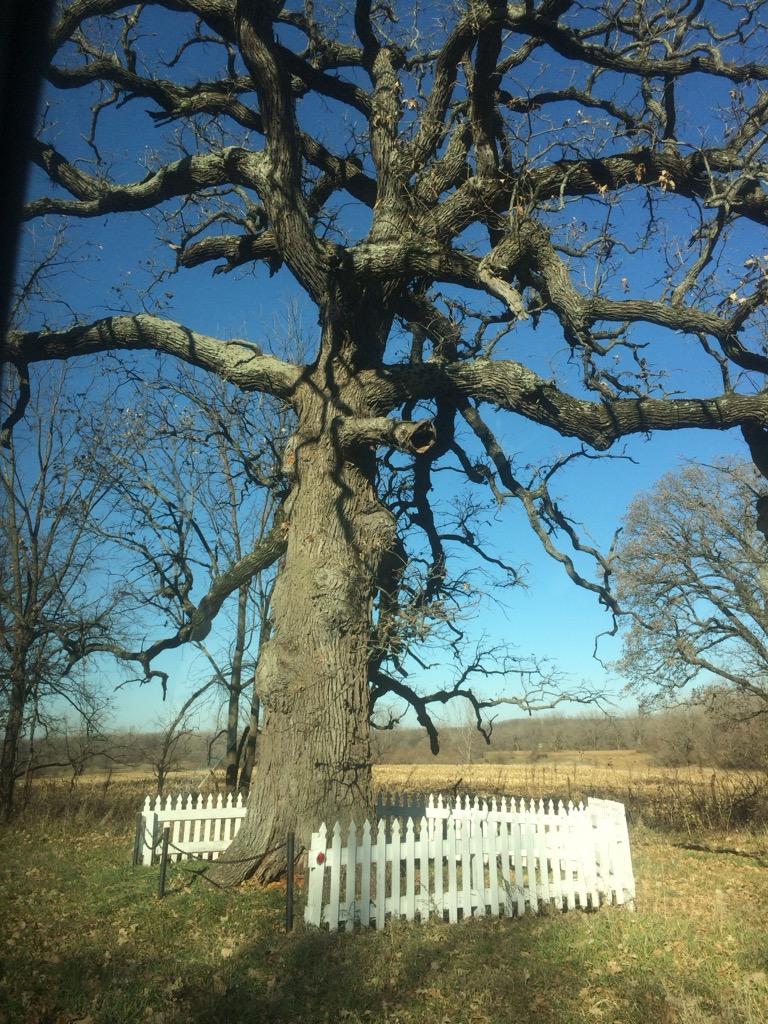
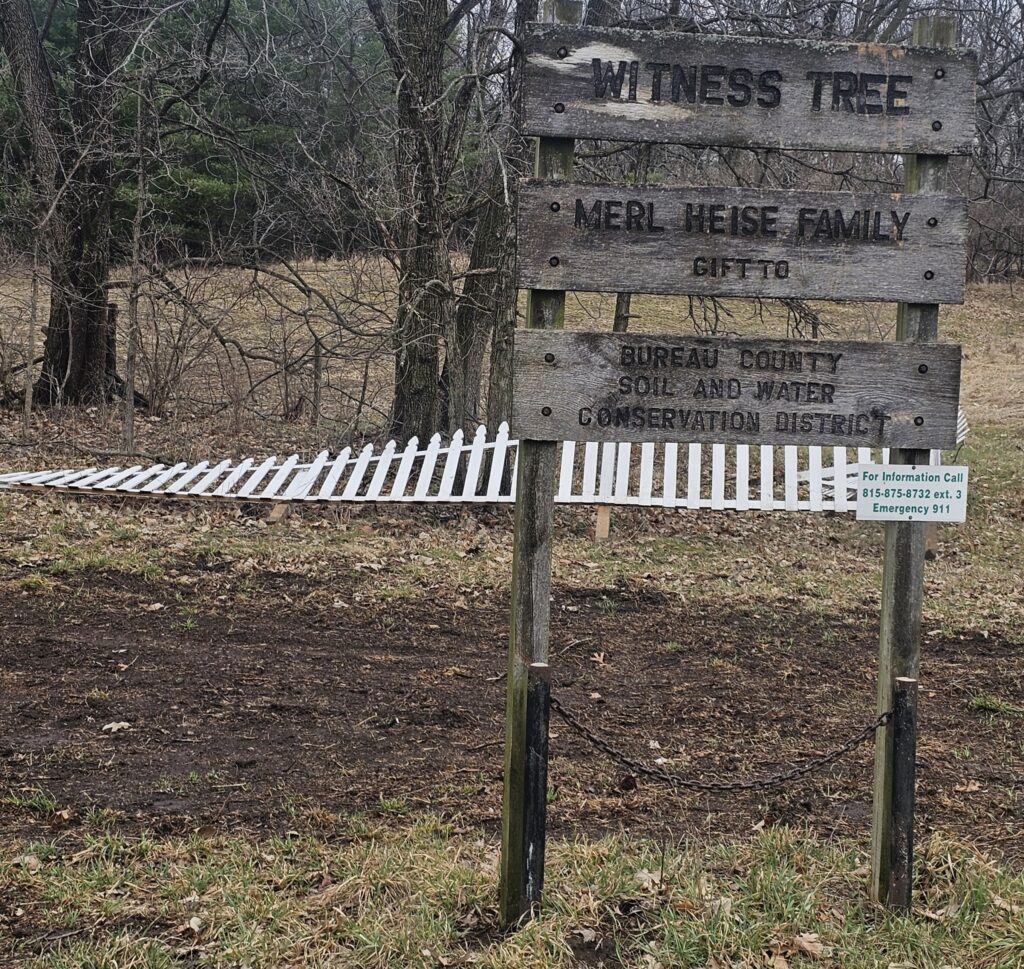
A few years ago, a white picket fence was built around the tree and a sign was placed, explaining the tree’s historical significance.
But two years ago the tree had to be cut down. And now, an effort is under way to plant another oak tree in its place.
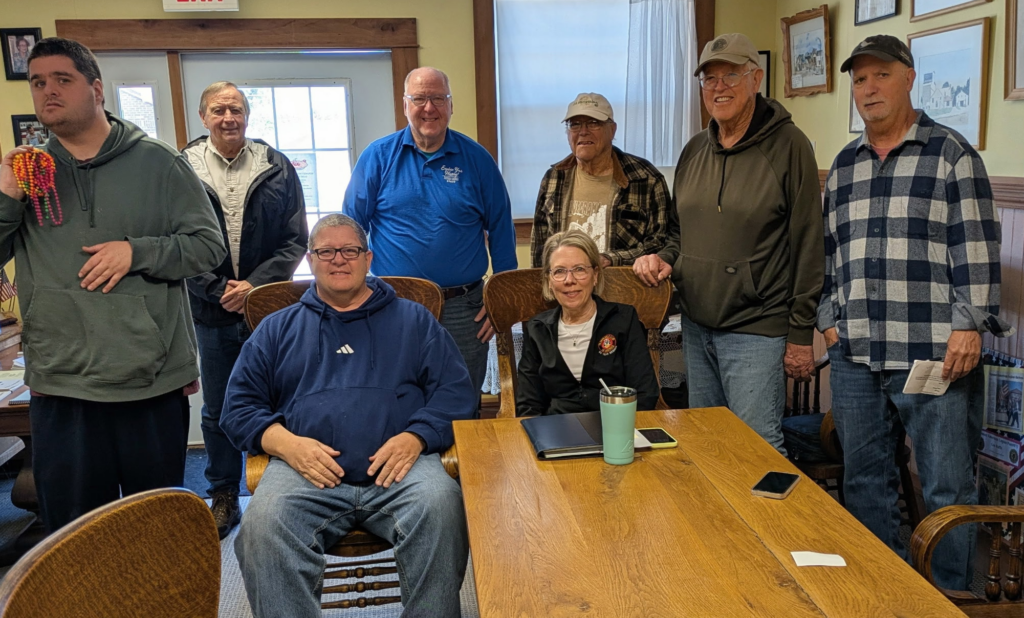
Representatives of the Neponset Historical Society, the Mineral Historical Society and the Bureau County History Center met earlier this month to discuss the recognition and possible replacement of the Witness Tree.
“This amazing 250-year-old bur oak tree was felled in February 2024 by the Bureau County Soil and Water Conservation,” wrote Lex Poppens, president of the Bureau County Historical Society. “The tree had become a hazard with falling limbs, fungus and mold in the tree and it had become hollow.
“Bureau County’s Witness Tree was a 250-year-old bur oak which served as a landmark and meeting site for at least 200 years,” Poppens wrote. “This mammoth oak’s burly trunk measured 14 feet in circumference with a branch spread of over 80 feet.
“The bur oak is a seminal Midwestern prairie tree with acorns so large that only one can fit in the palm of the hand,” Poppens wrote. “As early as the 19th Century Potawatomi Indians, led by Chief Shabbona, held council at the tree with members of the Fox and Sauk tribes.
“The tree stands along the Old Indian Trail that once ran through northern Illinois, parallel and just north of today’s Interstate 80. In 1944, local farmers donated small parcels of land surrounding the Witness Tree to ensure its preservation.”
The historical groups met with the goal of helping facilitate a replacement either from collected acorns or a new tree with new, permanent signage.
Poppens said some of the acorns from the original Witness Tree have been preserved, and could be planted in the place of the original tree.