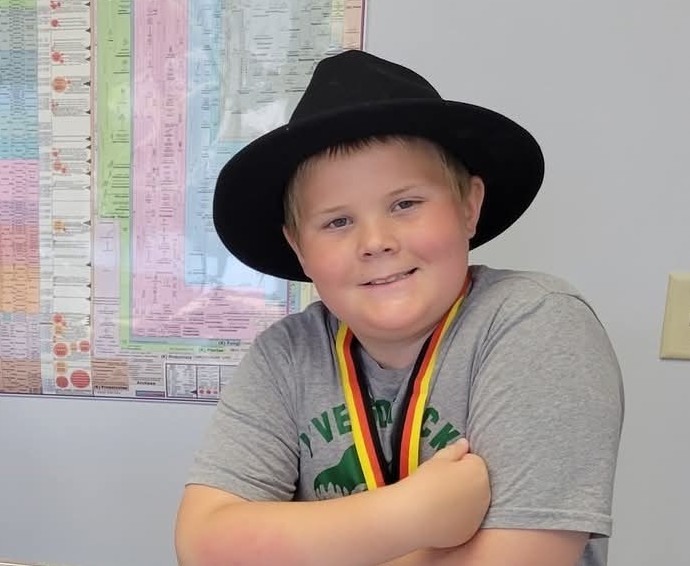
Anderson Taylor of Cambridge, Ill., has officially been recognized by Guinness World Records as the youngest museum curator in the world.
Now 11, Taylor was just 9 years old when he opened the Cambridge Natural History Museum on August 10, 2024. The son of John and Stephanie Taylor, he has become a natural history expert, confirming that everything old is indeed new again. Or, at least, new to those visiting his museum.
What began as a childhood fascination with fossils, minerals, dinosaurs and natural history has quickly grown into a remarkable community institution. He spent two years planning the museum before opening its doors, inspired in part by a family visit to the Staffin Dinosaur Museum on the Isle of Skye in Scotland.
Since opening, the museum has continued to expand through donations, community support, and Taylor’s ongoing dedication to building educational exhibits and sharing his passion for science and history with visitors of all ages. The young curator has regularly presented programs for libraries, schools, and other organizations in the area as well.
Located at 132 W. Center Street in Cambridge, Ill., the Cambridge Natural History Museum features fossils, minerals, artifacts, natural specimens, and educational displays designed to spark curiosity and inspire learning. The museum has rapidly grown from a small personal collection into a public space that welcomes visitors from across the region.
Community support has played a major role in the museum’s growth. Since opening, residents, collectors, businesses, and supporters from beyond the area have contributed specimens, display cases, funding, expertise, and encouragement to help the museum expand its reach and impact.
He credits the Village of Cambridge for allowing him to use a village owned property free of charge to start the museum. Since then, he has received donations from individuals and was awarded two grants from Illinois Humanities for the many presentations he developed. Currently, he is in the process of purchasing the building and hopes to gain full ownership in three years.
“This museum exists because of the kindness and support of so many people,” says Taylor. “I’m really grateful to everyone who believed in the idea and helped make it possible.”
The recognition from Guinness World Records marks a major milestone not only for Taylor, but also for the growing museum and the rural community that helped nurture it.
Taylor will tell you that the Guinness application process is no cakewalk. First, Guinness evaluates the applicant’s record to determine whether the category is measurable and verifiable. This is a rigorous process that involves many hours of research and documentation. Once the parameters are set, it’s a matter of gathering everything needed. For him, it was witness statements, verification of his qualifications to be considered a museum curator, media articles, videos, pictures and a birth certificate.
“It was a lot of work,” says the young entrepreneur. “I did most of it myself, but my parents helped me with a lot of it.”
Taylor is currently leading a fundraising campaign to purchase the building where the museum is located, helping ensure the Cambridge Natural History Museum has a permanent home for generations to come. Funds raised will also support ongoing renovations, exhibit expansion and future educational programming as the museum continues to grow. Approximately $20,000 has been raised so far, with another $30,000 to go before he reaches his goal.
Future plans for the Cambridge Natural History Museum include additional exhibits, hands-on educational opportunities, special events and continued efforts to make science, history and discovery accessible to people of all ages.
A sought after speaker, he is always working on the next presentation. As with many experts, his programs often find him on the road, accompanied by his many displays. On June 2, he will travel to Granville, Ill., to provide a program at the Putnam County Library. He will also be visiting the Lacon, Ill., library in Marshall County. A popular guest on local television stations, he quickly mastered the art of solid interviews.
If asked about his favorite prehistoric creature, he’s quick to point to the ammonite, which appeared about 410 million years ago. The coil shelled cephalopods resemble the nautilus, but are more closely related to the octopus, squid and cuttlefish. The beauty of their shells makes them a favorite of paleontologists such as Taylor.
When he’s not busy with school and his museum work, the young Taylor plays the violin, piano, tin whistle and uilleann pipes. He also does Irish dance, theater and is always working on developing animated stories and games with his brother, Miles.
For more information about the Cambridge Natural History Museum, upcoming events, or ways to support the museum, follow the organization online or visit the museum in downtown Cambridge.