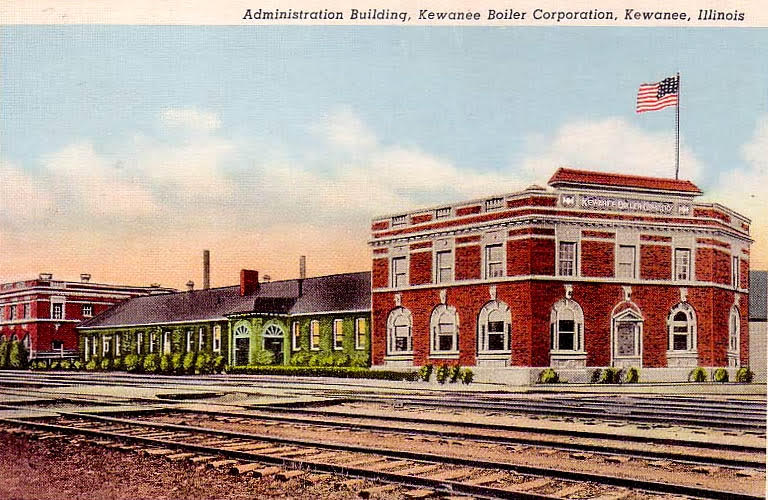
When fire destroyed the building that housed the administrative offices occupied by the Kewanee Boiler Corporation for more than 100 years Saturday night, it showed, in dramatic fashion, how fast and without warning our history can be lost.
The building looked like two bookends with a row of volumes in between. Across the middle was a one-story brick building built in 1900 when Emerit E. Baker moved the firm from a factory on the east side of North Main Street just south of the railroad tracks to the 100 block of Franklin Street, on the north side of the same tracks, in what was then the southwest corner of the city of Kewanee.
Baker, a native of Aurora, went to work at 17 as a general errand boy in the Chicago sales office of Anderson Steam Heater Co., a firm started in Kewanee in 1868 by Valerius Anderson. Anderson invented a steam cooker for processing animal feed but, in 1872, branched out into the manufacture of boilers for heating homes and businesses. Baker rose through the ranks, and when the company Anderson founded split in 1872, he took over the boiler side and formed the Kewanee Boiler Company. Others stayed with the parent company and formed what would eventually become the Walworth, making tubes, pipes and valves.
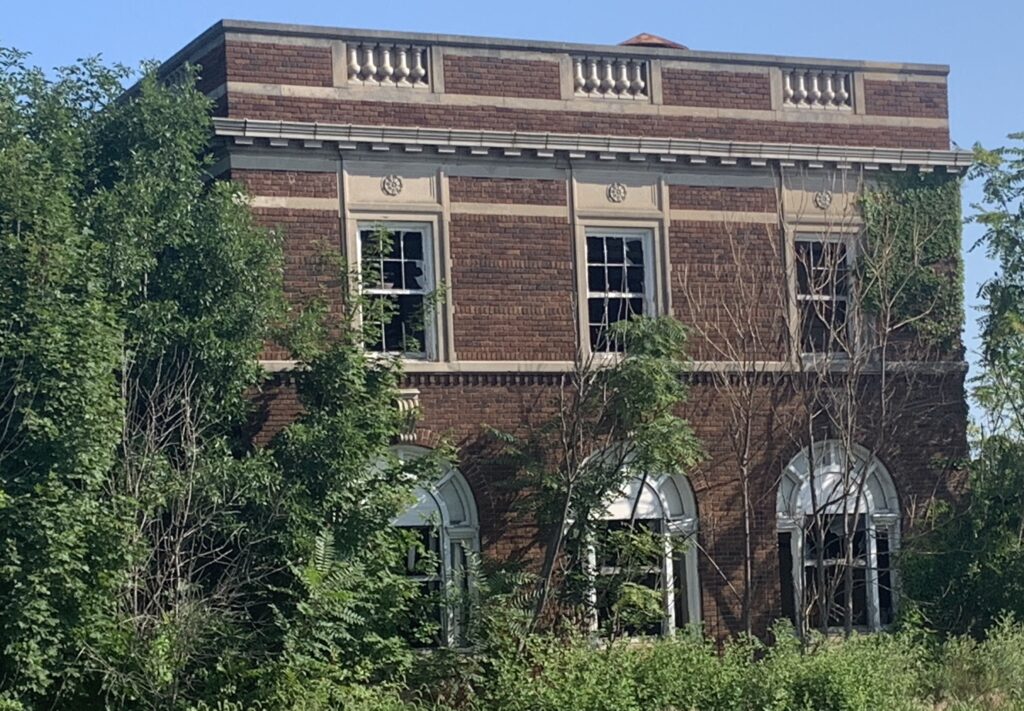
The boiler business grew rapidly on its new, 33-acre site. In 1915, to handle the expanding company, a two-story addition was built onto the east side of the building facing Franklin Street. It was designed by Hewitt & Emerson, architects from Peoria, who had also designed the national headquarters of the Boss Mfg. Co., at the corner of First and Chestnut streets, in 1914, and the Parkside Hotel, now Parkside Apartments, in 1916. The larger two-story addition to the west side was built in 1925 and was also designed by Hewitt & Emerson.
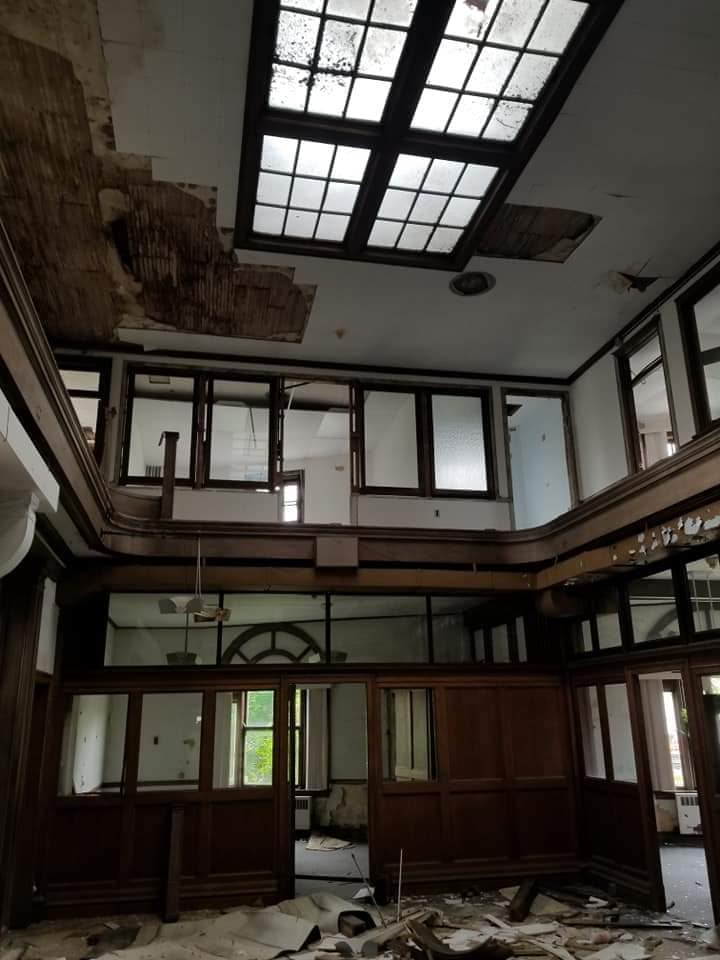
According to a story in the Star Courier, the extension would be “similar in appearance to the present east end addition…which was made several years ago when the office outgrew its quarters in the main section.” The new part of the building would hold a hospital room, a shop office, and the paymaster’s office on the first floor. The entire engineering department was located on the second floor, along with an assembly room. Other offices were moved into the spaces previously occupied by those departments.
From this office complex, E. E. Baker and his staff ran the company that became Kewanee’s biggest employer, largest supplier of various types of boilers in the world, and Kewanee’s longest-running industry.. The plant, purchased in 1991 by Burnham Industries, of Lancaster, Pa., ceased production in Kewanee in 2001, due to a declining demand for its products and an aging facility. The operation closed its doors the following year. Mr. Baker died on Jan. 1, 1929, at age 73. By then the company had become a division of what was eventually known as American Standard which owned the company until 1970.
Reacting Sunday morning to the fire, Kewanee Preservation Society President Mark Mikenas said “It’s too bad it happened that way.” His group is heading up efforts to create a memorial to Boiler employees in a small, triangle-shaped lot on the south side of the tracks, directly across from the scene of the fire. The lot was used as a park from 1920 to 1951 when it was acquired from the Kewanee Park District by Kewanee Boiler and used for office and visitor parking. A crosswalk over the tracks which once connected the two was removed long ago by the BNSF Railroad.
Mikenas said that other than the archway over the front entrance which they had hoped to move to the memorial, there was nothing in the building they were hoping to save or use. About three years ago a Peoria architectural salvage firm subcontracted by the owner at the time, removed numerous items from the interior of the office which could be reused in restoring old homes and other historic buildings. He said when the rubble is released by fire officials they would like to see if any portion of the arch survived the blaze and can be salvaged for placement in the memorial.
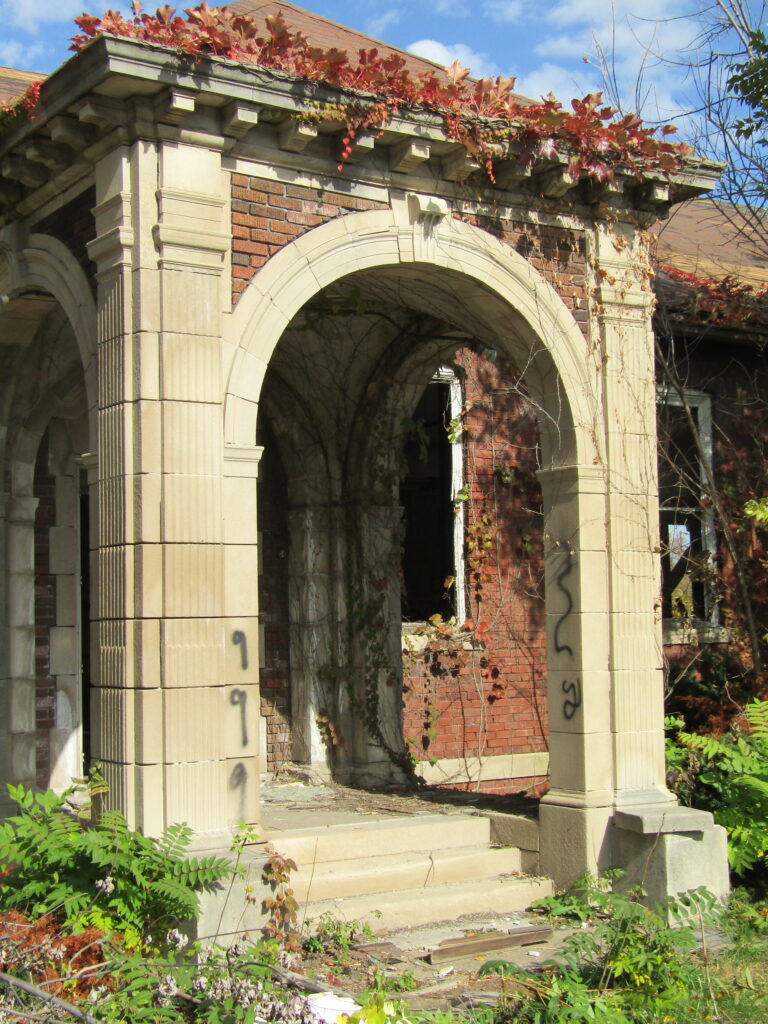
Other than that, he said, with permission from the owner, they would like to go through the rubble and see if there is anything left they can use. He said one possibility might be a section of a steel beam could be saved that could be used in the memorial in the same way as beams from the World Trade Center following 9-11.
He said progress with fundraising and items for the memorial continue on schedule. Saturday afternoon, just hours before the fire was discovered, Mikenas and local welder Mark Washburn, who is making a 35-foot flagpole for the memorial, delivered the underground sleeve to the site which will be placed in the ground and used to support the base of the steel pole.
“I’m hoping we can get the pole up and American and Kewanee Boiler flags flying in front of what’s left of the office as soon as possible as sort of a fitting way to honor those who worked there for so many years,” Mikenas said.
***Larry Lock contributed to this story.