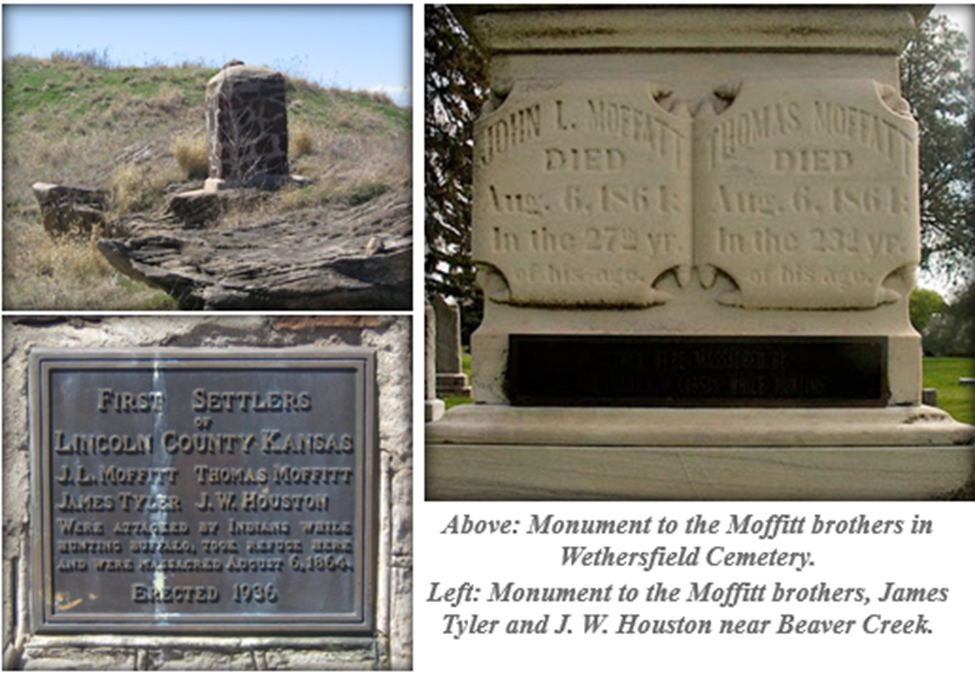
(Many of the facts for this tale are derived from a Dave Clarke story which appeared in the Oct. 29, 1985, Star Courier.)
John Leetch Moffitt was born in Ireland in 1837 and his brother Thomas in 1841. Their family came to America in 1845, settling initially in Philadelphia. By the early 1850s, the family moved to Stark County. But their father died in 1854, leaving his wife and nine children (one of whom would die the next year). The family moved into Wethersfield Township after that, and they began farming.
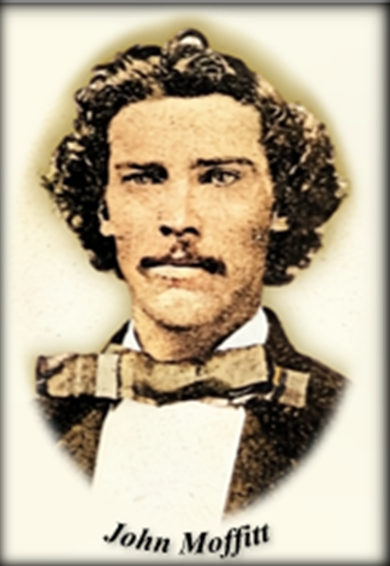
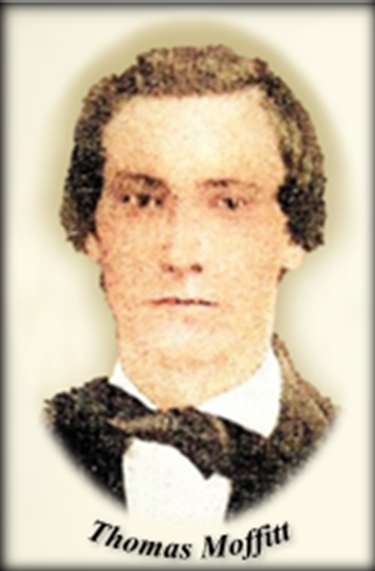
But John (“Jack”) and Thomas (“Tommy”) developed wanderlust and, hearing for years about the opportunities present in the Kansas Territory, decided to head out to the western side of the now new state.
The Moffitt brothers arrived in Lincoln County, Kansas on March 16, 1864, about 25 to 30 miles from Salina up the Saline River. They wanted to raise cattle.
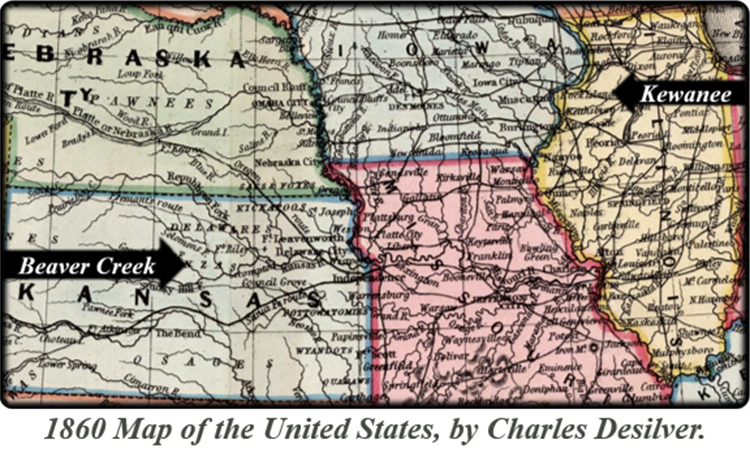
The two were the county’s first white inhabitants, about 13 miles from the nearest house.
The tragedy that befell them less than five months later was found in letters exchanged by the brothers and family members and ones among military personnel.
The first letter came from John to their brother, Robert, in Kewanee, on May 15, 1864. He told how, on Beaver Creek, they quickly put up a stable 35 feet in length and a log house 22 feet in length. They hunted buffalo for food.
On July 30, 1864. six days before the fateful events, a sister in Philadelphia received the last communication, a letter from Tom. He wrote,
“We have to carry arms wherever we go. even to the stable to care for the horses. . . . We were doing very well. and do well now, if it were not for the Indians. We would make $5 or $6 a day hunting but have been obliged to give it up for present. The Indians are so hostile to the hunters and settlers that we dare not go from the house.”
They were stranded in the middle of wilderness, surrounded by Indians who were apparently angered by their killing of the sacred buffalo.
Tommy wrote that the cavalry had sent out several companies of soldiers, but they were worse at fighting the Indians than the settlers in his opinion.
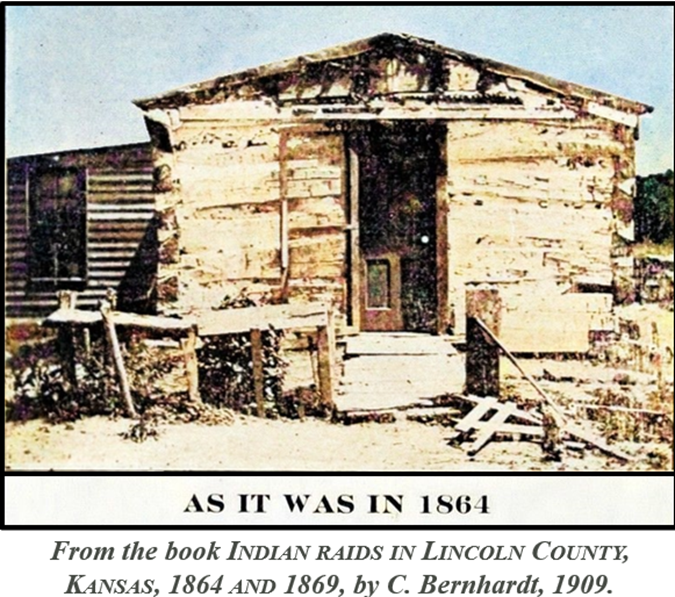
The details of the demise of Jack and Tommy Moffitt were recorded five days later by Captain Henry Booth of the 11th Volunteer Cavalry at Salina, Kansas. Captain Booth began:
“I have the honor to report the following facts in regard to the killing of four men by Indians, near Beaver Creek, about 40 miles from this place, on the north bank of the Saline river.”
Booth surmised that on the evening of August 6, 1864, the Moffitt brothers and two other men, James Tyler and J. W. Houston, started from the cabin to kill a buffalo for meat for a meal for them and newly arrived guests, taking a two-horse team with them. Houston’s wife (Tyler’s sister), two children and father-in-law had come for a visit but remained in the house.
Booth wrote the details of what he learned:
“Upon reaching the top of a hill about three-quarters of a mile from the house, the Indians were discovered rushing down upon them. The horses were turned and run toward a ledge of rocks, where the men took a position. They appear to have fought desperately and must have killed several Indians. Three of the men killed were scalped, but one of the scalps was left upon a rock close by. The horses were both shot through the head. This was probably done by the ranchmen to prevent them falling into the hands of the Indians. The wagon was burned.”
After overpowering and killing the hunting party, the Indians descended on the cabin where the old man and woman were braced for attack. The man shot through a hole in the wall and killed one of the Indians. The Indians retreated back up the Saline River, making off with all the horses and cattle on the place. After dark that night, the old man, his daughter and the children left the ranch and made their way on foot to the distant settlements.
One historian later wrote:
“It is evident from the above narrative that one of the four settlers was an experienced plainsman — he it was who turned to the nearest rocks and shot the horses to serve as breastworks— he it was who remained unscalped and, when capture was inevitable, and death by torture certain, turned his last shot upon himself, for an Indian will not scalp a suicide nor touch a demented man.”
Which of the men he is referring to is uncertain.
The warring Indians caused quite a stir among the settlers who held a mass meeting to “devise a means of protection from the ravages of the redskins.”
The victims of the Beaver Creek massacre were buried a few yards from where they fought and died.
A few weeks later the cavalry returned to the scene for a closer investigation. They found the fires of 15 teepees. indicating there been about 50 or more Indians involved in the raid. Marks on the rock ledges and two armfuls of arrows indicated they were well armed with rifles and bows and arrows
On Sept 30, 1964, Robert Moffitt arrived at the scene with a guard of 20 soldiers and four settlers. He wrote back to his mother In Kewanee, “I got Jack and Tommie’s bodies,” which were quite decayed, apparently from being out in the sun for some time before burial. “I got some of Tommie’s hair, but there was no hair left on Jack’s head,” Robert also wrote in response to a directive from his mother to find out and let her know as soon as possible who had been scalped. Robert returned to Kewanee with the bodies which were interred in the Wethersfield Cemetery.
The story reached national and international newspapers, including the New York Times.
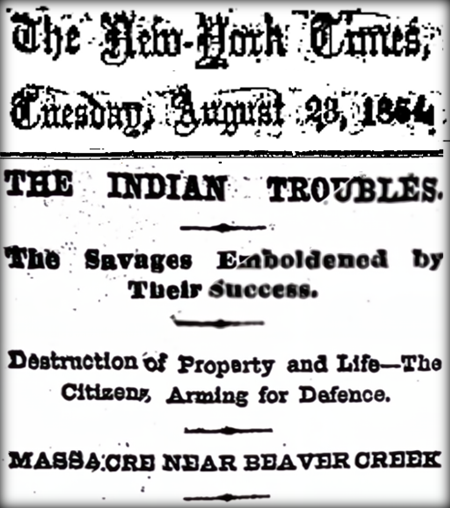
In his story, Dave Clarke wrote:
“[f]or the Moffitt brothers plans for riches and opportunity met a tragic end at the hands of men who were there before them and not so willing to release the new land and what it had to offer.”
(Other facts for this tale are from the Moffantana Bulletin, by George West Maffet, April 1907.)