On the last day of our trip to the Colorado Rockies this summer, I noticed a sign board near the ranger station. On it, park visitors could note the wildlife they’d seen. I read through the list with wonder and some envy: a weasel, two river otters, a bull moose, a bear. But the entry that really touched my heart was the last one: “I saw a butterfly fly.” Right up there on the same level of excitement as the park’s largest and most charismatic wild animals, this person had placed a butterfly.
Whoever wrote that entry, they are no doubt a kindred spirit of mine. Butterflies are among my favorite creatures on the planet. Whenever I watch them floating by on the breeze, I feel a surge of joy. They seem impossible, like something out of a dream, their wings too fragile and their colors too vivid to be real.
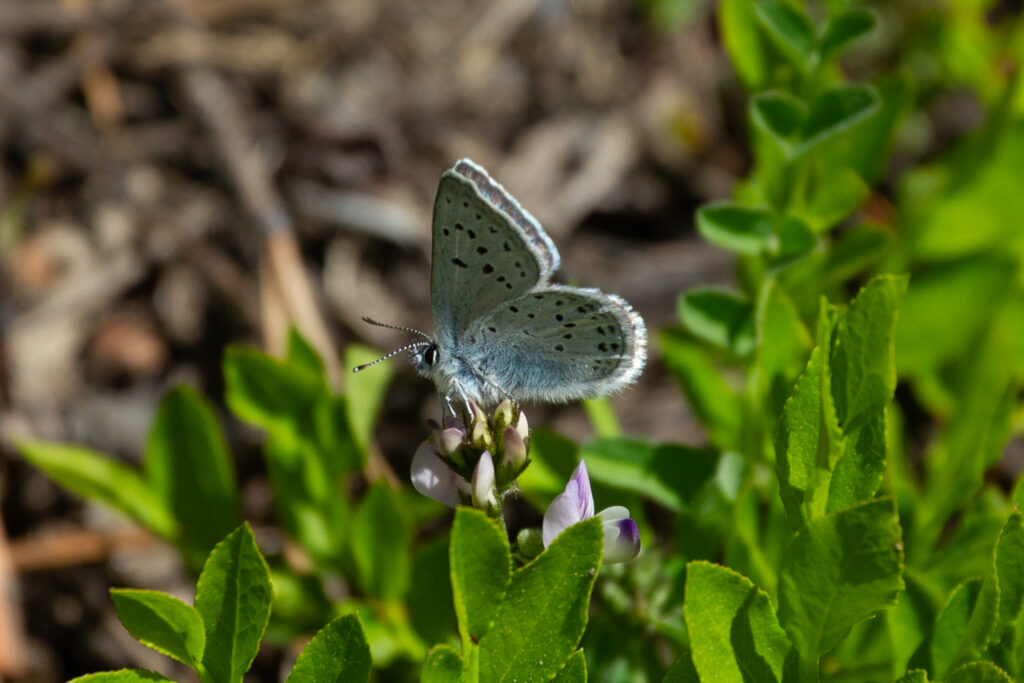
As soon as Marc and I arrived at our campground and began setting up our tent, I noticed a tiny blue butterfly drifting among the lupines and wild sunflowers in our site. The child’s voice in my heart cried out, “Run after it!” while the adult’s voice in my brain sighed, “First, the tent.”
As it turned out, both sides won—in a way. At over 8,000 feet in elevation, the campground had much thinner air than I was used to, and even something simple as bending down to secure a tent peg exhausted me. Then, when I stood up, the earth seemed to be spinning, and I had to sit. These dizzy spells happened again and again—and each time, I had the perfect excuse to just sit for a moment and watch butterflies flitting about. Even the most “adult” part of my brain couldn’t disagree.
All told, Marc and I battled the tent for over an hour before claiming victory. The ordeal left us drained. Fortunately, the combination of a little rest, a little food, and a lot of water took the edge off our altitude sickness, and before long we were ready to go out exploring. As we walked down the road near our campground, I scanned the wildflowers, searching for a butterfly like that first, tiny blue one. I had my camera now and wanted to take pictures.
In no time, I spotted one. When closed, the wings were no larger than my thumbnail. The lower surface had a silvery sheen, while the upper surface glimmered in iridescent blue, the exact shade changing with the angle of the light. The butterfly’s tiny body was fuzzy, almost plush. I couldn’t help squealing with delight.
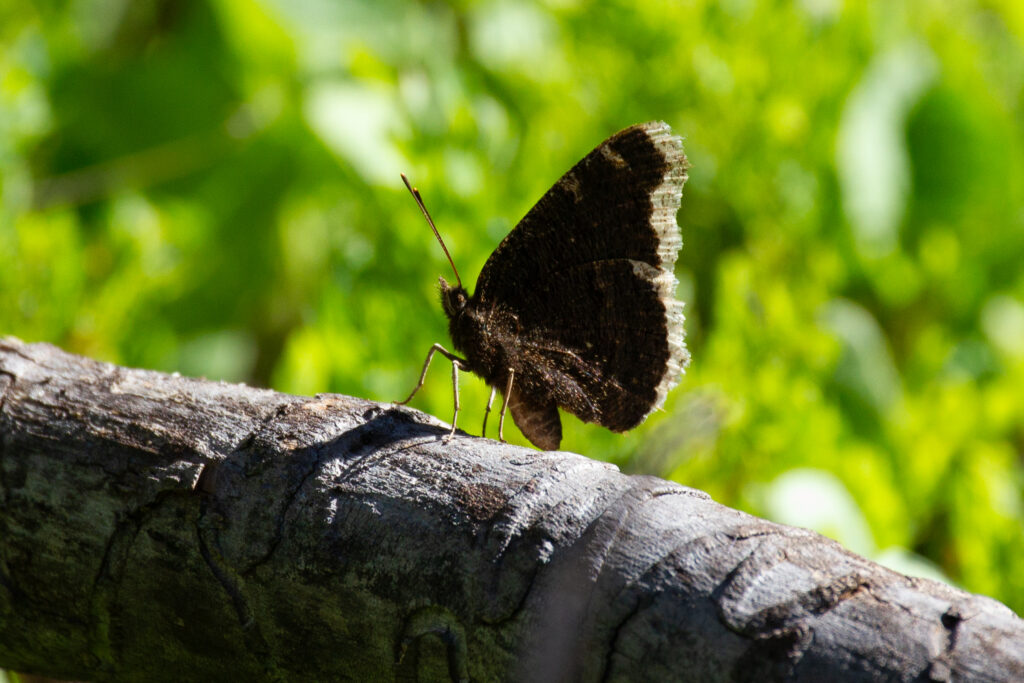
I may well have seen that species of butterfly before, on an earlier trip to the mountains, but I’d never taken a picture of it. The same is true for most of the butterflies I photographed that week. The spine of the Rocky Mountains acts as a natural barrier, separating eastern species of butterflies from their western counterparts. Some species, like the mourning cloak, exist on both sides of the continental divide, but many do not. The tiny blue butterflies I see out at Johnson-Sauk Trail are different species than the ones I saw in Colorado.
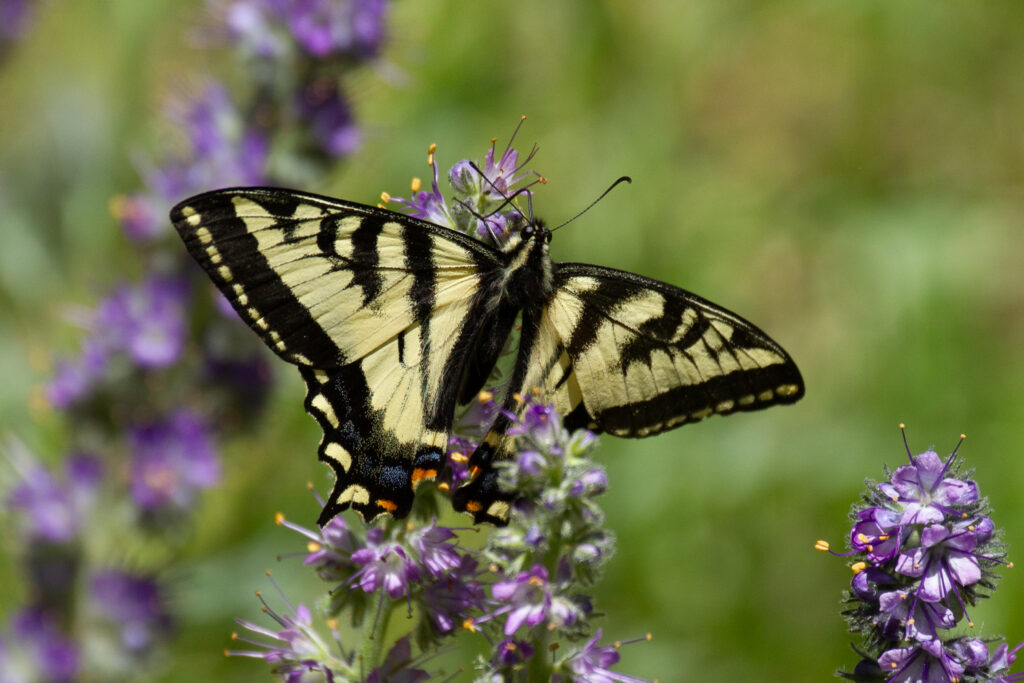
At home, in my garden, I love to watch the large, black-and-yellow eastern tiger swallowtails sipping nectar from my purple coneflowers. On the far side of the Rockies, I watched the similar—yet distinct—western tiger swallowtails gliding past me as we hiked through the pine forest.
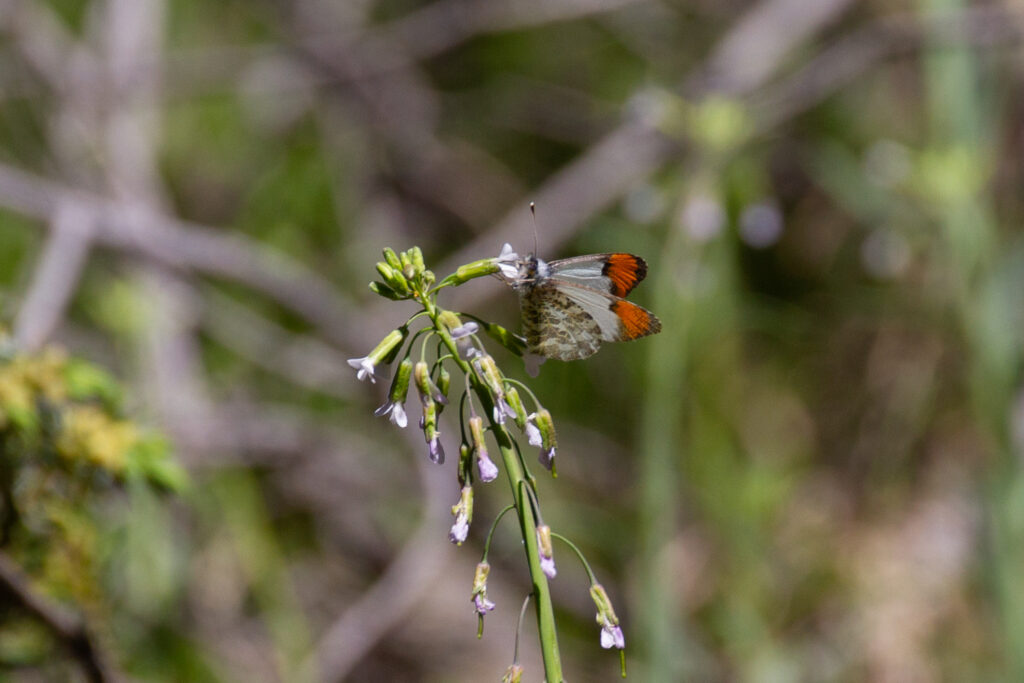
Other species took me back to my childhood in the mountains. When I saw the Rocky Mountain orange-tip, a well-named white butterfly with a dollop of orange on the forewing, I felt myself falling back in time to another mountain meadow, near a different mountain lake, and I could hear the echo of a girlish voice crying, “Oooooooh!!” I could hear my dad’s voice saying, “That’s an orange-tip butterfly.” While I saw many orange-tips this summer, they were wary, fast fliers who seldom sat still, so I only managed a single decent photograph. Some butterflies are just as hard to capture, and as poignant, as memories.
This June, during our trip to the Rockies, the forests and meadows were alive with the bustle and dazzle of a fleeting mountain summer. And my heart was filled with joy every single time that I saw a butterfly fly.