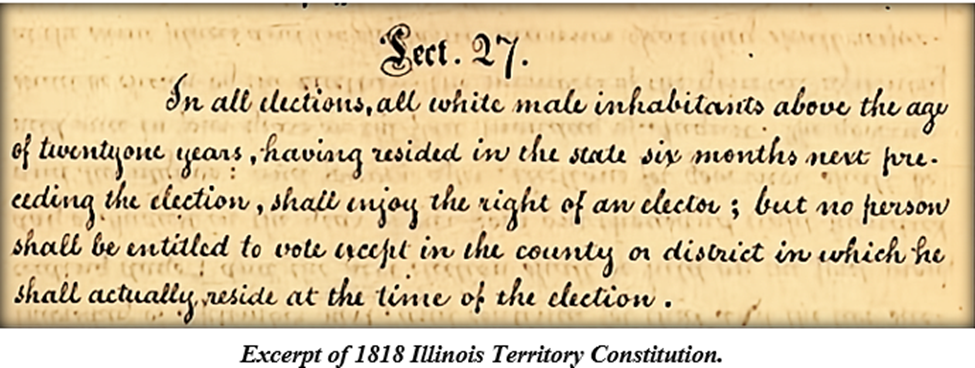
The 1818 Illinois Constitution granted voting rights only to “white, male inhabitants above the age of twenty-one . . . .” But within 50 years, the women’s rights movement took hold across the country, including in Illinois.
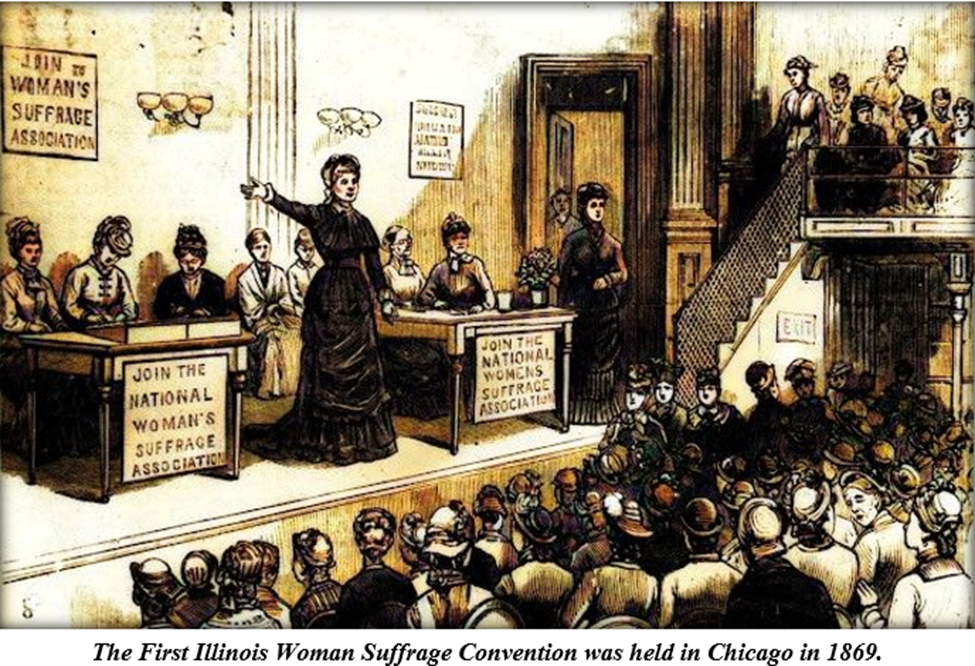
I’ve written before on the 1848 Seneca Fall Convention and its “Declaration of Sentiments” in support of women’s rights. (Women Responsible for at Least Half Our History.) In 1855, women in Illinois organized, and in 1869, Illinois women formed the first statewide suffrage organization, the Illinois Woman Suffrage Association.
In 1870, Illinois updated its constitution for, among other reasons, implementation of the 15th Amendment to the U.S Constitution which gave Black males the right to vote. However, by a 46 to 12 vote, the constitutional convention delegates did not expand voting rights to women.
In 1873, the Illinois General Assembly did vote to permit women to serve as county school superintendents. However, women still couldn’t vote in superintendent contests (even for themselves).
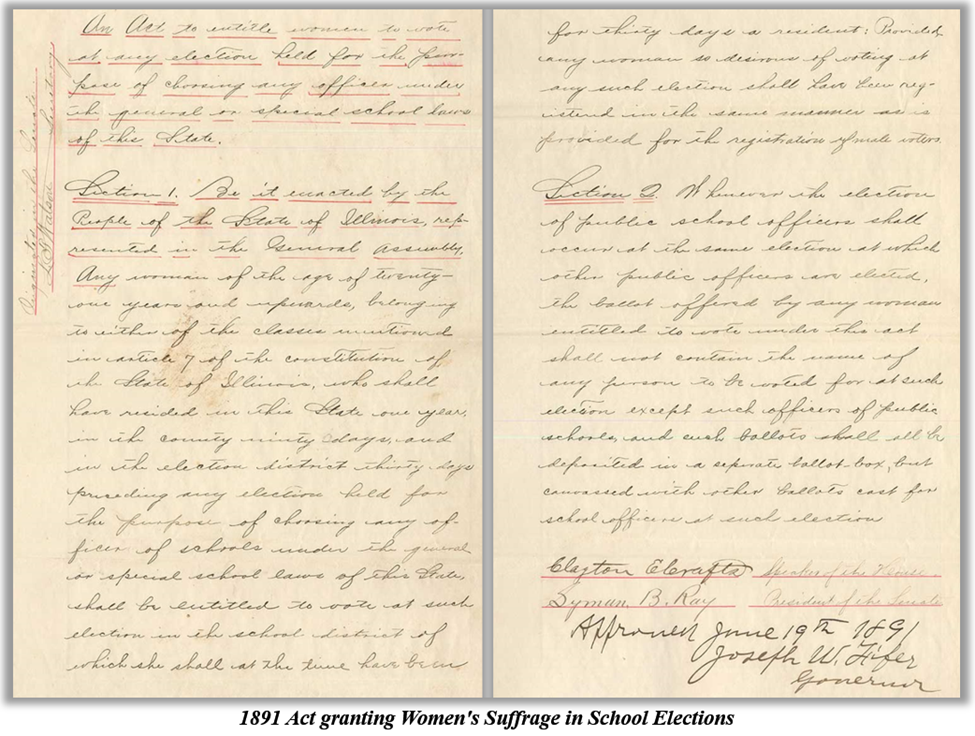
In 1891, the General Assembly granted women the right to vote in school elections. Those opposed had argued that men earned income and women performed household duties, and the two “spheres” should not be mixed. But suffragists successfully asserted that, assuming this separate sphere argument was valid, then women, whose role included overseeing the education of their children, should be allowed to vote in elections related to their sphere. The Illinois Supreme Court later upheld the constitutionality of the law.
Less than a year later, it appears that Mrs. E. V. Eddy became the first Kewanee woman to run for any elected office, 38 years after the village was founded.
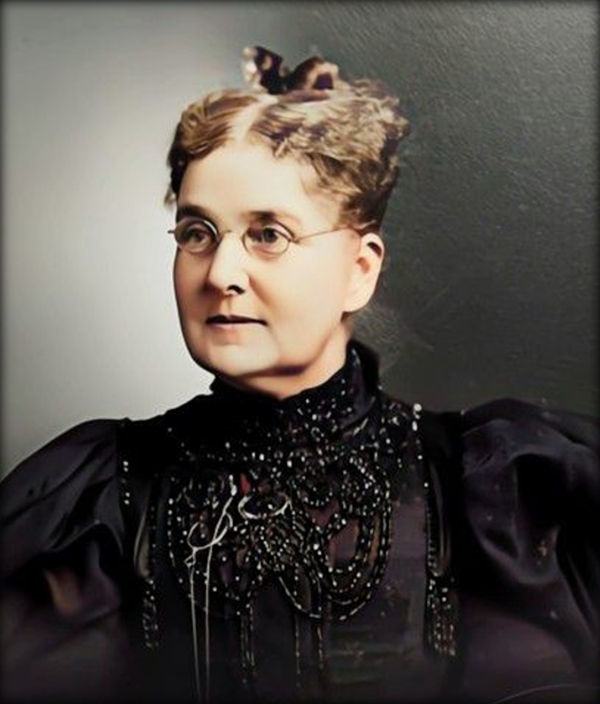
Elizabeth Venulia Keeler was born in New York in the early 1830s. She was said to be a descendant of Aaron Burr.
Elizabeth married Jiria W. Eddy, and by 1860, the family was living in Kewanee where Jiria was a watchmaker. Soon Jiria built a thriving jewelry business and became a prominent Kewanee citizen and property owner. (Part of one of his buildings still stands today on Tremont Street and is part of Good’s Furniture.)
Elizabeth similarly became well-known, first in Kewanee, then in the county, and then across the state, but for different reasons.
Elizabeth stood but 5 ft. 2 in. tall, but she was a strong-willed and determined woman. (That probably means that some people today, in our current political vernacular, might call her “nasty.”)
I first found Elizabeth’s name in connection with an 1881 petition to the Kewanee town board seeking to allow women a voice on the question of dram shops, an issue first raised by the Women’s Christian Temperance Union. (Temperance, women’s rights, and abolition grew up together across the U.S., including in Wethersfield and then Kewanee.)
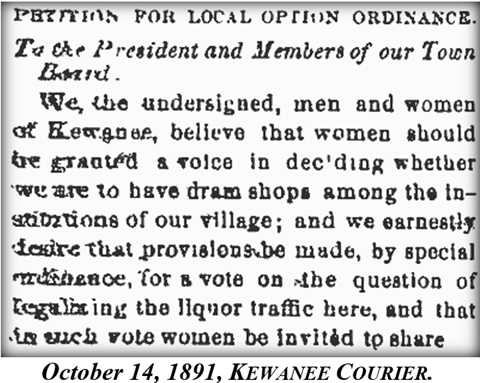
Elizabeth soon became a member of the Equal Suffrage Association of Henry County, and was elected its vice-president in 1891.
In 1891, the Equal Suffrage Association of Kewanee was formed, and Elizabeth organized and hosted their meetings, in both her home and, as the group quickly grew, in churches such as the Kewanee Congregational Church.
Elizabeth was also a member of the Illinois Equal Suffrage Association. In 1891 on October 28, 29 and 30, Kewanee hosted the twenty-second annual session of the Illinois association at the Methodist Episcopal Church. Elizabeth was critical in securing and then organizing the event, and she gave the opening speech on the session’s first night.
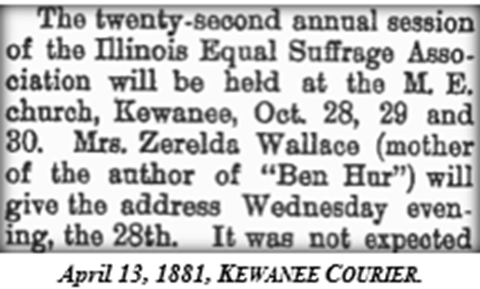
It was likely at that state meeting that Elizabeth was encouraged to run for the Kewanee school board. That summer, the legislature had passed and the governor signed into law the Act permitting women to run in school governance elections.
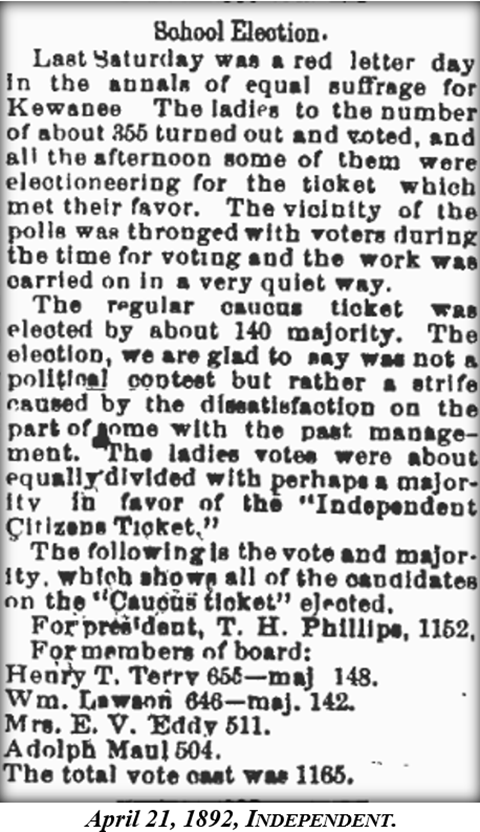
The April 1892 school board election was the first time Kewanee women could vote. According to reports, 1165 votes were cast, 500 by women. Pundits guessed the women’s vote was split between the two tickets of candidates. Elizabeth garnered 511 votes, failing to gain a board seat by 135 votes.
Elizabeth continued to be active in securing rights for women. She was elected to the executive committee at the state association’s twenty-third annual convention in 1892, and was also named a delegate to the national convention in Washington.
At the 1895 state convention, Elizabeth told the attendees that 1,000 Kewanee women had registered and voted in the last school election, resulting in what she described as “smash[ing] a corrupt school ring which had existed for 13 years . . . .” (She did not identify the members of the “ring.”)
Elizabeth continued to work on behalf of women’s rights in Kewanee, Henry County, and Illinois, until she moved to the state of Washington in 1909. She then became an extensive traveler, crossing the Atlantic eight times. (At the age of 65, she took up the study of French in Paris!)
Elizabeth lived long enough to see her life’s worked finally achieved.
In 1913, the Illinois General Assembly passed a law allowing women to vote in presidential elections – the first state east of Mississippi River to do so – and the Illinois Supreme Court upheld the law. But women were still not allowed to vote in elections for state offices absent an amendment to the Illinois constitution.
Then, in May 1919, the U.S. Congress passed the 19th Amendment, and on June 10, Illinois became the first state to ratify the amendment. In August 1920, Tennessee was the 36th state to ratify, and the amendment became a part of the U.S. Constitution.
However, as Joy Hernandez reminded me, only white women gained the right to vote in 1920. It wasn’t until the civil rights movement in the 1960s when Black women were assured voting rights.
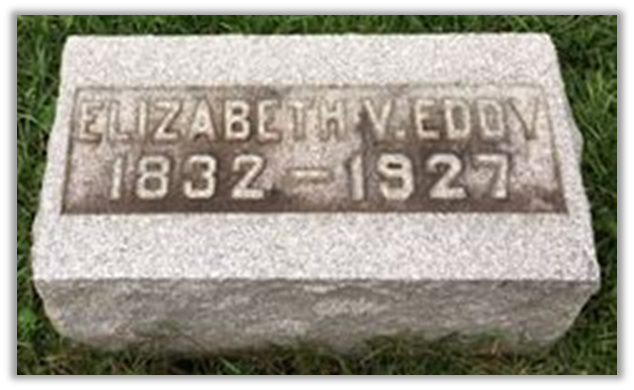
Elizabeth Venulia Keeler Eddy died in the state of Washington in 1927 at the age of 91 and was returned to Kewanee for burial in Pleasant View Cemetery. She was a woman who made a difference.
(I’ve posted on my Dusty Roads Facebook page the entire opening speech Elizabeth gave at the state association’s 1891 meeting in Kewanee.)