When Berrien was laid out in the spring of 1854 (a year before its name was changed to Kewanee), only the Potter brothers’ family and perhaps a couple of more people resided within the original village as shown on the plat filed at the Henry County Courthouse. By that November, the village had but one hotel, one warehouse, one lumberyard and only 11 dwellings.
Exactly one year later, however, the village had grown exponentially and offered two hotels, five dry goods stores, two clothing stores, two shoe shops, three harness stores, two wagon shops, seven grocery stores, eight office buildings, two drug stores, two bookstores, nine carpenter shops, three millinery shops, one barber shop, two mills, one printing office, three paint shops, one silversmith, one bank, two meat markets, two bakeries, and 90 dwellings.
Certainly, many of the residents and business owners were formerly Wethersfield colonists. But many had lived elsewhere – some in other Henry, Bureau and Stark County townships, as well as in other areas of Illinois and the United States. Who were these people and were they like?
Many of them were just like Sylvanus Wilson Warner.
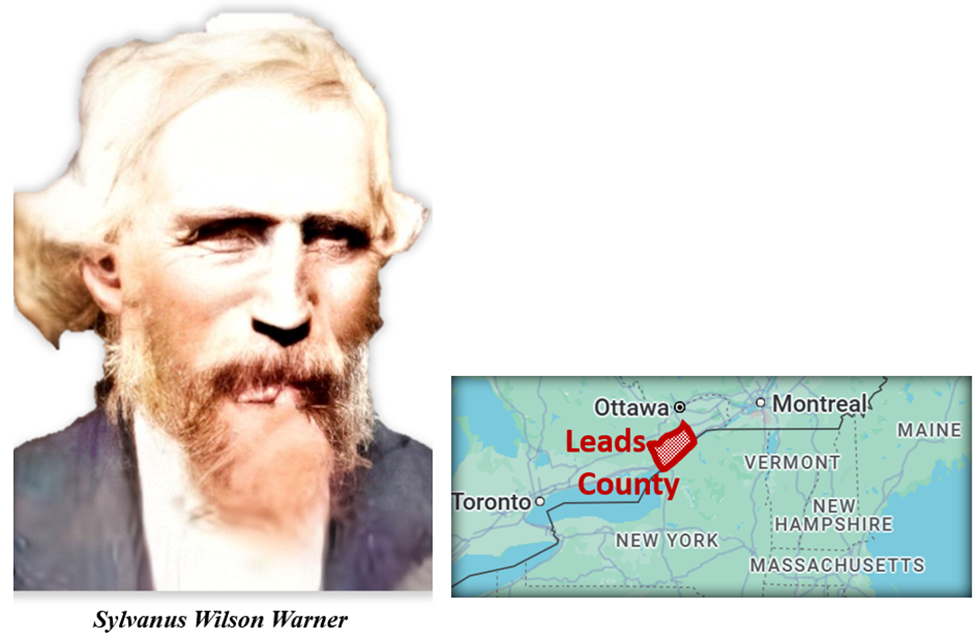
S. W. Warner was born in the county of Leeds, Canada, on February 9, 1817. His parents, Ralph and Clara (Keeler) Warner, were natives of Connecticut and Canada, respectively.
Warner’s early education was limited to the common schools of Canada, but his interests turned toward business and he began developing competency in the art of the deal.
In 1838, young Warner moved to Stark County, albeit with only $12 to his name. He farmed there for two years while taking advantage of ripe opportunities and continuing to gain business acumen.
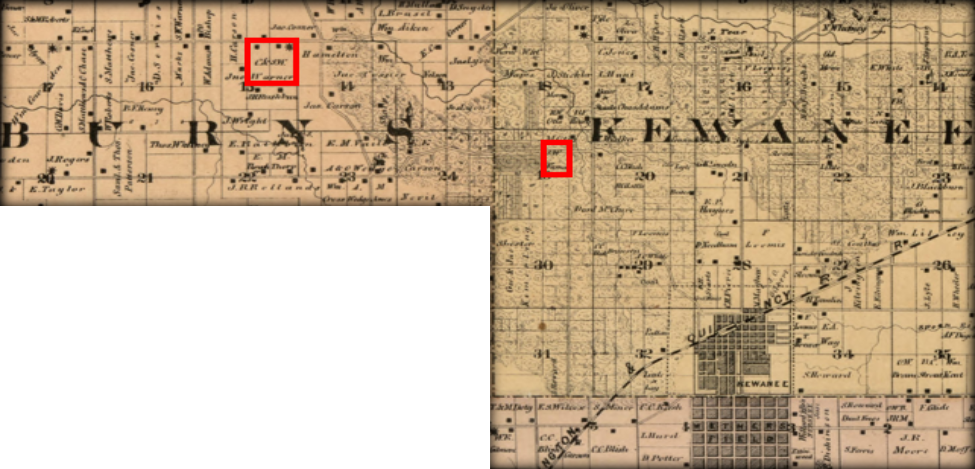
Warner then decided to buy land in Henry County. He purchased two 80-acre tracts of land, one in Burns Township in Section 15 where he made his home, and the other in Kewanee Township in Section 19. Warner also purchased other tracts of land from time to time.
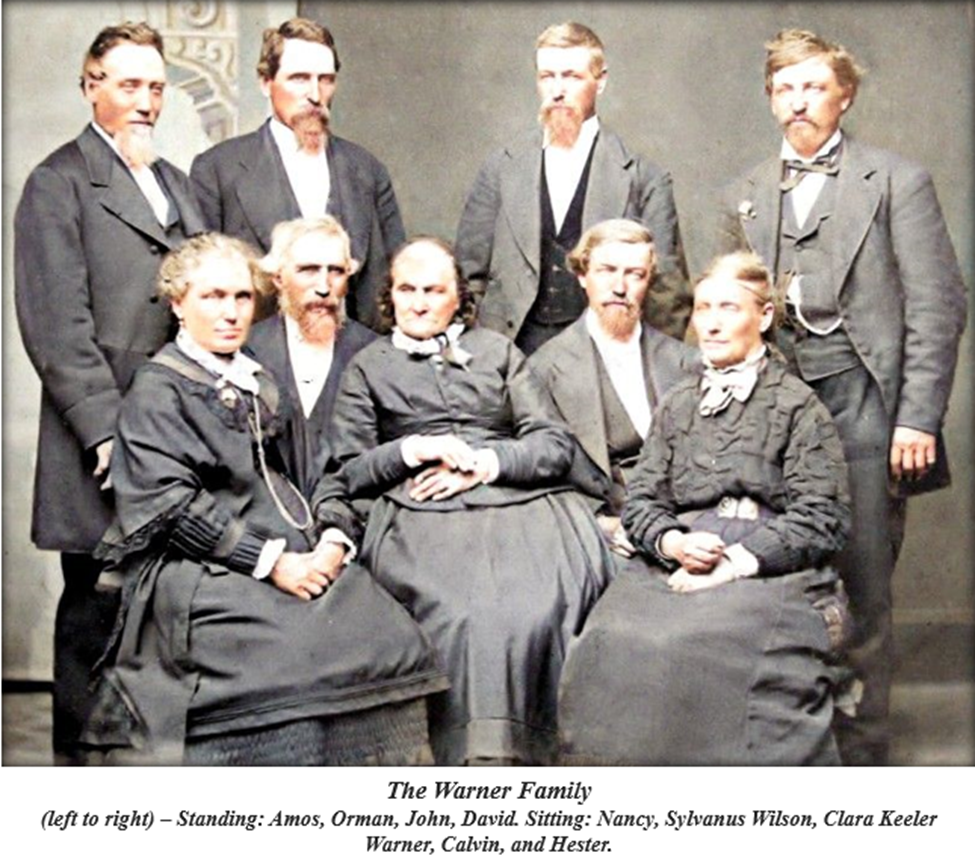
His parents joined Warner in Illinois in 1845 and spent the rest of their lives in Henry County. They reared six sons and five daughters. Warner’s father died in 1851, and his mother in 1879.
On July 8, 1847, in Stark County, Warner married Emaline Otis, a native of Ohio, and daughter of Edward Otis, a farmer. Warner and Emaline eventually raised six children.
In 1855 after the railroad through Kewanee was completed, Warner realized the opportunities that could be his in what he predicted would be a fast-growing village. He sold his acreage and moved his family to take advantage of the prospects.
Warner initially entered into numerous partnerships to operate a grocery business on Third Street/Railroad Avenue, across from the railroad depot. His various partners included Mssrs. Cooper, Higgins, McIntire and Lay. For a time, he also ran the business by himself. The concerns offered a variety of goods needed in a new village – groceries; tobacco; soap; wooden, willow and stone ware; dry goods; and boots and shoes.
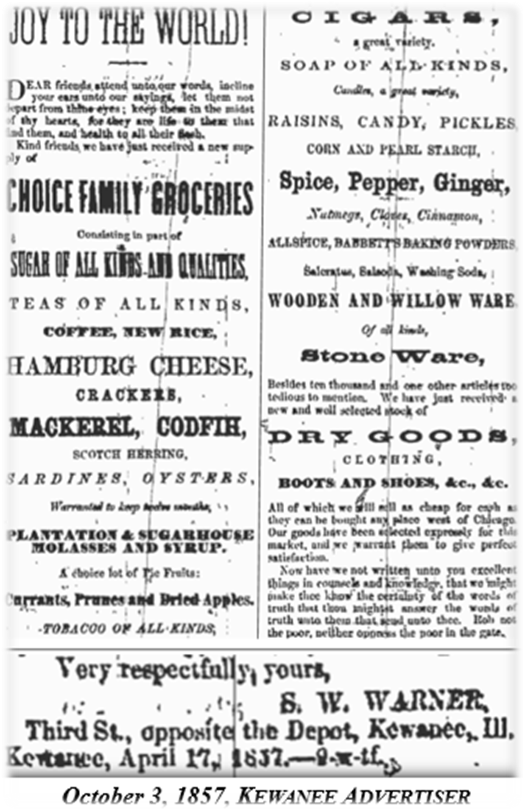
But by 1860, Warner left the grocery business for the grain business. He soon became the leading grain dealer of Kewanee, a business he ran for 35 years, buying and selling hundreds of thousands of bushels of grain.
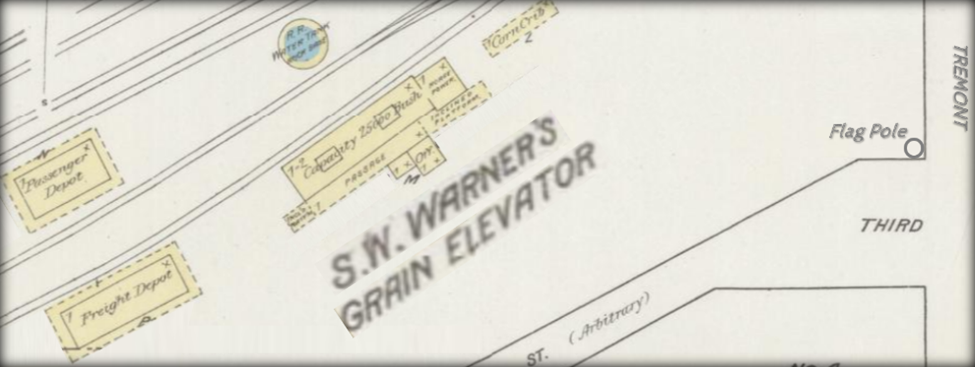
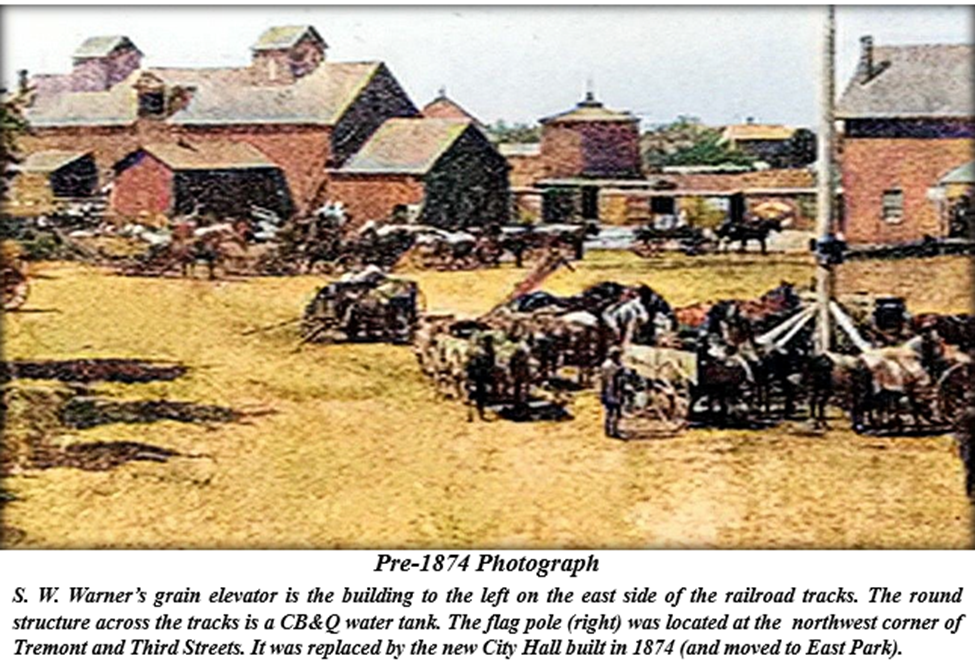
Warner operated his concern on the C. B. & Q. Railroad’s right-of-way, due north of Third Street (also called Railroad Avenue) between Chestnut and Tremont Streets.
Warner also was active in civic affairs. In the late 1850s, he served as an early trustee of the village. A few years later, Warner held the office of township assessor and then was elected supervisor.
Warner was a Royal Arch Mason, a member of the Baptist Church, and a staunch Republican.
S. W. Warner and his wife spent their last years living with a daughter in Kewanee. He died in Kewanee in 1901 after a year-long illness. His wife and his daughter were his only survivors.
Sylvanus Wilson Warner epitomized those who arrived early in Kewanee and helped spur its growth. There are many stories of others such as him who contributed to the success of our hometown.