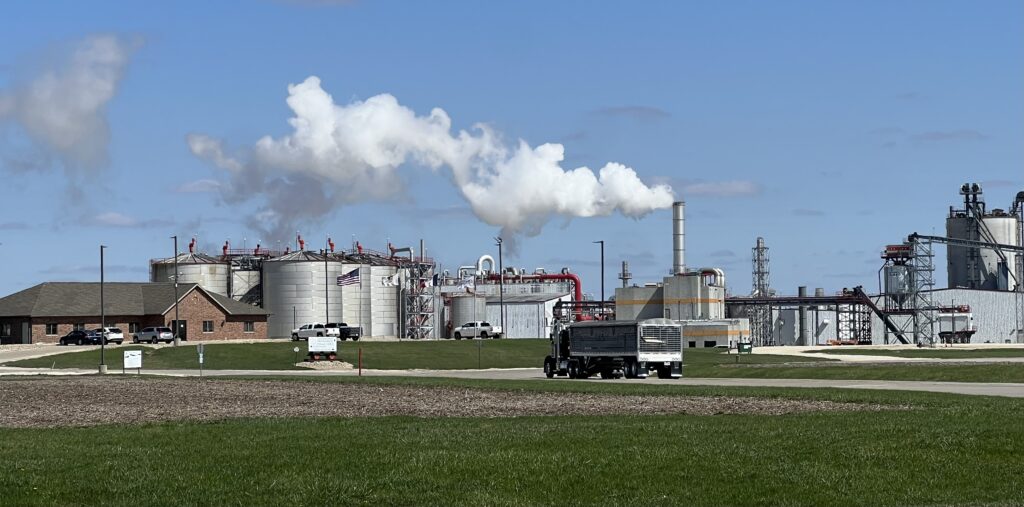
A new community survey conducted by The Kewanee Voice shows overwhelming opposition to the proposed Big River Resources and Lapis Carbon Solutions carbon capture and sequestration project in Galva, with residents citing safety, environmental risks and a lack of transparency as their top concerns. The results also reveal sharply low trust in city officials’ handling of the issue.
The online survey, which drew 385 responses, asked residents how knowledgeable they felt about the project, their level of support or opposition, and what concerns weighed most heavily on them. It also included an open‑ended section where respondents could list their community of residence.
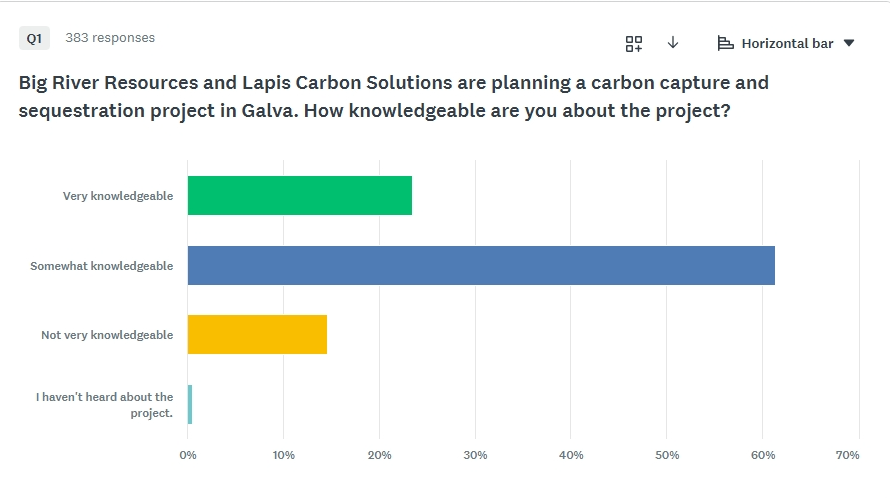
A large majority of participants reported being either “very knowledgeable” or “somewhat knowledgeable” about the carbon storage proposal. Only a small share said they had not heard of the project at all.
This suggests the public’s views—positive or negative—are being formed with at least some familiarity with the issue.
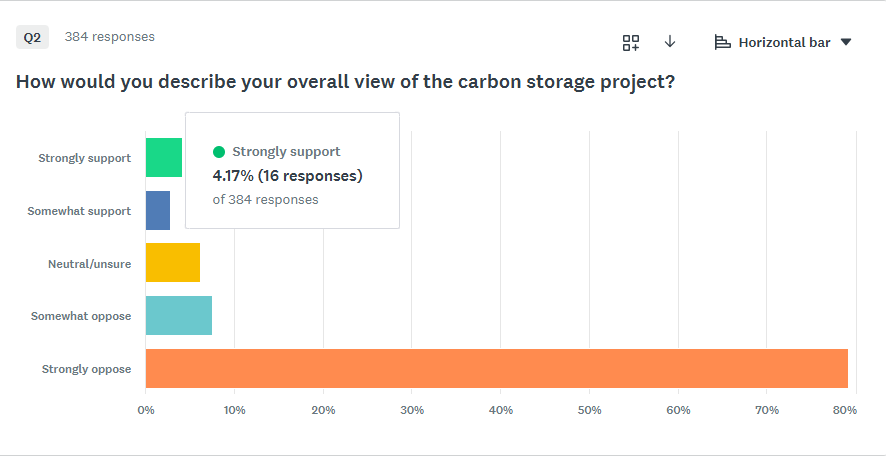
When asked for their overall view of the project, respondents overwhelmingly selected “somewhat oppose” or “strongly oppose.”
Support for the project was minimal, and only a small portion of respondents said they were neutral or unsure. In the open-ended comment section, one respondent said he supported Big River 100%. In that same section, a Galva resident said the main concern for them was that the topic was dividing everyone, although the results indicate a community that is not divided, but firmly aligned in its skepticism of the project.
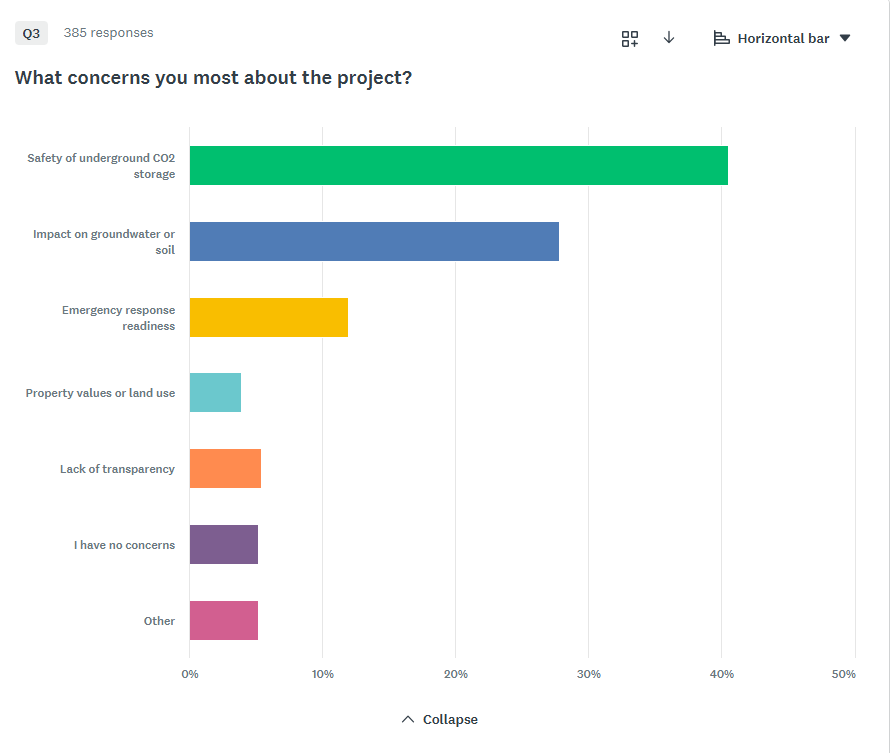
When asked what concerns them most, respondents pointed to several key issues:
–Safety of underground CO₂ storage
–Impact on groundwater or soil
–Emergency response readiness
–Property values and land‑use impacts
–Lack of transparency from officials and companies involved
Only a small number of respondents said they had no concerns at all.
One respondent wrote, “This is not something you gamble with. If something goes wrong, it affects everyone.”
Another commented, “We don’t have the emergency infrastructure to handle a CO₂ leak. That’s terrifying.”
A third respondent said simply, “Too many unknowns. Too much risk.”
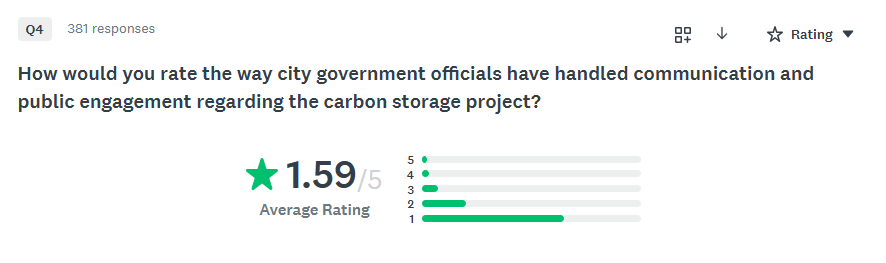
Respondents were also asked to rate how well city officials have handled communication and public engagement surrounding the project. The average score was 1.59 out of 5, a rating that reflects widespread dissatisfaction.
Comments left by participants frequently mentioned frustration with the flow of information:
“We’re finding out more from Facebook than from the city.”
“No one is being honest with us.”
“They’re not listening. They’ve already made up their minds.”
Several respondents said they felt the city had been “slow,” “unclear,” or “dismissive” in addressing residents’ questions.
The open‑ended responses show participation from Galva, rural Galva, Kewanee, Stark County, Bradford, Andover, Cambridge and other nearby communities. The geographic spread suggests the issue resonates beyond city limits and is viewed as a regional concern.
While the survey does not represent a scientific poll, the volume of responses and consistency of sentiment point to a community deeply uneasy about the project and distrustful of the process surrounding it.
One respondent summed up the prevailing mood:
“If this is such a great idea, why does it feel like we’re being kept in the dark?”
Another wrote, “We deserve transparency. This affects our homes, our families, our future.”
While emergency and city officials have begun to discuss the possibility of a carbon injection moratorium in Henry County, the project will continue to move through regulatory and local review processes.
The survey results suggest that public engagement and rebuilding trust will be central challenges for both city officials and the companies involved.
***Editor’s note: This survey is not a scientific poll. It is meant to engage readers and gauge public sentiments on this issue, and the results should not be interpreted as a definitive or statistically representative measure of community opinion.