I love living in a world of cycles, of seasons, where something can be experienced time and time again throughout the years.
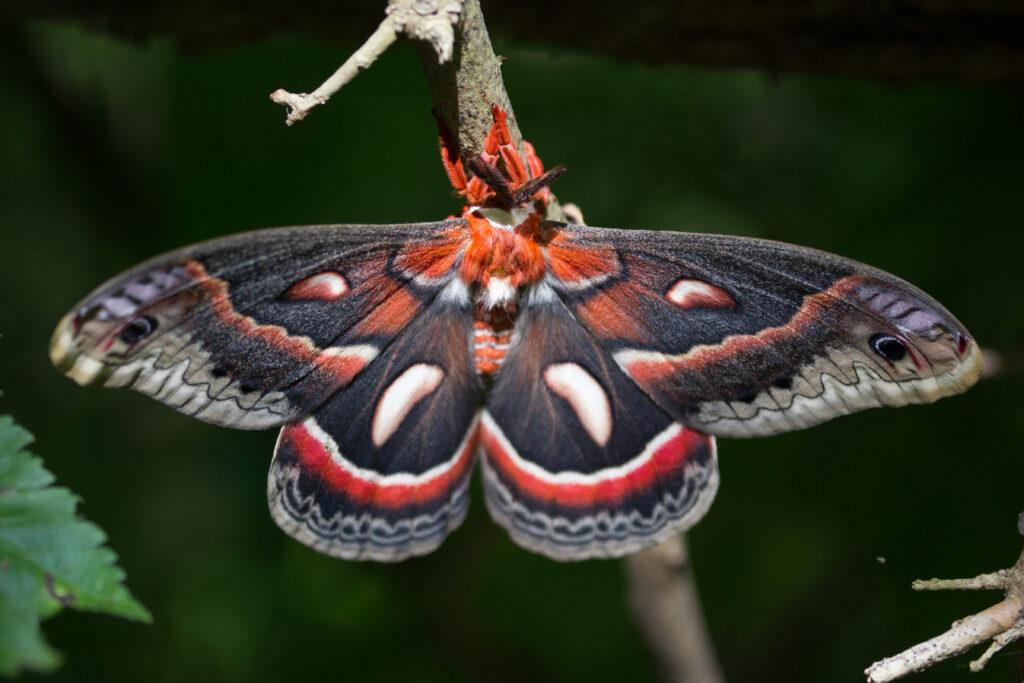
Each summer, one of my most beloved pastimes is raising cecropia moth caterpillars. Adult cecropia moths are both endearing and magnificent, with plush, striped bodies and gray, red, and white wings that can span six inches or more. These largest moths native to North America belong to the giant silk moth family (Saturniidae) along with pale green luna moths, golden-tan polyphemus moths, and others.
Cecropia moths are utterly harmless. The adults have no working mouthparts, which means that they can’t eat. After emerging from their cocoon in late May or June, their sole purpose is to find a mate and produce the next generation. Female moths release airborne chemicals called pheromones, which male moths sense with their lush, feathery antennae.
After mating, the females lay their eggs on an appropriate caterpillar host plant; these include black walnut, silver maple, wild cherry, and many others. The beautiful but ephemeral adult moths live only a week or two.

When I was little, on wintertime walks through the woods, my dad would often spot cecropia cocoons. We would bring them home and store them in the garage over the winter (bringing them inside would have disturbed their natural cycle and caused them to hatch too early, before outdoor conditions were right). In early summer, the large, exquisite moths would emerge from their cocoons. If one happened to be a female, we would keep her in a screened box overnight, hoping for her to attract a mate.
She usually did. If I went out to her box right around dawn, I would see several male cecropia moths flapping in the shadows nearby. They emerged from the woods as if by magic. Normally, these moths are shy and mysterious. I seldom see them in the wild, and with good reason: to survive, they must be wary of predators, such as birds. But the female’s irresistible pheromones changed everything, drawing male moths out into the pale morning light. Some may have followed the scent trail for up to a mile.
That evening, my dad would collect a dozen or so eggs before releasing the female moth. Once the eggs hatched (about 10-14 days), we set to work raising the caterpillars. We put them out in net bags on an appropriate tree—usually black walnut, because the caterpillars did so well on it.
My dad cautioned me that whichever food plant the caterpillars started on, they had to stay with it. They could not, for example, switch from black walnut to silver maple.
In the summer of 2019, my dad gave me several cecropia caterpillars from a brood he had been raising. As I was now the proud owner of a tall black walnut tree, I could properly nourish them. I kept the cocoons from those caterpillars over the winter, watched the adult moths emerge the following spring, and raised their caterpillars over the summer. The cycle has continued every year, so that this summer I am raising my sixth generation of caterpillars. This metamorphosis is always new—always familiar—always thrilling to watch.
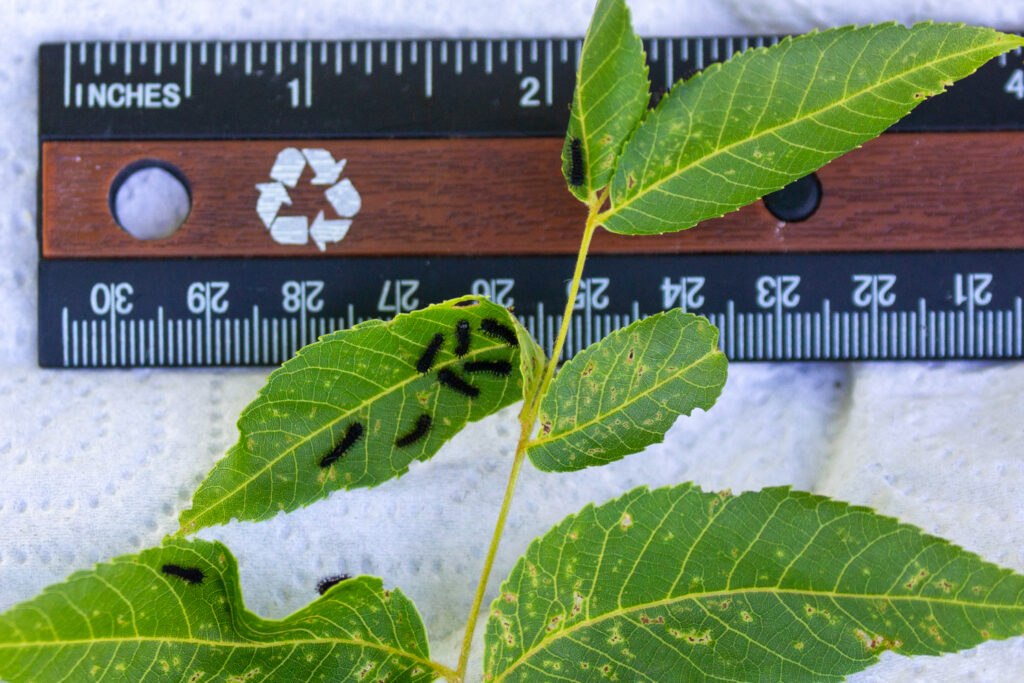
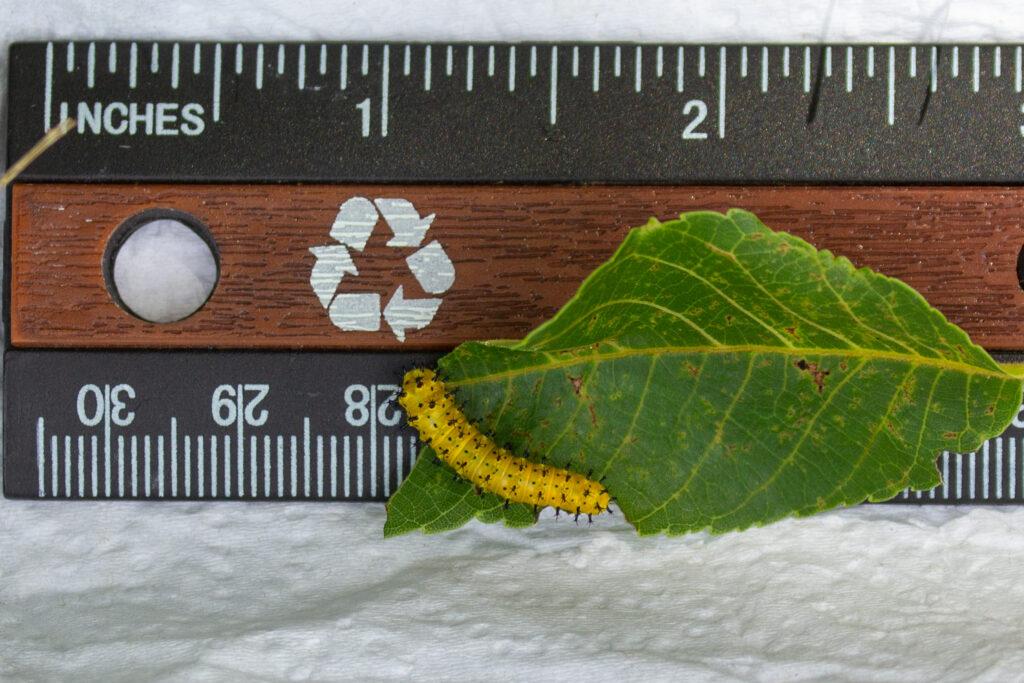
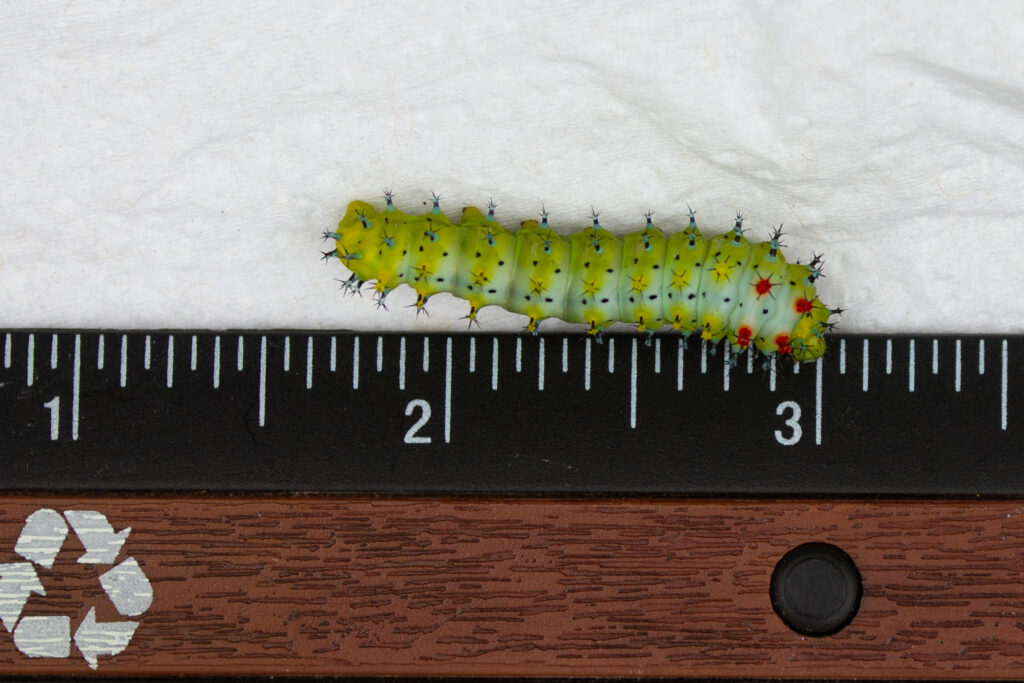
The caterpillars hatch as tiny black threads, only a quarter of an inch long. Soon, though, they have grown enough to shed their skin and enter their second growth stage, or instar. Now yellow with black polka dots, they have doubled in length. In about a week, the caterpillars once again shed their skin. Third instar caterpillars are over an inch long. They’re yellow-green with black polka dots and multi-colored “horns” along their bodies; these “horns” are harmless to people but may deter a hungry bird.
Soon, the caterpillars undergo two more transformations. In the fourth instar, they’re still green, but more substantial and lacking polka dots. In the fifth and final instar, the “horns” nearest the head have turned from red to orange.
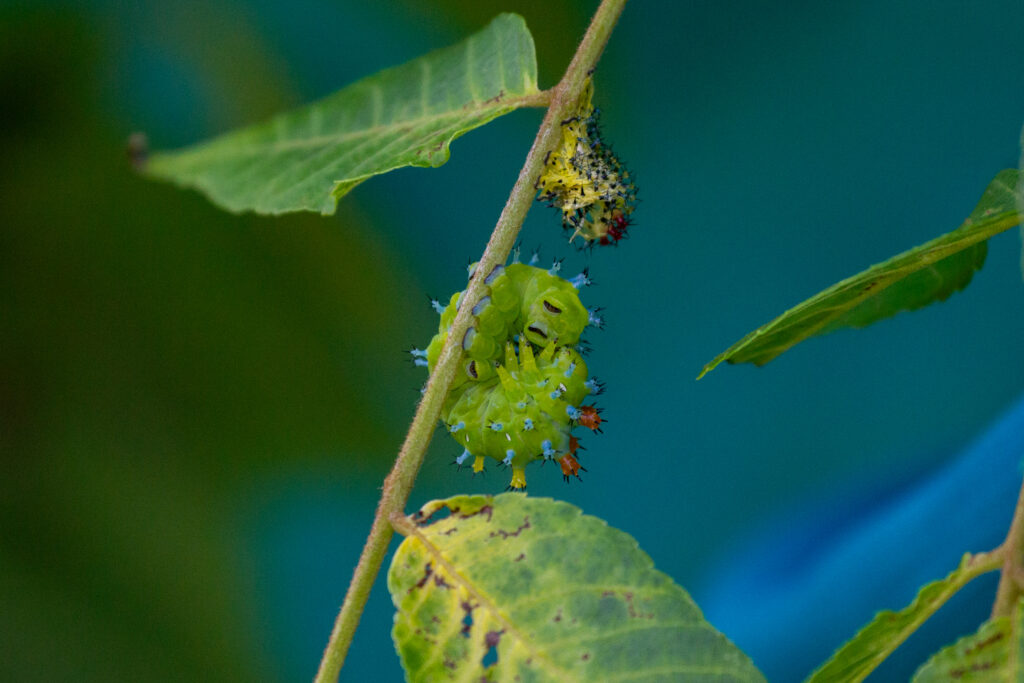
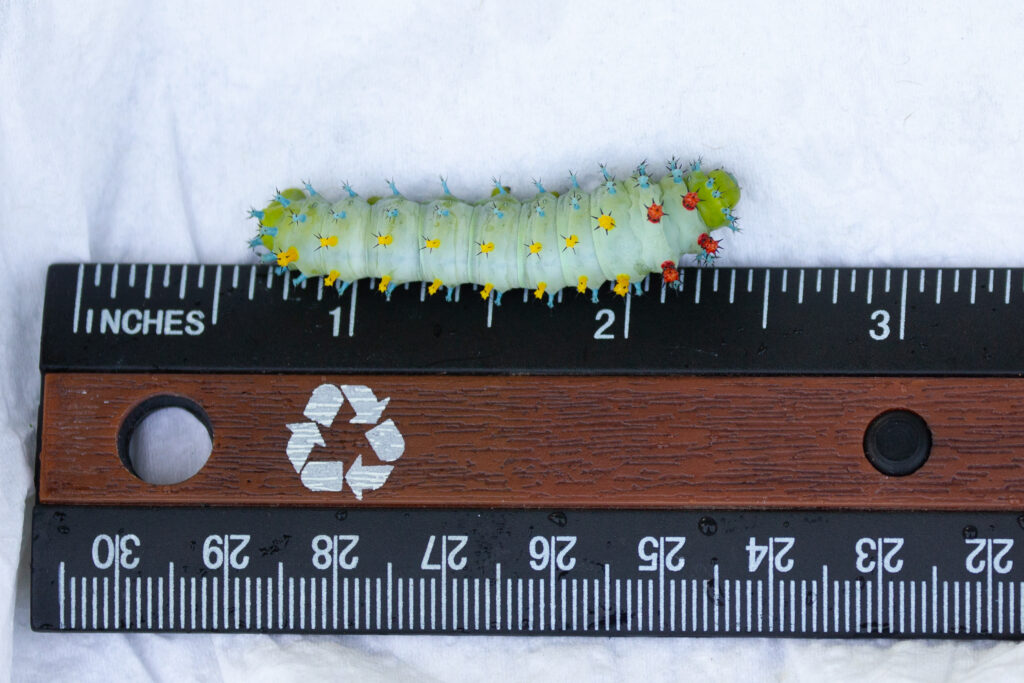
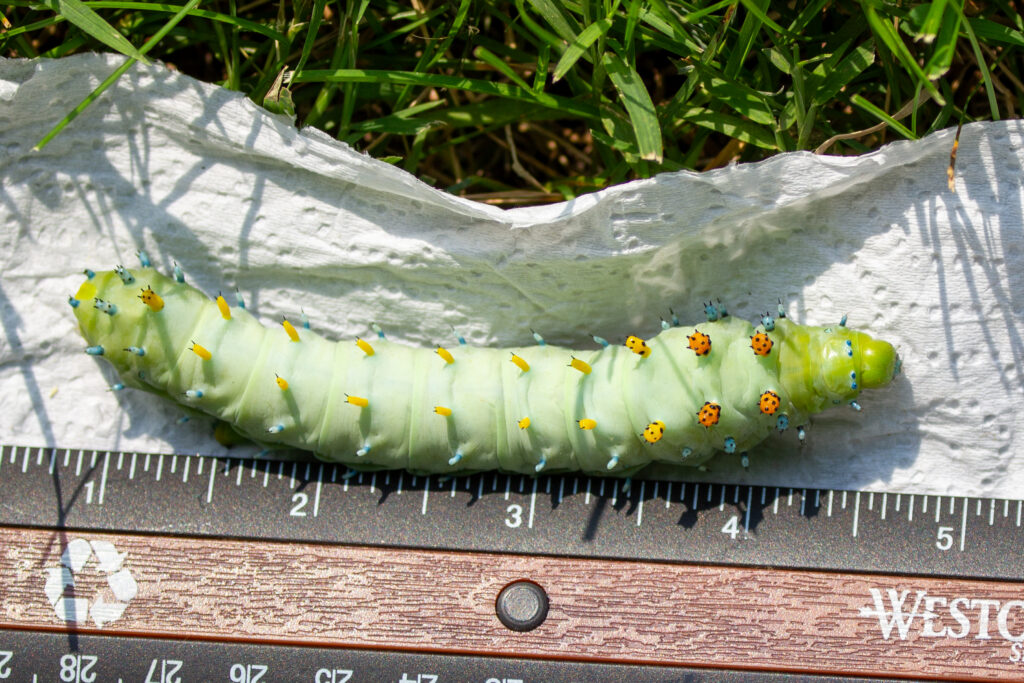
With one mission only—to devour a boundless feast of leaves—caterpillars in this final stage soon grow to a hefty four inches long—or more!—and must frequently be moved to new branches. They’re sturdy enough to hold gently during these moves, and their leafy diet gives them a pleasant herbal smell. It’s impossible not to smile with a mammoth cecropia caterpillar marching across your hand!

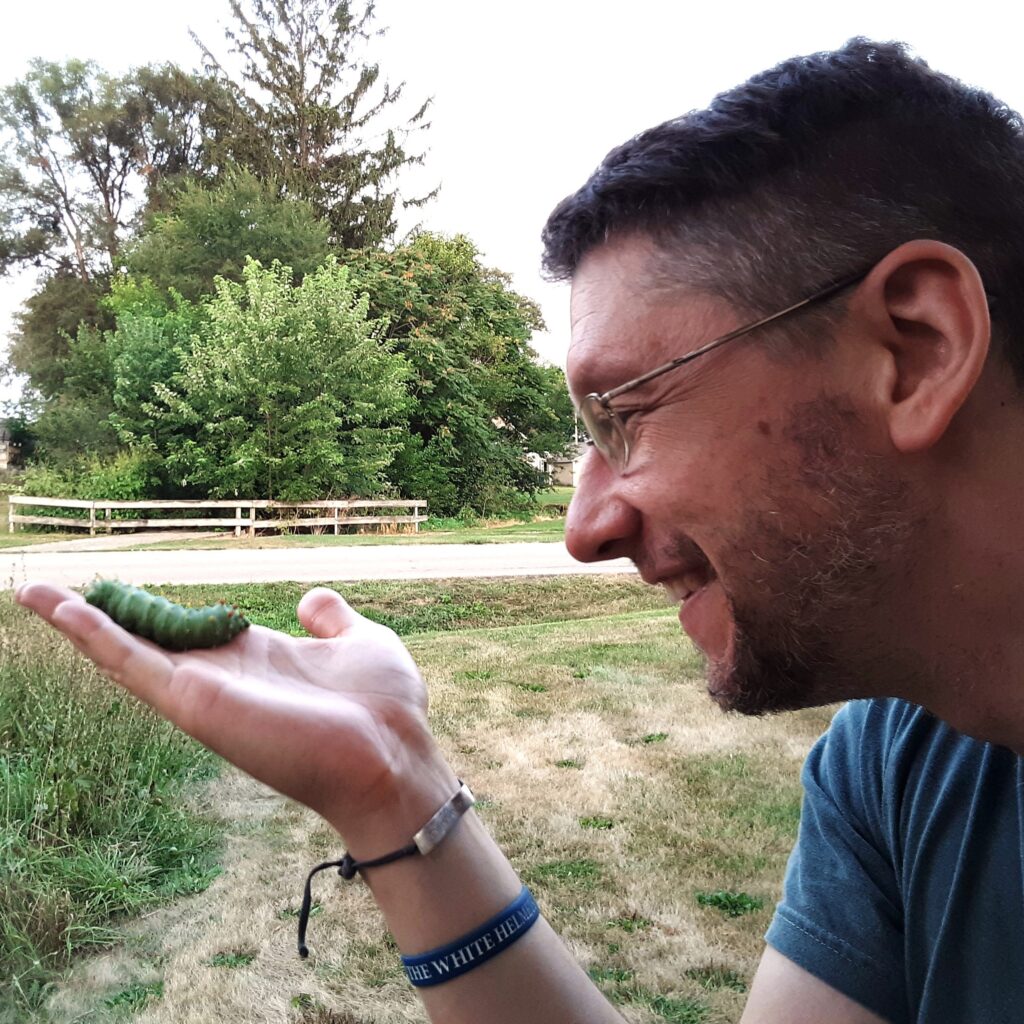
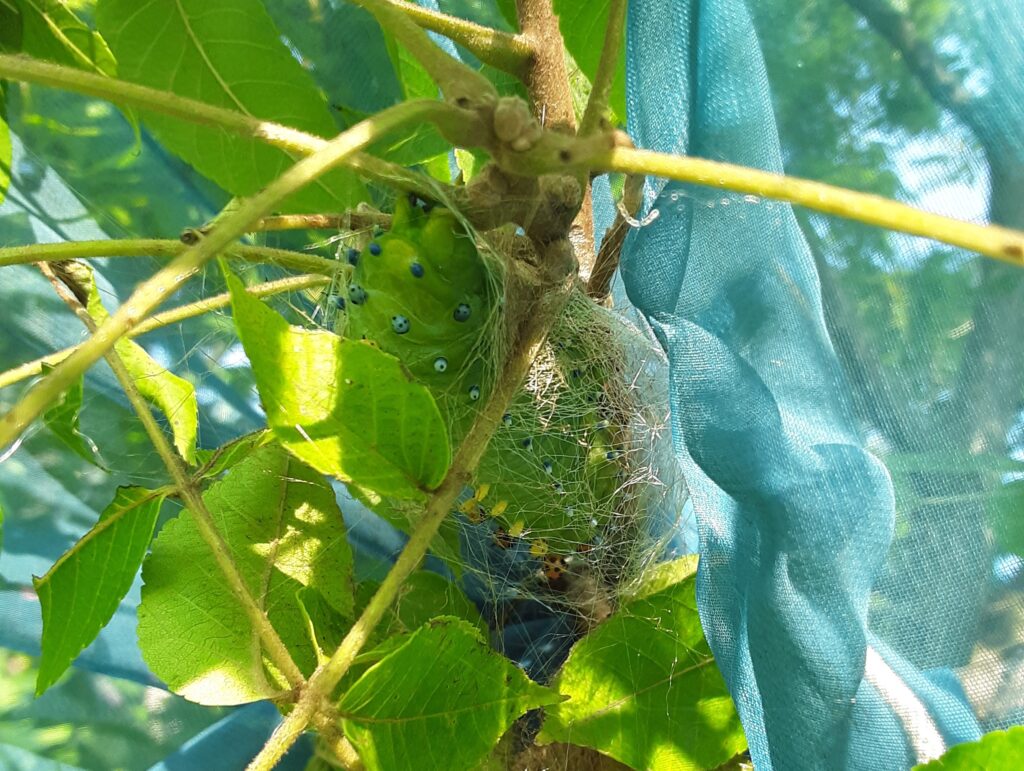
This year, my caterpillars hatched from their eggs on June 20. All are now in their final growth stage, and in just a week or two, they will spin their cocoons. It’s always a bittersweet moment for me, when they take this inevitable next step. I will miss taking care of them, watching them grow.
But as the long days of summer end, I hold onto the most beautiful thing about cycles. Next spring I will meet these cecropias again as they emerge from their cocoons and take flight in their lovely adult forms. Then, the season of caterpillars will begin once more.