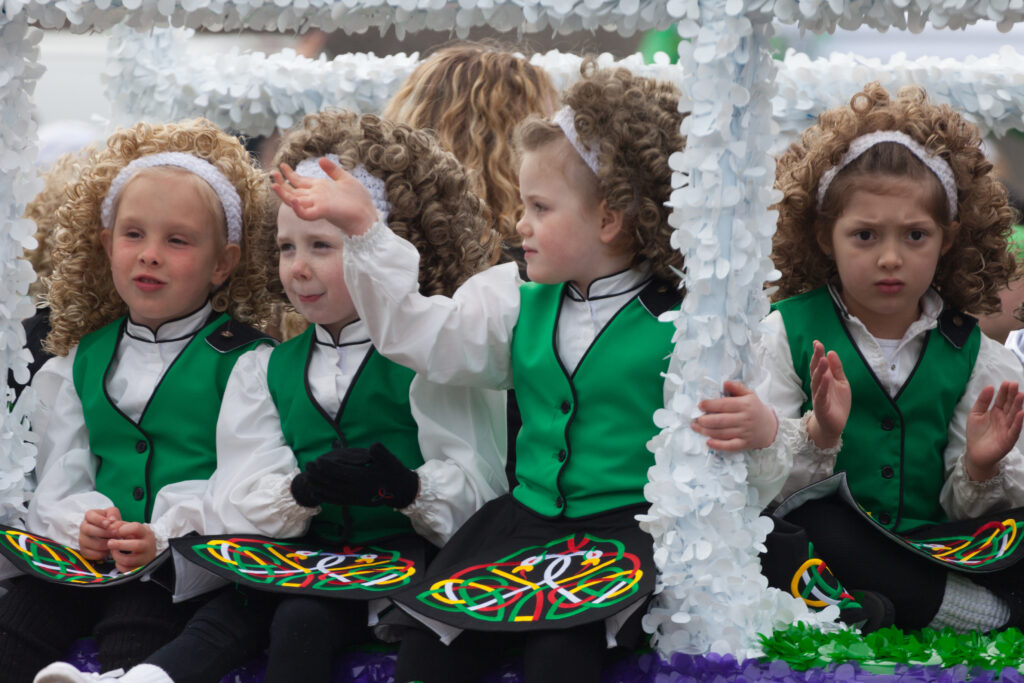
If you wonder where all this started, why we put on green, eat corned beef and cabbage, decorate with shamrocks, and drink green beverages, you need to travel back centuries in time to the fifth century.
Religious scholars claim that the beloved Saint was born sometime around 490 AD to a Roman-British officer named Calpornius and his wife, Conchessa, in an area that later became Wales. His name at birth was Maewyn Succat. While Calpornius was a well-respected deacon in the church, his son never showed any religious leanings. He also wasn’t fond of his name (can you blame him?) and had many monikers throughout his life. Among them were Magonus, Succetus and Cothirthiacus (his choices didn’t improve much). Eventually, he settled on Patricius, which is Latin for “nobleman” and precursor to the “Patrick” we identify with today. This is probably a good thing, because “Happy St Cothirthiacus Day” does not roll easily off the tongue.
However, when 16-year-old Maewyn was captured by Irish pirates and trafficked away to tend sheep and pigs for a cruel landowner, he had a religious awakening. Convinced his enslavement was punishment for not following his father’s religious beliefs, he spent many hours praying and repenting. After six years in captivity, he managed to escape only to be recaptured by the French (escaping was not one of his better skills). There he learned a lot about monastery life and was eventually allowed to return home. Filled with religious fervor, he had a vision telling him that the people of Ireland wanted him to bring them Christianity. Soon after he made a return trip to the land of his original captors and began to preach.
And the rest is history!
Here’s some trivia about St. Patrick’s Day so you can impress your family and friends with your knowledge while you celebrate the day:
-St. Patrick was not Irish; he was born to an English family in what is now known as Wales.
-He was a victim of human trafficking and made a slave to a wealthy Irish landowner; he later preached against such practices.
-He did not drive the snakes out of Ireland; snakes are not indigenous to Ireland and have never been a part of the country.
-St. Patrick’s Day has been celebrated in Ireland for the last ten centuries.
-The traditional Irish meal eaten on that day was bacon and cabbage; corn beef is a relatively new addition.
-The very first St. Patrick’s Day parade took place in 1601 in the New World in a Spanish colony that is now St. Augustine, Florida. Today, major cities, such as Chicago, host annual St. Patrick’s Day parades.
-The great Irish potato famine killed thousands and nearly one-fourth of the nation’s population came to America to find a new life.
-Legend has it that St. Patrick used the three leaves of the shamrock to explain the Holy Trinity when he converted the Irish to Christianity. It remains the national flower of Ireland.
-Before 1798, blue was the preferred color to symbolize Ireland.
-Homesick Irish soldiers serving in the English army marched in Boston and New York City on March 17, 1737.
-In 1848, several New York Aid Societies formed the oldest civilian parade in New York City; it remains the largest with over 150,000 participants.
-Leprechauns are also known as “Lobaireins”, which means “small-bodied fellow” and are cranky and irritable. Thought to belong to the ogre family, they mend the shoes of fairies and guard pots of gold that fairies put at the end of rainbows. Should you catch one, he has to tell you the location of the gold.
-While Patrick is considered the Patron Saint of Ireland, he was never officially canonized.
If these trivia facts don’t put you in the mood to celebrate, grab a green drink, eat some corned beef and cabbage, don something green, and listen to some authentic Irish music. Happy St. Patrick’s Day.
Slainte!