From its birth, Kewanee has had a rich tradition of providing local and regional news important to its citizens. The Kewanee Voice is the successor to that tradition.
Henry County’s first newspaper, a five-column folio, the Henry County Gazette, was published by J. W. Eystra in Cambridge. Its first issue was distributed on February 13, 1853. But the paper immediately ran into financial distress and closed its doors within a year.
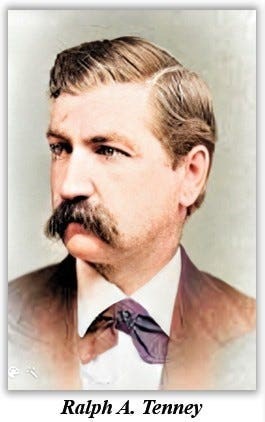
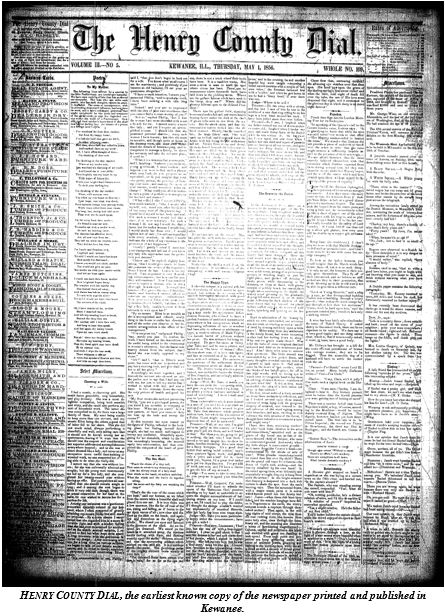
As our hometown was being platted by Wethersfield entrepreneurs, they recognized that the new village would soon need a newspaper. Nelson Lay, Ralph Tenney, Henry. G. Little, George A. Morse and other public-spirited citizens raised enough money to purchase what was left of the Gazette and started a new paper, the Henry County Dial, published initially in Cambridge. They hired Isaiah Smith Hyatt as editor, and he put out the first edition in February 1854.
But soon the Dial, its Washington hand press, type cases, and other printing equipment was all moved to Kewanee via oxcarts. The entire population turned out to meet the caravan when it arrived in August 1855. The first issue emanating from the new village was published on August 15, 1855. However, Hyatt left Kewanee only a short time later, moving to Geneseo where he launched the Geneseo Republic.
In September, Chauncy Bassett, a newspaperman by trade, purchased the Dial and took control of the business. Bassett engaged John H. Howe, an attorney and later a renowned Civil War officer, as editor.
In 1856, the newspaper relocated to the new Tenney, Hardy & Co. store building on the corner of Main and Second Streets in the Phillips Block. But Howe, a soon-to-be Republican, and Bassett, a staunch Democrat, had a falling-out over the issue of slavery in the Western States. That was a portend of things to come.
In June 1856, Bassett ran afoul of the newly-formed Republican Party. According to Bassett, when he first arrived in Kewanee in 1855, one of the stipulations of the purchase was that the paper should be non-partisan – it was free to criticize public men and measures, but not to advocate the position of any political party. However, the Republican Convention in June 1856 in Bloomington apparently changed that.
Bassett claimed that the Kewanee Republicans returning from the convention demanded that he should either publish a Republican paper or give up the paper to someone who would. Bassett said that “[w]e thought it extremely hard to be thus forced out of business for refusing to publish a partisan paper, by the very men who, a few months before had stipulated that we should not, – one of whom coolly remarked, ‘It is the fortune of war.’”
Bassett subsequently sold the paper to Howe and H. M. Patrick. (The next year, with the help of Ralph Tenney, Bassett started the Advertiser. To the chagrin of the new Republicans of Kewanee, President James Buchannan appointed Basset Kewanee’s postmaster in 1857. In the 1860s, Tenney, also a Democrat, was threatened for the political positions he espoused while still in Kewanee, before he moved to Chicago.)
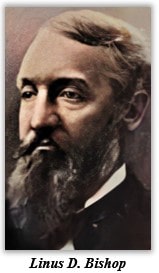
Howe’s tenure as editor, however, was short-lived. That fall, Howe was elected circuit court judge and he sold his interest in the paper to Patrick. Oliver White joined Patrick for a while until Linus D. Bishop took over the Dial.
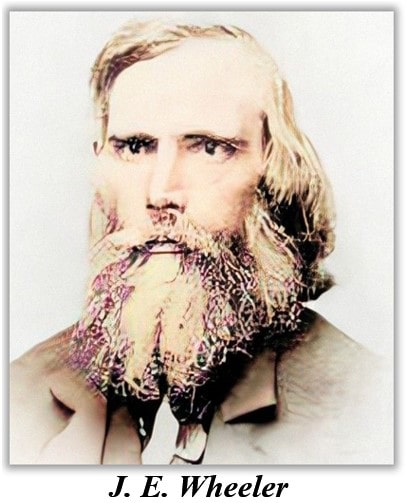
A few years later, John Elhanan Wheeler acquired the Dial. He had been an apprentice of Horace Greeley (of “go West young man, go West” fame) at the New York Tribune and later one of the founders of the Chicago Tribune.
Wheeler ran the Dial until 1866, near the time of his death. Hiram Wyatt succeeded him. Briefly, the Dial also put out the Illinois Advertiser in 1868-69. George W. Wilson followed Wyatt, who sold it to N.W. Fuller. Fuller changed the name to the Kewanee Radical, and the paper was discontinued in 1870.
Kewanee’s first newspaper was not without competition. Bassett left the Dial for the Advertiser in 1856, the first of several papers which used that name. The Tenney, Hardy & Company’s Advertiser was issued the first year by the company, after which Bassett took it over and, for a while, it was the Kewanee Advertiser. Bassett later published the Union Democrat for a while in 1863 and 1864. Bassett ran another Advertiser in 1866 and 1867. Finally, when the Dial’s successor, the Kewanee Radical, was dying in 1870, Bassett began yet another Advertiser, which later changed its name to the Independent.
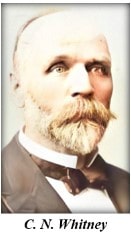
(The Kewanee Star Courier can trace its roots back to the Kewanee Courier, established on March 22, 1876, by Cephas Newhall Whitney. Whitney had previously published a newspaper in Princeton. In 1897, the Courier and the Kewanee Star merged to form the Kewanee Star Courier.)
By the way, Kewanee’s early newspapermen were “inventive” sorts – literally. Celluloid was the first synthetic plastic material ever, and it was invented by former Dial editor I. S. Hyatt and his brother in the late 1860s. They received numerous U. S. letters patents for variations on it, as well as a U. S. trademark registration for the term CELLULOID. Both Hyatts became wealthy men. Not to be outdone, Chauncey Bassett similarly obtained a U.S. letters patent in 1870 for an improvement on a typesetter cabinet.
While Bassett did not achieve the fame or money to rival that of the Hyatts, he stayed around Kewanee for a quarter of a century and, arguably, was the father of Kewanee newspaper business.
Technically, our hometown’s founders, cognizant of the need for a newspaper, owned a paper even before the town came into being, albeit published in Cambridge. It boded well for the village and its growth that the voice of the village could more easily travel far and wide, helping Kewanee rapidly grow into the second half of the 19th century.
Today, there is a new voice carrying the news of Kewanee far and wide, The Kewanee Voice. It also bodes well for our hometown and its striving to grow again to the forefront of our region.