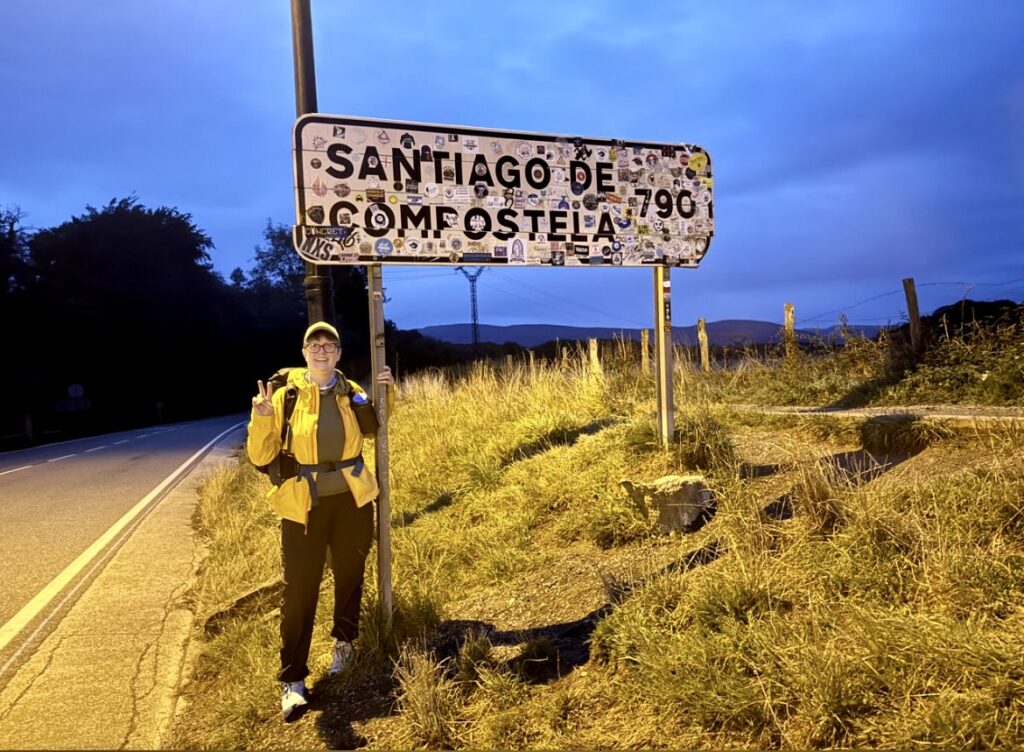
For Kewanee resident Ruth Kapacinskas, the trip of a lifetime was just a matter of timing.
Recently retired, Kapacinskas learned that two other local residents, Christy DeSmit and Adeeba Rashid, were planning to hike the El Camino de Santiago Trail in Spain. With the goal to travel more and see the world, Kapacinskas contacted the two women to see if she might tag along.
“I totally invited myself along,” she said.
The Camino de Francés or Camino French is the most famous pilgrimage route leading to Santiago de Compostela, Spain. It stretches approximately 500 miles from Saint Jean-Pied-de-Port in France to Santiago passing through picturesque villages and landscapes across four Spanish regions.
Kapacinskas felt that being a part of a group might provide her with the confidence she needed for such an ambitious undertaking. But walking almost 500 miles isn’t something one does on a whim, so she started training. She had already begun a weightlifting workout.
“I felt I was in good shape,” she said, but adding cardiovascular training was important, so she Googled it.
With just a little less than three months to train, Kapacinskas started off walking just three miles a day, although she was confident she could have walked six or seven miles with no problem.
“I gradually increased,” she said. And she started to wear a backpack and increased the weight over time. By the time August arrived, she felt ready to go.
She landed in Madrid and once at the starting point in Saint Jean Pied-de-Port, she began her month-long journey. But that month on the trail would leave its mark on Kapacinskas.
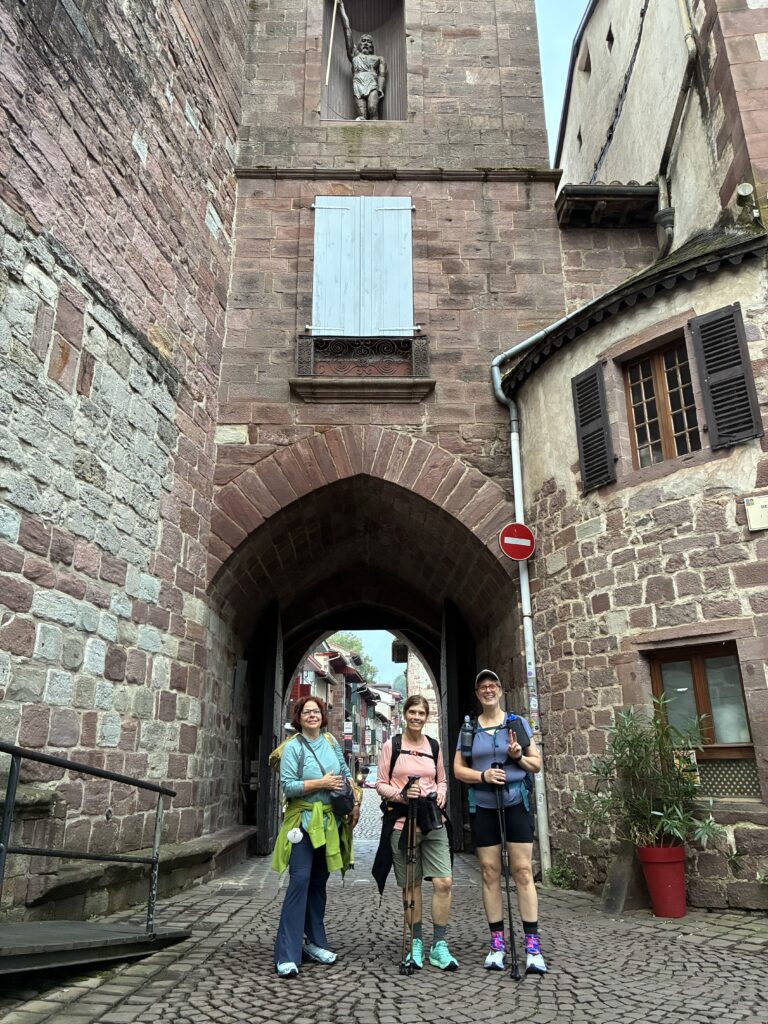
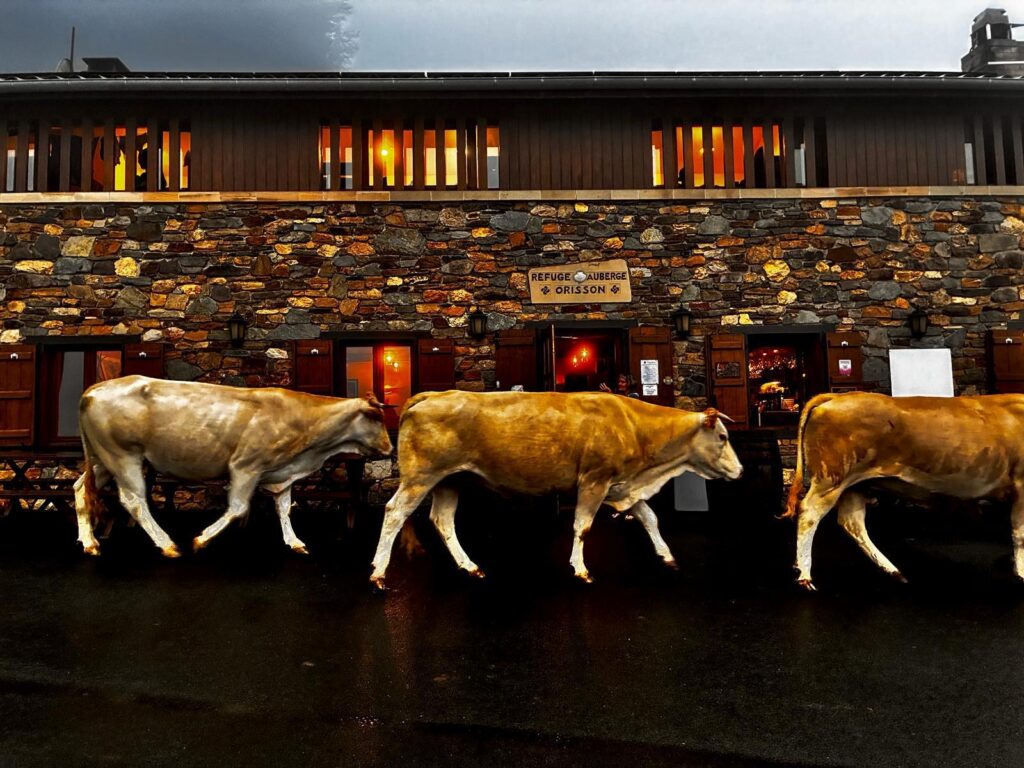
The days spent hiking on the trail soon took on a rhythm and while her two fellow travelers started off before the sun was up, Kapacinskas slept a little longer, preferring to walk when it was light out.
“I didn’t want to miss anything,” she said, describing the scenery along the legs of the trail as shifting between mountains, forests, rural farm fields, quaint villages and golden acres of wheat.
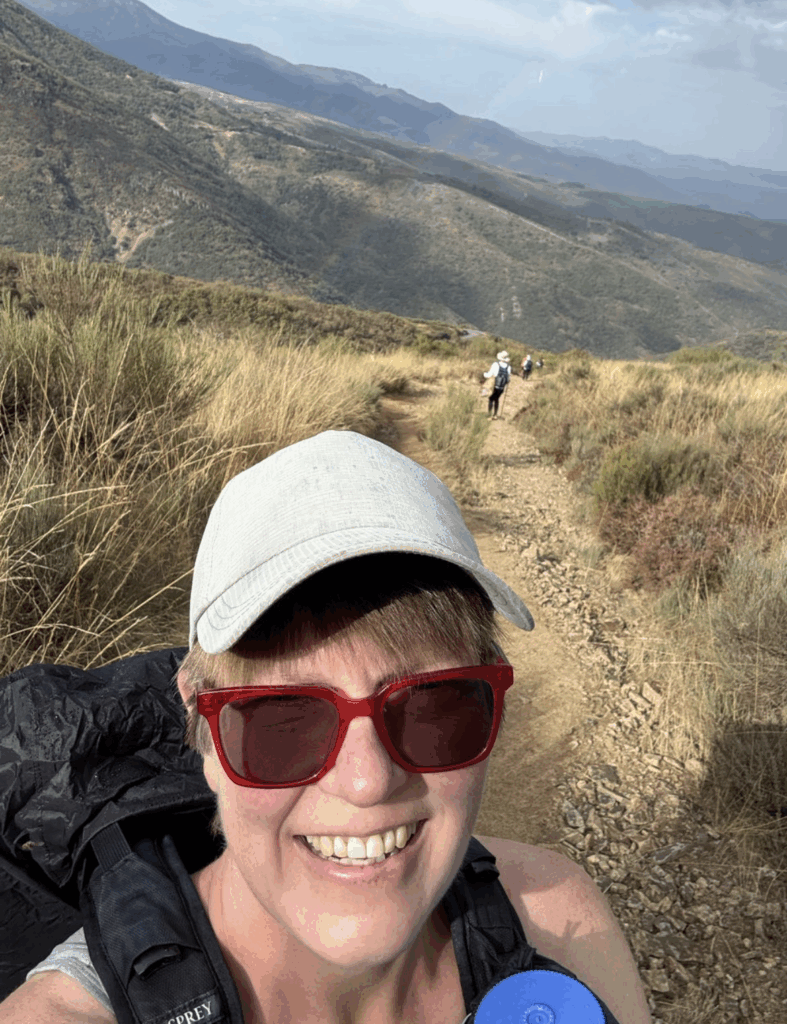
She often walked alone and packed lightly, carrying only essentials such as water bottles and rain gear, some clothing and Vaseline, considered essential to help minimize the blisters that formed between her toes.
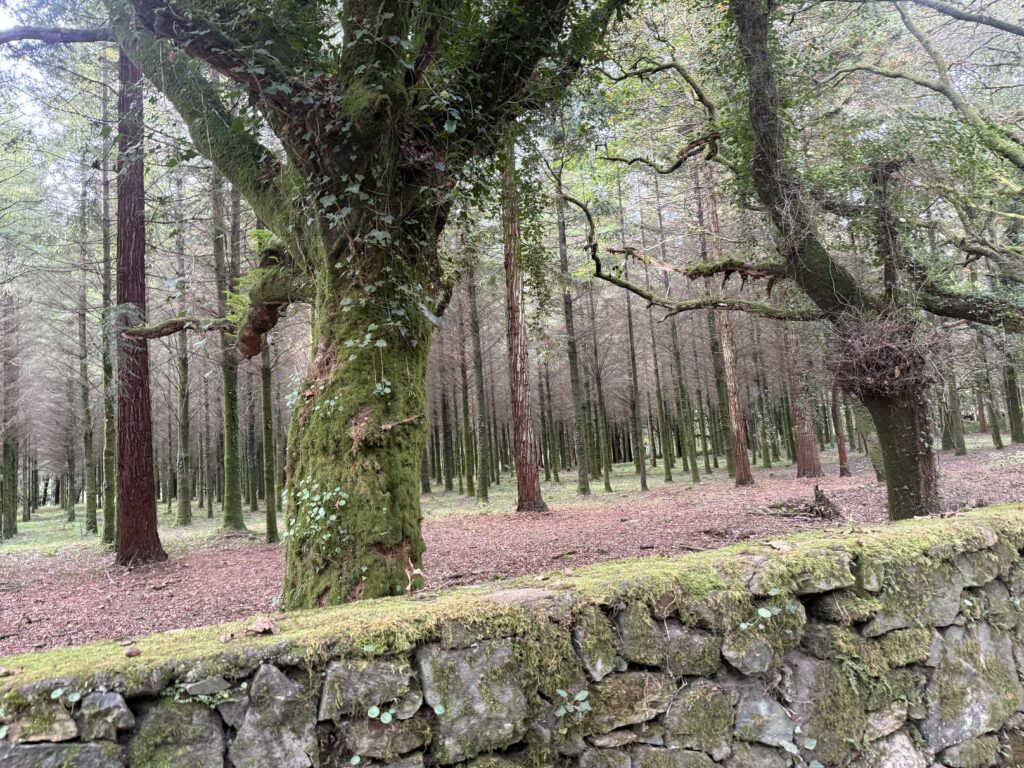
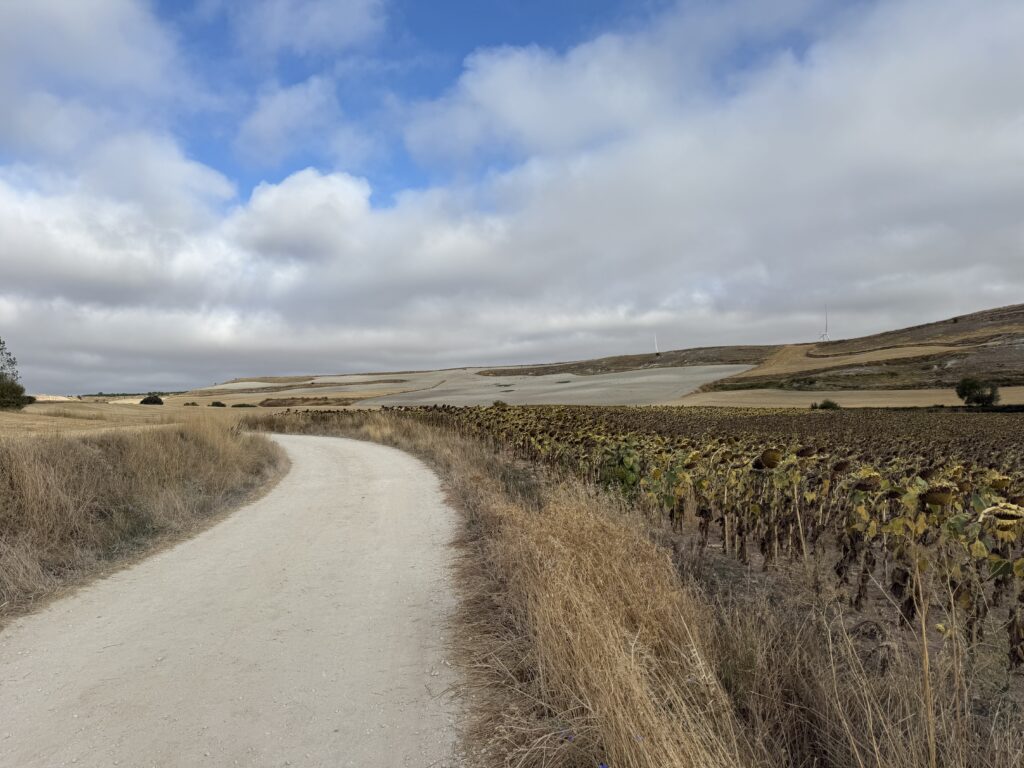
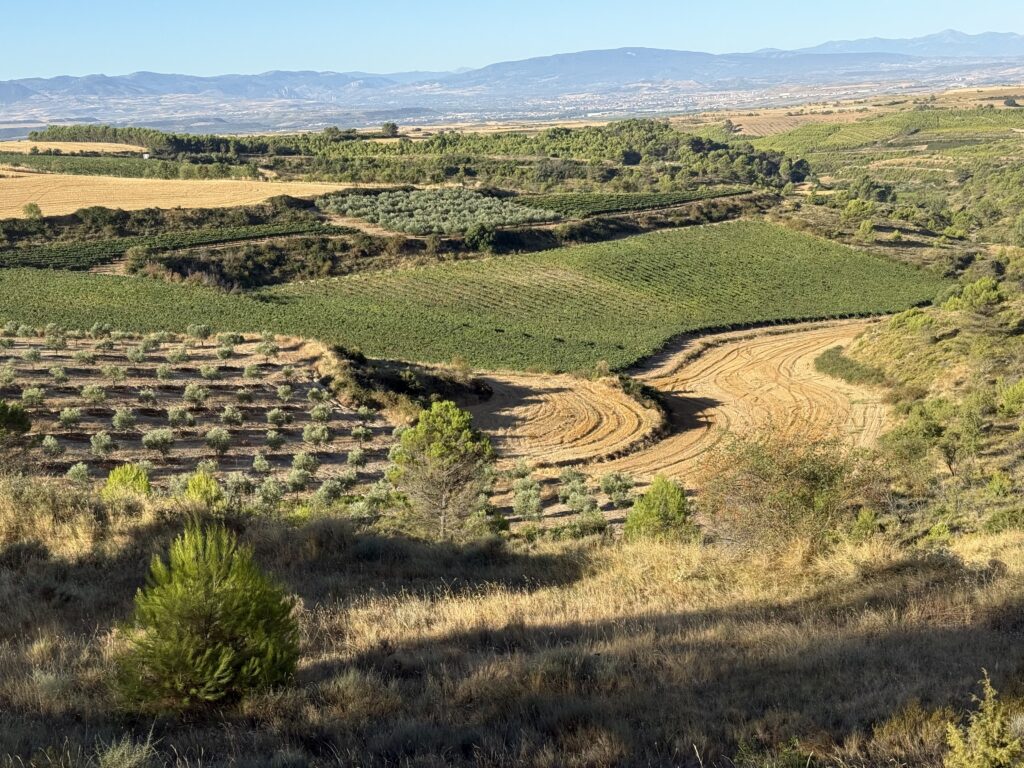
Her mornings started at around 7:30 and because the villages were often close together and tourist-centric, she was able to hike into a village and eat breakfast before setting off again. She usually ate a potato dish not unlike a frittata or a quiche with no crust, she said.
At the next village, she might stop for food again, although she said she began to purchase groceries to minimize the cost.
Along the route, she would often encounter other pilgrims, who were quick to offer pearls of wisdom and advice. One woman she had encountered had walked the trail 15 times, seeing the walk as a spiritual journey.
“She wanted to do it on a regular basis,” Kapacinskas said.
She met people from all over the world on the trail, pilgrims from the United States, Australia, Germany, Canada and Spain.
“Pilgrims hike mostly alone but that’s the cool thing about the Camino, you’re never alone for too long,” she said.
Each day she walked 15 miles before stopping at one of the many hostels along the trail. There she would shower, do laundry, dine on pilgrim or family-style meals, and at night, she used an eye mask and ear plugs to combat the conditions of communal sleeping.
For the most part the weather was beautiful, she said, but the first day the temperatures soared making her ascent up the Pyrenees Mountains more difficult. The second day, a rainstorm came in and drenched her.
“It was miserable,” she said.
And further on into her hike, it did turn colder, requiring her to layer all of her clothes she brought along. But those days were the harder ones she remembered.
“The weather was actually beautiful,” she said. “I think we lucked out.”
Of course there were times she felt like giving up.
“The thing that made it hardest for me is that my dog got sick,” said Kapacinskas. Not being able to be there for him made her feel helpless.
“I was really worried.”
And then she got a cold and questioned whether she needed to even finish.
“Posting daily on social media, I felt a lot of love,” she said.
The messages of encouragement from friends and family following her pilgrimage on social media and cheering her on from thousands of miles away gave her strength, and her sister, Paula, was at home taking care of her dog Ace.
“So he was in good hands,” he said.
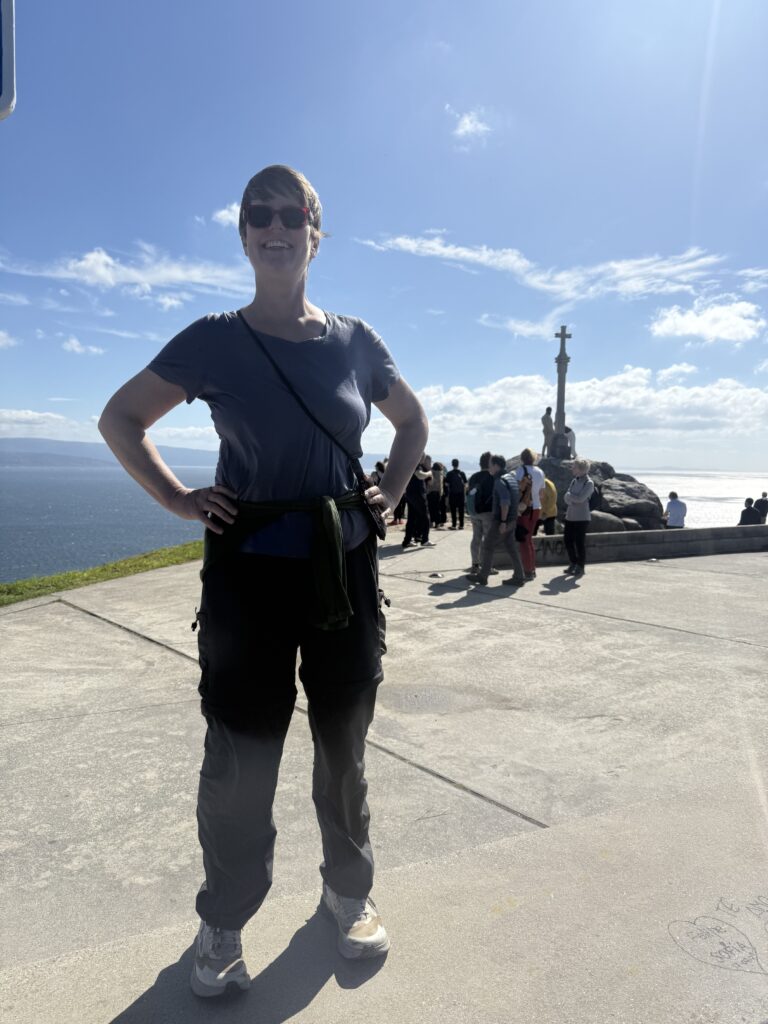
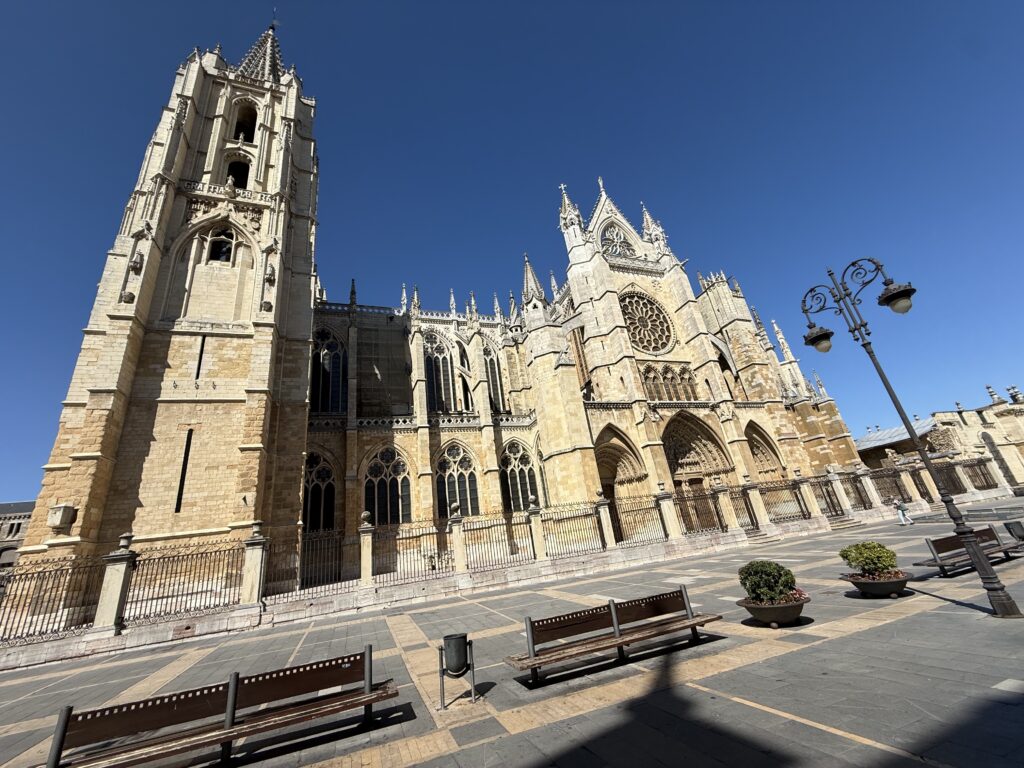
On Sept. 27, exactly one month from the day she started her journey, she walked into Santiago, having logged a total of 479 miles.
“I definitely feel the overall experience made me more confident in my abilities both mentally and physically,” she said.
The trip not only gave her the time to reflect on her life, but her thoughts often turned to both her mom and her grandnephew, people she had lost. A special moment along the way also gave her some closure.
In her backpack, she has packed a polished heart-shaped stone given to her by her niece who brought it back to her from her grand-nephew’s funeral. On days when her pack seemed heavy, she imagined she was giving her nephew Morgan a piggyback ride. That gave her comfort. She carried the rock with her, not sure why she brought it along or what she planned to do with it until one day, when she threw the stone into the ocean.
It was a symbolic gesture, she said, of letting him go.
“I was giving him back to the earth.”
For Kapacinskas, the long hike was therapeutic, and there was a healing quality to it.
“You look at mountains and say I hiked those. Long hiking trips are group therapy,”
Her trip came to an end on Sept. 29 when she boarded a plane to come home. Since then, she’s had even more time to reflect on that month.
Would she ever consider walking the trail again?
“If I were to do it again, I would love to have my adult children with me by my side,” she said, and she might be persuaded to do another route in the future, but next time around, she would definitely slow down and perhaps only walk 12 miles a day, she said.
To anyone considering taking the journey, Kapacinskas encourages them to take the chance.
“I would say definitely do it,” she said, offering the advice to train on treadmills at the highest incline or find hills in the area to climb. “I didn’t train for hills,” she said.
The trip has stayed with her even months later and she admits to experiencing cultural shock when she returned home.
On the trail, her world shrunk.
“I wasn’t thinking about politics, my responsibility and bills. I was thinking about putting one foot in front of another,” she said.
She still carries the trail with her, and she views things differently.
“I didn’t realize I would be trying to look at things with Camino eyes. If I were a visitor what would I appreciate here?”
And she’s grateful that she has the gift of health.
“Funny how big experiences can teach you little lessons,” said Kapacinskas.