When Marc and I first moved to our home five winters ago, we had a long list of improvement projects in mind. As spring arrived, though, a top priority for me became the yard. It looked barren, neglected. It badly needed a dose of color and life.
Enter milkweed.
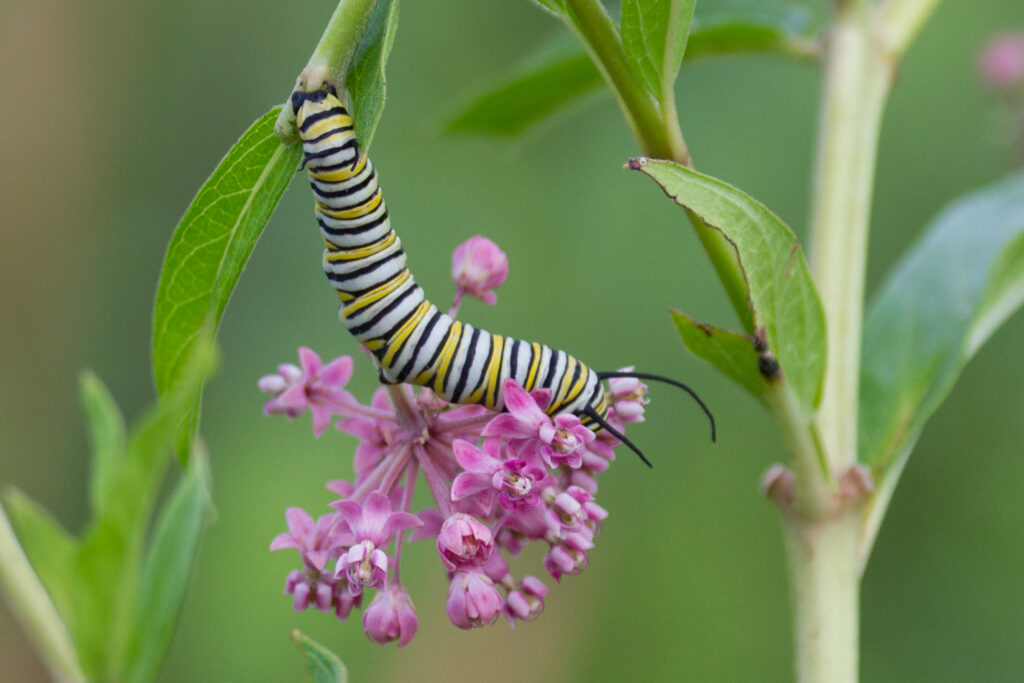
I planted a few seeds of common milkweed (Asclepias syriaca) in the front garden bed, hoping they would sprout and attract monarchs. These large, vivid-winged butterflies need milkweed to complete their life cycle. Their caterpillars can eat different species of milkweed, such as rose milkweed (Asclepias incarnata) or orange butterfly weed (Asclepias tuberosa), but they have no other food plant.

To my delight, the plan worked. Several milkweeds sprouted and grew tall, and that year I saw both adult monarchs and their striped caterpillars in my garden.
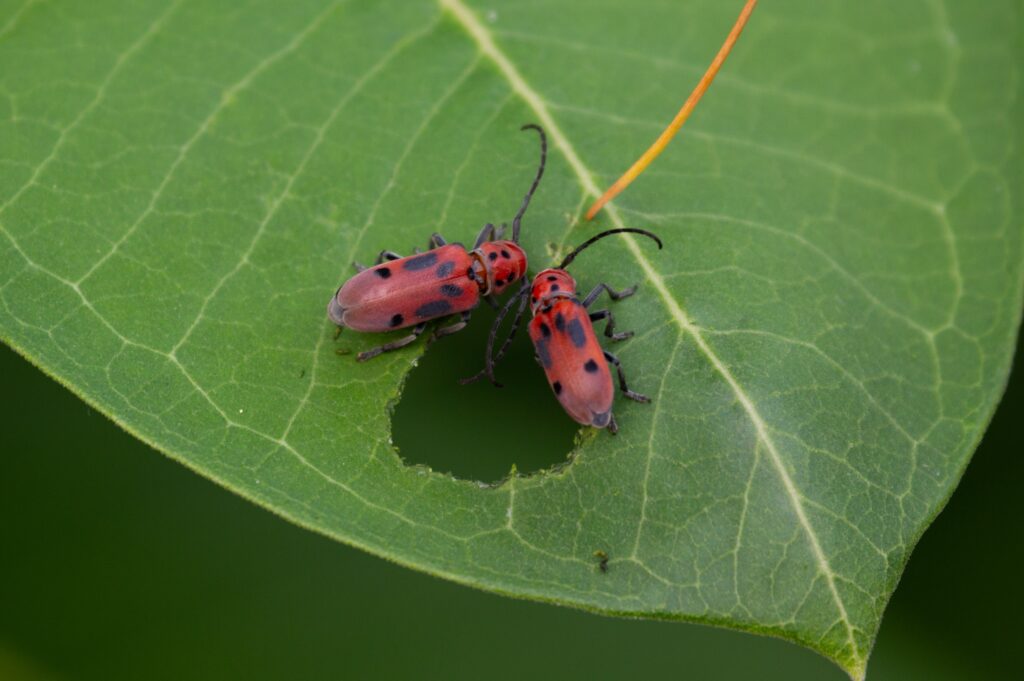
Better still, the soft mauve globes of milkweed flowers—which smell a bit like lilacs—attracted other insect life as well. Red milkweed beetles were among the first to find my plants. Like monarch caterpillars, these sweet-faced beetles with black polka dots and long antennae feed only on milkweed. They have a stronger need than most insect species to locate milkweed plants—although I’m always amazed that they’re able to do so!
The garden brightened further as bumblebees, honey bees, and iridescent blue-black wasps began buzzing from bloom to bloom, collecting nectar and pollen.
The hard work of those pollinators showed later that summer. Milkweed blossoms ripened into seed pods, which dried and finally split open, showing brown seeds attached to silky white strands of fluff. Breezes caught these filaments and scattered seeds around the yard.
The following spring, new milkweed plants sprouted. I let them grow—in fact, I encouraged them by removing grass and establishing gardens around them. If just a few milkweed plants could draw monarchs, beetles, and bees to the yard, what might a whole patch bring in?
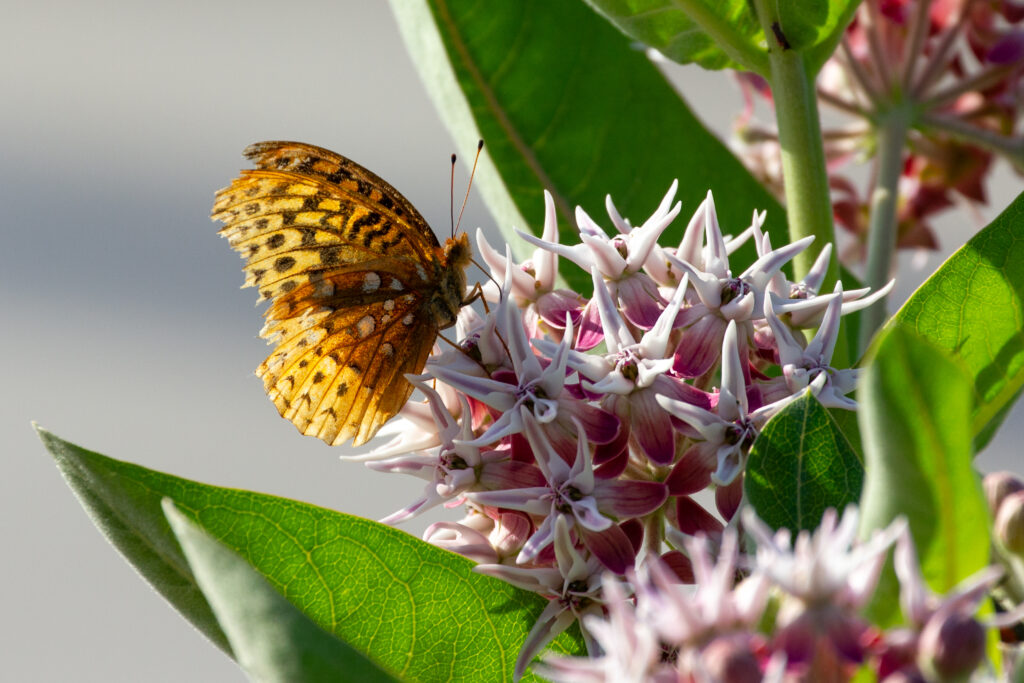
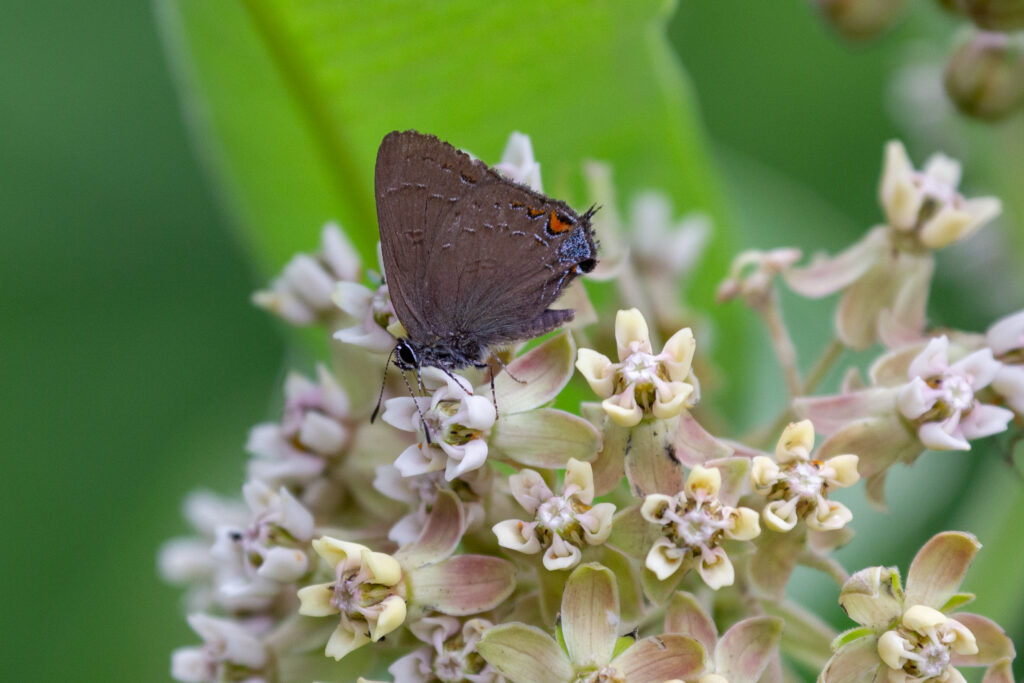
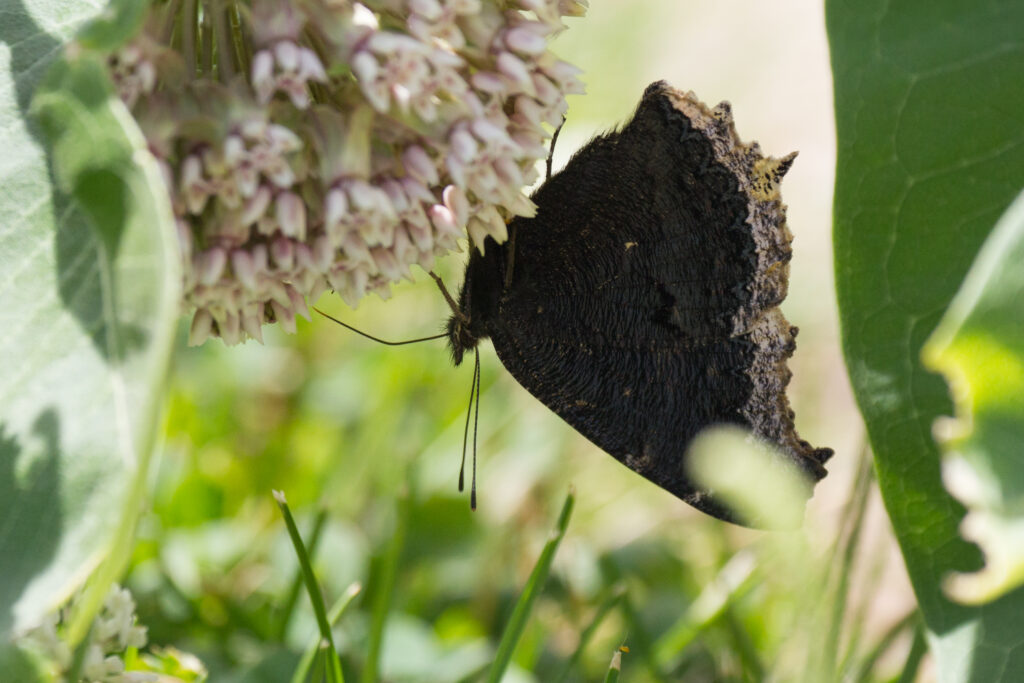
Finding out has been a source of pure enchantment. On any given day, I can find many tiny webworm moths, their dainty wings an orange-and-white checkerboard. Other visitors stop in sporadically, like the chestnut-brown mourning cloak, the miniscule banded hairstreak, and the rusty orange great-spangled fritillary (all species of butterflies).
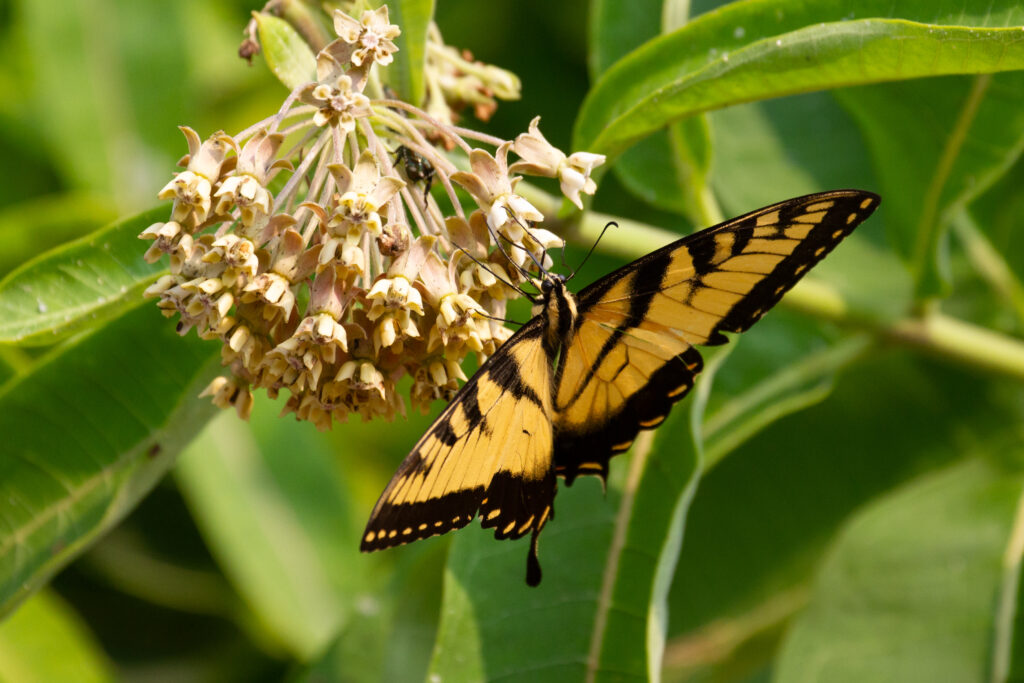
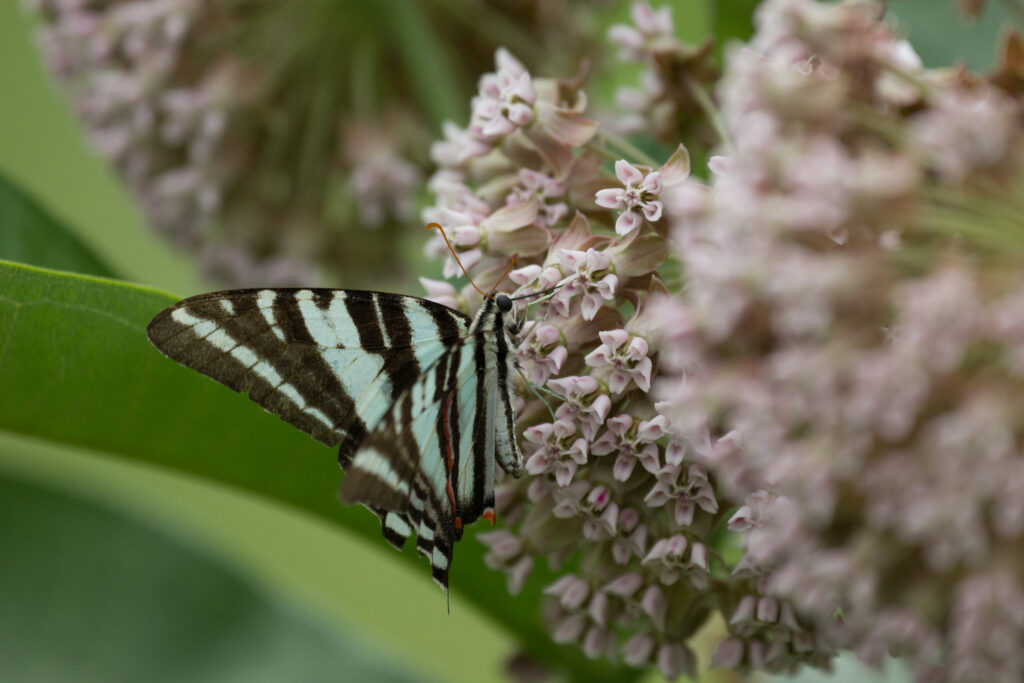
Swallowtail butterflies frequently pass through. Most often I see the large, charismatic, yellow-and-black tiger swallowtails or the smaller, more delicate black swallowtails fluttering among the blooms. Just once, we had a rarer guest: a zebra swallowtail. With dramatic stripes of black and greenish-white, zebra swallowtails are native to the eastern United States but much more common in the southern part of their range. The only one I’ve ever seen in Kewanee was nectaring in my milkweeds.
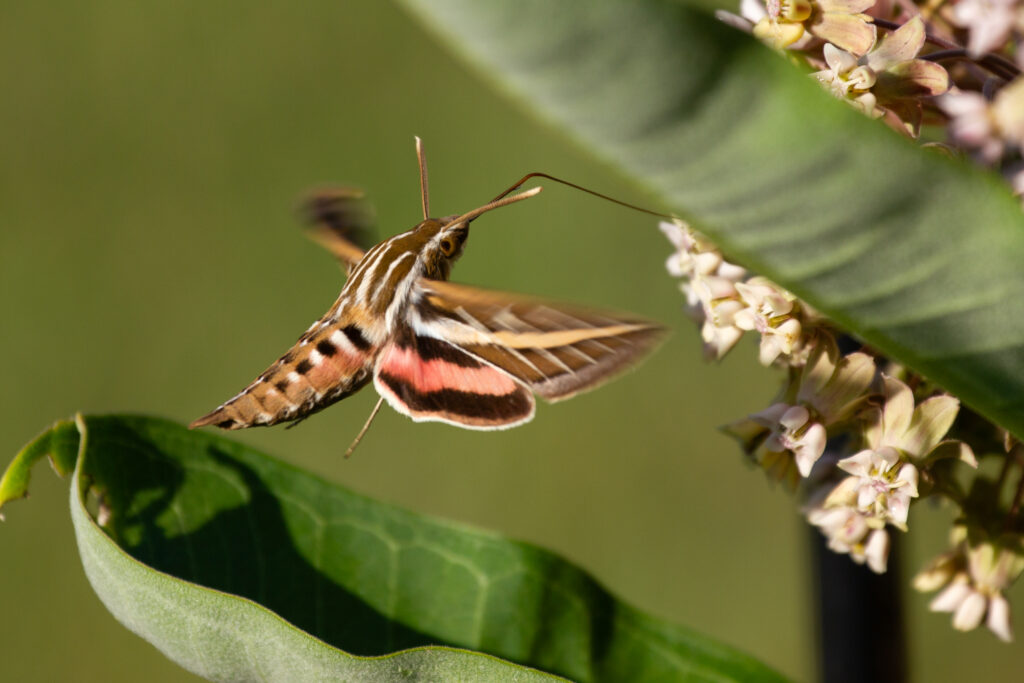
One of my most interesting garden encounters came one evening while I was finishing the supper dishes. As I looked out the window—admittedly paying more attention to the garden than to the plate in my hands—I noticed something hovering near a milkweed flower. At first, I thought it was a hummingbird; I’d seen their jewel-green forms flitting through there before. On second glance, though, I realized that I was actually looking at some type of sphinx moth!

Sphinx moths are often called hummingbird moths, with good reason—they fly in a similar way, hovering before flowers as they sip nectar. I grabbed my camera and tiptoed outside, hoping not to scare the little creature. Fortunately, it was so intent on its meal that I could inch close, unnoticed. That individual turned out to be a titan sphinx. I later had similar encounters with white-lined sphinx moths, who have a rosy stripe down their wings.
Every year, I remove a little (or a lot) more grass and plant a few (or a lot) more native plants. In every new section of garden, milkweed is always one of the stars. No other single plant has brought more life and color to our corner of the world.