“When a society or a civilization perishes, one condition can always be found. They forgot where they came from.” Carl Sandburg.
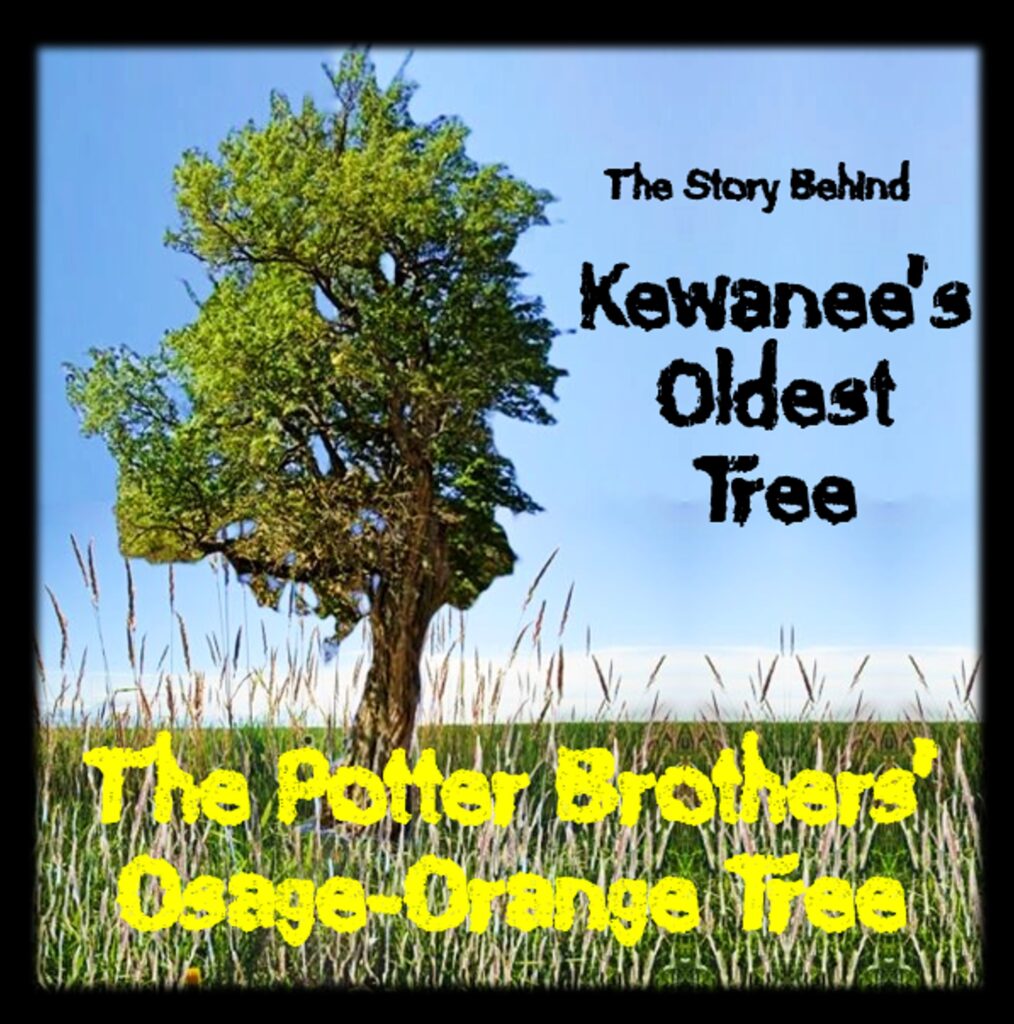
This is a tale of but a single, unkempt-looking tree, planted in the 19th century at the birth of Kewanee. But a 21st century marriage of science and the human spirit preserved it as a living connection between our past and our future, a reminder of where we came from.
The Wethersfield Colony was founded in 1836. David Potter, his wife and eight children, including 17-year-old Matthew, 15-year-old John, arrived in the fall of 1838. The family farmed in the southwest quarter of Section 4 in today’s Wethersfield Township (to the west and north of the intersection of today’s Beach and South streets). David soon started the first fruit orchard in the township, growing apples, likely with seeds and cuttings brought with him from Ohio.
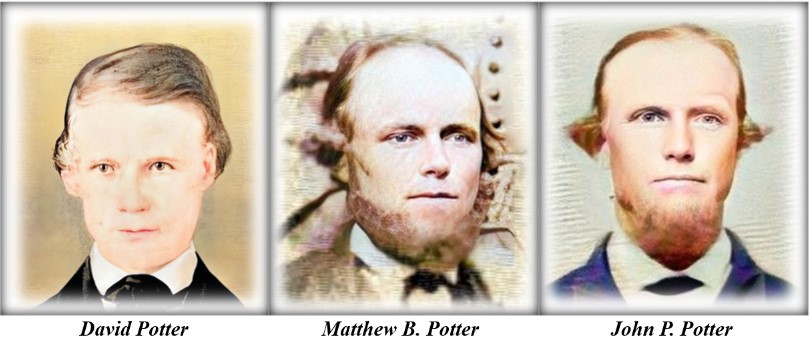
After helping his father establish the farm and orchard, Matthew similarly began farming in Wethersfield. He also served as a deputy sheriff for Henry County, beginning in 1844. Matthew was elected Henry County collector and sheriff in 1848, serving through 1850. He held other township and county elective offices throughout his life. But Matthew continued farming, John soon joined him in farming, and both married in the late 1840s.
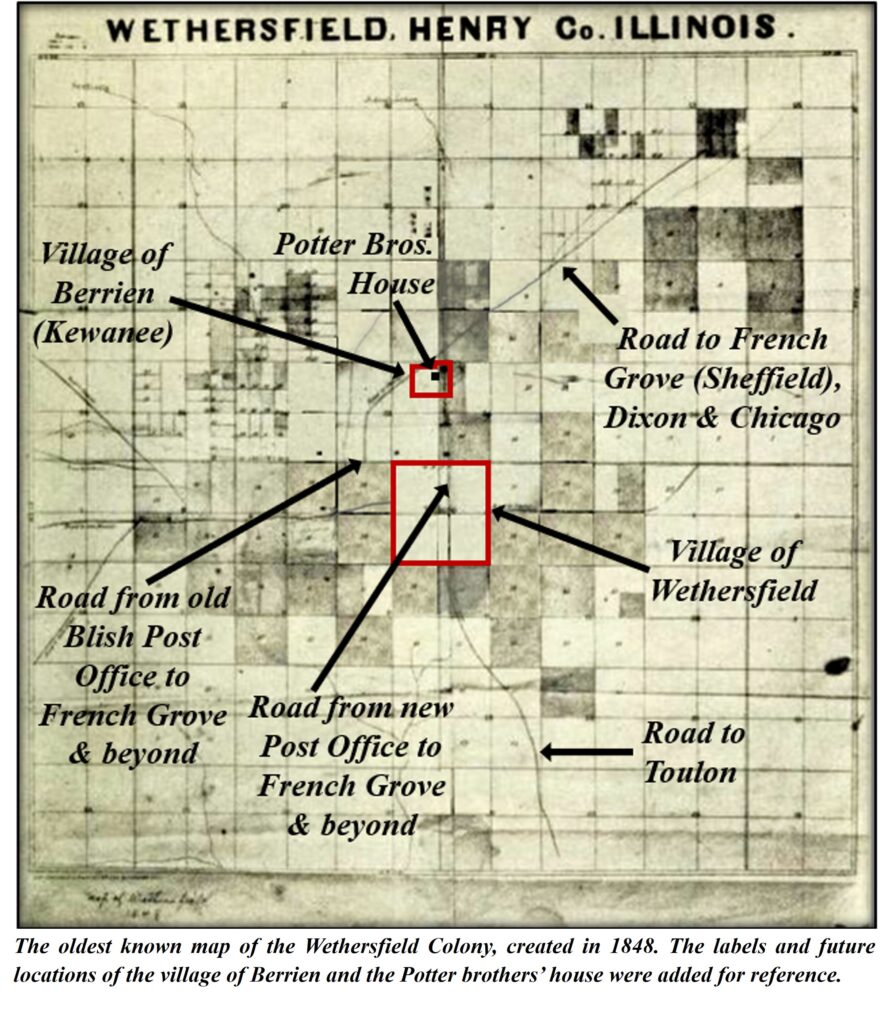
In February 1851, the brothers purchased the northwest quarter of Section 33 in today’s Kewanee Township for $200. It was all prairie, but Big Barren Grove was within view to the west and to the north. To the east and southeast, there was more undulating prairie filled with hazelnut bushes, other scrub trees and beautiful, riotously-colored wild flowers.
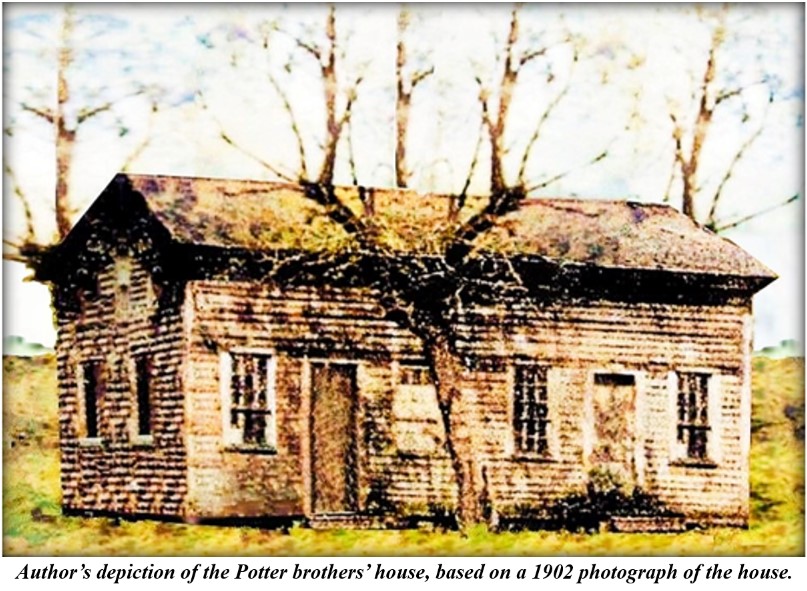
The Potter brothers built a small, unpretentious frame house, divided into two parts for their respective families. It was on the west side of the dirt road running from Wethersfield to the north (today’s Main Street), a few hundred yards south of where the railroad would cross the road three years later.
Meanwhile, beginning in the mid-1830s in Jacksonville, Illinois, Jonathan Baldwin Turner, a professor at Illinois College, came to believe that successful farming on the Illinois prairie required a means by which the land could be protected – from wild animals as well as livestock. (Turner later also helped establish what became the University of Illinois.) But the cost of fencing was generally high because of the lack of sufficient timber on the prairie. So, Turner began investigating alternatives.
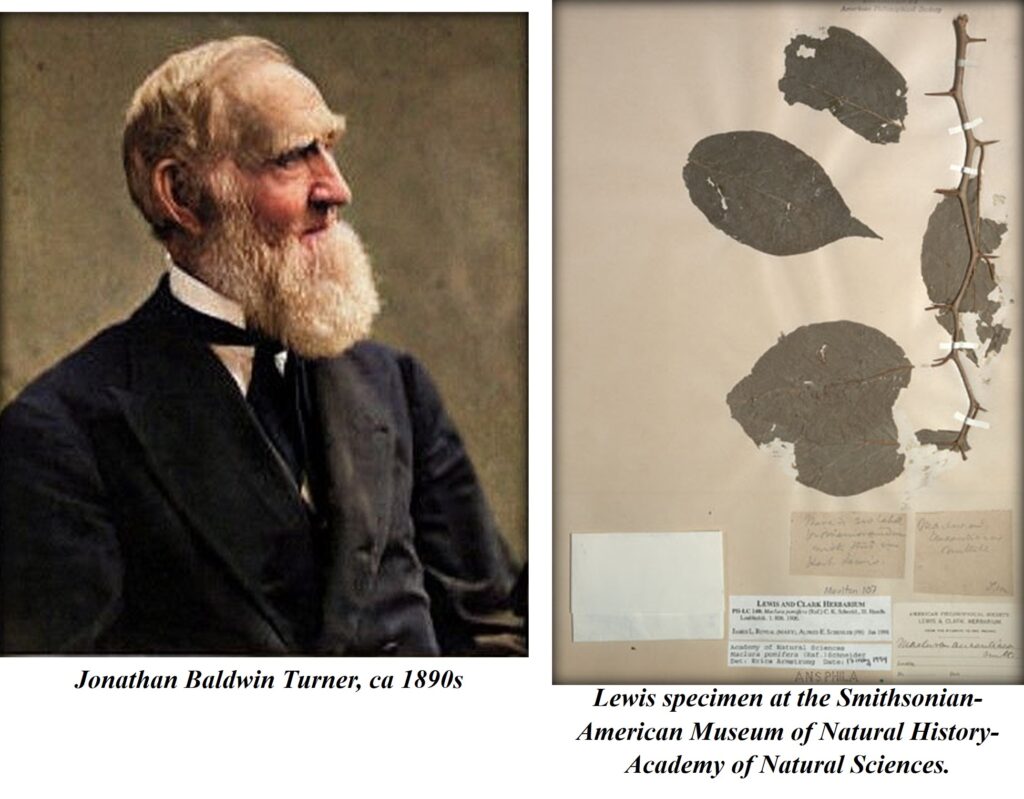
Hedgerows had been around for centuries. But in the United States, there were decided disadvantages to the plants typically used to create them. Turner, however, learned of a plant growing to the south, what became known as the Osage-orange. (Meriwether Lewis, of Lewis and Clark fame, made this the very first plant from their expedition sent to President Jefferson. He obtained it from trees that had been brought to St Louis by Osage tribe traders as he was buying provisions for the 1803 expedition. His original herbarium specimen now is a prized item in the Smithsonian in Washington D.C.)
As he experimented with it over the next decade, Turner found that it could grow successfully and quickly in Illinois, that its root system defeated the most pernicious gophers and other burrowers, its thorns the most rapscallious above-ground creatures, and no living thing would eat it. While the cost of seeds was initially high, Turner was confident that the price would soon fall to a fraction of the cost of a wood fence.
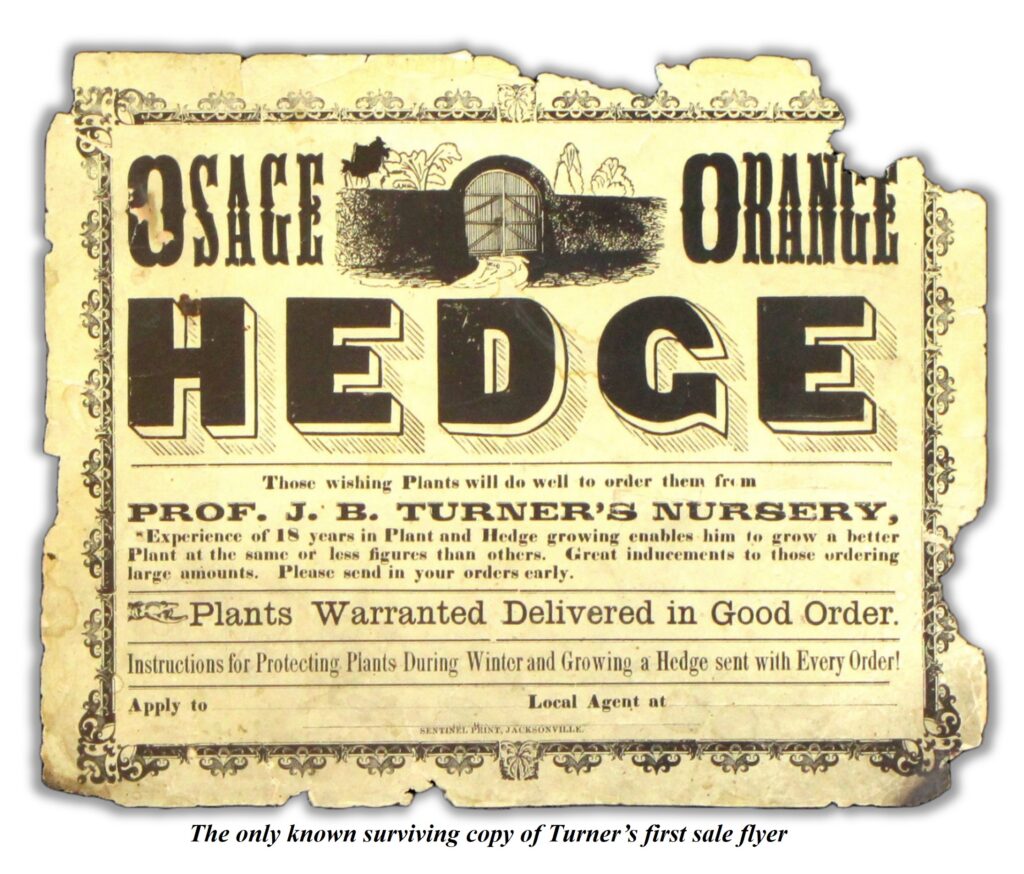
In 1848, Turner began marketing the Osage-orange as a durable, inexpensive living fence. On Turner’s Evergreen Farm near Butler, Illinois, he devoted a 10-acre plot which he used as the primary nursery nationwide for growing the seedling trees. Planted about a foot apart, as the plants grew, they would soon intertwine to make an impenetrable barrier – it was “horse high, hog tight, and bull strong.”
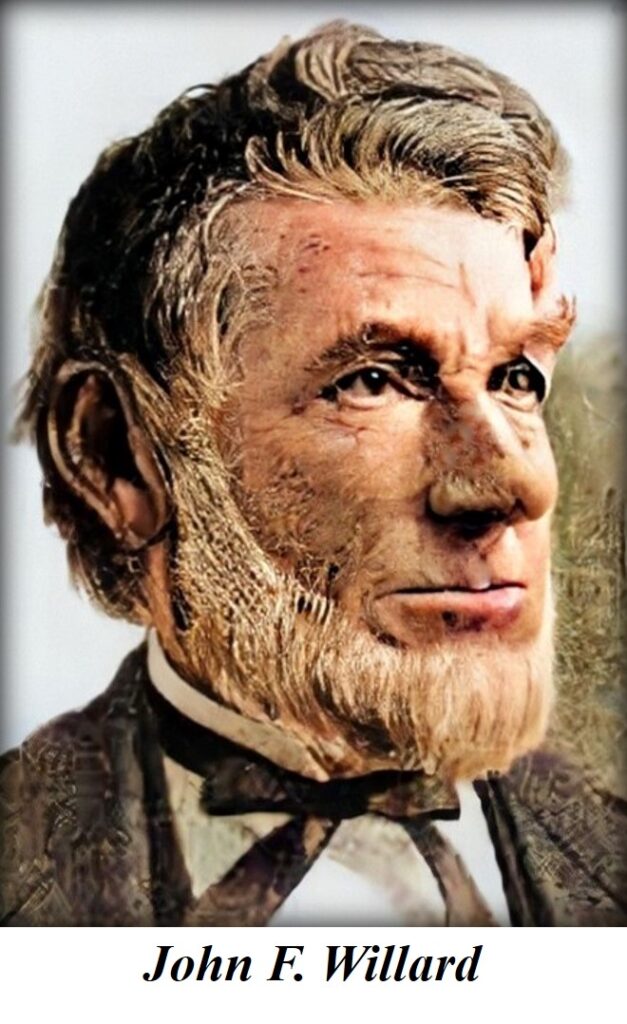
Initially, Turner contracted with a number of Illinois nursery owners to plant and stock the Osage-orange. In 1846, Wethersfield pioneer John F. Willard had begun the first nursery in the colony just east of the village. Willard likely was either one of those original agents for Turner or an early proponent of “Turner’s Oranges” for use in hedgerows. (By 1860, Willard had enough of the plants for 200 miles of fencing.)
After the Potter brothers purchased their land from which the village of Kewanee would arise, they began preparing to farm and raise livestock. Corn was their choice for planting, while they maintained their acquaintance with the ubiquitous hogs which populated most farms in the county.
Although nearby Big Barren Grove was a source for fence posts in the area, the brothers’ experience with plants and trees gained via their father likely tilted them to using at least some hedgerows to protect their corn from their hogs and wild critters. Rather than starting from seeds, they also likely went to Willard’s Henry County Nursery in Wethersfield to purchase Osage-orange plants.
After the Potter brothers sold their land to those who developed Kewanee, most shrubs and trees, including the Osage-orange plants, were removed as the village quickly grew and new housing and buildings went up. But an occasional Osage-orange, left untended, grew into tree-sized proportions, particularly any along Main St.
And, one still grows along that street in Kewanee nearly 175 years later because of coordinated efforts by dedicated Kewaneeans, volunteer arborists, some cyclists, and the media.
In mid-December 2009, Guy Sternberg, owner and operator of Starhill Forest Arboretum in Petersburg, Illinois, got the phone call: “The historic Potter Farm Osage-orange in Kewanee is tilting; they plan to take it down on Tuesday before it falls on someone!”
The tree had survived while an entire city grew up around it. A sidewalk touched its buttress on the west, and a state highway crowded its base on the east. Its root system had been so abused over the past century that any lesser species would have gone to Arbor-Heaven decades ago. But this was Maclura (its scientific name), a miracle tree with amazing decay resistance and regenerative powers.
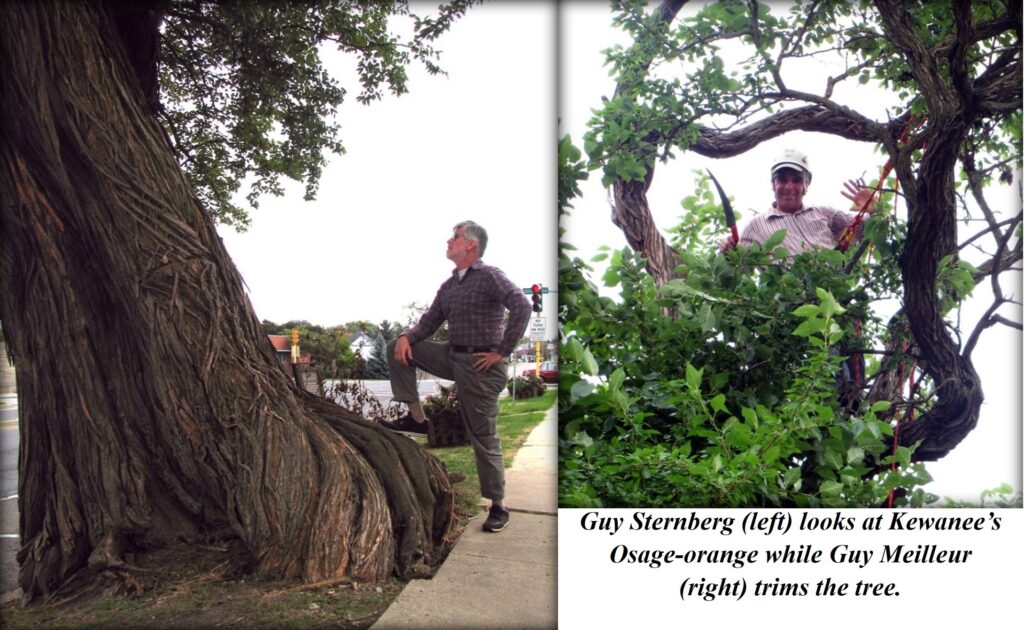
Sternberg spent the weekend rallying support for a plan to save the tree. The city agreed to consider alternatives to euthanasia, beginning with the pruning of about two tons of wood from the down-lean side of the tree (directly over Main St.). Before long, the tree had a bank account, a Facebook page and on-air advocacy from Chicago radio host Mike Nowak. Local news coverage and a National Park Service podcast swelled the ranks of supporters. Among them was Board Certified Master Arborist Guy Meilleur of North Carolina who, like many others, volunteered his time and expertise to help save the tree. (Because Sternberg and Meilleur often worked together and were confused due to the same first name, they casually adopted the nicknames Gusto (Meilleur) and Gweedo (Sternberg) long ago.
In June 2010, a major storm lashed Kewanee with 70 m.p.h. winds. When the storm passed, Main Street was littered with broken limbs and shredded leaves, but the Osage-orange was unscathed. Here was proof that faith in this tree was justified.
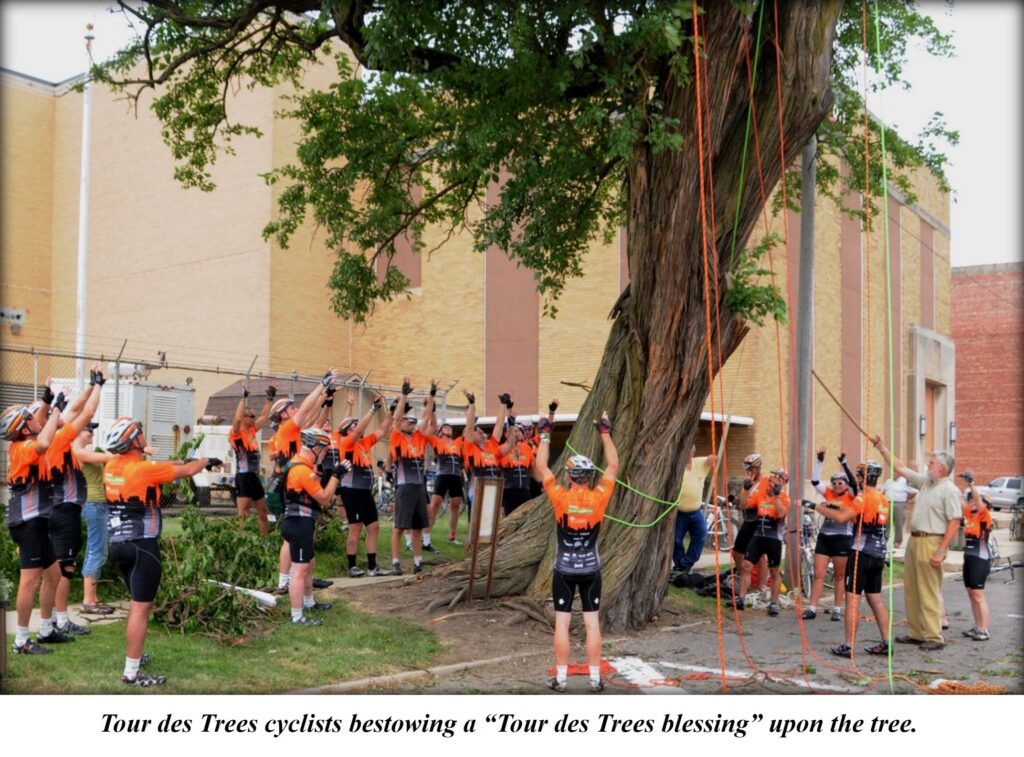
In July, the 2010 STIHL Tour des Trees stopped by for the cyclists to pose for pictures and bestow a “Tour des Trees blessing” upon the tree. The riders encircled the tree and chanted “Live, tree, LIVE” in bold, synchronized cadence. “I believe the tree stood a bit taller after that encouragement; I know I did,” said Sternberg.
The following February, Gweedo Sternberg returned with Gusto Meilleur to collect cuttings from the tree which they took to the Brenton Arboretum in Iowa, where Curator Andy Schmitz was assembling a national collection of Osage-orange.
Sternberg said at the time, “[i]sn’t this what we’re all about? Trees with a long and documented history like this one are a living connection to our past and our future. Passionate arborists, armed with knowledge born of research and the backing of local citizens, the media and 75 sweaty cyclists, succeeded in saving an historic tree from an untimely and unnecessary demise. Our hope was that its progeny will eventually shade future citizens of Kewanee, perhaps inspiring others to a lifetime of environmental advocacy.” Continuing, Sternberg noted that a “tree can live seven times longer than a human, but just one thoughtless human generation can foil the good work of all of those that came before it. Thanks to the efforts of an inspired group of local citizens, tree advocates and the media, this tree lives on to share its story, and theirs.”
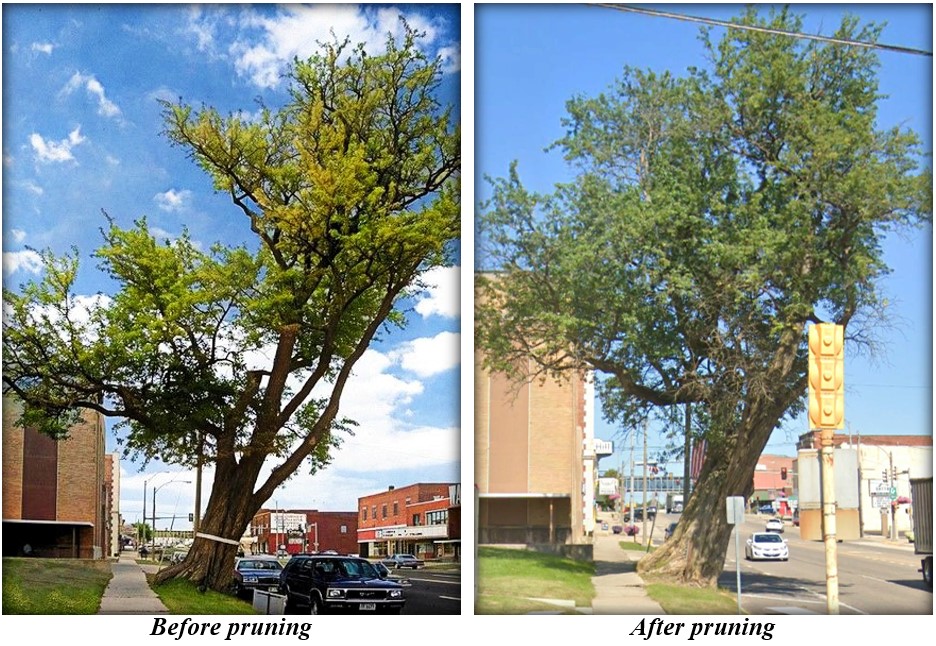
A connection between the past and the present maintained, preserved by attention to the science and the human spirit. Evidence that, perhaps, we have not, after all, forgot from where we came.
(Dean and Guy “met” last spring. Guy helped Dave Clarke and Dean clarify the species of trees that had been planted around the Wethersfield school a century ago for a story Dave and Dean had published in the Illinois State Historical Society’s ILLINOIS HERITAGE magazine. As a result, Guy and Wethersfield high school teacher Mrs. Cathy Dana, whose students are working on a continuing tree identification and planting project and were featured in the story, are hoping to coordinate a student field trip to Guy’s arboretum. A variation of this story on Kewanee’s Osage-orange tree will appear in a future edition of ILLINOIS HERITAGE.)