(This is a chapter from my upcoming book, Kewanee, Illinois – Reflections on its First Years – 1854-1865.)
Norman Hyde Pratt came to Wethersfield from New York in the 1840s. He eventually became a commission salesman.
When President Lincoln called for additional enlistments in mid-1862 during the Civil War, Pratt was one of many Wethersfield and Kewanee citizens to sign up, and he was elected as a lieutenant of one of two companies of Kewaneeans which eventually became part of the 124th Regiment of the Illinois Volunteer Infantry. His brother, Julius Augustus Pratt, was the first Kewaneean in the two companies to die in the Civil War. After the Vicksburg siege in 1863, N. H. Pratt was promoted to captain.
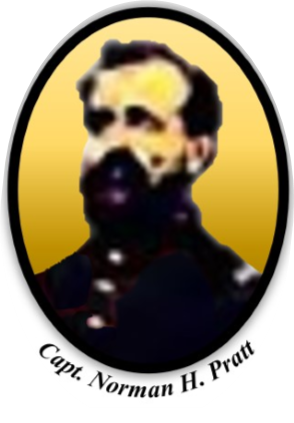

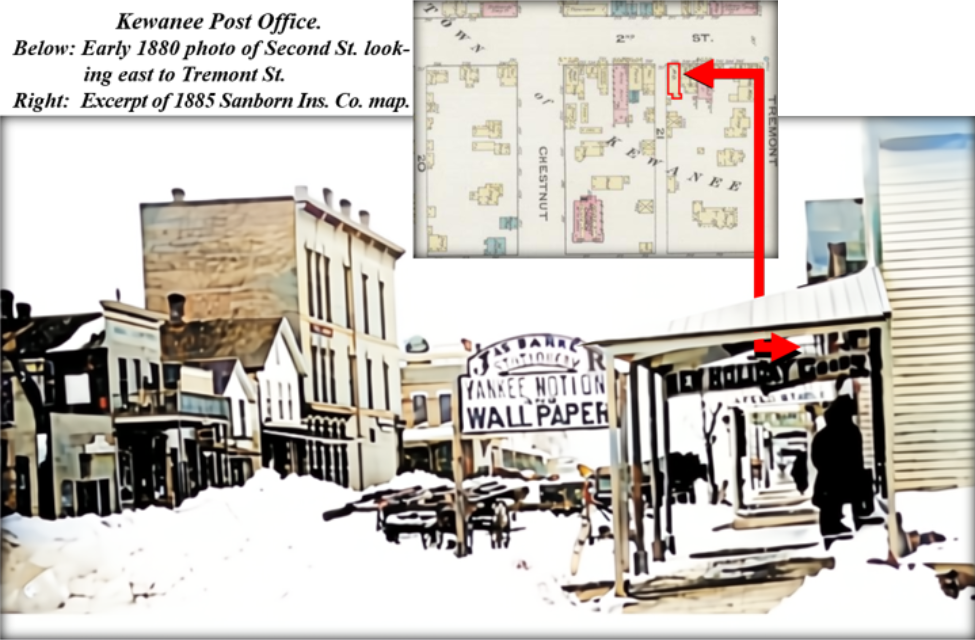
After the war, Pratt opened an insurance agency in Kewanee on the south side of Second Street midway between Tremont and Chestnut streets. In 1867, President Johnson appointed Pratt Kewanee’s postmaster, and he ran the Post Office from his Second Street business from 1867 until 1887 when his wife, Louise Anna Sloan, daughter of early Kewanee pioneer Seymour Sloan, died. Pratt moved back to New York, remarried, and eventually moved to the Chicago area, where he died in 1895. At his death, Kewanee’s newspaper, the Independent, wrote that “Capt. Pratt was a man of sterling qualities who always had the greatest respect of those who knew him.”
The following is an excerpt from the History of the 124th Regiment Illinois Infantry Volunteers, Otherwise Known as the Hundred and Two Dozen, by Chaplain R. L. Coward. It describes a day or so in the life of Kewanee’s Union soldiers in battle against the Confederates as part of the Mobile Campaign in Alabama:
“Company A, under Lieut. W. F. Dodge was then sent out as a skirmish line to feel of the enemy on our right front, while company F, commanded by Capt. N. H. Pratt, was sent out for the same purpose in front of our left.
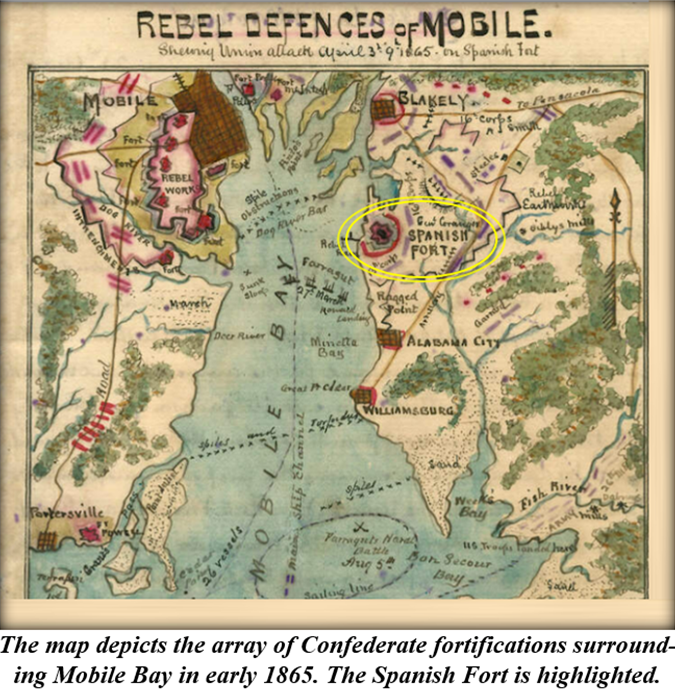
“Capt. Pratt deployed his company with his left resting on the enemy’s main line of works, and swept forward. After advancing about a hundred and fifty yards, a piece of artillery opened on them with grape, but they speedily captured it, sustaining no damage, and with it eight or ten prisoners and another gun.
“Sending his prisoners to the rear, the captain requested permission to continue his advance, giving as a reason that he believed the enemy were evacuating, and these few men were only a feint to cover the escape of the main body. Company F continued to move forward, capturing eight or ten pieces of artillery, and more men than its own force numbered, till nearly midnight. Some of the men inquired if the captain was going to take company F to Mobile unsupported.
“But at last the rest of the regiment came up to find the rebels really gone, penetrating as far in the darkness as Old Spanish Fort, which it reached about midnight. Here we stacked arms and rested a little, scrambling meantime for the possession of the guns, and for the hams and corn meal left by the garrison.
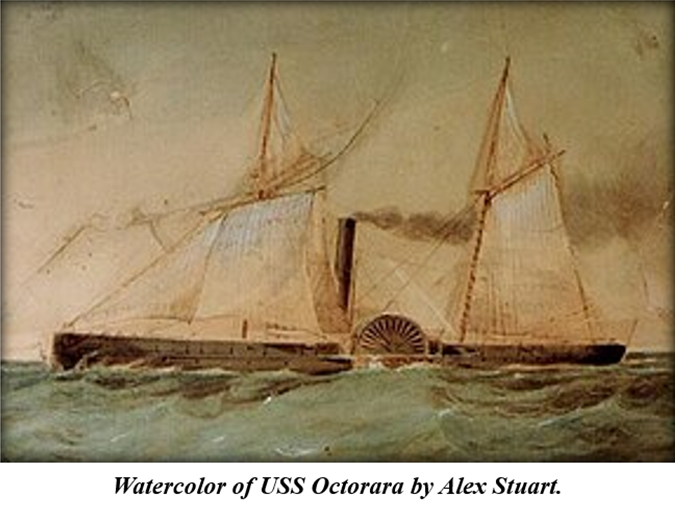
“But very soon the “Octorara,” not knowing of the change of administration in the Fort, sent a hundred-pounder shell at us, and it was deemed prudent to withdraw. So we returned to our quarters, reaching them about three o’clock in the morning, confidant that we had done a pretty good night’s work.
“The division took about 500 prisoners, of which we took our full share. The troops on our left took the confederates in the rifle-pits in front of them, who had been left to their fate by the retreating garrison, but they did not do it until after midnight upon learning that the Fort as in our hands.”