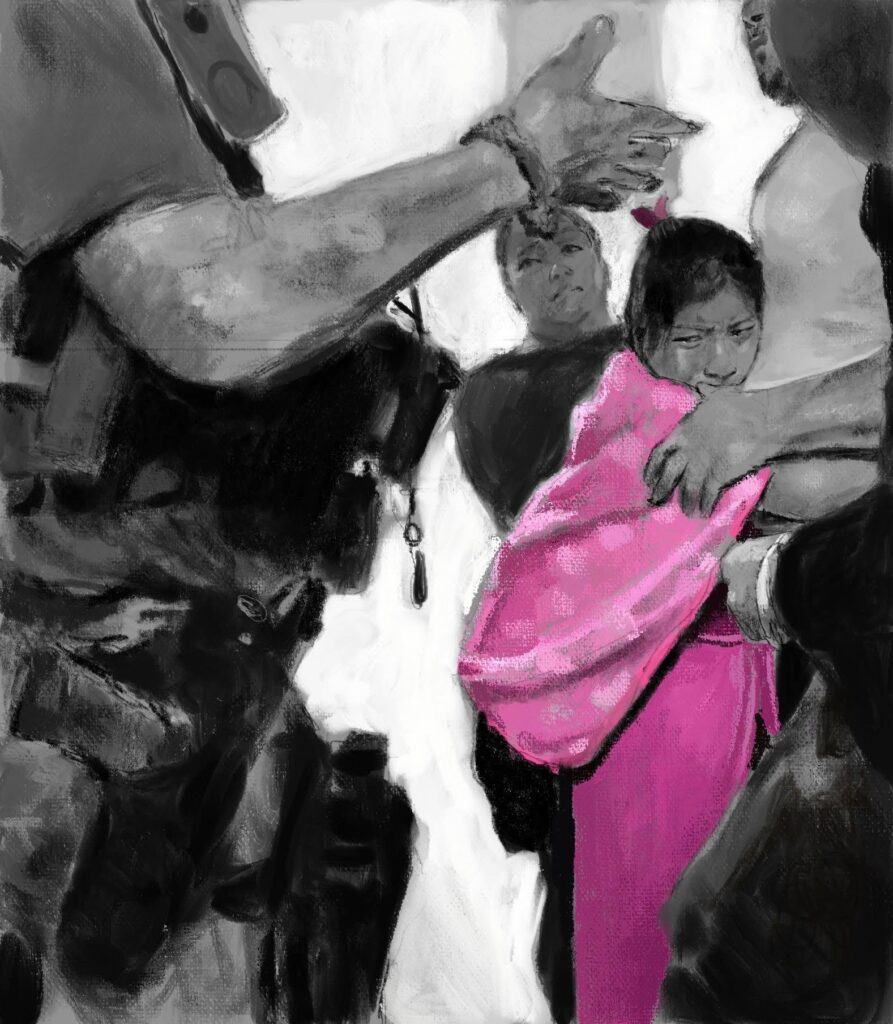
KEWANEE, Ill. — For more than a decade, Marc Nelson has used his art to document human rights abuses around the world. His drawings are stark, intimate and grounded in eyewitness accounts.
Many of his illustrations have been featured in international exhibitions, a documentary, academic journals and even on CNN.

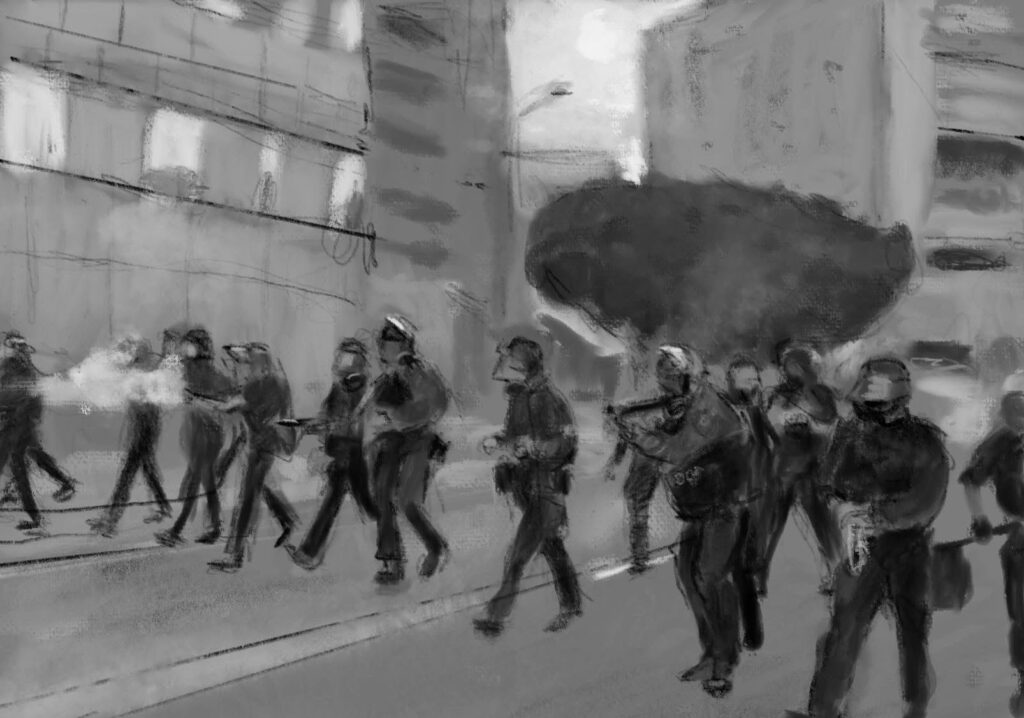
But in recent months, the Kewanee artist has turned his attention closer to home: the streets of Minneapolis, where he says federal immigration agents have carried out “illegal and violent invasions” of American communities.
Nelson’s work has never been ordinary, and neither has his career. Within the past year alone, he has been part of a group exhibition at the University of Michigan titled A Prison, A Prisoner, and A Prison Guard. His pieces are also included in Detainees and Disappeared — Memory Against Denial, a traveling exhibition with stops across Syria, including the Damascus National Museum. The exhibition is accompanied by a published book.
His art honoring a Syrian activist friend, killed by the Assad regime in 2024, was featured on CNN. He has created covers for national and international books and journals, and he currently works as a freelance illustrator for Hardball Press in Brooklyn, Each Step Home in Los Angeles and the Syria Emergency Task Force in Washington, D.C.
Nelson’s work has also been the subject of academic study. His art appears in the Journal of Law and Society in an article examining accountability for mass human rights violations in Syria.
For years, Nelson’s artistic mission centered on the Syrian civilians who rose up against President Bashar al-Assad. Their struggle, he said, struck him at a deeply personal level.
“For the last decade my art has focused on the Syrian civilians who risked everything to rise up against the oppressive, murderous Assad regime,” Nelson said. “The plight of the Syrian people resonated with me so powerfully because these fellow human beings were struggling for the same ideals we, as Americans, and citizens of the world, hold so dear: life, liberty, freedom of expression and democracy.”
He described watching a modern, cosmopolitan nation “being brutally destroyed, in real time, for everyone to see,” calling it “blatant, industrial, mass murder.”
Nelson said he never expected to witness similar scenes in the United States. But when federal agents began appearing in cities across the country — including Chicago, where he grew up — he felt compelled to document what he saw as escalating abuses.
“When this current administration started flooding cities with masked, armed, paramilitary forces, I was obviously horrified,” he said. “I had been depicting the devastation wrought by dictatorial despots in Syria, Gaza and Ukraine, and now American communities were being terrorized.”
The turning point for him came when Immigration and Customs Enforcement and Border Patrol agents arrived in Minneapolis.
“Minneapolis/St. Paul is a beautiful, multicultural, highly educated and famously friendly city,” he said. “My wife was born there, so it will always have a special place in my heart. Watching these kind, loving communities being torn apart with impunity is beyond horrifying.”
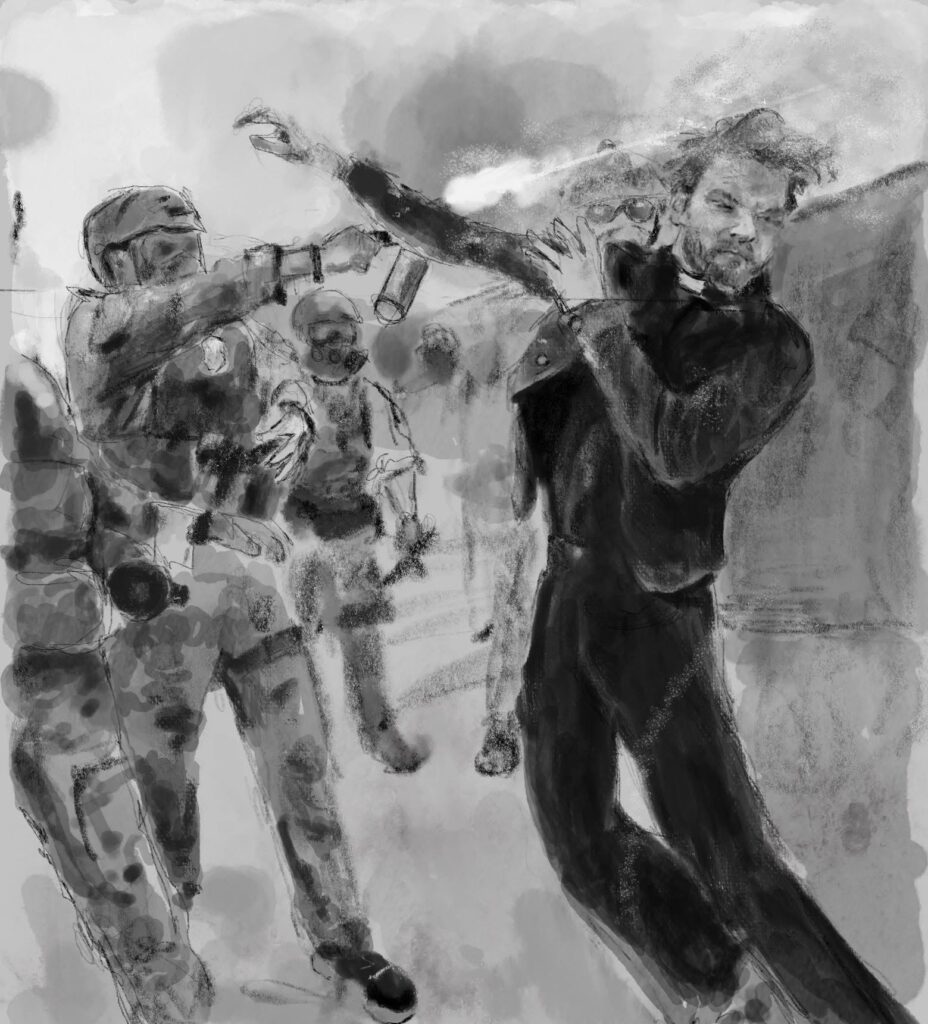
Nelson said he has seen videos of citizens being “abducted, torn out of cars, gassed, shot in the face with ‘less than lethal’ bullets” and homes and businesses “illegally invaded, and often destroyed, with no accountability.”
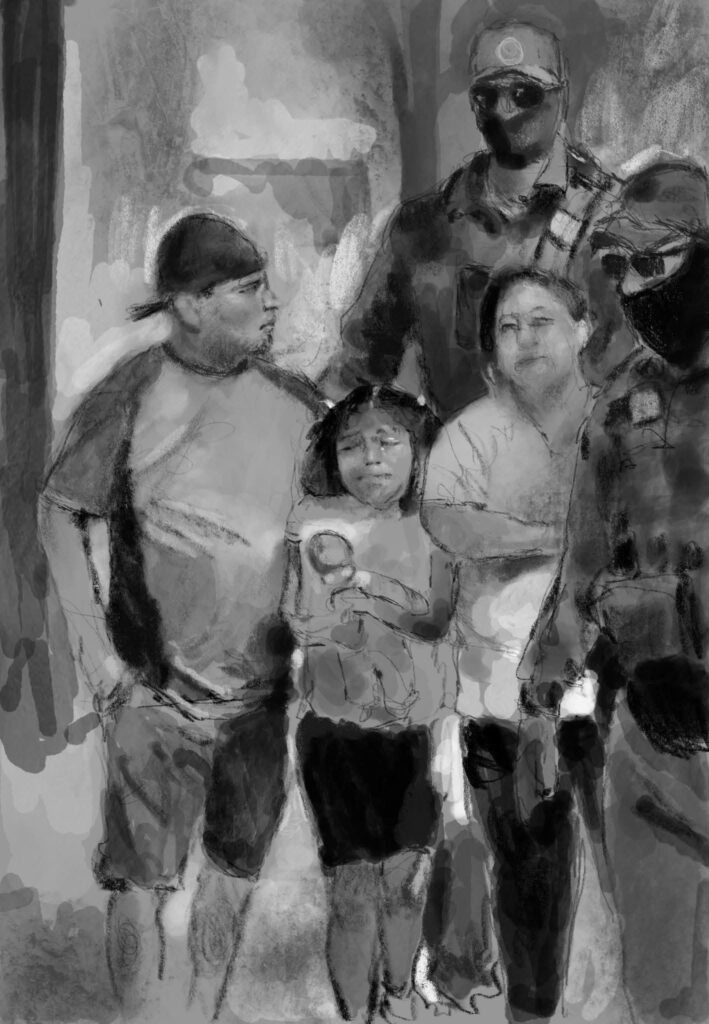
One recent video, he said, showed an elderly Hmong man, a naturalized U.S. citizen, being pulled from his home “almost naked, in the freezing Minnesota weather” before agents realized they had detained the wrong person.
“This isn’t about justice or law,” Nelson said. “It’s about intimidation and fear. Likewise, this isn’t about politics, it’s about basic human rights.”
Nelson’s Minneapolis series continues his practice of drawing from eyewitness photos and videos. The process, he said, is both artistic and emotional.
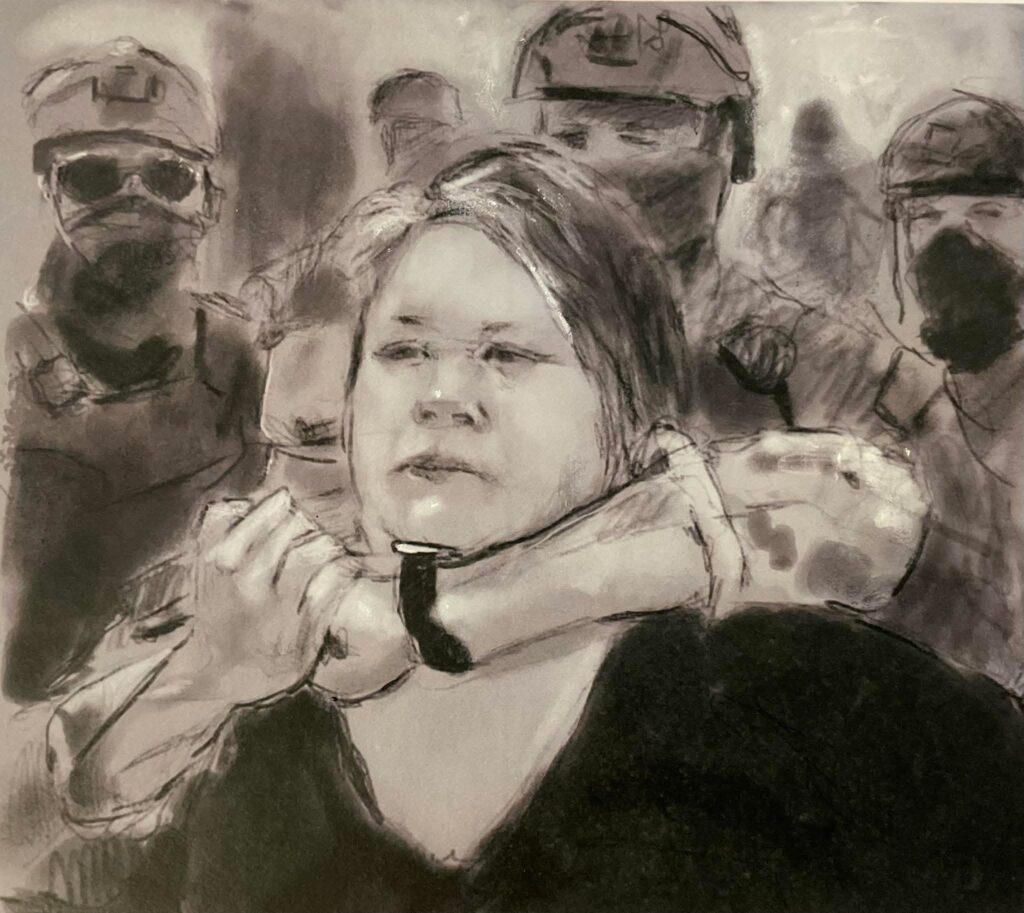
“I feel compelled to depict these atrocities on paper, because it is the only way I can begin to process them, and express my frustration and horror in a way that words cannot,” he said. “I want to sit with each image; drawing allows me to do that.”
He sees a direct connection between his past work and his current focus.
“The line between the art I’ve made about Syria, Gaza and Ukraine, and what is happening in America, is terrifyingly thin,” he said.
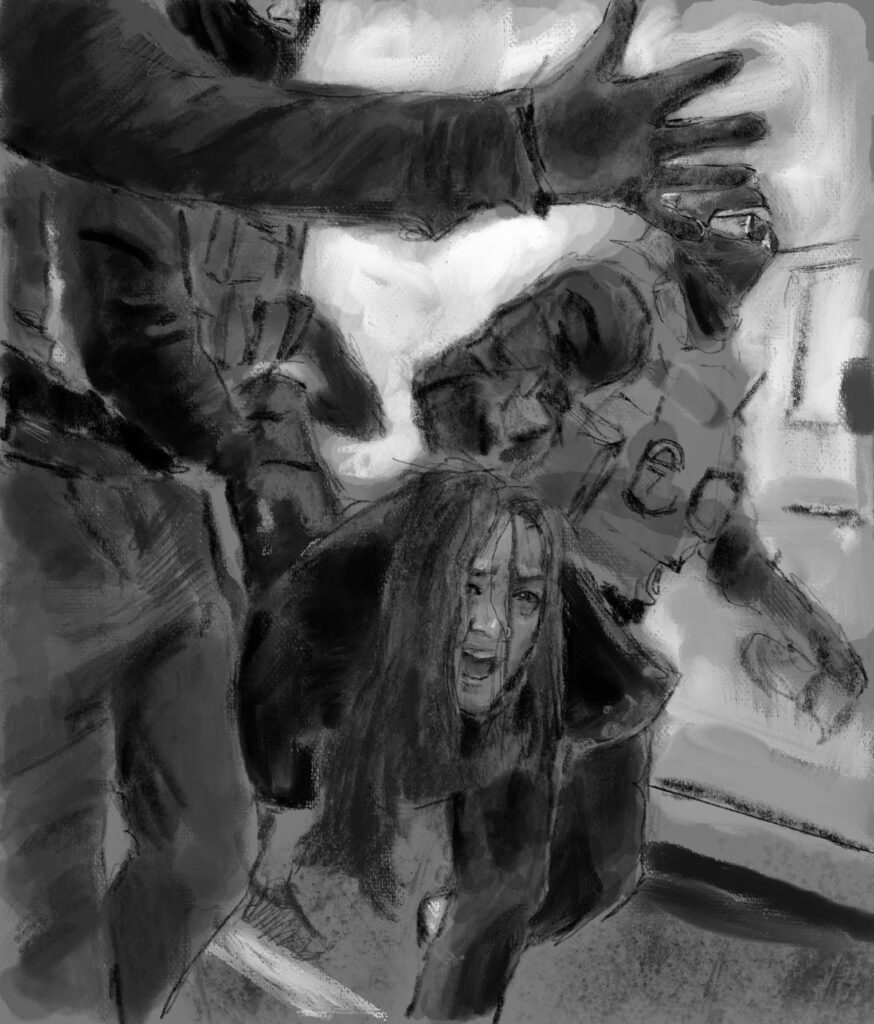
Nelson believes silence is dangerous. He hopes his art encourages others to speak up.
“I think the best way to help people in Minneapolis is not to be silent,” he said. “Peacefully demonstrating and contacting lawmakers at all levels of government are effective ways to make your voice heard.”
As his work continues to gain national and international attention, Nelson remains rooted in Kewanee, but his art, as always, reaches far beyond it.