(I recently watched LeeAnn Bailleu and Marianne Culver’s podcast, Junius Sloan: In Quest of Beauty, on their Facebook page, KewaneeMemoryLane. It’s a great way to learn more about Junius Sloan, whose early painting career found him creating beautiful landscape art in and around Kewanee in the 1850s and 1860s. You can see the podcast here.
(Here is a little more information on Julius Sloan.)
Junius R. Sloan only spent a handful of years in Kewanee – less than two years in the mid-1850s, less than two years in the late 1850s, the summer and fall in 1866, and an occasional visit with his parents. But Junius and Kewanee became intimately linked in the art world. Richard H. W. Brauer, Emeritus Director of the Brauer Museum of Art at Valparaiso University, refers to Sloan’s landscape paintings of scenes in and around Kewanee as “unrivaled prairie paintings thought to be the earliest depictions of life on the settled Illinois prairie.”

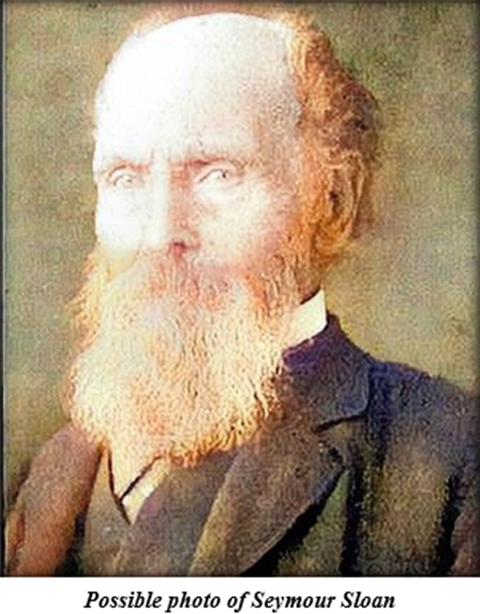
Junius Ralston Sloan was born in 1827 in Kingsville, Ohio, near the shores of Lake Erie at its border with Pennsylvania. He was the second of eight children of Seymour and Drusilla Sloan. The elder Sloan, a redheaded and red-bearded blacksmith, toolmaker, and farmer, was stern and sought practicality for his children. In contrast, Drusilla, a milliner, encouraged their aptitudes for music, writing, and painting.
Junius gravitated toward art, and by his 21st birthday, was painting portraits of local well-to-do residents. He soon left home and traveled by foot, stage, steamboat, and canal around the eastern states, “hunting heads to paint,” while taking in the beauty of the scenery around him.
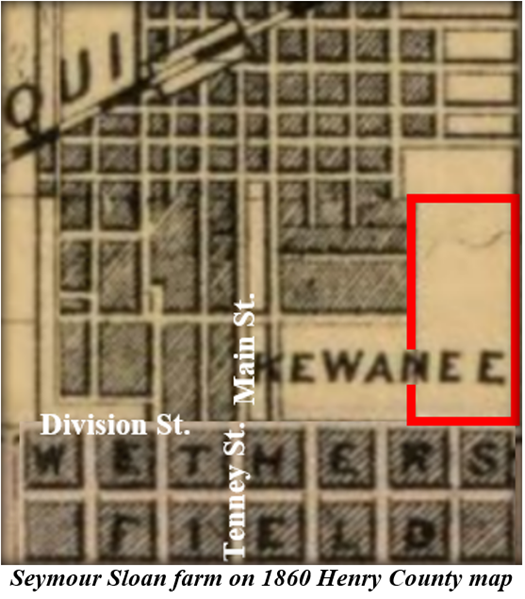
Meanwhile, in 1852, Seymour, Drusilla, and their minor children migrated westward to Illinois. They soon bought farmland just north of Wethersfield, in the southeast quarter of Section 33 in what would later become Kewanee.
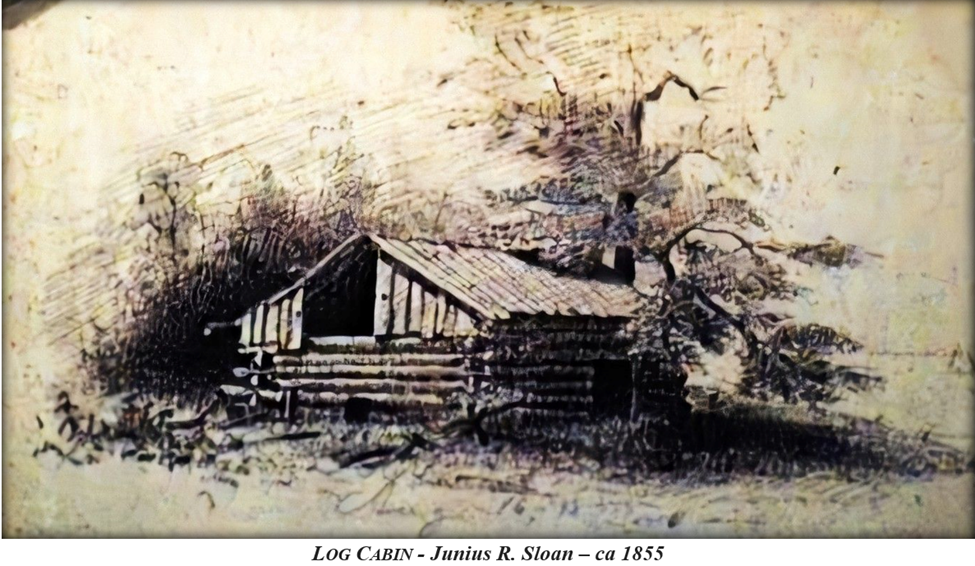
In late 1853 or early 1854, Junius decided to join his 55-year-old father and 53-year-old mother to help them develop their homestead. During Junius’ nearly two years with his parents, he experienced the birth of Kewanee just to the north of his parents’ farm as he helped them establish their roots. While Junius briefly stopped painting, he soon began anew his artistic pursuits, sketching scenes in and around Kewanee, including one of an old log cabin seen here.
Professor Brauer, based on the words of Junius’ brother, Henry, described early life and work on the Sloan farm:
“[W]ormy sweet potatoes and cabbage, planting currants, having plenty of watermelons, being annoyed by pesky roosters, selling pigs ‘on the hoof,’ going to the ‘timber’ to cut and then install fence posts, threshing wheat in a caravan, rejoicing that Seymour was buying a mower and reaper, and using a planter to plant corn. The cows provided milk and meat. But Seymour’s main commercial product on this corn belt farm was probably field corn.”
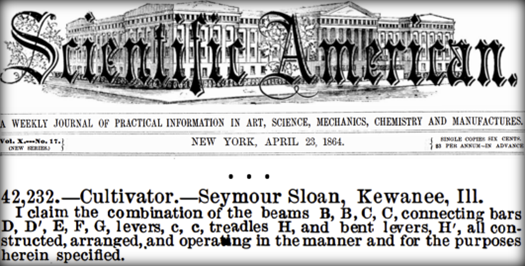
(Seymour Sloan actually obtained a U.S. Letters Patent for his invention of a particular type of cultivator.)
In early 1856, Junius took a Chicago, Burlington & Quincy train from Kewanee to Princeton where he had decided to set up as that village’s first portrait artist. In a May letter to his close friend and soon-to-be brother-in-law, he wrote “I have but just opened here, and the prospect seems Tolerably favorable inasmuch as there is wealth, taste, and a lack of pictures.”
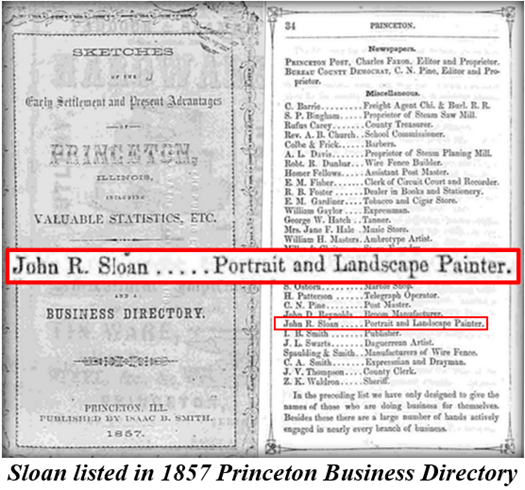
In Princeton, Junius became friends with James T. Stevens, a furniture merchant. Stevens agreed to display some of Junius’ portraits and make referrals. In a letter to his parents, Junius referred to his arrangement as “fishing for business.”
While in Princeton, Junius associated with other young professionals. He also became friends with members of the Bryant family, early Princeton settlers, the oldest of which were brothers of Eastern poet William Cullen Bryant. Some of the subjects of his portrait work included some of the Bryant family.
After his two years in Princeton, Junius began traveling again. In late 1857, he moved to New York City with Princeton’s Julian Bryant. It was during this period that, although he had been relatively successful as a portraitist, Junius segued to painting landscapes.
In 1858, Junius married Sara Spencer in Ohio. Sara was the daughter of a nationally known penmanship scholar and sister of one of Junius’ close friends. Following in her father’s footsteps, Sara also became a writing teacher, supplementing the Sloan family’s income over the years as Junius continued trying to make a living painting.
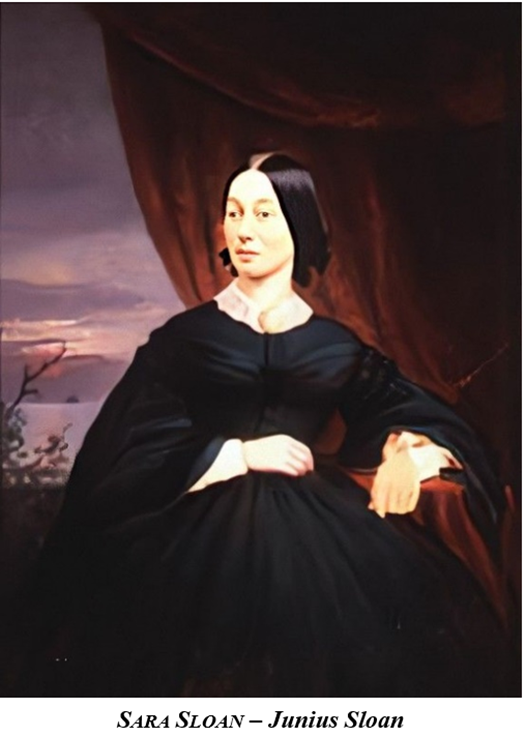
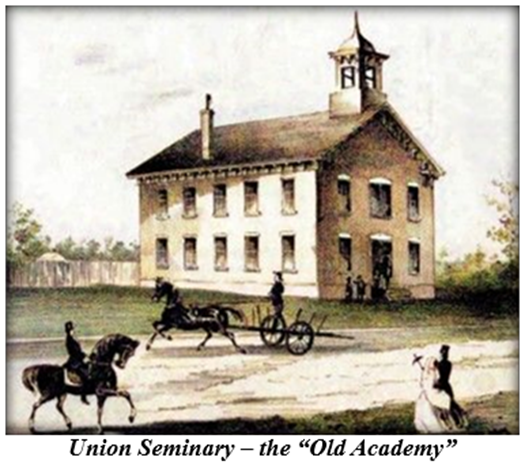
For a year and a half after their marriage, Junius and Sara lived in Kewanee with his parents. During their stay, Sara taught at the Union Seminary on South Chestnut Street, later called the “Old Academy,” Wethersfield and Kewanee’s first high school. While Junius was moving toward landscape painting, he continued to paint portraits and is said to have painted the portraits of the children of Kewanee attorney and later Civil War general John H. Howe.
After that, Junius and Sara lived with her family in the Catskills in New York state, followed by a period in New York City. But after the birth of their first child, they moved to Chicago, and Junius fully pursued a career as a landscapist.
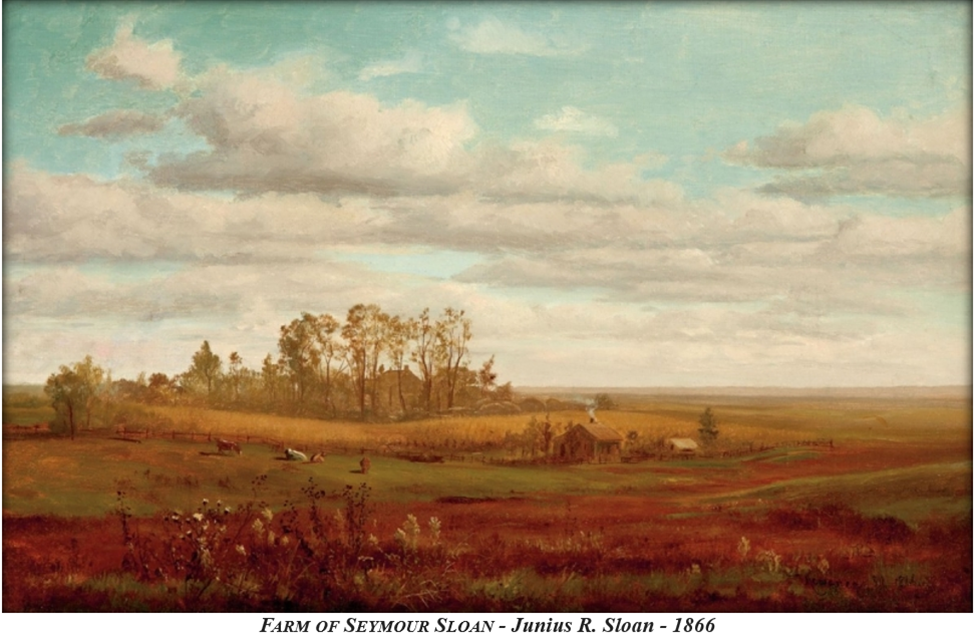
In the summer and fall of 1866, Junius, Sara, and family returned to Kewanee to spend time at his parent’s prairie farm. It was during this time that Junius embarked on a style of painting Illinois prairie scenes which led to success. Those Kewanee period paintings included Farm of Seymour Sloan, depicting his father’s homestead (only a year before Seymour and Drusilla sold it and moved into a home in the village), and Cool Morning on the Prairie, showing his niece, Cara, walking the cattle at milking time through the heavy morning mist in a fenced-in pasture.
Junius, however, did not confine himself solely to landscapes. While in Kewanee, he worked on “genre paintings” including one of his then-invalid mother, Drusilla, teaching her granddaughter and his niece, Cara, to knit.
Overall, while Junius was in Kewanee, he completed some 20 paintings.
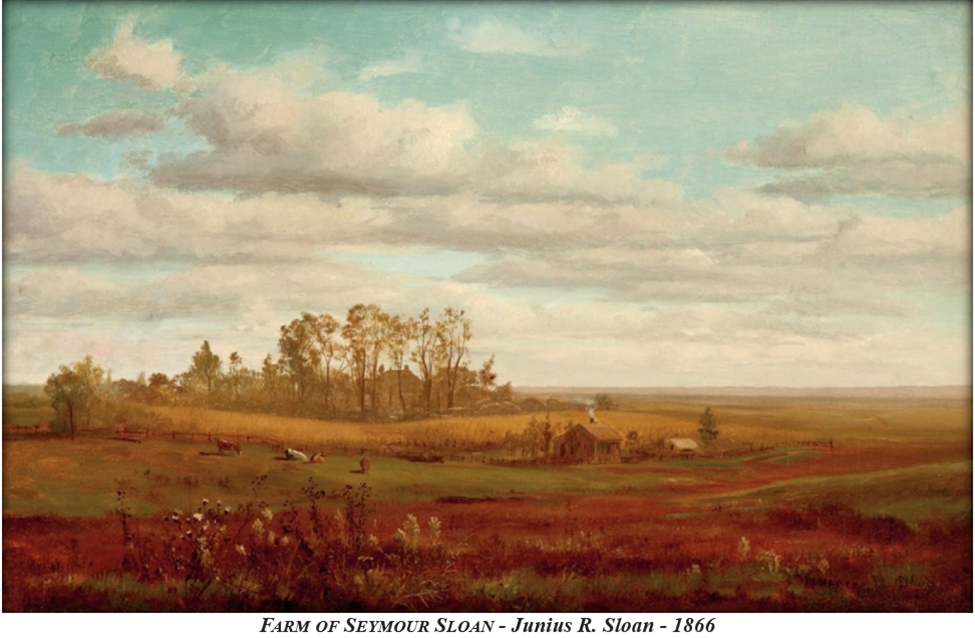
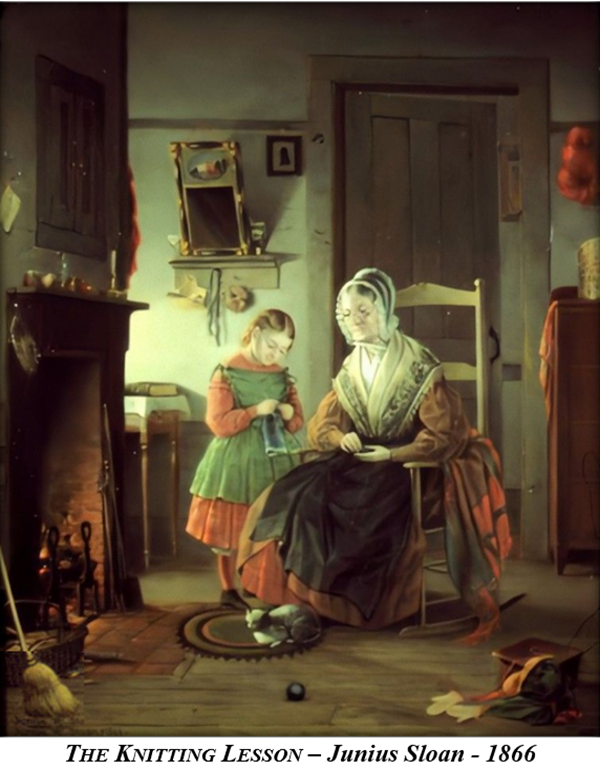
After leaving Kewanee in 1866, Junius, Sara, and their family returned to Chicago, where his reputation began growing. But once again, Junius took off to the East, first to upstate New York and then to New York City.
In 1873, Junius, Sara, and their family returned to Chicago permanently. His paintings were professionally recognized and were displayed in a variety of museums and in exhibitions, including at the Chicago Academy of Design, forerunner of the Art Institute of Chicago, where he was also a member and an officer, and at the Art Institute after its establishment. He also held memberships in other art organizations. Junius had come into his own.
After Junius’ mother died in Kewanee in 1875, his father continued to live in his home on the northwest corner of Prospect and Chestnut Streets where Junius would periodically visit him. Seymour then moved to Redlands, California, in 1887 to live with his daughter, and died there in 1891 at the age of 91.
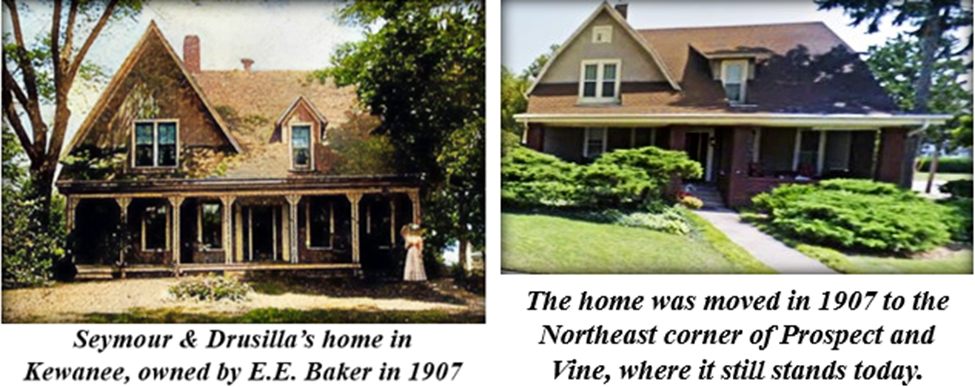
On a trip to Redlands to visit one of his sisters in 1900, Junius Ralston Sloan died at the age of 73. One of his two children had preceded him in death.
Sara Sloan lived another 23 years. Sara, her sister, an attorney, and her sister-in-law, an educator, all became women’s rights advocates.
The inscription on Junius and Sara’s headstone reads:
THESE TWO ENVISIONED AND CREATED
BEAUTY FOR THE JOY OF IT
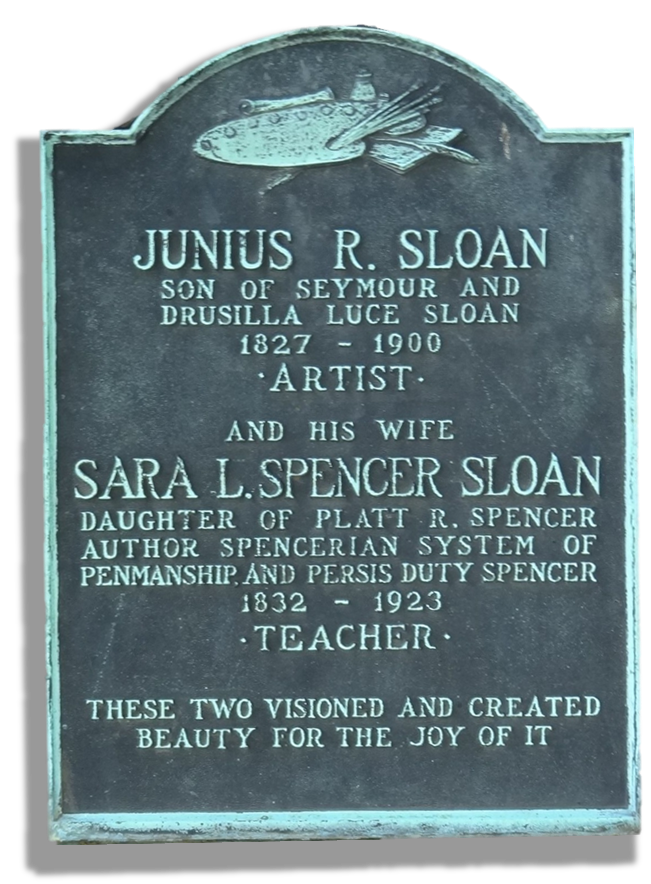
Professor Brauer, who described Junius R. Sloan as a “gifted Great Lakes Region farm boy,” said of him:
“Sloan was among the nineteenth-century American landscape painters who celebrated the American homeland as Edenic, an unspoiled paradise reflecting its Creator.”
Professor Brauer also remembered Junius R. Sloan’s words, written in 1870 and which guided his life:
“The sketching season is near at hand, and during it I shall wander somewhat in quest of beauty.”
Kewanee may have had a hand in the artistic development of Junius Ralston Sloan, and it certainly is better for having hosted this “farm boy” during an important part of his journey as an important artist.
(Fittingly, Professor Brauer called his tribute to Junius IN QUEST OF BEAUTY, an exhibit at the Valparaiso University Brauer Museum of Art. The Brauer Museum houses the largest known collection of works by Junius R. Sloan. A number of years ago, Professor Brauer traveled to Kewanee to visit the region where so many of Sloan’s earliest works were created. He also photographed and recorded on a compact disc 40 works by Sloan that pertained to Kewanee and presented it to the Kewanee Historical Society. You can learn more about Junius R. Sloan at the Brauer Museum and also at the Historical Society’s new museum.)