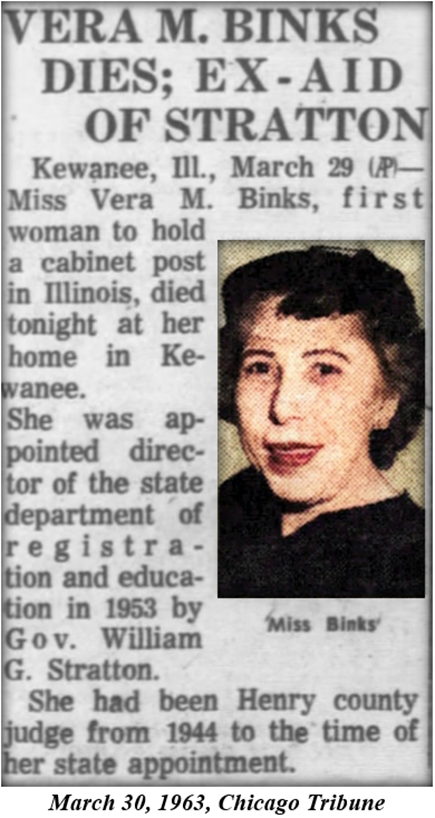
(A few weeks ago, I received a call out of the blue. The man had read an earlier story I wrote about Vera Binks, the first woman attorney in Kewanee and Henry County, and then the county’s first woman judge. He then proceeded to tell me an amazing story about her. He asked to remain anonymous because there are a few people in the story who are still living. Here is his and her story.)
His parents were from Illinois and Arkansas. He was born in 1938 in Oklahoma. But his family moved back to Galva (where her parents lived) a couple of years later. He attended Galva schools and later a seminary in St. Louis. Since the seminary, he has been a respectable man.
But, in his own words, “I was raised to be a criminal.”
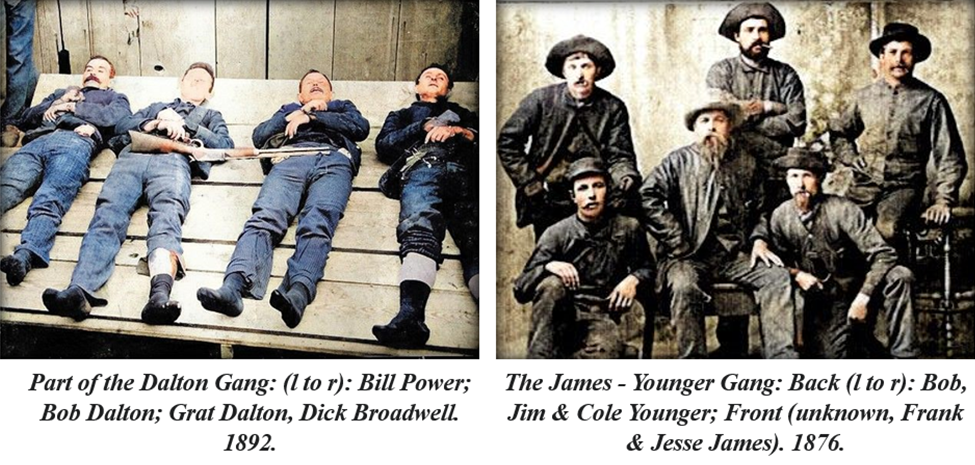
His mother’s lineage included the Dalton brothers, originally lawmen who turned into a gang which specialized in bank and train robberies, mostly in Kansas and Oklahoma during the late 19th century. The Daltons’ older cousins were the outlaw Younger brothers, often operating in league with the infamous Frank and Jesse James.
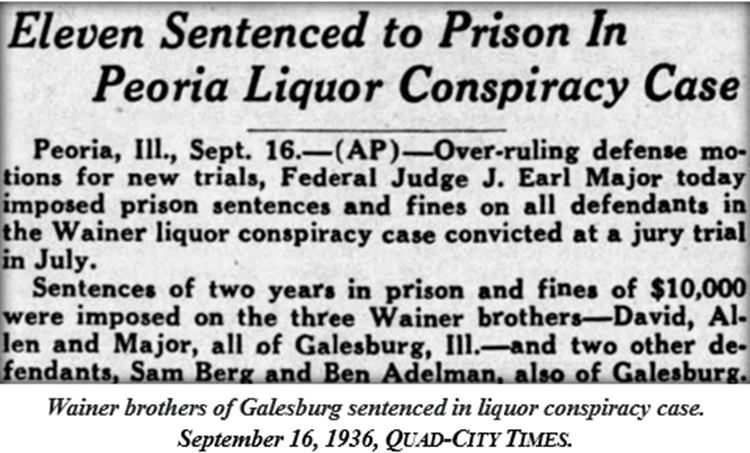
Meanwhile, his father, while employed in lawful work (not that he didn’t cross to the dark side occasionally), was pals with “Uncle Delbert.” Delbert was a Chicago gangster-type who had worked with Al Capone as well as other men of ill-repute, including the Wainer brothers in and around the Galesburg area.
Seeing the boy’s promising life trajectory, Delbert’s Chicago bosses told him to bring the boy to Chicago so the boy could “make his bones.” But the boy’s parents objected and Delbert demurred. According to the boy, Delbert later paid the price for not following orders, dying from “.45 caliber lead poisoning.”
In 1952, the boy, now a sophomore in high school, reached a crossroads.
He and four other young juvenile-delinquents decided to take a further step toward a life of crime. Armed with knives, they snuck into the high school and, during the course of a basketball game with Cambridge, they broke into the gymnasium’s lockers in a daring robbery.
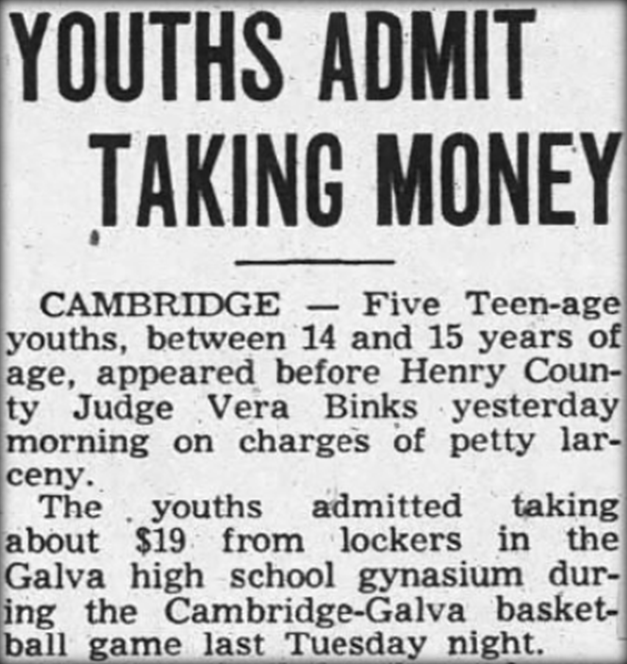
But they were soon caught and brought before Judge Vera Binks in Cambridge. The other four boys’ cases were dispatched quickly with probation. But the boy, a year older than the others, was treated differently.
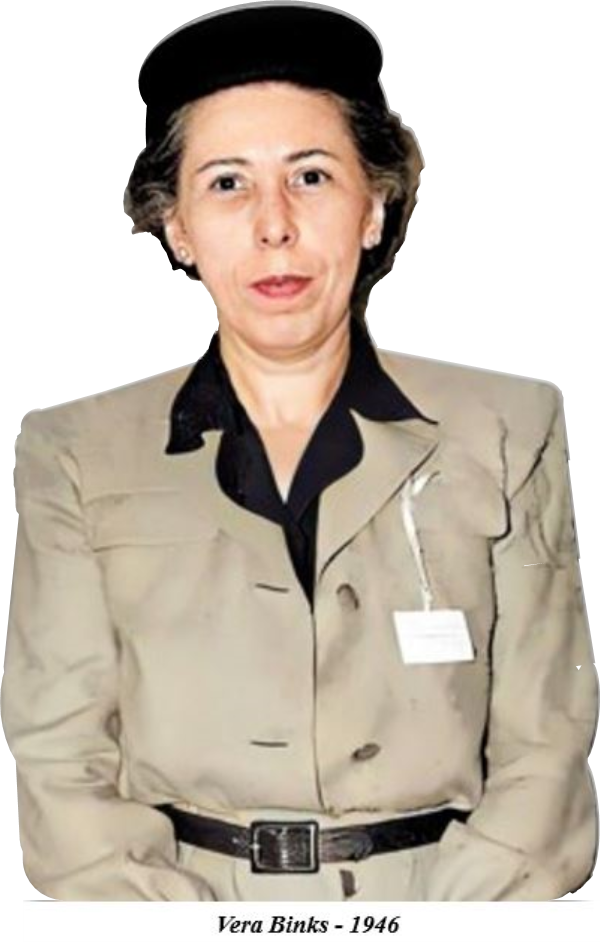
Judge Binks demanded that the boy’s mother come into her courthouse office with the boy. The judge then asked the mother if anyone in her family attended church. The mother was “scared half to death,” but said that the boy’s grandma attended Galva’s Assembly of God Church. Judge Binks then turned to the boy and said that “you can either go to church with your grandma every week for the next year or you can go to a juvenile home.” He chose the former.
Today, the boy, now retired, said that “Judge Binks saved my life.”
That year of going to church changed him. He said that he found Jesus, which led him to eventually attend the Midwest Bible and Missionary Institute in St. Louis. For a long time after that, he worked for Gideons International. He then pursued another line of work but maintained his faith. In retirement, he still runs a small business helping others.
Of Judge Binks, he said that he continues to admire her:
“Being a woman and taking all of the chances she did to become a lawyer and then a judge, and all of the things she did in both capacities, including taking a chance on me . . . well, she saved me like God does for others.”
So, who was Vera Mae Binks?
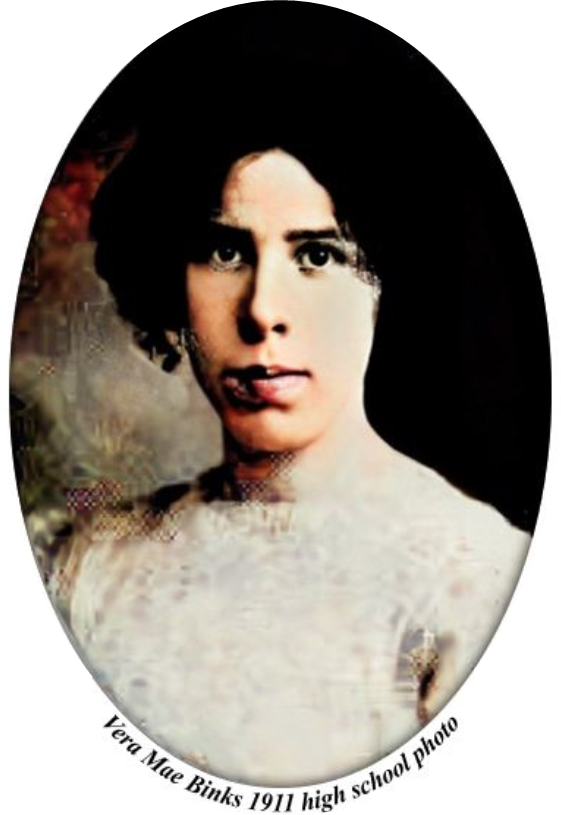
Vera Mae Binks was born in Galva in 1894, the daughter of William and Winifred Binks. She attended elementary school in Pekin and then moved to Kewanee as a young girl.
After Vera graduated from Kewanee High School in 1911, she worked in the office of the Boss Manufacturing Co. for nine years.
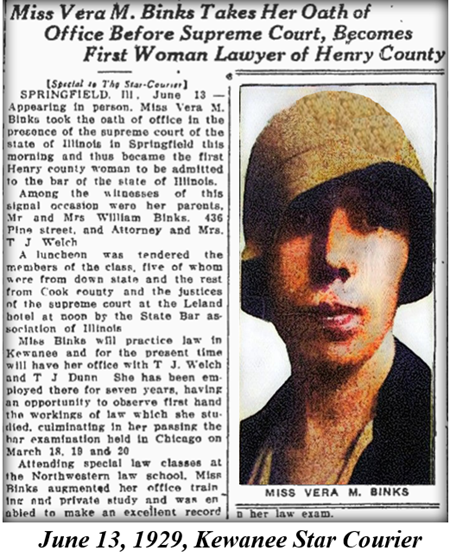
After a short time working in another office, Vera began working for Kewanee attorney T. J. Welch. Enjoying being associated with legal work, she began taking a correspondence course in law. When Welch learned about Vera’s interest, he offered to give her exposure to real casework.
After seven years working for Welch and more than four years of special courses through Northwestern University, Vera passed her state bar examinations. She then returned to Kewanee to become a member of Welch’s firm. Vera became not only the first woman lawyer in Kewanee but also the first in Henry County.
Later in life, Vera told a Star Courier reporter about her first case. She represented a waitress who had a fork thrown at her by a cook. Vera got a favorable verdict for her client, decided she had made the right career choice, and never regretted it. She never handled criminal cases but, instead, built a general law practice.
Vera was active in local, regional, and state service. She was a member of the Business and Professional Women’s Club and served as president of the local chapter and also as head of the Illinois federation. In addition, she was a state legislative representative and was a delegate to national conventions. She was a member of the First Baptist Church, Kewanee Woman’s Club, and the Henry County and Illinois State Bar Associations. For 10 years, Vera served as a member of the Advisory Board of the Geneva State Training School for Girls. She was instrumental in the creation of the Social Service Agency of Kewanee and served on that board from the time of its creation until 1946.
During World War II, Vera also served as a member of the Governor’s Committee on Civil Defense.
Vera had a strong interest in troubled youth. She handled countless cases of those who could not afford legal protection, with many of them involving children.
In 1944, Henry County Judge Charles G. Davis died in office. Vera decided to run to replace him. She won, becoming the first woman judge in Henry County and only the third in the state. Vera subsequently was reelected in 1946 and again in 1950.
As a county judge, Vera recognized the need for equal opportunities for women, and she worked tirelessly on the legal status of women, including compiling a digest of laws relating to them.
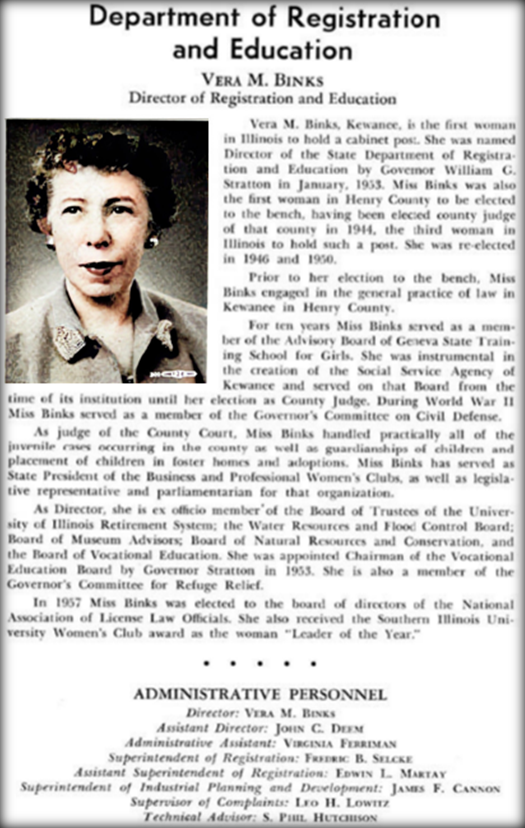
In 1952, then Governor William G. Stratton asked Vera to join his administration, and in January 1953, Vera became the Director of Illinois Department of Registration and Education, the first woman to hold a cabinet post in Illinois.
As cabinet officer, Vera was an ex-officio member of the board of trustees of the University of Illinois Retirement System, the Water Resources and Flood Control Board, the Board of Museum Advisers, the Board of Natural Resources and Conservation, and the Board of Vocational Education. She also was appointed chairman of the Vocational Education Board and was a member of the Governor’s Committee for Refugee Relief.
Vera was in constant demand as a speaker for many years. She talked on a variety of subjects, from juvenile delinquency to club work, speaking not only in Illinois but across the Midwest.
In 1957, Vera received the Southern Illinois University Women’s Club award as the woman “Leader of the Year.” In the same year, she was named to the board of directors of the National Association of License Law officials.
Overall, Vera served seven years in the Republican administration of Gov Stratton until she became ill in 1960. Vera told a Star Courier reporter that even though she was able to handle her duties by working at home, she still hoped to return to Springfield. But she cautioned the reporter, “I hope you don’t say I’m running business from my bedside . . . I’m up and around the house.” Unfortunately, her illness ultimately prevented her from returning to work.
Vera Mae Binks died on March 29, 1963. She had an illustrious career in the service of others. In an editorial two days later, the Star Courier used a variety of highly complementary phrases to cover the many-faceted and successful career of Vera. She was the first woman in many of her life achievements, but Vera also liked the little people and enjoyed the little things of life:
“At her home in Kewanee, her telephone was constantly ringing, scarcely a night passing without someone taking a problem to her. . . . [In addition,] [s]he felt a warmth that comes to a person who considered herself a ‘home-body’ at heart . . . she liked to make raspberry jam, for instance, she liked to garden, she liked her radio broadcasts, she liked to fly and to go boating. Yes, she liked her club work. She was a person who was never bored. Somehow, we felt she must have experienced an impatience with her illness for limiting her energy. We’ll miss Vera Binks. She was a remarkable woman.”
That young boy in the beginning of my story, moving toward a life of crime would concur with those sentiments, and surely would say, “Amen.”