Every year as the cold February gusts give way to the more temperamental winds of March my mind turns to Ireland and St. Patrick’s Day. Since I was a child the land and its people have held a special place in my heart.
As a lover of all things Irish one would think I would be more into the big celebrations of St. Paddy’s Day. Nah! My idea of honoring St. Paddy’s Day is more in keeping with a glass of wine, a Reuban sandwich and watching “The Quiet Man” while wearing my fat man pants lounging on the couch.
But it was due to my love of the Irish country and culture that has propelled me in search of information around this green hued, beer guzzling holiday, enjoyed by so many world wide.
The celebration of St. Patrick’s Day has been occurring in Ireland for over a 1000 years and it has been celebrated here in the U.S since 1600, with the first recorded celebration taking place in St. Augustine, Fla. in 1600.
It was organized by the Spanish Colony’s Irish vicar, Ricardo Artur – Richard Arthur. A year later in 1601 the first St Patrick’s Day Parade was held in the very same city. Those early celebrations bore a stronger resemblance to those held back in Ireland and they were deeply rooted in religion as a solemn observance honoring the Patron Saint of Ireland St. Patrick.
Fast forward a handful of centuries and the holiday’s landscape began to change from its original somber shade of religious reverence to a lively verdant shade of green and fun. As with most things in the U.S. we like to make things bigger, better, more grand and lively. And it was under the influence of the Irish Americans that caused the holiday’s progression from a subdued religious occasion to the modern more secular and at times raucous celebrations of Irish culture with parades, music, food, drinking and dancing.
As St. Paddy’s Day takes place in the middle of Lent, the day offered a break from the strict lenten rules. Irish families would attend mass in the morning and celebrate in the afternoon enjoying a temporary respite from the church’s seasonal mandate of fasting and the abstinence of meat and drink. Which may well have been a key factor in the progression of the holiday’s celebration. Live it up good for 24 hours because it’s back to abstinence come March 18.
The days surrounding March 17 see a plethora of corned beef and cabbage dinners. Americans indulging in what they view as an authentic Irish cuisine. In reality back in Ireland they ate Irish bacon and cabbage. It was the Irish immigrants in America that substituted the bacon for what was at the time a cheaper cut of meat – corned beef.
The term “luck of the Irish” has nothing to do with a leprechaun and his pot of gold and it actually came from the success of the Irish miners in 19th – century America, who struck gold during the Gold Rush.
The middle of March see’s an influx of all things green. The color green appears everywhere and on everything, all done in homage to the holiday; leprechauns in little green suits, shamrocks, and green clothing, and green lights illuminating famous landmarks like the Empire State Building and Eiffel Tower in Paris.
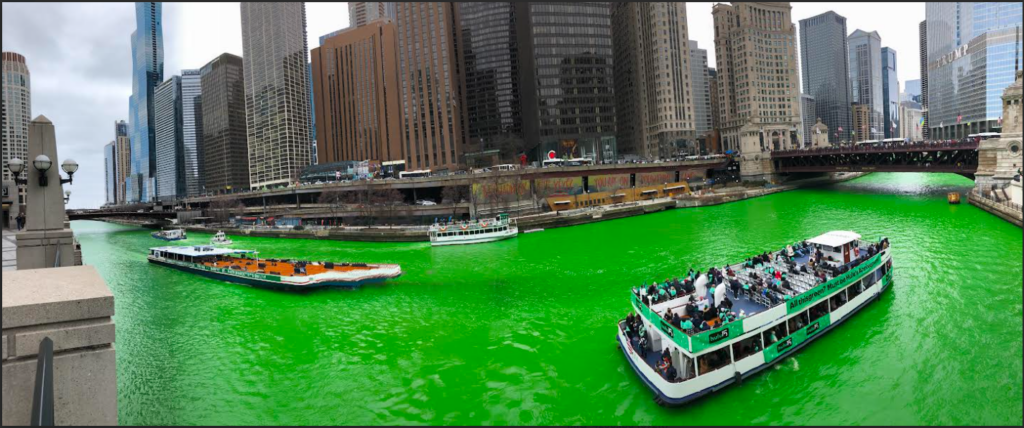
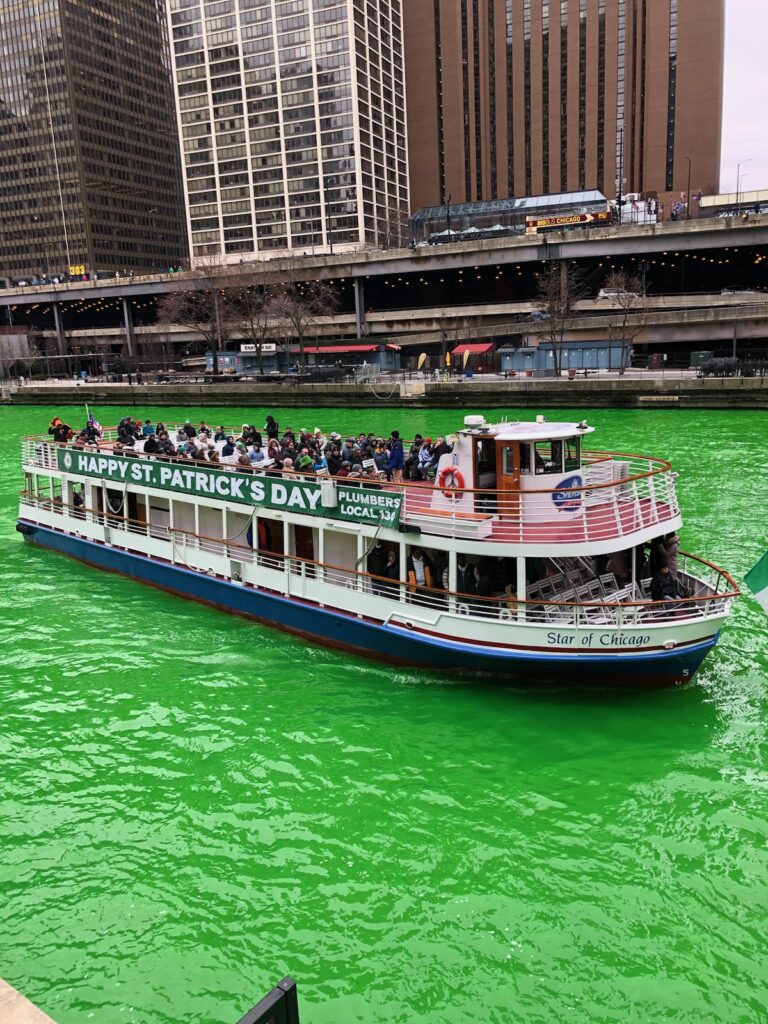
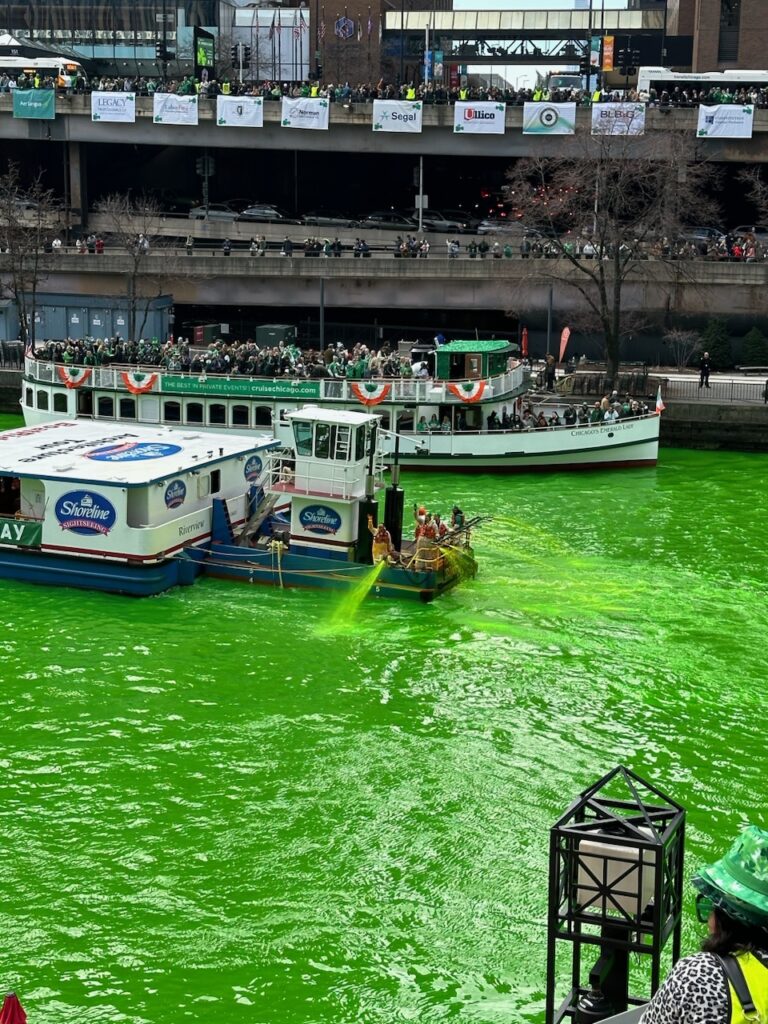
Some cities have taken to dying their rivers green. Since 1962 Chicago has dyed the Chicago River with an eco-friendly dye that turns the water a festive shade of green. Americans also began the tradition of green beer and dying foods like bagels and donuts green.
While one might think the largest St. Paddy’s Day Parade would take place in Dublin, Cork or somewhere in Ireland, they would be wrong. The largest St. Patrick’s Day Parade actually takes place in New York City. It has around 150,000 participants and draws an estimated crowd of 2 million spectators every year. This N.Y. parade has been around since 1762, when it was organized by Irish soldiers serving in the British army, and makes this parade not only the largest but also the oldest running St. Paddy’s Day Parade.
Yep. The celebration of the holiday has changed quite a bit over the years, all thanks to America’s Irish immigrants and their love of their former country and culture. This country’s foundation sits on the backs of immigrants from all over the world and it is what makes the U.S. special.
Come March 17 people world-wide will celebrate St. Patrick’s Day, not just those of Irish descent. Because on March 17 everyone’s a little Irish.