On December 7, 1941, the Japanese bombed the U.S. naval base at Pearl Harbor, “a date which will live in infamy” in the American psyche.
Four months later, in the early morning hours of April 13, 1942, the Great Kewanee Fire began, devastating downtown Kewanee and creating another vivid memory for Kewaneeans.
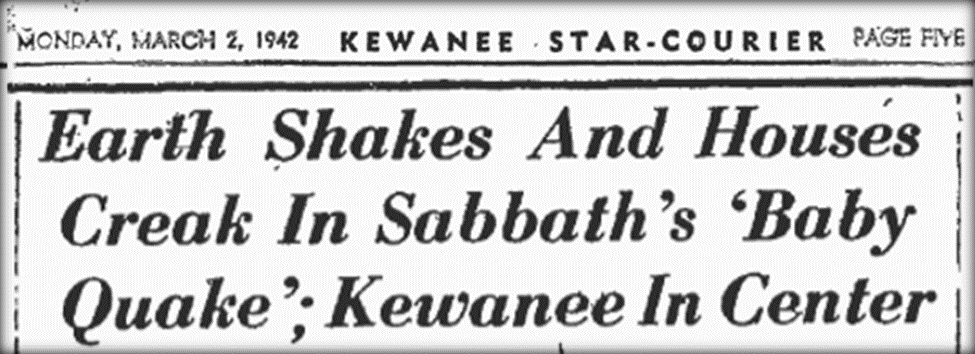
In between those dates, Kewanee was near the epicenter of an occurrence of nature extraordinarily unusual for the Midwest in general and Illinois in particular. It was an event which, according to the March 2, 1942, Kewanee Star Courier, “occasioned more Sabbath excitement than anything which has happened since that ‘Black Sunday’ last December when Pearl Harbor was raided.” But few today know about the event.
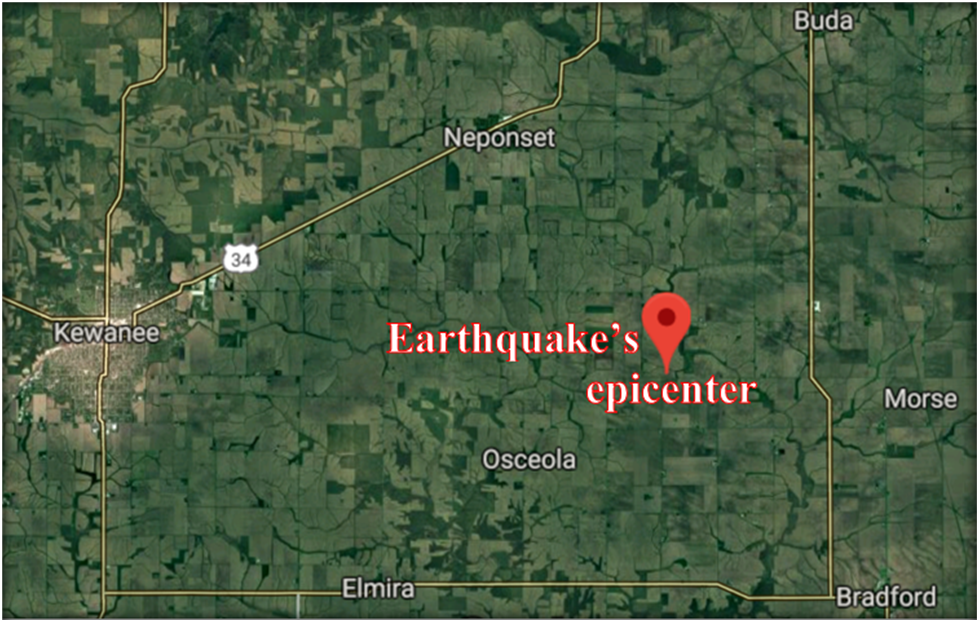
At 9:44 a.m. on March 1, 1942, when Kewanee citizens were reading their Sunday papers, heading to church, or perhaps still sleeping, an earthquake consisting of two tremors seconds apart shook the city and the surrounding area.
According to the St. Louis University seismograph station, the epicenter was located at 41°14′ north, 89°44′ west, about 9 miles east of Kewanee. The seismograph station at Loyola University in Chicago reported that the shock was felt in the counties of Rock Island, Henry, Bureau, Mercer, Knox, Stark, and Peoria. Press reports indicated that the shock was strongest at Kewanee and Buda.
The Star Courier reported that;
“houses were shaken, the earth quivered and residents here experienced their first earthquake. . . . [T]he result was an almost steady shaking for less than a minute sufficient to rattle windows, cause buildings to creak and dishes to rattle but not of sufficient intensity to break windows. Reactions of the householders were varied but the most common one was to rush to the basement to discover if the ‘furnace wasn’t acting up.’ Others thought that a heavy truck was shaking the street.”
According to the newspaper, people next thought that there had been a heavy explosion: “Wild rumors were started concerning an explosion at the Rock Island arsenal or the Burlington, Iowa ordnance plant.” Scores of residents rushed to their phones to call police stations and newspaper offices, and the telephone exchanges were swamped with calls.
In Sheffield, most residents thought the shaking was the result of dynamiting at the Shale Products Company west of town where blasting occurred frequently.
In Galva, the government weather observer, who was credited with giving the first report of the quake, said his drugstore was besieged with telephone calls. In the Methodist church, the leaded windows rattled vigorously. At the Henry Sweat farm along the Burlington railroad east of Galva, the Moline Dispatch reported that “dishes clinked together in the China closet and a door was rattled as if someone were trying to open without turning the knob. The accompanying tremble seemed to the Sweat family just like the quivering sensation they experience many times a day when the heavy Burlington trains rumble nearby.”
Residents of Buda rushed out of their houses when the earth began to shake.
According to most reports, nearly all residents in Kewanee, Buda, and the surrounding area were not necessarily frightened but more curious why their windows and walls were shaking.
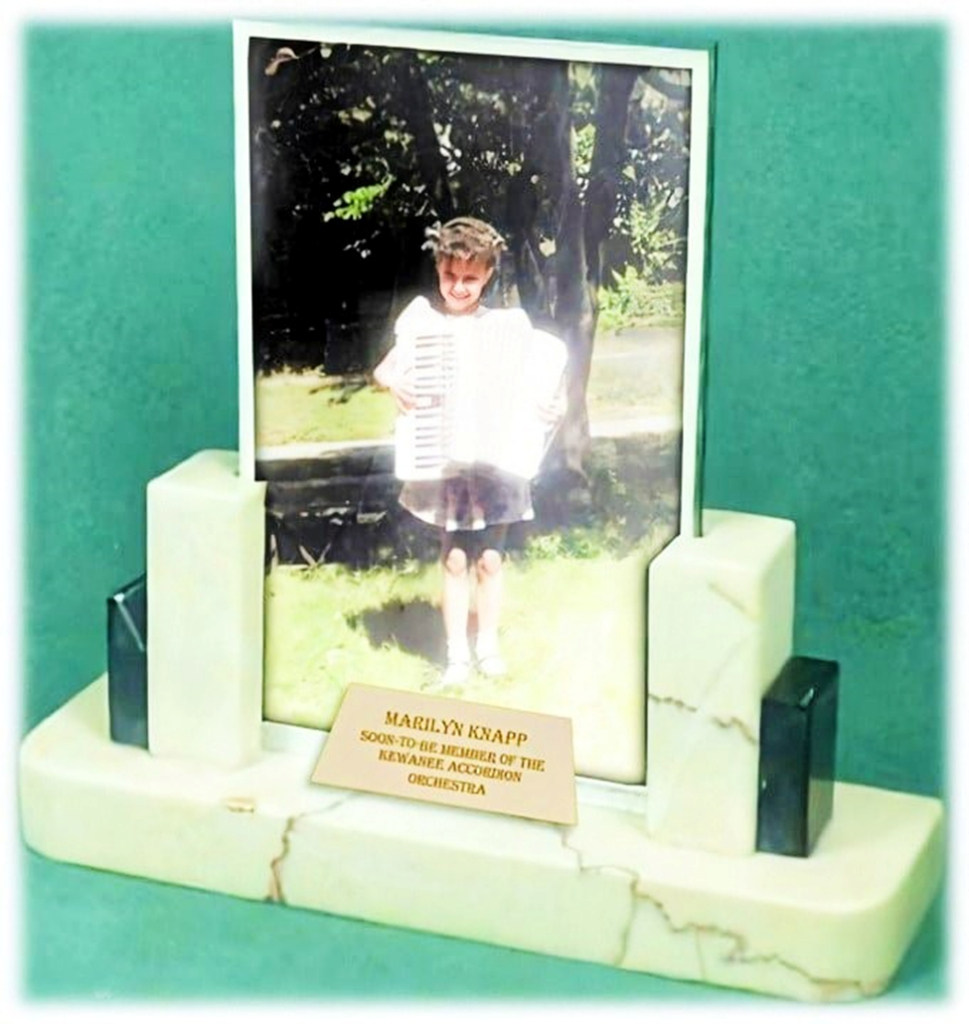
My cousin, Marilyn Kelly (née Knapp), then eight years old, recalled the quake. Her mom was in the kitchen and she was in an adjoining room when her mom made a sudden sound, and then asked if Marilyn had felt “it.” Marilyn had indeed felt the quake; it was not terrible or violent, but very noticeable. She remembers the event being a relatively big thing in Kewanee, and also a bit scary for a youngster, not knowing what was going on or if there would be another one.
Two days later, the March 4 Star Courier reported that a number of residents, particularly in the south and eastern part of Kewanee, felt a “disturbance” shortly after 9 p.m. Tuesday night similar to the Sunday tremors. The paper asked whether another earthquake had occurred and whether it was becoming a habit. However, there was no other evidence that another quake had struck.
The 1942 Kewanee earthquake’s magnitude is unknown. Earthquakes had not occurred with any frequency in the Tri-County area, nor had they produced significant damage. In the Kewanee quake, small articles were shaken from desks, windows rattled, and walls shook slightly, but that was all.
At the time of the quake, the Rev Alphonse Schmitt, professor of physics at Loyola, said records indicated that it was the first quake to be felt in northeastern Illinois since January 2, 1912. The last previous quake reported in Illinois had been on November 21, 1929, when a slight tremor was felt in the cities of southern Rock Island County. Morris Leighton, director of the Illinois Geological Survey, was quoted in the paper saying “as far as I know there are no geological conditions in northwestern Illinois that could conceivably produce earthquakes.”
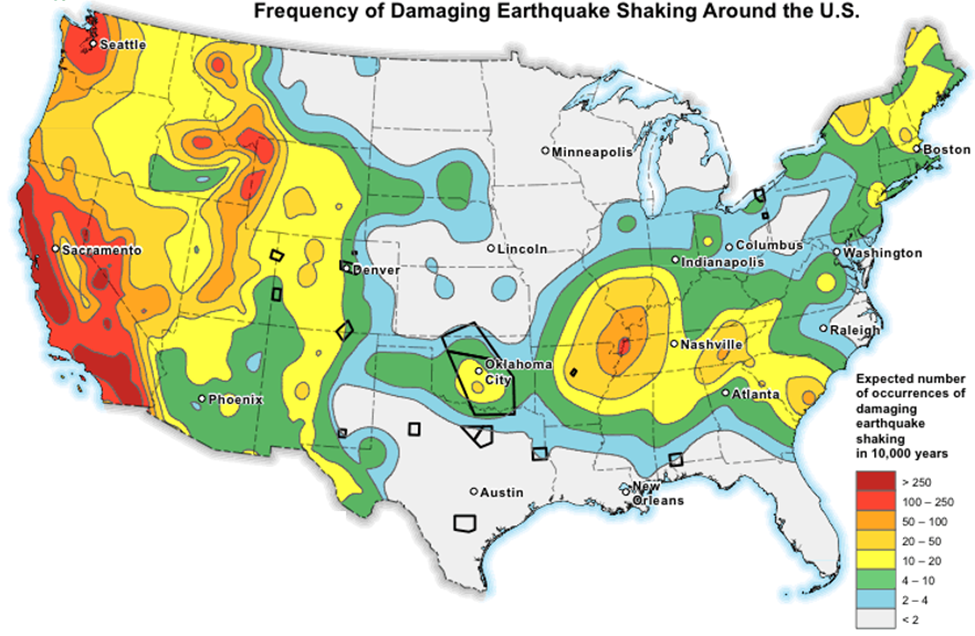
However, according to the June 4, 2004, Heart of Illinois Project Impact report, Natural Hazards , “[e]arthquakes are a possibility in the Tri-County area due to its proximity to the New Madrid Fault Zone [to the south].” In 2018, the Illinois Emergency Management Agency reminded people that the New Madrid Fault produced the largest earthquakes in the continental United States in 1811-1812.
The U.S. Geological Survey map below puts the odds low that any major earthquake will hit Kewanee. But our hometown could still experience at least a little more shake, rattle, and roll in its future, just as it has in its past.