It’s funny how everything can shift in just a moment, with a sudden glimpse of color or a longed-for sound.
Last Tuesday morning did not begin well. I had hardly slept, yet somehow, I was still running late. I felt harried as I lugged my school bags out to the car—then desperate as I remembered it was our garbage day. I could hear the truck rumbling nearby. At a run, I hauled our blue can out to the street.
“Conk-la-reeeee!” A proud, buzzy bird call rang out in the cold, crisp air. Forgetting the garbage and all my other angst, I turned toward the sound. They’re back! I thought joyfully. The blackbirds are here!

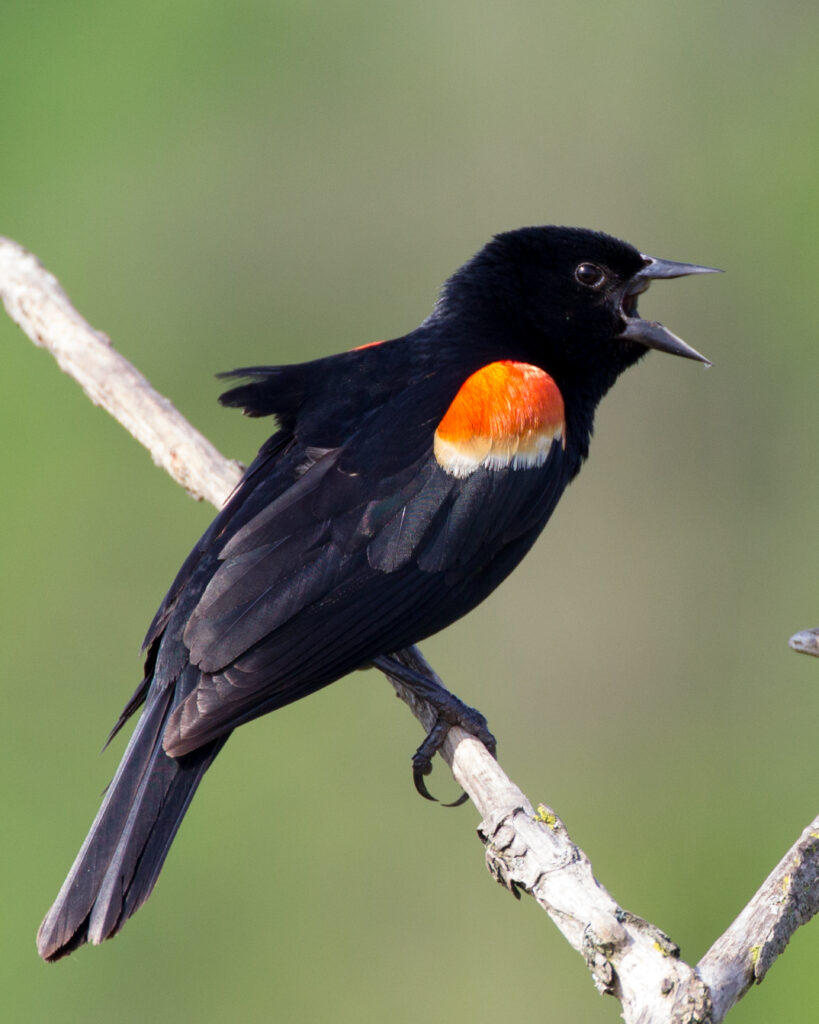
Every year since my husband and I moved to our home, red-winged blackbirds have been our seasonal neighbors. The males arrive first, in late February or early March. These glossy black birds with bright red epaulets perch high in the crowns of our maple and walnut trees, declaring their message for all to hear: “Conk-la-reeeeee!” It’s a sound that means springtime and the coming of warmer days. It means evenings out on a picnic blanket as dramas unfold in our yard.
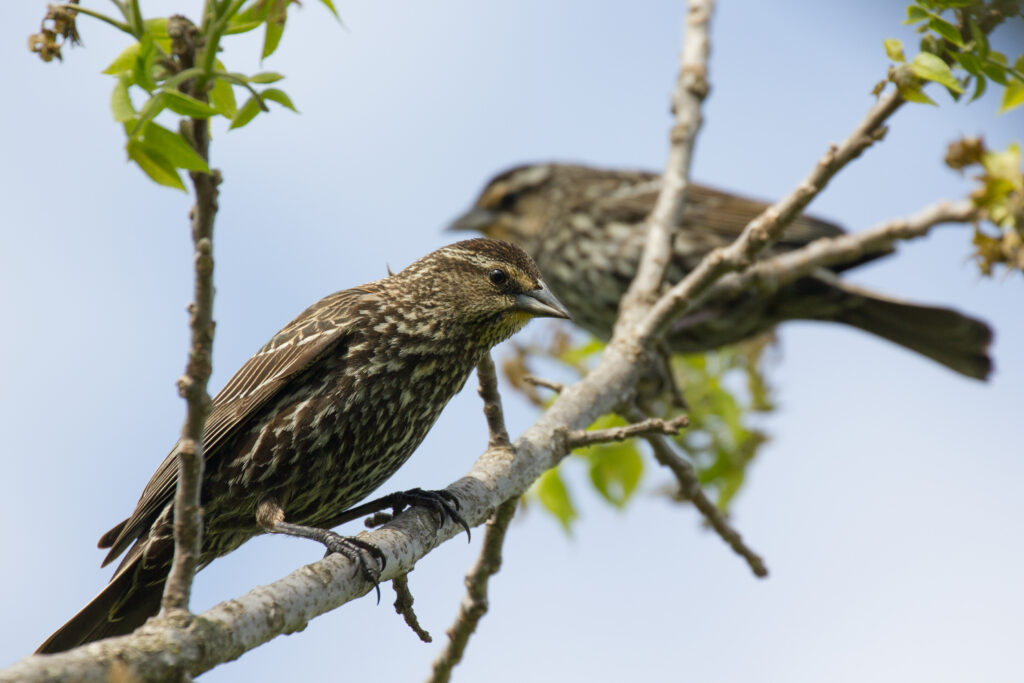
Eventually, each male blackbird claims a territory in the elderberry bushes and tall grasses along the creek. Females arrive several weeks later, and that’s when these birds become really fun to watch. As the subtle brown females take sunflower seeds from our feeder or peck for insects in the grass, a male might be seen strutting around like a miniature rooster, his wings outspread and his epaulets flaring.
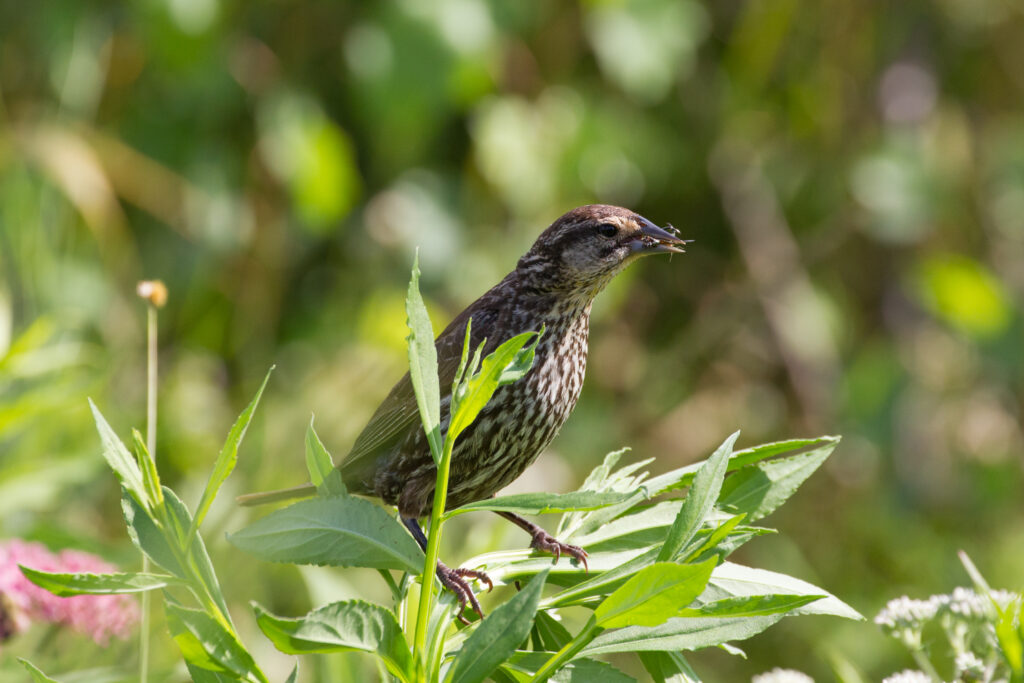
In the end, several females usually join the territory of a single male. They weave nests mere feet above the ground, on grasses or flower stems. These nests are so well hidden that you could be walking right beside one and never see it—but even so, you would definitely know it was there!
Red-winged blackbirds defend their nests with unmatched courage. The males stand watch at all times, calling out furiously and swooping down at any creature that comes too close—crows, hawks, eagles, owls, humans. The size of the intruder doesn’t matter to these dauntless little birds. Once an alert has been sounded, the females join in on the defensive maneuvers. These become especially intense after the baby blackbirds have fledged and are moving clumsily through the grasses.
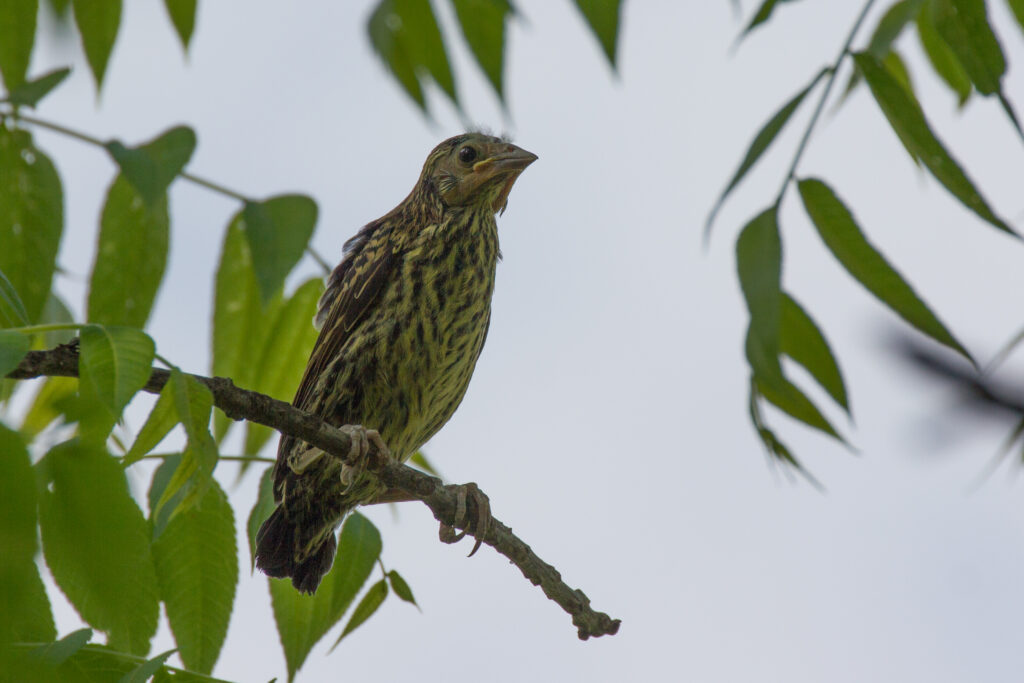
Our blackbird neighbors raise two broods of young each year. This means that throughout the spring and summer, I have to be careful when tending the trees and garden plants in the parts of our yard closest to the creek. I hate to accidentally come too near a nest and upset them.
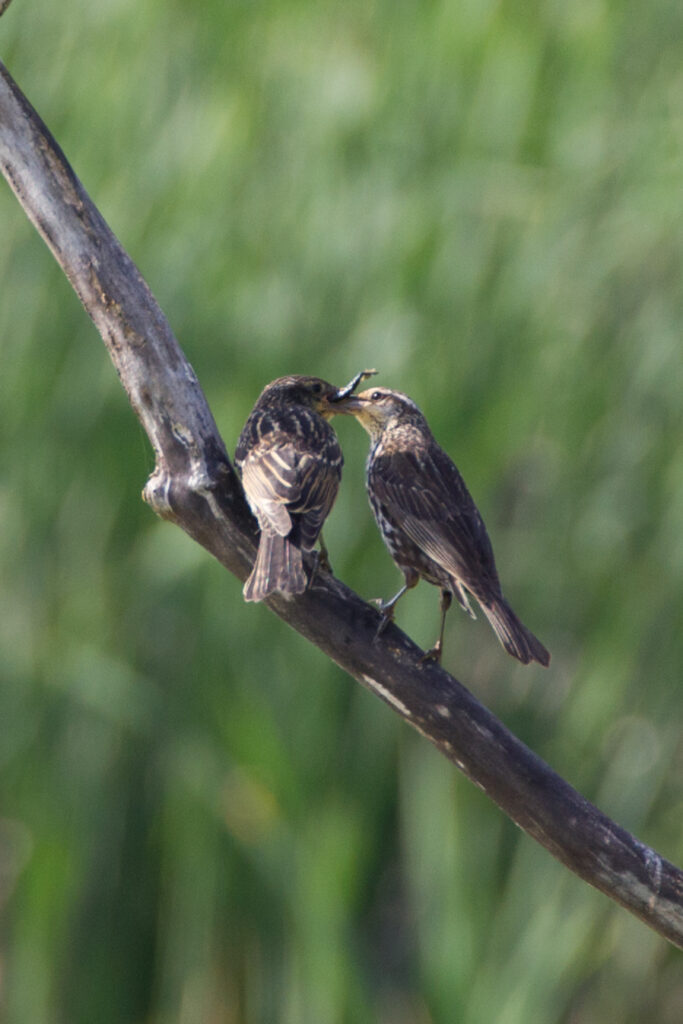
These feisty little birds are, after all, just trying to live their lives—and in the meantime, they make mine so much richer and more interesting. I especially love watching the blackbird families visit our sunflower feeder toward the end of nesting season. The young are still semi-dependent on their parents, still learning how to be blackbirds. Yet they are well on their way.
The strangest part of blackbird season is the end, when they begin migrating southward. I never actually know which day they leave, but every year, sometime in late July or early August, I realize that I haven’t seen or heard a red-winged blackbird in the past day or so. It’s always startling. Suddenly, this constant, charismatic feature of my life is just gone.
Of course, there’s comfort in the thought that red-winged blackbirds will return to my yard next spring—that, once again, I’ll have a moment when stress transforms into delight. But it’s a comfort tinged with worry. Overall numbers of birds have plummeted in the past few decades, and while numerous, red-winged blackbirds are considered a species in decline. It haunts me to think of a springtime without them.
Why are blackbird numbers falling? As with so many other species, a big reason is habitat loss. Red-winged blackbirds like to nest near water, for example in marshes or near creeks and ponds, but wetland habitat is also in decline.
In the lower 48 states, some 50 percent of wetlands have been lost, with more at risk (according to a 2024 report by the US Fish and Wildlife Service). Climate change and poisons are among the other threats facing blackbirds.
Thankfully, knowing about a threat makes prevention possible. There are many steps we can all take to help blackbirds (as well as other species!), and to give back for the beauty they bring to our lives.
• If you need to cut grass or brush along a creek or ditch, wait until after the nesting season (mid-August or so, in our area).
• Keep cats safely indoors.
• Contact lawmakers at all levels of government (local, state, and national) to urge them to support laws that protect birds and their habitats.
• Volunteer with or donate to organizations dedicated to birds, such as American Bird Conservancy, The Cornell Lab of Ornithology, and the National Audubon Society.
• Volunteer with or donate to organizations that protect and/or restore wetlands, such as The Wetlands Initiative, the International Crane Foundation, or The Nature Conservancy.