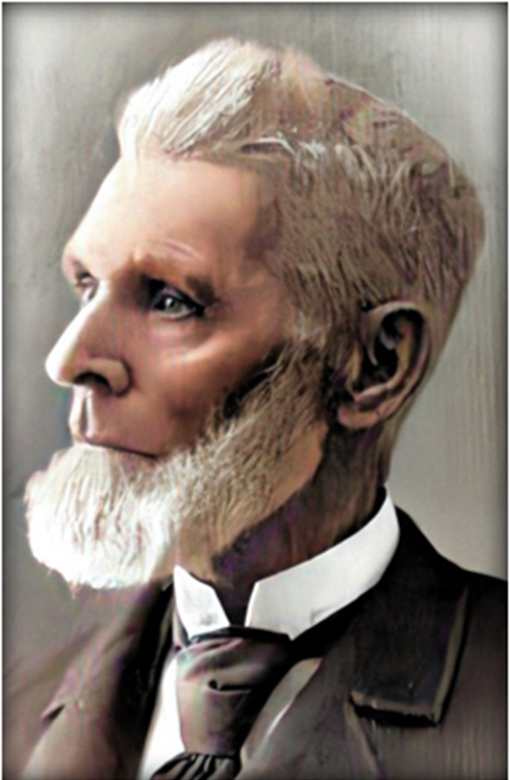
Henry Gilman Little was one of the original Wethersfield colonists in 1836. He soon became an influential figure in the colony, in Henry County, and later in the state.
In 1854, Little became one of the founding fathers of Kewanee. In 1856, he joined the fledgling Republican Party after attending its organizing convention in Bloomington. He then was a founding member of the Kewanee and Henry County Republican Party apparatuses.
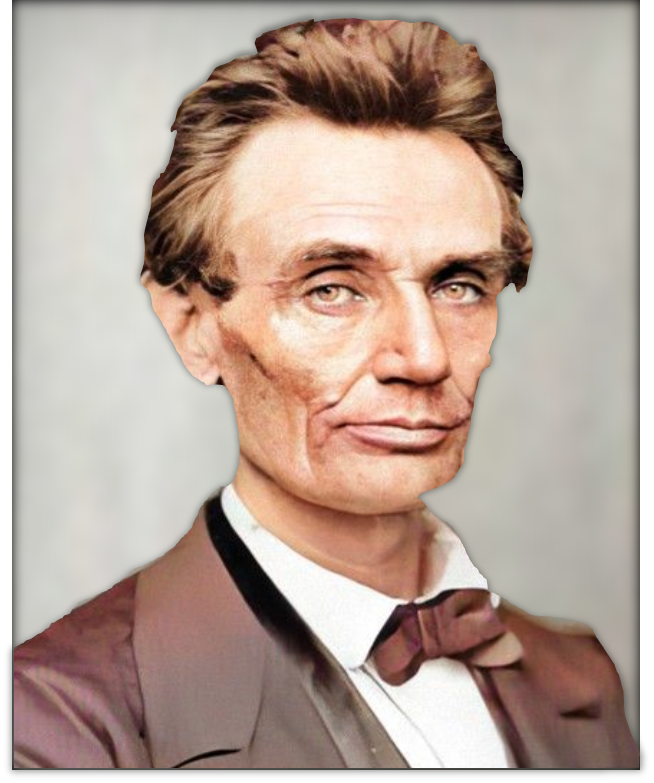
In November 1856, Little was elected to the Illinois General Assembly as representative of the third district, comprised of Rock Island, Mercer, and Henry counties. Although Abraham Lincoln was no longer in the General Assembly, he was a powerful force in the Republican Party in Springfield. Little had already been a friend and admirer of Lincoln. But Little admitted that he had never fully realized Lincoln’s greatness, wisdom and foresight until the winter of 1856-57 in Springfield.
Over that winter, Lincoln continued his efforts to build the Republican Party in Illinois. As part of that effort, Lincoln and his wife would regularly invite the members of the legislature and their spouses to spend a social evening at his home. “Abe’s parties” were regarded as the most enjoyable of the season, “political entertaining” by the Lincolns.
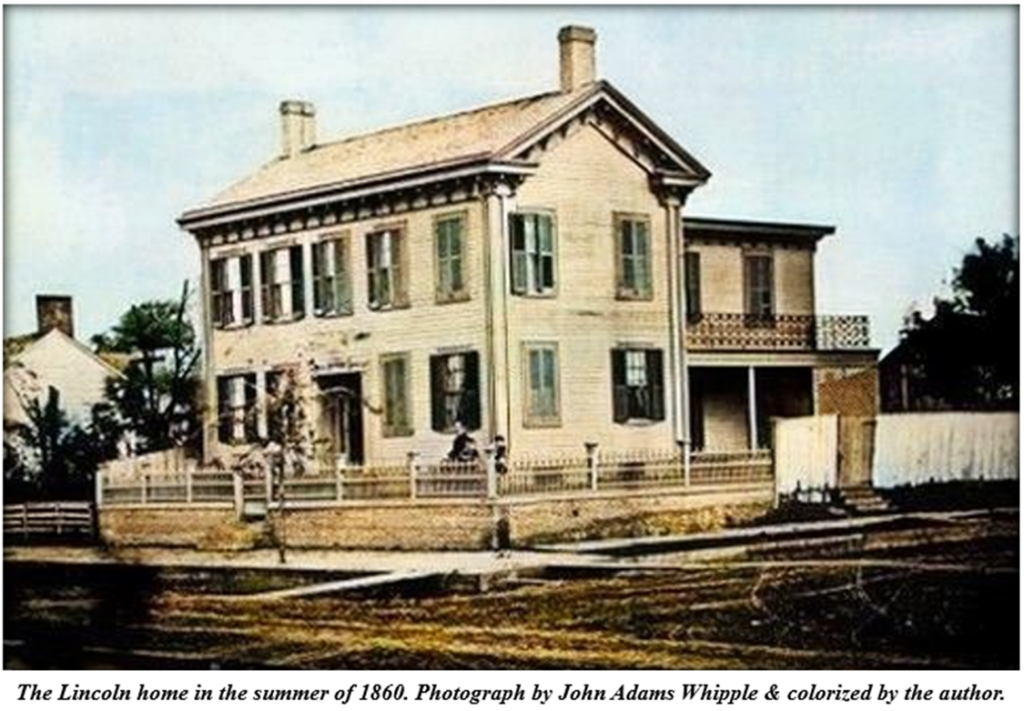
As the winter made its way into February, the frequency of the Lincoln fêtes increased. In one three-week period, they held a party almost every night. Mary Lincoln wrote to her sister during this period that “I am recovering from the slight fatigue of a very large and I really believe a very handsome and agreeable entertainment, at least our friends flatter us by saying so – About 500 were invited yet owing to an unlucky rain, 300 only favored us by their presence . . . .”
A friend of the Lincolns recalled that it was customary to dismantle the beds to allow for more room at the parties. Lincoln, himself, took part in the preparations, often writing invitations by hand.
Henry G. Little recalled a large party, and recounted the food arrangement: “A long table was stretched nearly the whole length of the room, while above the table was a succession of shelves growing narrower upward. On these shelves the edibles were placed, and the guests… were left to help themselves, the waiters serving only coffee.”
Lincoln later joined Little at a table and asked wryly, “Do they give you anything to eat here?”
Years later, Little told a story explaining how his admiration for Lincoln’s political savvy grew exponentially.
The great struggle between Republicans and Democrats for the control of the state had begun. The House was equally divided, and the third-party “Know Nothings” could not be relied upon by either side. The Senate was nearly equally divided as well. Representative of their positions on the coming National divide, the Democrats chose to sit on the south side of the House, and the Republicans on the north.
During the last half of the term, the Republicans caucused nearly every evening after the day’s session ended, from nine to midnight. Very often, even after hours of discussion, they were not sure how to oppose the Democrats in the next day’s battle.
Little said that at that point, someone, usually Norman B. Judd from Chicago, would say, “I will go round and bring in Old Abe tomorrow night.” Lincoln, practicing law in Springfield, was sure to be there the next night.
Little observed that Lincoln would take his seat in the back during the caucus, draw the shawl which he usually wore around his shoulders, cross and wind up his long legs, sometimes with his hands clasped over his knees, lean forward and listen attentively to what was said for an hour or more, occasionally nodding his head.
Then, when it was clear that the caucus was unsure of what to do, Little would see Lincoln throw back his shawl, straighten out his legs, very slowly rise to his feet, and modestly begin: “From what I gather from your talk, I reckon the Democrats will do so and so tomorrow,” and give his reasons why. Then he would say, “It seems to me, if I were a member of this body, I should do so and so to checkmate them.”
Little said that Lincoln would then explain every move the Democrats would likely make for days ahead, and what the Republicans should do to counter them. When Lincoln finished, Little noted that everyone wondered why they had not seen the path before, that it all seemed so plain. The lawmakers, said Little, “sat in astonished silence, marveling at the ease with which the great man penetrated the thoughts and plans of our sharp-witted opponents, and saw, beyond all their sharpness, the course which would match and master theirs.” And, invariably, what Lincoln predicted came to pass. Little said that this was just one example of the extraordinary vision Lincoln displayed, a foreshadowing of what would soon follow.
Kewanee’s Henry Gilman Little had a front-row seat to observe the greatness of his friend and humble man who would soon lead the nation through its greatest test.