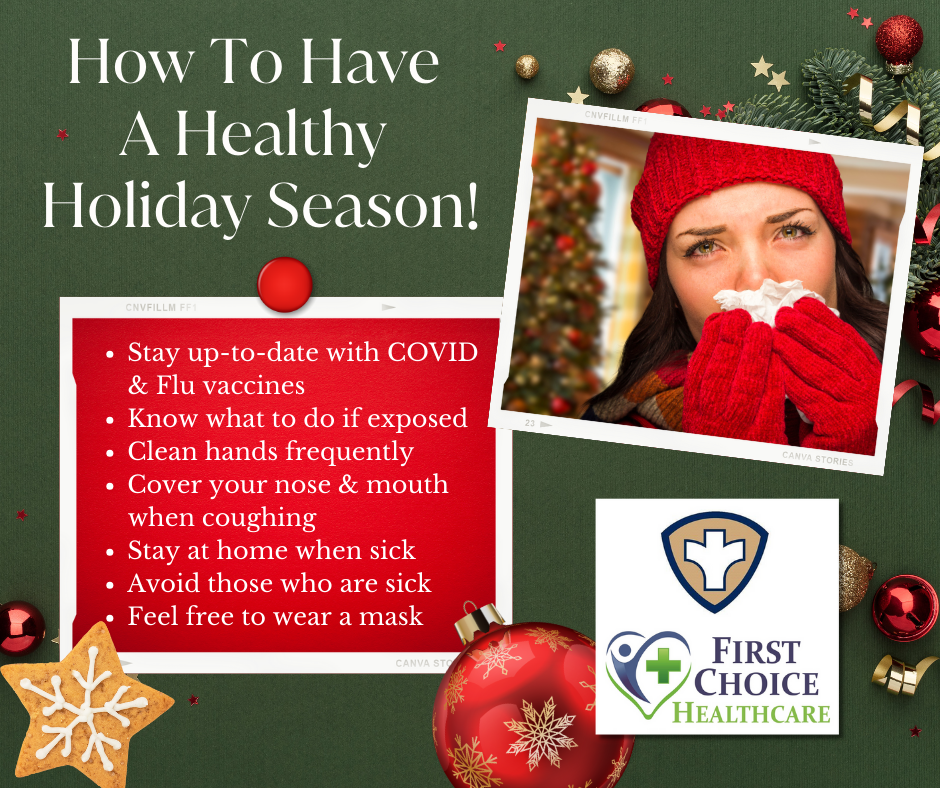
It’s the time of year to look ahead to preventing sickness during the holidays and infectious season. The Henry & Stark County Health Department wants the public to be aware that Covid-19, flu, RSV and common cold infections will be and are already on the rise.

Here are some suggestions on how to help keep germs away during gatherings and activities and the infectious season:
The Henry & Stark County Health Departments and First Choice Healthcare have the Pfizer updated Covid-19 shots for all adults & children (6mos.+) at their clinics in Kewanee, Colona and Toulon. Covid-19 shots are available by appointment at all locations, simply call the First Choice Healthcare location nearest you: Kewanee 309-852-5272; Colona 309-792-4011 or Toulon 309-852-3115.
Adults 18 years+ can get their flu vaccination on a “walk-in basis” (Monday-Friday 8am-4pm) and children’s flu shots (6 mos.+) are available by appointment at all clinic locations.
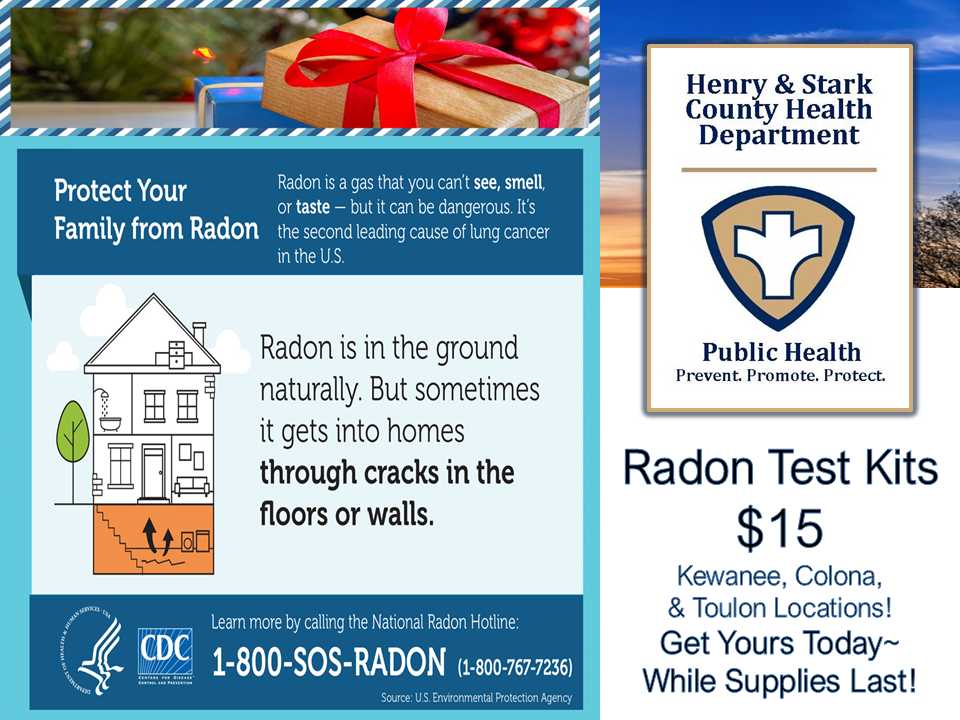
The Environmental Health Division of the Henry and Stark County Health Departments announce they have radon home test kits available for purchase through their offices in Kewanee, Colona and Toulon. The kits are being offered at the low cost of $15 per kit.
Area residents are encouraged to give the gifts of good health and peace of mind this holiday season to the homeowner in their life by purchasing one of these radon home test kits.
“Many people don’t even know that Radon gas is such a health threat. Radon is a naturally occurring radioactive gas present in the soil and water that can build up to dangerous levels in the home. Radon gas is odorless, colorless, tasteless, and invisible and the only way to know if a home has a radon problem is to test for it. Breathing radon can increase one’s risk of lung cancer. If you are a smoker, your risk is even more heightened.”
Radon gas is found in 65% of homes in Henry County and 82% of homes in Stark County. Radon is a Class A human carcinogen, meaning there is actual evidence that exposure to radon causes lung cancer. It is the cause of 20,000 lung cancer deaths in the United States annually.
Testing your home is the only way to know if you have elevated levels of radon. If radon levels, above the U.S. Environmental Protection Agency’s (USEPA) action level of 4 picocuries per liter of air (pCi/L), are detected in your home; the Health Department can provide you with information regarding radon mitigation on our website at www.henrystarkhealth.com or through our Environmental Health Division.
For more information on Radon gas or the Radon Home Testing Kits call (309) 852-0197.

The Environmental Health Division of the Henry and Stark County Health Department notes that according to the Centers for Disease Control and Prevention (CDC), “1 in 6 Americans contract foodborne diseases every year, affecting more people than the common cold.” But many of the symptoms of food poisoning mimic those of the garden-variety flu, sometimes leaving people to wonder if the cause was the food they ate or a virus they picked up along the way.
Despite the prevalence of foodborne illnesses, it can be hard to recognize them. Like people with the “stomach flu,” those with foodborne illness usually suffer from vomiting, diarrhea and abdominal pain. The Health Department notes, “There’s no real easy way to distinguish between many types of foodborne illness and a flu bug, but with the flu, one might be more apt to see generalized aches and pains and just overall not feeling well.”
Foodborne illnesses are, by and large, illnesses that occur in close proximity to exposure. If a large number of people have the same symptoms at the same time, then the cause is most likely food poisoning. However, if people are ill at different times their symptoms are more likely to be flu-related, as it takes time to pass the virus from person to person.
Though most foodborne disease outbreaks don’t occur during the holidays (they occur most often in the summer), the holidays warrant special attention because certain foods and food practices popular during the season can increase the risk for foodborne illness.
The Health Department offers the following food safety suggestions:
According to Health Department staff, “The holidays don’t always make it easy for food handlers to follow this advice. One reason is that people get caught up in the hectic pace of the holiday season. They lose the vigilance that they might follow at other times of the year.
The traditional advice should always be applied: Keep hot foods hot and cold foods cold.