The Henry and Stark County Health Departments remind everyone that as we welcome spring and celebrate several holidays it is important to keep in mind proper food preparation and handling.
Whether you’re celebrating your Easter dinner with ham or lamb, or a Seder meal with brisket, keep food safety in mind. In conjunction with the USDA, they offer the following food safety tips:
● Eggs should not sit out at room temperature for more than two hours. Keep hard-cooked eggs in the refrigerator until ready to serve.
● All cooked egg dishes should reach a safe minimum internal temperature of 160 degrees F, as measured by a food thermometer.
● If you plan to eat the Easter eggs you decorate, then be sure to use only food-grade dye. One suggestion is to make two sets of eggs, one for decorating and hiding that will not be consumed, and another set for eating. Consider using plastic eggs for your Easter egg hunt.
● During Passover, various kosher meats are consumed. Kosher meat and poultry are produced under rabbinical supervision. Verify the safety of meats by looking for the USDA mark of inspection to ensure the product was produced in an establishment inspected by the USDA.
● Be sure to allow plenty of time to thaw a frozen brisket. Thawing in the refrigerator can take about 24 hours for a trimmed, first-cut brisket. A whole brisket weighing about 10 pounds can take several days.
● Bake the brisket, fat side up in a baking dish, in an oven set no lower than 325 F. The brisket is safe to eat when it reaches an internal temperature of 145 F and is allowed to rest at that temperature for three minutes.
Ham is a popular meat for the Easter table. Did you know that there are several types of ham, and they require different preparation methods? Ham is either ready-to-eat or requires cooking before eating. Be sure to read the package instructions carefully.
○ Fresh, uncooked hams must be cooked to reach a safe minimum internal temperature of 160 F.
○ Ready-to-eat hams are cooked at the plant and can be safely eaten right out of the package and can be served cold or heated to serve warm.
Lamb is another popular dish. For food safety, the USDA recommends cooking a leg of lamb and other cuts to a safe minimum internal temperature of 145 F.
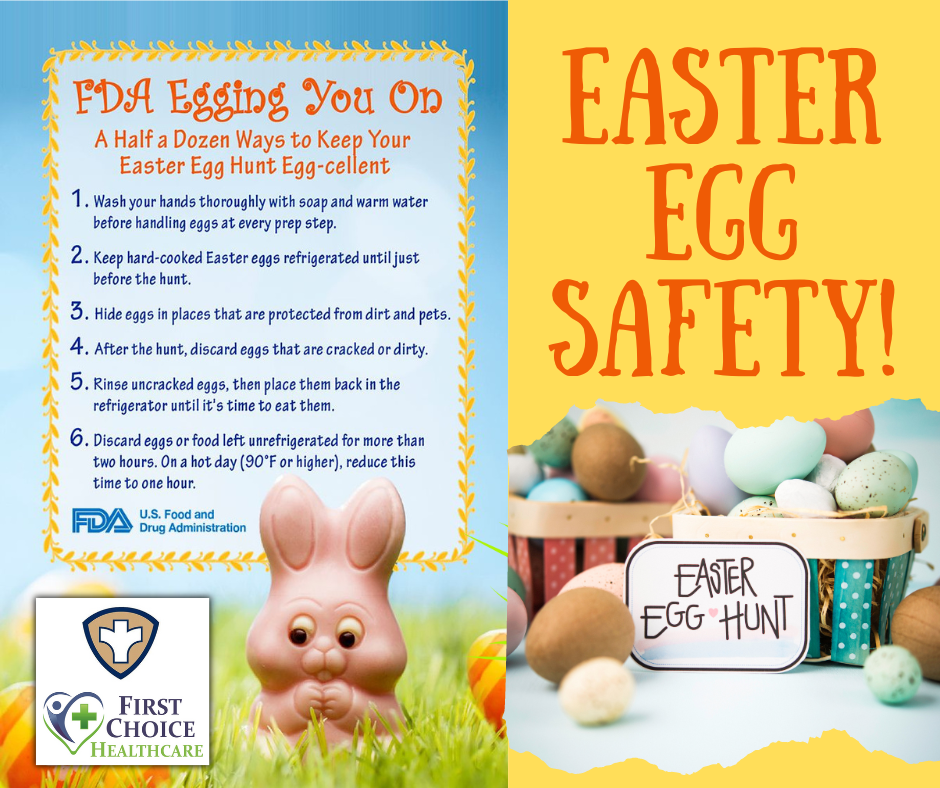
This time of year many groups, organizations, and families may be planning festivities to celebrate the upcoming Easter holiday. For those planning an Easter egg hunt the Henry and Stark County Health Departments would like everyone to be aware that hard-boiled eggs require some special attention.
In years past, various instances of food borne illnesses have been associated with the consumption of improperly prepared Easter eggs; therefore, they recommend the following guidelines to help insure a safe and enjoyable holiday.
● Use only fresh, clean, unbroken eggs that have been obtained from a reliable source and kept refrigerated.
● Eggs should be prepared by healthy persons who observe good hygienic practices such as frequent hand washing and proper cleaning of cooking utensils.
● Eggs should not be allowed to cool in standing water. They should be placed into the refrigerator immediately after cooking.
● Hard-boiled eggs must remain refrigerated after preparation and coloring, and used within seven days.
● It’s safe to keep the eggs outside for an hour or two during an Easter egg hunt, but any eggs that are not consumed right away must be returned to the refrigerator. Also, hide eggs so they stay clear of pets, dirt and other sources of bacteria. To be extra cautious, cook two sets of eggs: one for hiding and decorating with, and another for eating.
● Remember, hard-boiled eggs-in the shell or peeled-do not keep as well as raw eggs, so discard any leftover eggs after one week.
Whether preparing, serving, hunting or decorating with eggs, it’s easy for everyone to have a splendid Easter celebration while still staying safe from any “food borne unpleasantness.”
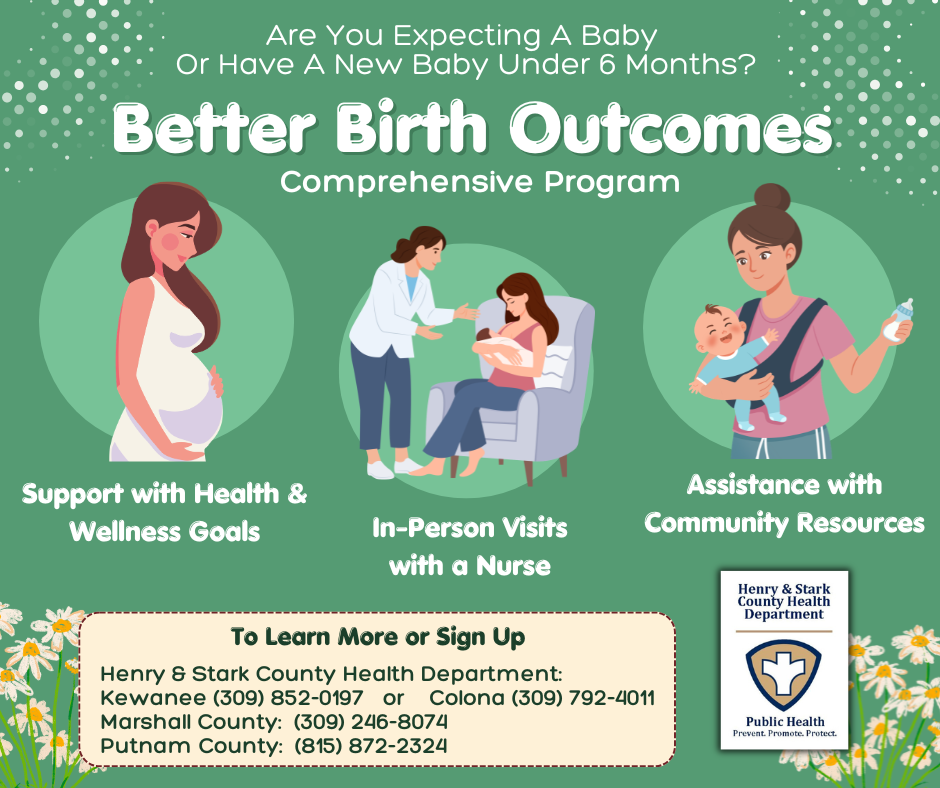
The Maternal and Child Services Division of the Henry and Stark County Health Departments asks, “Are you expecting a baby or have a new baby under 6 months?” If so, their Better Birth Outcomes-Comprehensive Program is here to support you through your journey.
Better Birth Outcomes is a free program that pairs families with an experienced nurse navigator, RN who will work with you one-on-one during your pregnancy and the first 6 months after your baby is born. Together they will focus on your health, your baby’s health and development, and be a support person for you and your family.
How does the “Better Birth Outcomes” program help? Your Health Department Nurse will provide personalized care and connect you with services that can help you:
● Connect you and your family with a healthcare provider.
● Connect with a Nutritionist and Breastfeeding Support staff through the Department’s WIC program.
● Identify and help prevent health concerns that could affect your pregnancy and help prevent complications before, during and after birth.
● Identify and address substance abuse concerns.
● Identify and connect mental health services for yourself or family.
● Help navigate your health care plan and benefits.
● Educate participants on pregnancy issues and newborn care and safety.
● Support your baby’s healthy growth and developmental milestones.
For more information or to sign up for the Better Birth Outcomes program simply call the Henry and Stark County Health Departments in Kewanee at 309-852-0197 or Colona at 309-792-4011; or Marshall County residents at 309-246-8074; or Putnam County residents at 815-872-2324.
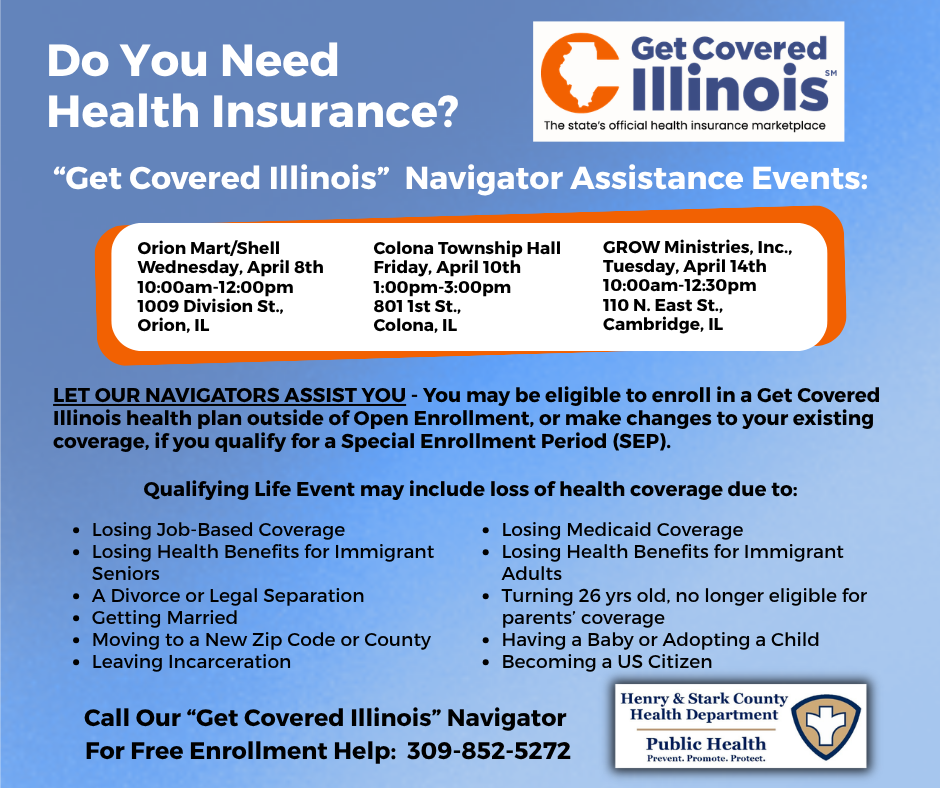
The Henry and Stark County Health Departments and the Get Covered Illinois Navigator Program asks, “Do You Need Health Insurance?” Their health insurance navigators will be present at the upcoming local events to assist anyone looking to set up health insurance coverage:
Orion Mart/Shell, 1009 Division St., Orion, Ill.
Wednesday, April 8
10 a.m.-12 p.m.
Colona Township Hall, 801 1st St., Colona, Ill.
Friday, April 10
1-3 p.m.
GROW Ministries, Inc., 110 N. East St., Cambridge, Ill.
Tuesday, April 14
10 a.m.-12:30 p.m.
Our “Get Covered Illinois” navigators can help you:
● Find affordable health coverage that meets your needs
● Fill out and submit your application
● Compare quality health plans side-by-side
● Find out if you qualify for financial help to lower your monthly premium
● Find out if you qualify for Medicaid or an affordability program
● Understand your benefits
● Understand health insurance terms
Remember you may be eligible to enroll in a Get Covered Illinois health plan outside of the usual Open Enrollment, or make changes to your existing coverage, if you qualify for a Special Enrollment Period (SEP). The SEP may require you to enroll within 60 days of a Qualifying Life Event. A qualifying life event is a life change, such as:
Loss of Health Coverage, due to:
● Losing job-based coverage
● Losing Medicaid coverage
● Losing Health Benefits for Immigrant Seniors or Health Benefits For Immigrants Adult coverage
● A divorce or legal separation
● Turning 26 years old, no longer eligible for parents’ coverage
Other Qualifying Life Events include:
● Getting Married
● Having a baby or adopting a child
● Moving to a new ZIP code or county
● Becoming a US Citizen
● Leaving incarceration.
For more information on this Get Covered Illinois Navigator Event or assistance in enrolling in a Get Covered Illinois Healthcare Marketplace please call 309-852-5272.