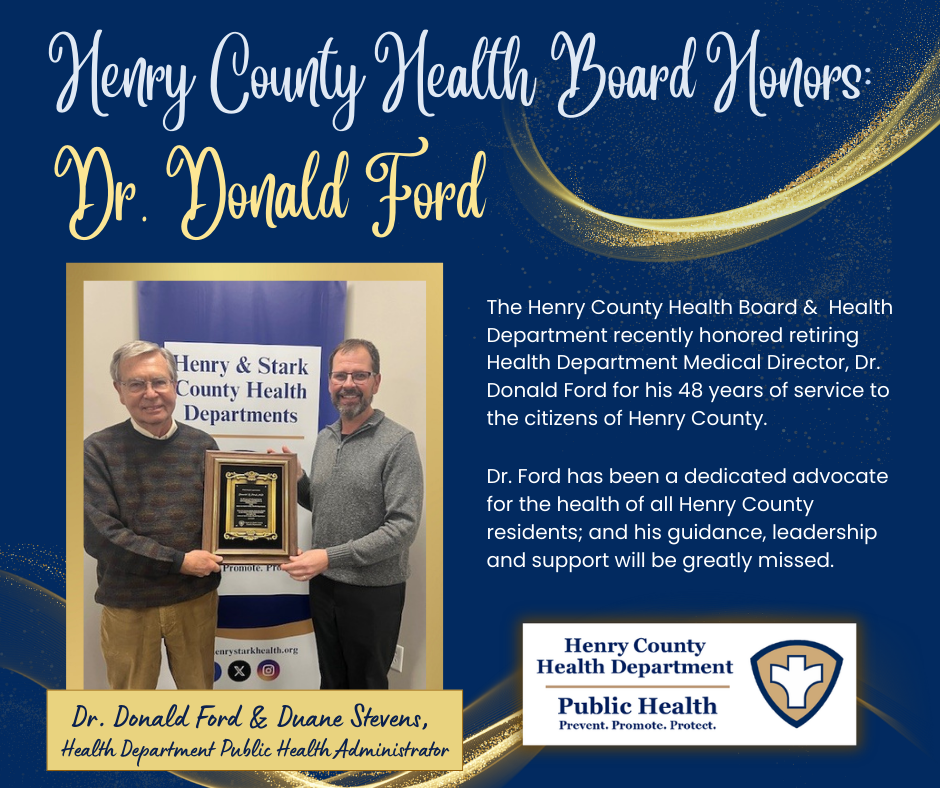
Duane Stevens, Public Health administrator with the Henry and Stark County Health Departments, and the members of the Henry County Health Board recently honored retiring Health Department Medical Director, Dr. Donald Ford, for his 48 years of service to the citizens of Henry County.
Stevens said. “Dr. Ford has been devoted to the community; in addition to his tenure as Medical Director, he served for 14 years -10 years as Board President to the Henry County Board of Health. His years of service to the Health Department, Health Board, and his personal practice has been and will always be sincerely appreciated.”
“Dr. Ford has been a dedicated advocate for the health of all Henry County residents; and his guidance, leadership and support will be greatly missed,” said Stevens.
The Henry County Health Board consists of two physicians; one dentist; one county board member; and four other residents of the county with an interest in the county’s health needs. The Health Board meets quarterly and members serve with no compensation.
For more information on the Henry County Health Department call 309-852-0197. You can also visit their website at www.henrystarkhealthcom or find them on Facebook or follow them on Twitter.
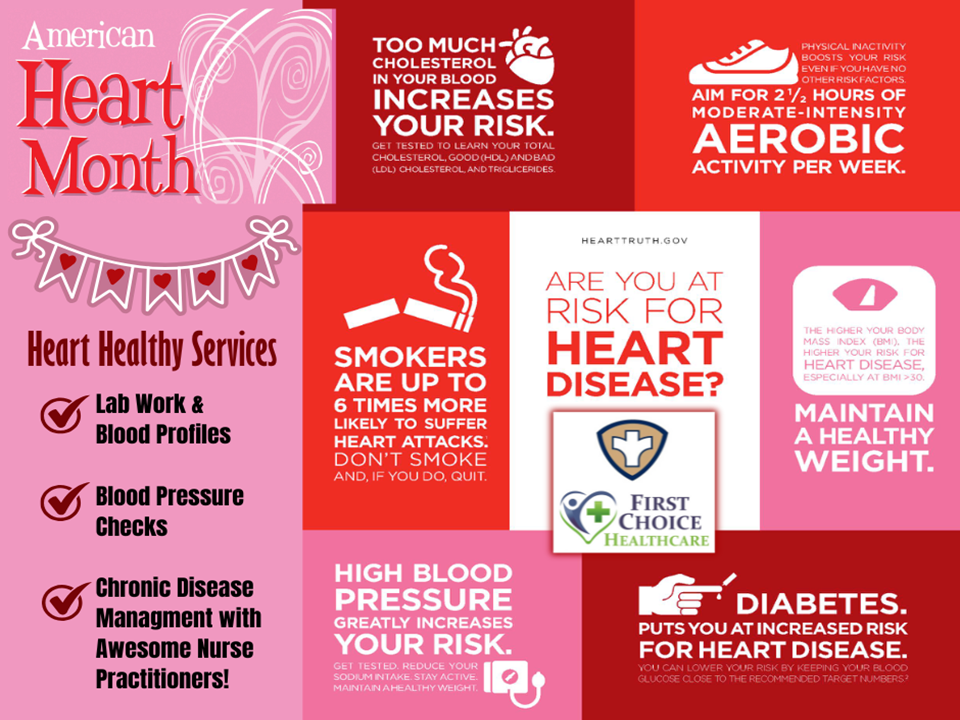
The Henry and Stark County Health Departments and First Choice Healthcare Clinics in Kewanee, Colona and Toulon note that February is American Heart Month.
The Health Department and the Centers for Disease Control (CDC) note during the month of February we tend to view the human heart as the symbol of love, admiration and affection. But this February show yourself the love. Learn about your risks for heart disease and stroke and stay “heart healthy” for yourself and your loved ones.
Cardiovascular disease – CVD – including heart disease, stroke, and high blood pressure -is the number one killer of women and men in the United States. It is a leading cause of disability, preventing Americans from working and enjoying family activities. Truth is many CVD deaths could have been prevented through healthier habits; but it helps if you have a plan and carry out some strategies for better heart health:
Work with your health care team. Get a checkup at least once each year, even if you feel healthy. A doctor, nurse or other health care professional can check for conditions that put you at risk for CVD, such as high blood pressure and diabetes—conditions that can go unnoticed for too long.
Monitor your blood pressure and get your cholesterol checked. The Health Department along with their First Choice Healthcare Clinics remind area residents that their family nurse practitioners can help with the management of high blood pressure and high cholesterol. If you don’t know your blood pressure and cholesterol numbers; they have services that can help you see where you stand.
Eat a healthy diet. Choosing healthy meal and snack options can help you avoid CVD and its complications. Limiting sodium in your diet can lower your blood pressure. Be sure to eat plenty of fresh fruits and vegetables – adults should have at least five servings each day. Eating foods low in saturated fat, trans fat, and cholesterol and high in fiber.
Maintain a healthy weight. Being overweight or obese can increase your risk for CVD.
Exercise regularly. Physical activity can help you maintain a healthy weight and lower cholesterol and blood pressure.
Don’t smoke. Cigarette smoking greatly increases your risk for CVD. If you don’t smoke, don’t start. If you do smoke, quit as soon as possible.
Limit alcohol use. Avoid drinking too much alcohol, which can increase your blood pressure.
Manage your diabetes. If you have diabetes, monitor your blood sugar levels closely, and talk with your health care team about treatment options.
Take your medicine. If you’re taking medication to treat high blood pressure, high cholesterol, diabetes, or another condition, follow the instructions carefully. Always ask questions if you don’t understand something.
This February show yourself some love and lower your risk of heart disease. For more information on the “Heart Healthy” services available through the First Choice Healthcare call 309-852-0197. You can also visit their website at www.henrystarkhealth.com or find them on Facebook or follow them on Twitter.
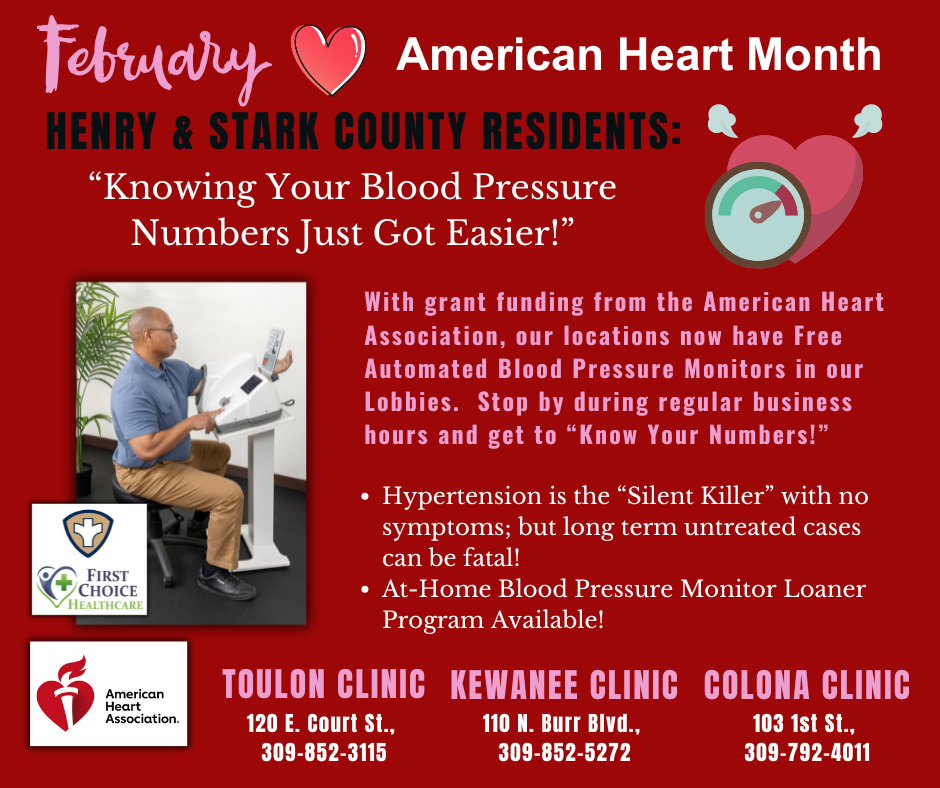
February is American Heart Month, and the Henry and Stark County Health Departments want to let residents know that, with grant funding from the American Heart Association – AHA, they now have free automated blood pressure monitors in their Kewanee, Colona and Toulon lobbies. The public is welcome to stop in during regular business hours and get to “Know Your Numbers!”
High blood pressure is known as the silent killer because you can suffer from it without even knowing. Which is why it is so important to have your blood pressure checked. If you know family or friends who haven’t had their blood pressure checked recently, the health department encourages them to have it checked as well.
Anyone who stops in to try their new automated blood pressure monitors will receive a printout of their results to keep. Ask yourself:
● Have you had concerns about your blood pressure lately?
● Do you have a family history of hypertension or other cardiovascular diseases?
● Have you recently started or changed your blood pressure medication?
● Or, it’s simply been a while since you’ve had your blood pressure checked.
If so, their staff encourages you to stop by their locations and “Know Your Numbers.” It’s free, painless and only takes a few minutes.
In addition, the AHA grant funding has created a new automated blood pressure loaner program. Their clinics now have single and two-person monitors in various sizes. These monitors can help you keep track of your blood pressure and heart rate at home. These monitors are a great tool to help you and your healthcare provider to track your blood pressure over time.
For more information, call their location nearest you: Kewanee-309-852-5272; Colona-309-792-4011; or Toulon-309-852-3115 or stop by anytime Monday-Friday, 8 a.m. to 4 p.m. daily.
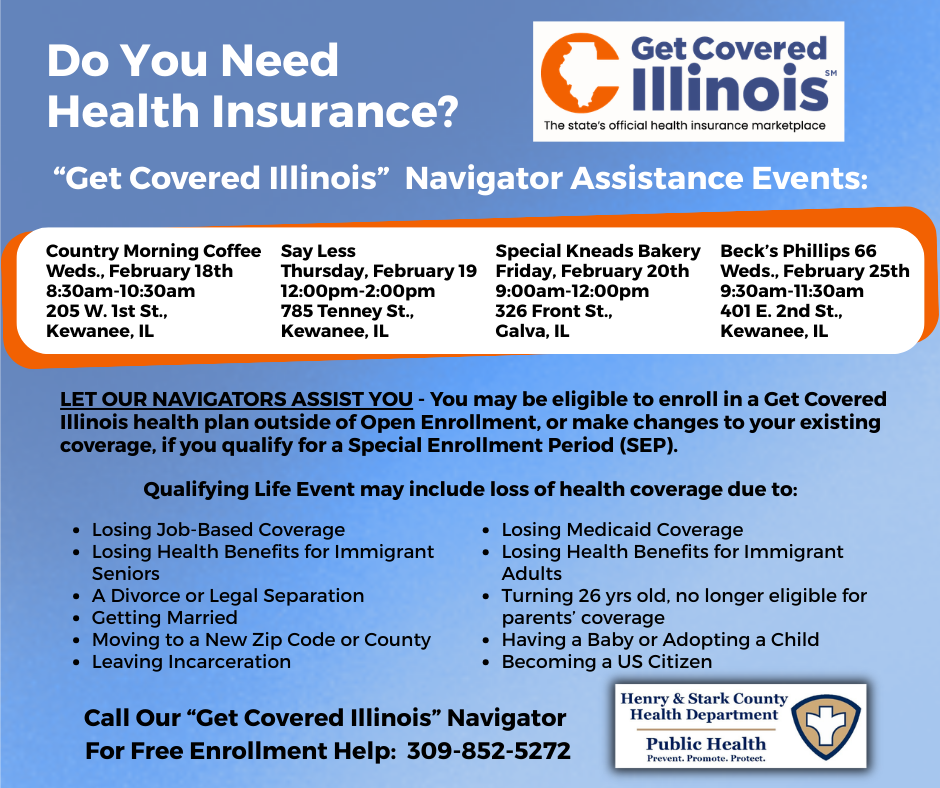
The Henry and Stark County Health Departments and the Get Covered Illinois Navigator Program asks, “Do You Need Health Insurance?” Their Health Insurance Navigators will be present at the upcoming local events to assist anyone looking to set up health insurance coverage:
Say Less, 785 Tenney St., Kewanee, Ill.
Thursday, Feb. 19
12-2 p.m.
Special Kneads Bakery, 326 Front St., Galva, Ill.
Friday, Feb. 20
9 a.m. – Noon
Beck’s Phillips 66, 401 E. 2nd St., Kewanee, Ill.
Wednesday, Feb. 25
9:30 – 11:30 a.m.
YMCA-Kewanee, 315 W. 1st St., Kewanee, Ill.
Friday, Feb. 27
9 a.m. – 11 a.m.
Our “Get Covered Illinois” Navigators can help you:
● Find affordable health coverage that meets your needs
● Fill out and submit your application
● Compare quality health plans side-by-side
● Find out if you qualify for financial help to lower your monthly premium
● Find out if you qualify for Medicaid or an affordability program
● Understand your benefits
● Understand health insurance terms
Remember you may be eligible to enroll in a Get Covered Illinois health plan outside of the usual Open Enrollment, or make changes to your existing coverage, if you qualify for a Special Enrollment Period -SEP. The SEP may require you to enroll within 60 days of a Qualifying Life Event. A qualifying life event is a life change, such as:
Loss of Health Coverage, due to:
● Losing job-based coverage
● Losing Medicaid coverage
● Losing Health Benefits for Immigrant Seniors or Health Benefits For Immigrants Adult coverage
● A divorce or legal separation
● Turning 26 years old, no longer eligible for parents’ coverage
Other Qualifying Life Events include:
● Getting Married
● Having a baby or adopting a child
● Moving to a new ZIP code or county
● Becoming a US Citizen
● Leaving incarceration.
For more information on this Get Covered Illinois Navigator Event or assistance in enrolling in a Get Covered Illinois Healthcare Marketplace please call 309-852-5272.