Muhammad Ali once said that Henry Aaron is “[t]he only man I idolize more than myself.” That’s high praise coming from the greatest self-promoter of all time (with all due apologies, of course, to Donald Trump).
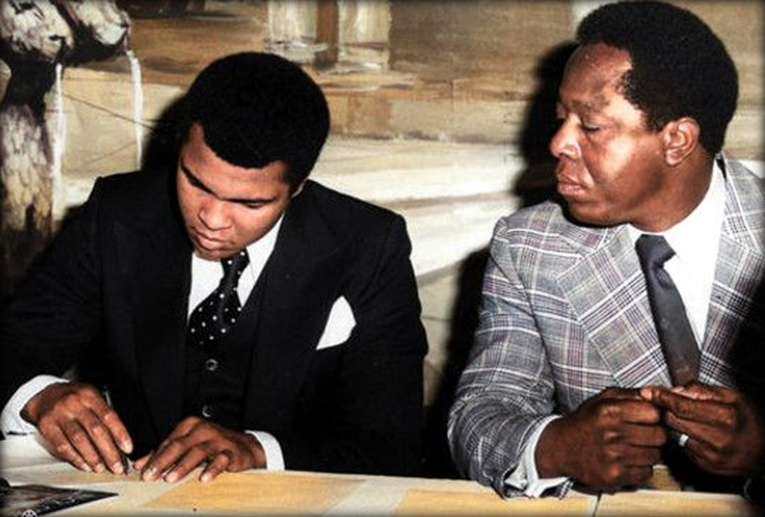
At least part of the reason for looking up to Hank Aaron, in addition to his incredible career numbers, was his consistency: 14 times batting .300 or better, 15 times hitting 30 or more home runs, 16 times driving in 90 or more RBIs, winning three Gold Glove Awards, and appearing in 25 All-Star games. Pitcher Curt Simmons said that “[t]rying to sneak a pitch past Hank Aaron is like trying to sneak a sunrise past a rooster.”
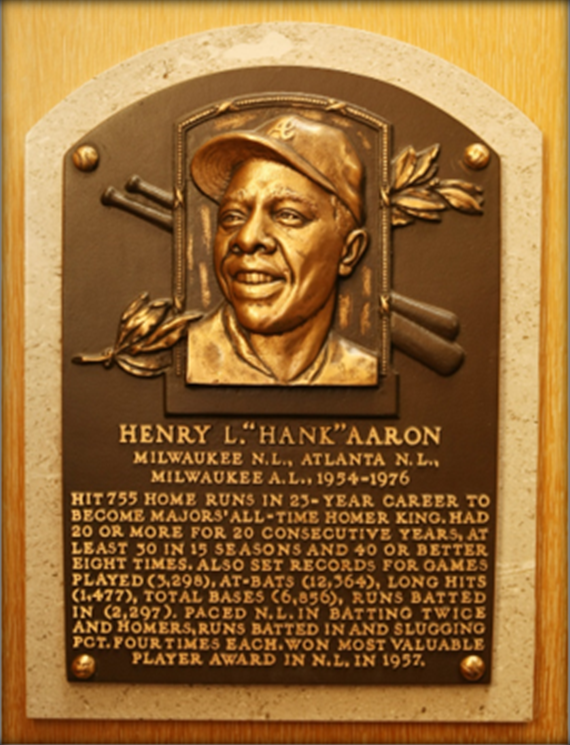
Henry Louis Aaron was born on February 5, 1934, and played on the sandlots in Mobile, Alabama, a baseball hot-bed which has produced five Hall of Fame members: Satchel Paige, Willie McCovey, Billy Williams, and Ozzie Smith, in addition to Aaron. He grew up in a time when Blacks were not allowed in the Major Leagues, although they once had been before the Jim Crow era sent its tentacles into the game. (Moses Fleetwood “Fleets” Walker is credited as the first openly Black man to play in the Majors, in 1884, 63 years before Jackie Robinson and the re-integration of MLB.)
Aaron and his family lived in a poor Mobile neighborhood and on the edge of poverty, so everyone in the family had to work, including Henry, who picked cotton among his other jobs. But he was a gifted athlete, playing shortstop, third base, and outfield on a team that won the city’s Negro high school championship in his first two high school years.
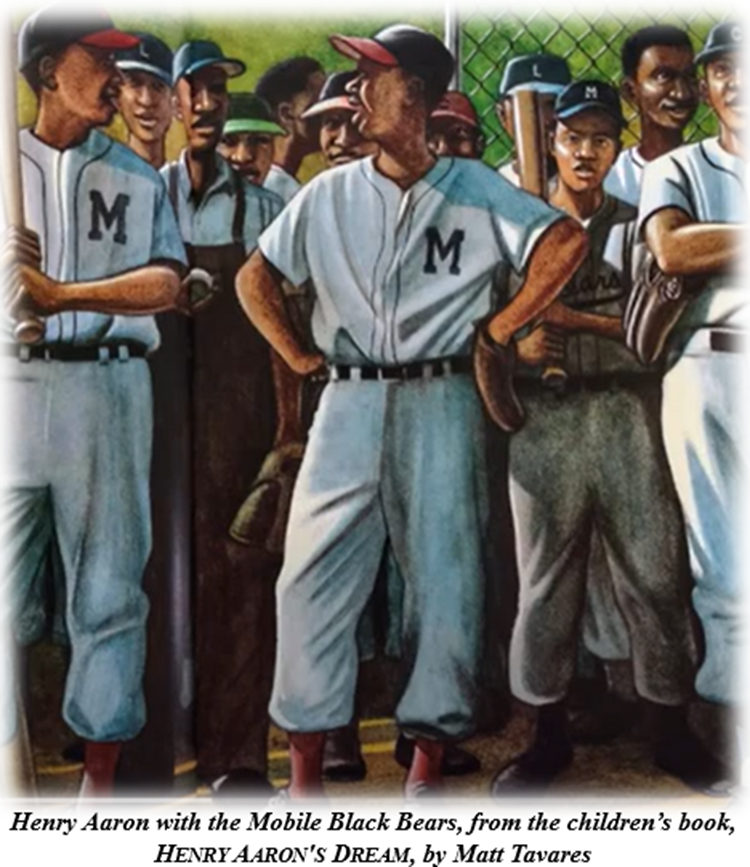
In 1949, the 15-year-old Aaron tried out with the Brooklyn Dodgers but didn’t get a contract offer. He switched high schools while also playing for a local semi-pro team (with which he had played since age 14). He then signed with the Mobile Black Bears, a semi-pro traveling team, but his mother did not permit him to leave Mobile, so he was limited to playing local games.
In late 1951, Aaron signed a $200/month contract with the Indianapolis Clowns of the Negro American League. The next year, the lanky 17-year-old played three months for the Clowns. In 26 games, he hit .366, with five home runs and nine stolen bases, showcasing his range of skills. As a result, his contract was sold for $10,000 to the Boston Braves.
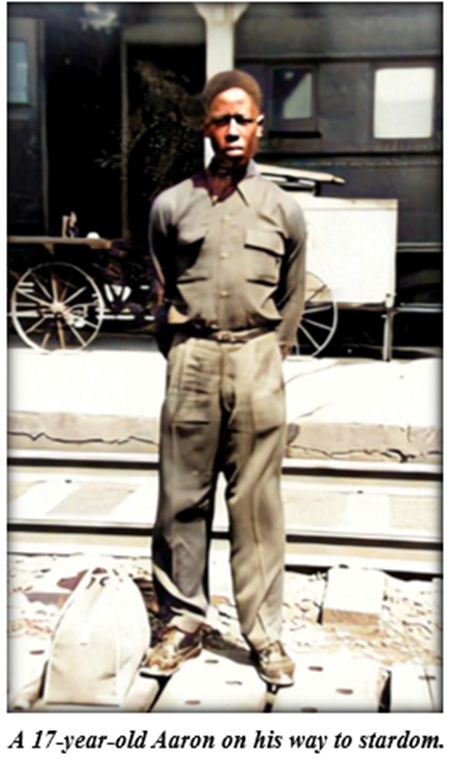
It was during that 1952 season that Aaron played in Kewanee.
Kewanee had hosted a minor league affiliate of the Philadelphia Athletics for a couple of seasons, but by 1952 was back to only town ball.
The Negro League teams traveled the country playing before crowds in cities small and large, including across Central Illinois, and they picked up the slack of small towns’ loss of professional ball. However, because of the re-integration of baseball beginning in 1947, the League was trending downward, as the best players began signing with MLB teams. Nevertheless, there were still young, up-and-coming Black players, and Kewanee saw one of the best on a late spring day in 1952.
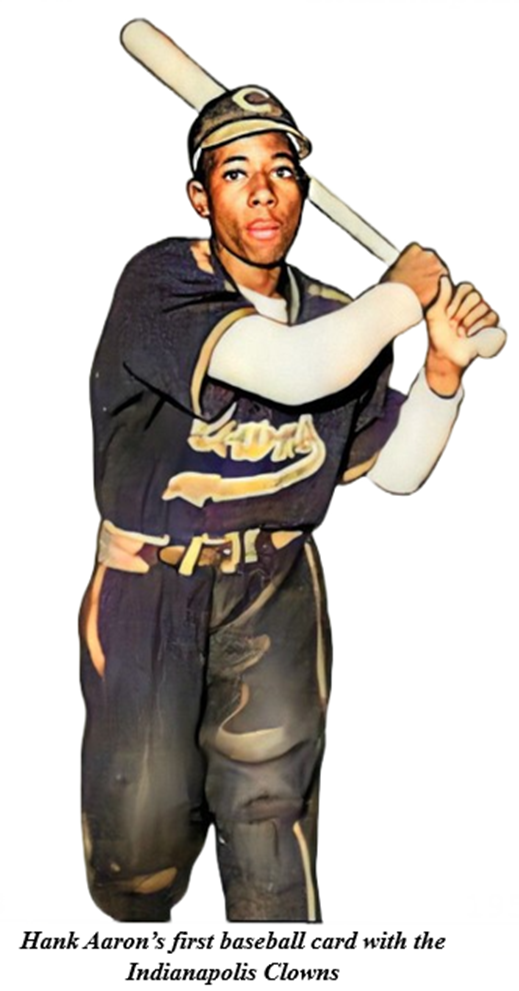
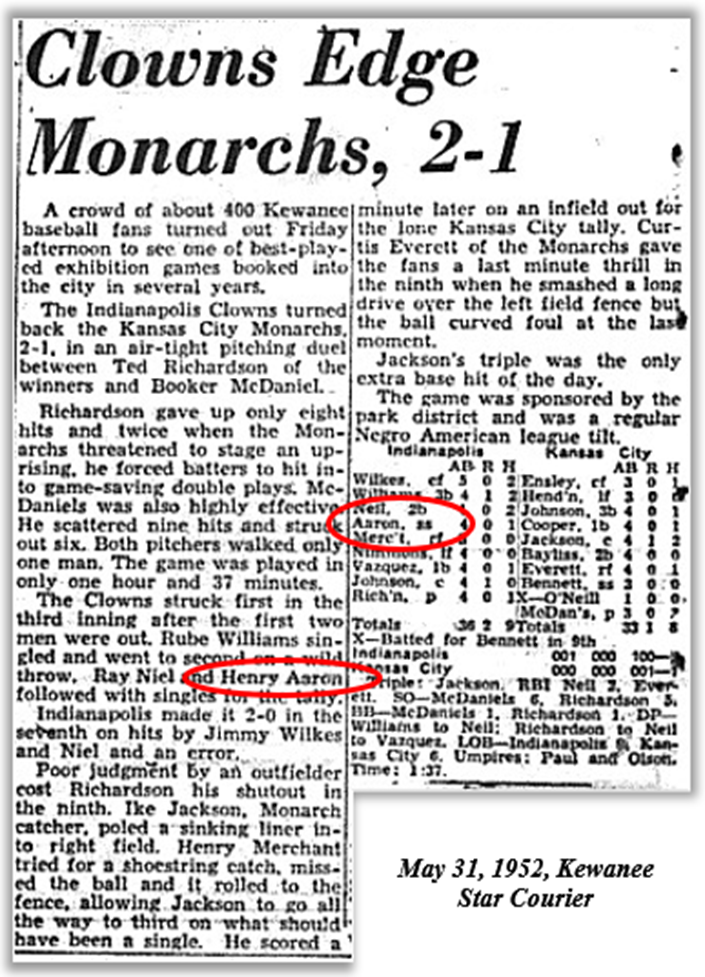
As the long Memorial Day weekend got underway, Kewaneeans enjoyed bright, sunny skies. With temperatures in the high 70s, over 450 baseball fans turned out at Northeast Park for an afternoon ball game between the fabled Kansas City Monarchs and the Clowns. The Clowns had reversed the trajectory of the Harlem Globetrotters, starting as pure entertainers before becoming a serious baseball club. They had won the Negro American League pennant the year before and were looking to win it again.
As he did all season, Aaron batted clean-up and played shortstop. He was one for four, driving in the Clowns’ first run. In the third inning after two outs, two Clowns reached base before Aaron stepped to the plate. Still using his cross-handed batting grip (which he gave up later that year), Aaron drove a single over the infield with his whip-like swing, driving in the game’s first run. The Clowns scored once again in the seventh inning before the Monarchs scored in the ninth after a Clowns’ outfielder missed a shoestring catch. But that was all the scoring in a one hour, thirty-seven minute pitchers’ duel.
Kewaneeans couldn’t know of the soon-to-be greatness of the skinny kid at short, a boy destined to become the man who would break Babe Ruth’s home run record.
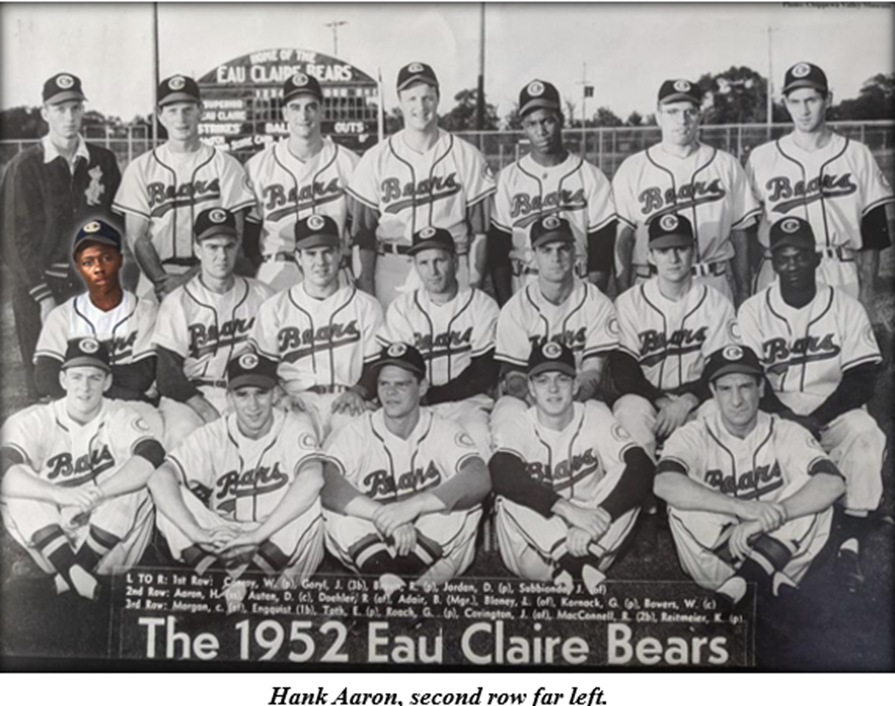
After he joined the Class C Eau Claire Bears later that summer, he hit .336 with nineteen doubles in only 87 games. He not only made the league’s All-Star team, but was selected the Northern League’s Rookie of the Year. He also reportedly handled the racist taunts with a quiet detachment. The boy had become a man, and the major leagues were beckoning.
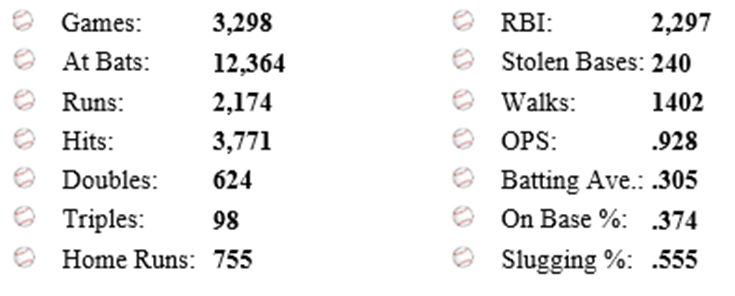
At the end of his storied career, Aaron had amassed these incredible numbers:
When Aaron finally broke Ruth’s home run record on April 8, 1974, in Atlanta, the Dodgers’ famous radio announcer Vin Scully described it this way:
“What a marvelous moment for baseball; what a marvelous moment for Atlanta and the state of Georgia; what a marvelous moment for the country and the world. A black man is getting a standing ovation in the Deep South for breaking a record of an all-time baseball idol. And it is a great moment for all of us, and particularly for Henry Aaron. . . . And for the first time in a long time, that poker face of Aaron shows the tremendous strain and relief of what it must have been like to live with for the past several months.”
Henry Aaron ranks high on my list of favorite baseball players, and near the top of those individuals I deem heroes, those who, as Eleanor Roosevelt said, move “[j]ust a step at a time, meeting each thing that comes up [and] discovering . . . the strength to stare it down.”