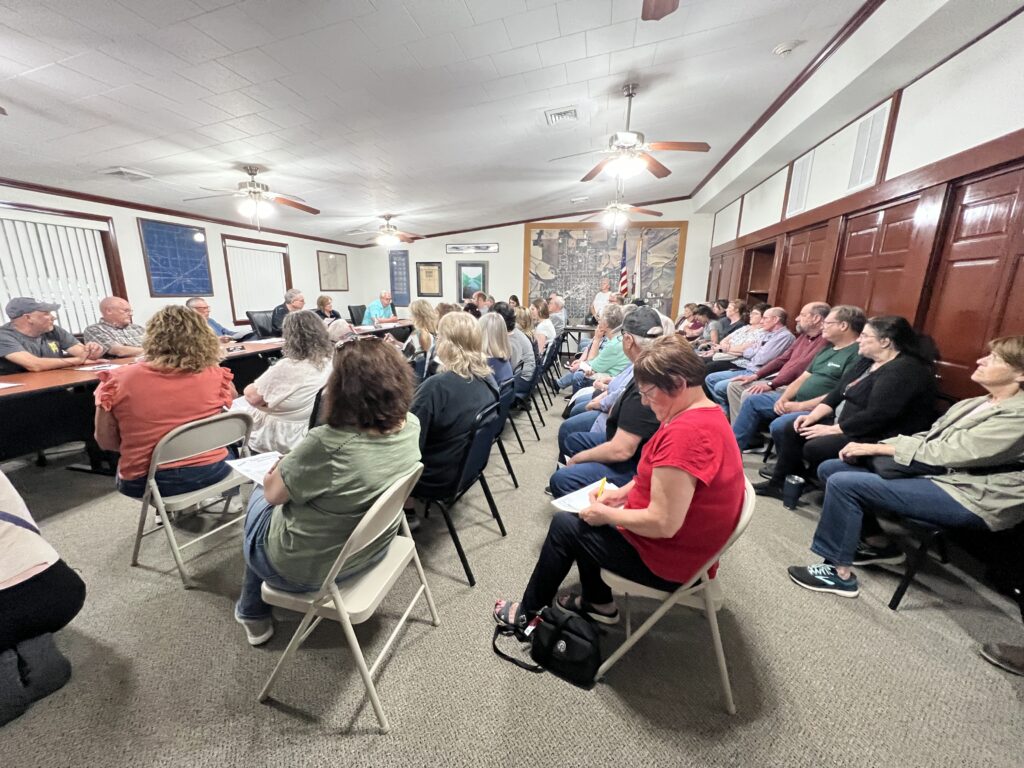
GALVA, Ill. — Galva residents packed the city council chambers Monday night to express frustration and concern after learning that City Administrator David Dyer signed a land‑use agreement with Lapis Carbon Solutions last November without notifying the council or the public.
More than 75 people filled the council chamber, where residents were given three minutes each to speak during a half‑hour public comment period.
Many who had turned out said they felt blindsided by the deal, which would allow Lapis Carbon Solutions and its partner Big River Resources to use a parcel of city land for a carbon‑capture and sequestration project if the U.S. Environmental Protection Agency (EPA) approves the permit.
The contract, signed by Dyer, includes an upfront payment of $20,000 to the city and a total value of $170,000 contingent on permit approval. Dyer told attendees he wanted the money for the city and said he has contacted universities to find a geologist to review the project for the city.
Resident Dustin Williams opened the public discussion, informing the group that he had filed a Freedom of Information Act request that had revealed the November agreement between Lapis and the city. Williams said he recently formed a group and created a Facebook page to raise awareness about the carbon‑storage proposal and questioned why the contract was signed before residents could weigh in.
“You didn’t give us an opportunity for the people to vote on it,” Williams told the council. “You should have done your homework before you signed that contract.” His comment drew applause from the attendees.
According to Lapis Carbon Solutions, the carbon project would store more than 725,000 metric tons of carbon dioxide annually for 12 years next to Big River’s ethanol facility. Company officials say the effort will reduce the carbon intensity of its products and strengthen its position in the low‑carbon fuels market. The plan includes additional CO₂ being trucked into Galva from Big River’s Burlington, Iowa plant.
Several residents voiced fears about health and safety risks of storing CO₂ under Galva, citing potential leaks, increased truck traffic and long‑term environmental impacts. Many questioned how the city of Galva would benefit from the project.
A nurse, Amanda Stodgel, filed a formal complaint, saying Galva is unequipped to handle a CO₂ emergency. She presented the council with a document that requires written responses from the city addressing safety measures.
Others questioned how property values and farmland could be affected and whether the contract adequately protects the city.
Mayor Rich Volkert said the council had not discussed the agreement before it was signed.
“We didn’t talk about it,” Volkert said.
Residents also raised concerns about transparency and accountability.
“We may get a couple hundred thousand, but that means nothing to me if my grandson is poisoned,” one attendee said.
Speakers urged the council to reconsider the deal and some suggested that residents should appeal to the Henry County Board members, who could impose a moratorium on carbon sequestration.
“I understand the city needs money to survive, but not at the cost of our safety,” said resident Lance Smith.
Williams’ remarks closed out the public comment portion of the meeting. He encouraged residents to stay engaged, stay strong, vigilant and professional.
“Go to every meeting,” he said.
The city of Galva plans to hold a public meeting on the issue in June but the date and location hasn’t been announced.
***This copy has been edited to clarify that the contract made between city administrator David Dyer and Lapis was a land-use agreement which will allow Lapis to use public land as a sequestration site if the permit is approved.