(This year’s Prairie Chicken Art Festival will be held Friday and Saturday, July 18 and 19, and its theme is a Hawaiian Beach Party Luau. Let’s look at another Hawaiian-themed event held almost a century ago in Kewanee.)
Emerit E. Baker joined the Haxtun Steam Heater Company in the 1870s, became a director in the 1880s and, when Haxtun was sold in 1891, he and two partners took over the boiler making operation, renaming it the Kewanee Boiler Company.
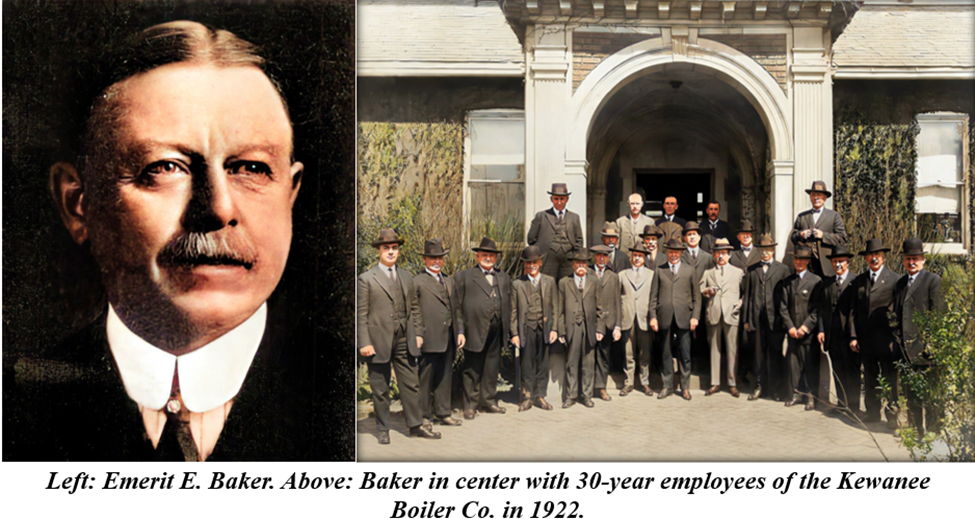
Baker became an industry giant and well-known philanthropist. He continued as president of the company until his death in 1929. Baker, however, may best be remembered as the father of the Kewanee Park District, the organization of which he spearheaded in 1919 and to which he donated over a half-a-million dollars during his lifetime.
For the purpose of our story, though, Saturday, June 18, 1927, is the focus. That night, the Bakers hosted a Hawaiian evening for Joseph E. McAdams and friends. They were commemorating the two couples’ earlier cruise to Hawaii.
The hosts furnished costumes for the occasion and first entertained the group in the couple’s backyard garden.
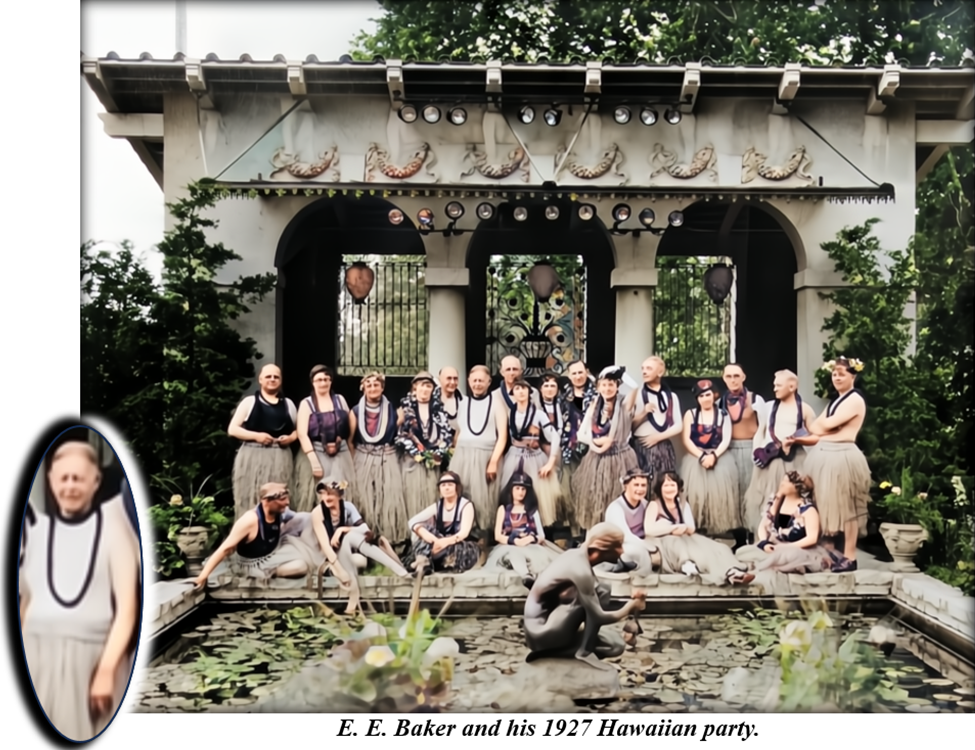
The photo above was taken just before the group moved into the dining room for a repast set for twenty-three, each guest sitting in front of place cards with tiny Hawaiian figures. The fare was served Hawaiian-style among bright yellow flowers displayed throughout the room. After dinner, the group danced the night away.
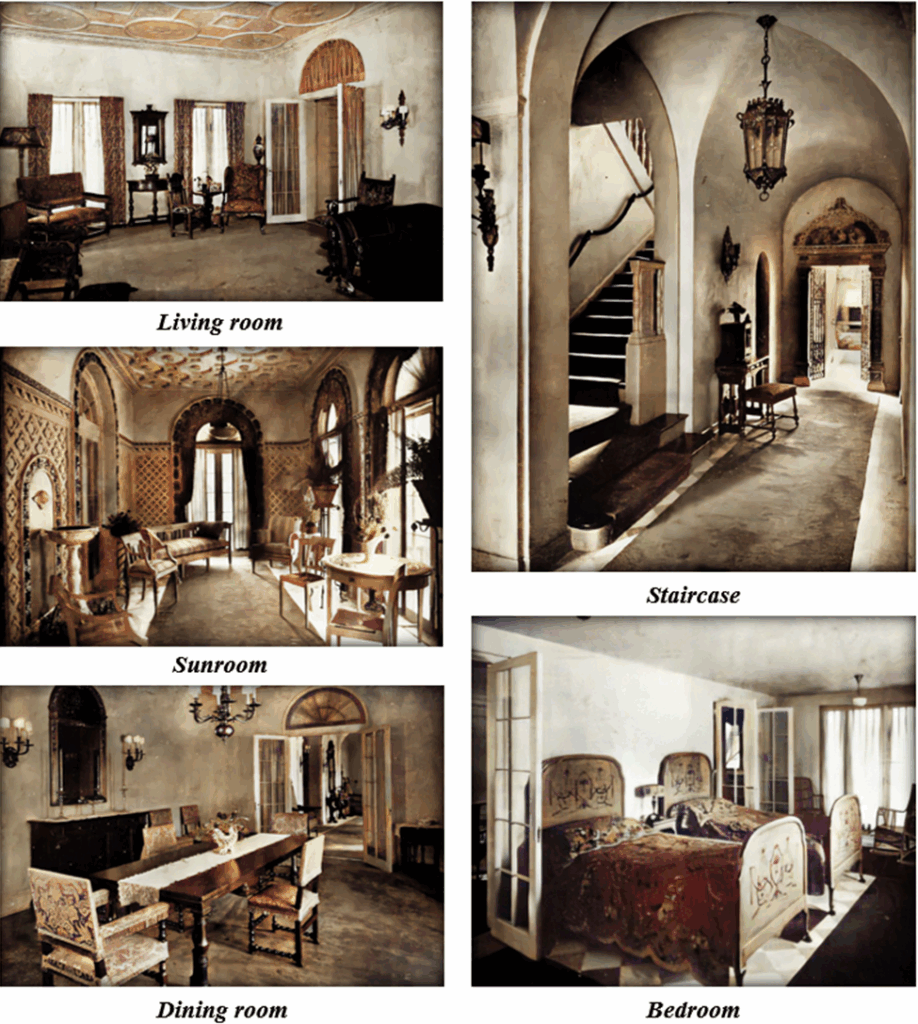
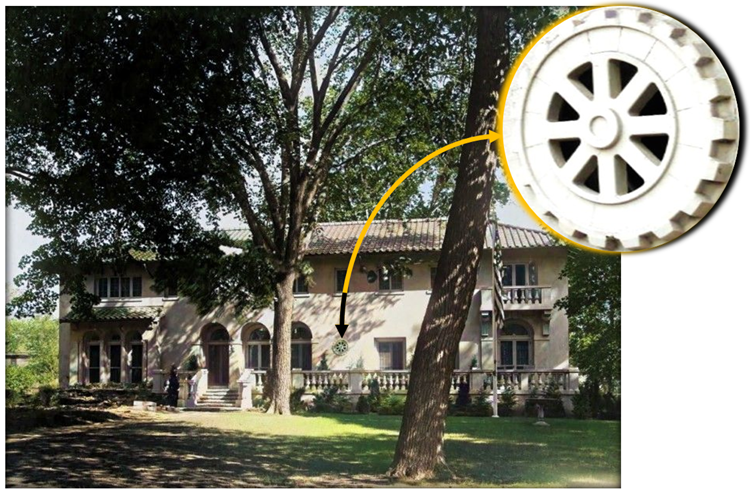
The Bakers were well-known for their lavish entertainment at their spectacular home on Prospect, at the corner of Chestnut. In 1917, Baker had purchased several houses surrounding the one he earlier had purchased from Kewanee pioneer Seymour Sloan and removed all of them. He then hired Chicago architect Frederick W. Perkins to design a mansion and a Chicago contractor to build it. The next summer, the Bakers occupied the new home, which they named “LaVilla.” It was a 2 1/2-story Spanish colonial-style home built of concrete and stucco with a tile roof.
Particular attention was paid to simple elegance without ornate fixtures on the interior. According to a 1919 article published in the magazine, The Architectural Record, earlier styles of heavy paneling and strong, detailed carving gave way to “broad surfaces of plaster, enriched only by an occasional tapestry or heavily carved mirror in old gilt, and crowned by groined arches or coffered ceilings. Mantels and occasional doorways of carved stone, gates, lanterns and sconces of metal, floors of tile, and heavily carved but sparing furniture carry out the effect.” The Bakers exemplified the trend with “their plain walls, rich plaster ceilings, and dependence almost entirely on the carved or painted furniture for their success.”
But it was the exterior of the home and surrounding landscaping which brought the greatest accolades.
The shaded front yard and the evergreen foundation around the front of the house invited guests with warmth and charm.
And then guests were treated to a backyard without equal.
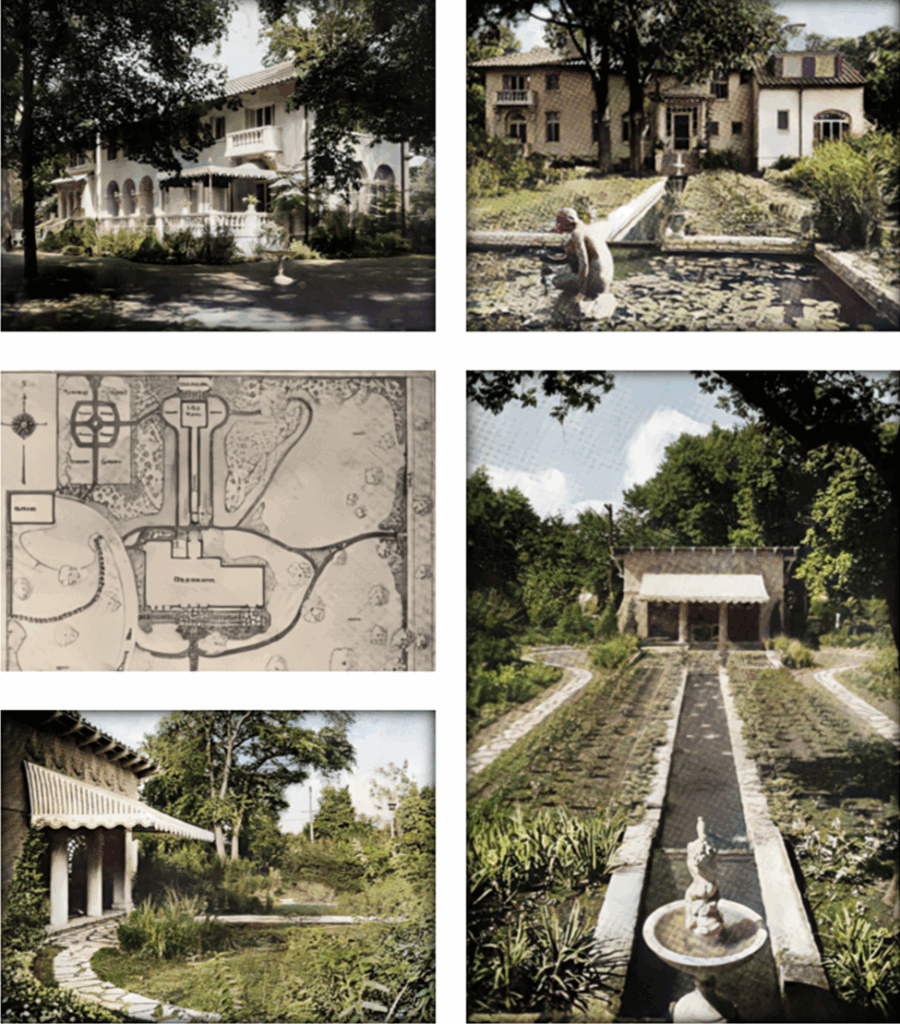
Previously, gardens were isolated from houses. But the Bakers’ garden was laid out to be intimately connected to the house, with a sense of enclosure and privacy for maximum enjoyment.
Some large trees were left near the house to give it “the required air of age and unbalanced harmony that new gardens often lack. The figure embodied into the pool is an example of fitness in garden statuary.”
A water way with a waterlily pool connected the summer porch and a garden teahouse. Flowering plants and evergreens were used on either side. “Emerging from the formally treated rose garden the view is across the lily pool to the naturalistic lawn and effective boundary screen.”
The garden was a beautiful space to behold.
In 1917, Baker had co-founded the Rotary Club of Kewanee. The Rotary’s cogwheel symbol was built into the wall just east of the main entrance.
Emerit E. Baker lived for only a year and a half after the Hawaiian gala, dying in 1929.
In its time, the Baker mansion was considered Kewanee’s premier home. It was a fitting home for the premier captain of Kewanee industry. And a pretty good setting for a Hawaii-themed gathering.