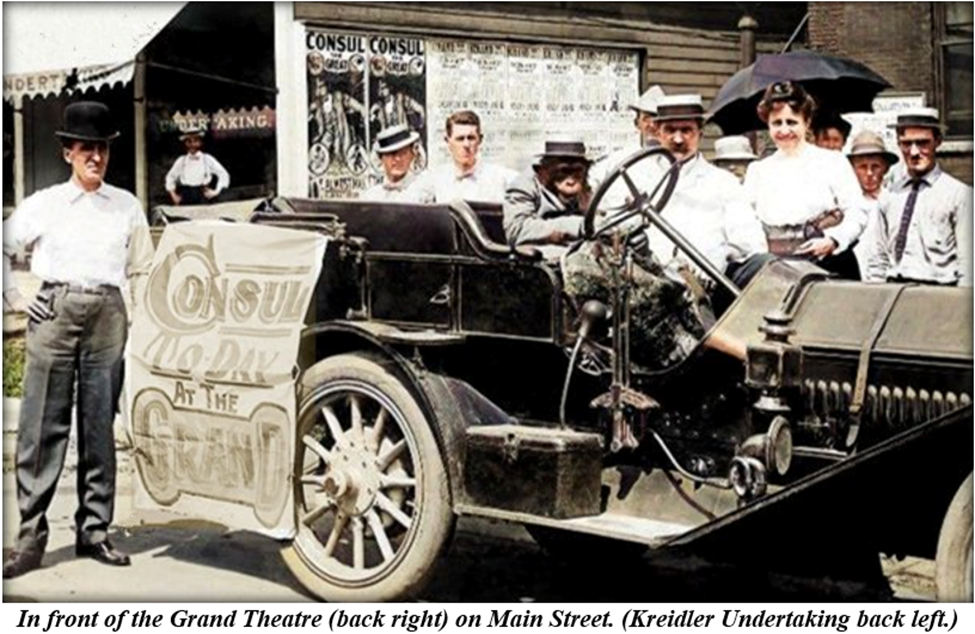
I recently saw a photo of “Consul the Great,” a trained chimpanzee who visited Kewanee during the week encompassing the Fourth of July in 1910. I decided I needed to know more.
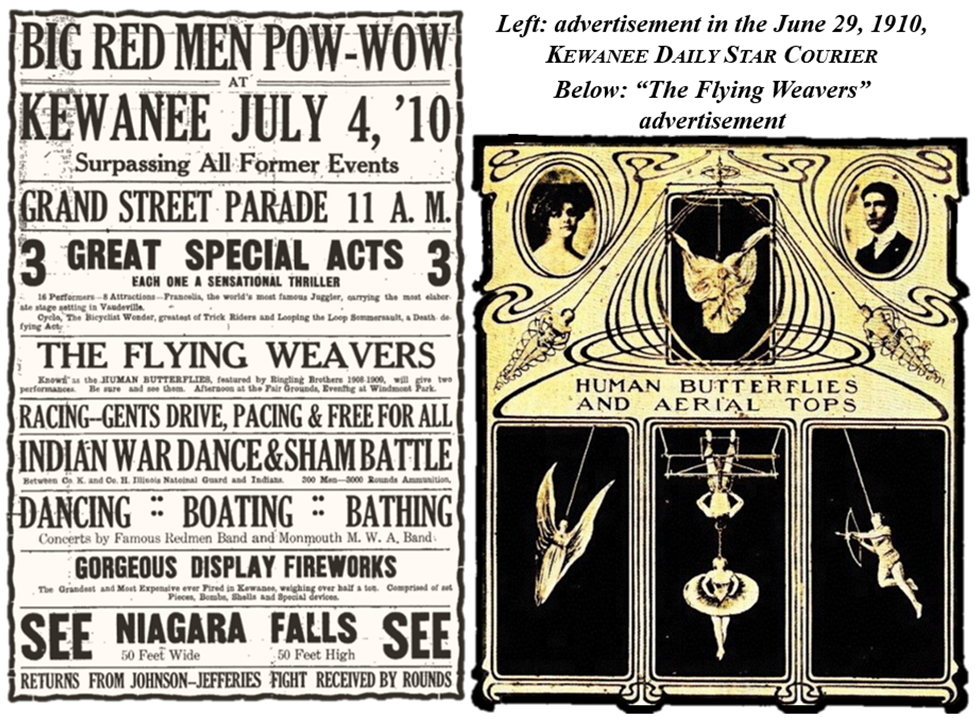
Independence Day that year was a heck of a reason for Kewanee’s Redmen to organize a grand “Powwow.” The local Redmen chapter was part of a nationwide fraternal organization started in the first half of the 19th century. The group traced its lineage back to the Boston Tea Party, and it appropriated Native American cultural aspects to drive its organizing principles.
The Redmen planned a multiplicity of entertainment events, including a parade, to celebrate Independence Day.
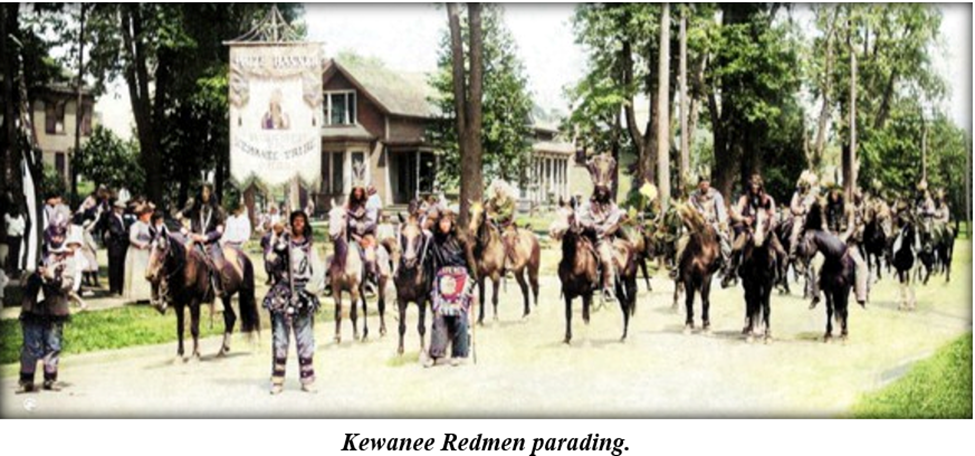
Thousands lined the streets along the parade route – it commenced at East Park (now Veterans Park) on Second and traveled to Main, north on Main to Third, west to Chestnut, south to Second, east to Tremont, south to Prospect and back to Third. The parade was led by mounted Kewanee Redmen.
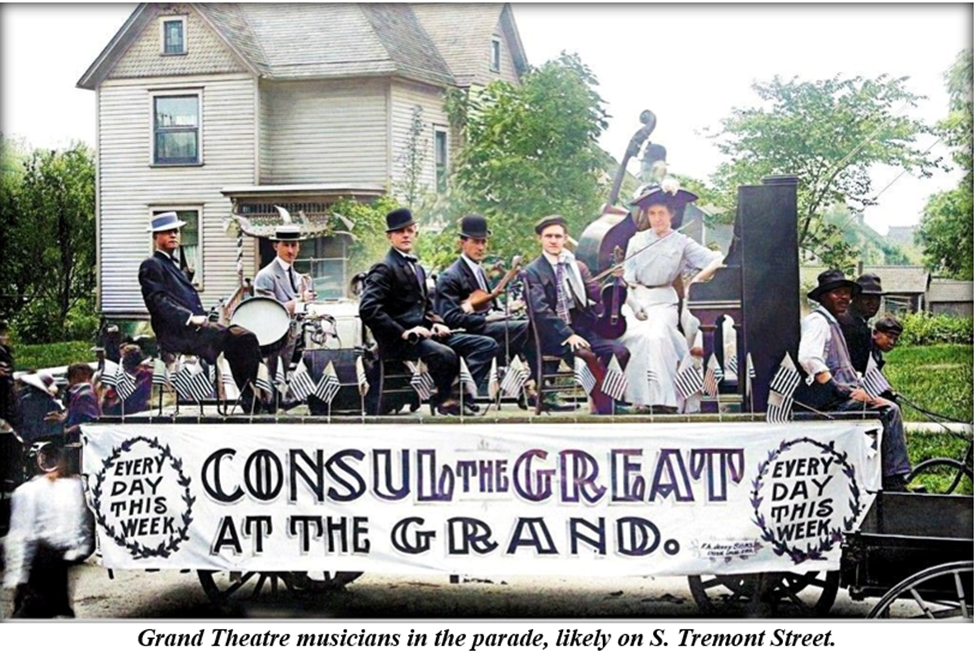
The parade included the Kewanee Fire Department; a Palmer & Cavanagh float; the Monmouth M. W. A. band; a Redmen float featuring Nina Steer, Emil Engstrom, Dudley Craig, Mrs. Donahue, and Mr. Lindberg; an Arter Clothing float; Mayhew’s moving dray; Y. M. C. A. acrobats and tumblers; Grand Theatre musicians playing on a flattop dray; the Grand Theatre manager and Consul the Great driving a car; a Mystic Workers Lodge float; a Royal Neighbor’s float with Forrester’s uniformed team marching beside it; a Hamilton & Plummor float with a larger ostrich made of flowers; a decorated Lindbeck & Nelson restaurant automobile; a Frank P. Ladd monument dealer float; many other automobiles and floats; and the parade ended with a clown band.
The afternoon program included races, bicycle riding; ring and trapeze work; juggling of heavy weights, loop the loop without a loop; and a sham battle. Music was furnished by the Redmen Band. In particular, The Flying Weavers were well received with their tumbling, ring and trapeze skills, along with a “butterfly dance” where a woman hung by her teeth.
The evening program at Windmont Park included a vaudeville show, a Niagara Falls display, and fireworks, followed by a dance with music provided by Krahn’s orchestra.
Coinciding with the Redmen’s celebration, the Grand Theatre had snagged a world-famous act to anchor its entertainment schedule for the week of the Fourth.
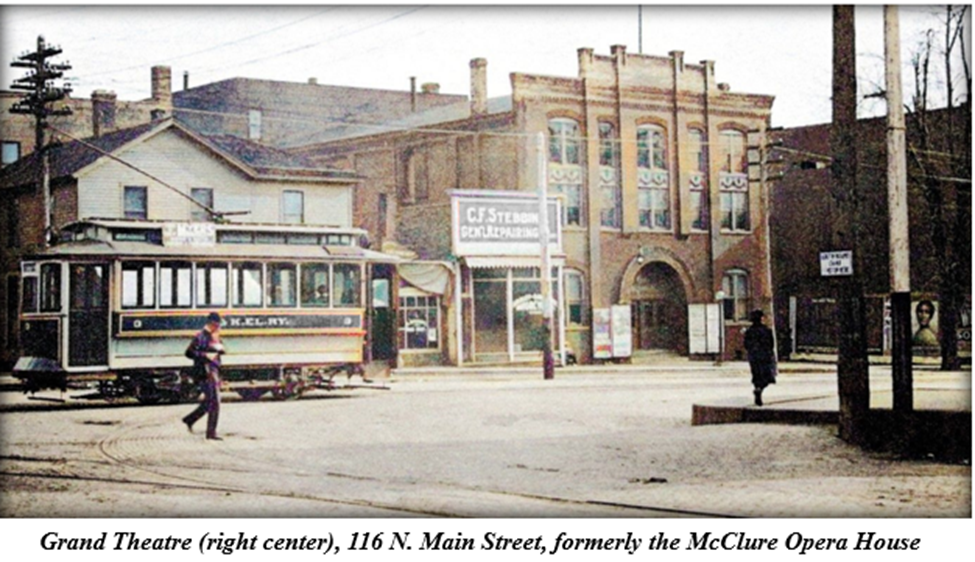
The Grand Theatre had opened its doors only a month earlier, on June 6. The building, constructed in 1899, had previously housed a venue simply called the Opera House, followed by the McClure Opera House and then the Kewanee Opera House. When Frank Thielen of Aurora and Willard J. West of Kewanee became the managers of the opera house, they completely overhauled the building and accoutrements, with the intent of offering vaudeville and “moving pictures.” Improvements included frescos painted on walls, cork matting laid down on the aisles and stairways, new “art” doors installed, and a new stage floor laid. The Grand’s opening night’s entertainment included four different moving pictures, a troupe of bicyclists, a singing trio, and a lady impersonator.
During the Fourth of July week run, the Grand offered performances by singers Miss Langford, Miss Evans and Ed Badger, accompanied by a number of musicians. But the main attraction was Consul.
Consul’s act started with the chimpanzee coming onto the stage in full dress with his trainer. His suit was tailor made and in the latest fashion. Consul then took a seat at a table in a dining room. He enjoyed a dinner, and after the service, he drank wine, used his napkin, used a toothpick to clean his teeth, and manicured his fingers. Consul then smoked an after-dinner cigarette with ease and grace. Next, the curtain was raised for roller skating with child-like pleasure. Consul performed some high skate jumping, rode a small bicycle and then a taller one as he performed numerous stunts. After thirty minutes, Consul prepared for bed, but not before doing his exercises. He then donned his sleeping dress, blew out the candle, and fell “asleep.” At the end of his performance, Consul came forward to the footlights and bowed. The audience was simply amazed.
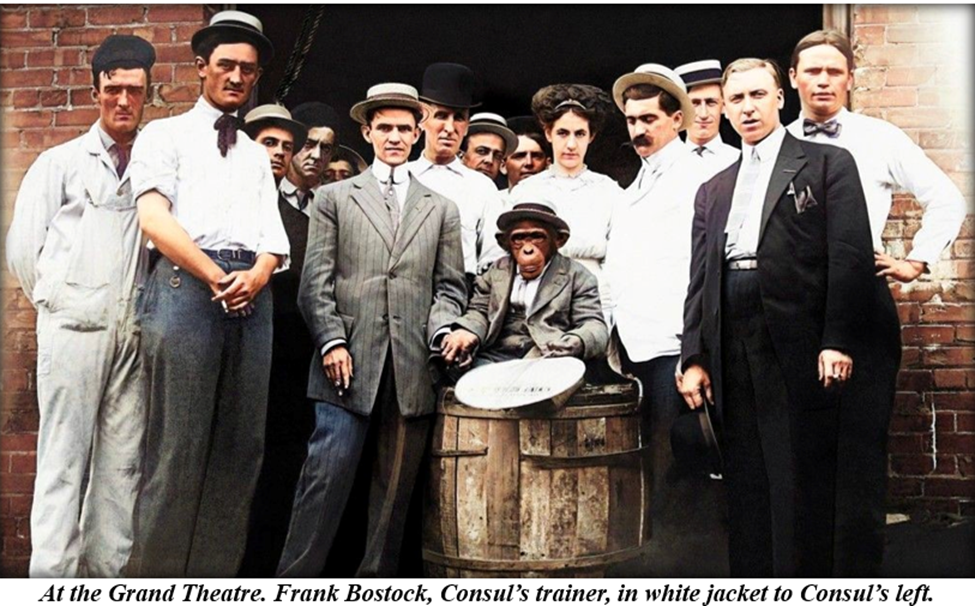
Frank Bostock was a famed third-generation animal trainer and menagerist. But Consul was his greatest money maker. The original Consul was trained in England but died at the turn of the century. Another chimpanzee was trained to take his place, coming to America in 1910. Consul is often credited as the first performing chimpanzee, and others followed in his footsteps. One of the Consuls appeared in a movie short chronicling his trip across the Atlantic. After the original Consul died, the story goes that Bostock replaced him with multiple Consuls so Bostock could arrange multiple tours.
In 1915, an industrious inventor, William Henry Robertson, used Consul’s fame for the name of a novelty calculating device/toy, a number chart combined an object resembling and representing Consul, which was adjustable in relation to the chart, and which could perform computations, thereby suggesting the idea that Consul could perform addition and multiplication. The U. S. Patent Office issued patents for a toy and for calculating.
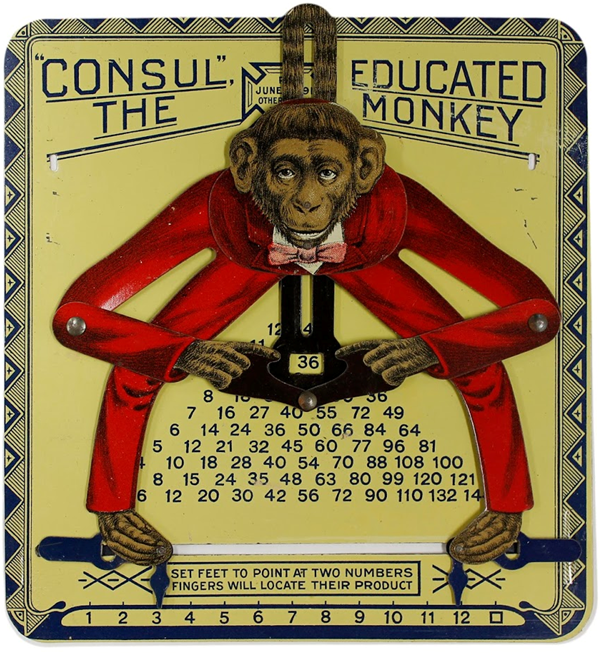
By moving Consul’s feet to two numbers, the correct answer would appear in the box Consul was holding – in this case, 3 times 12 equals 36.