(This is adapted from my upcoming book on the history of the first years of Kewanee.)
I’ve written about chain migration before. It was an important part of the development of the nation. From the Pilgrims in Massachusetts Colony, the settlers in the Virginia Colony, the Germans, Irish, and many others from many other nations, seemingly whole groups of friends and neighbors uprooted their lives elsewhere to settle in America.
But I’ve not written directly about the migration internally, although clearly the Wethersfield colony represented the greatest example. Once here, many of those folks continued westward across the country as people persisted to reach out for something better. When one family found what they believed to be bounty, their extended families and neighbors soon followed.
Here are two examples of others who came later, at about the time Kewanee rose out of the failure of the railroad to pass through Wethersfield.
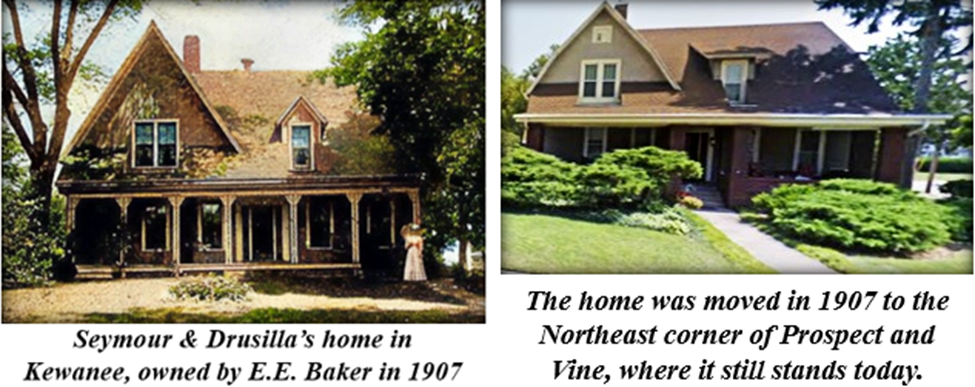
The Seymour Sloan family is an example. His ancestry traces back in America to the 17th century. They eventually migrated from Massachusetts to New York where Seymour was born. But then Seymour moved further west, to Kingsville in Ashtabula County, Ohio, near the shores of Lake Erie at its border with Pennsylvania. In 1824, he married Drucilla Luce. They ultimately had eight children, seven of whom survived childhood – Horace Lendol, Junius Ralston, Louise Anna, Willam W., Laura, Henry Harrison, and Mary. The elder Sloan, a redheaded and red-bearded blacksmith, toolmaker, and farmer, was stern and sought practicality for his children. In contrast, Drusilla, a milliner, encouraged their aptitudes for music, writing, and painting.
But in 1853, Seymour decided it was time for the Sloan family to move west again, to Henry County, Illinois. They bought farmland just north of Wethersfield, in the southeast quarter of Section 33 in what would later become Kewanee. By the time Berrien was founded the next year, most of the extended Sloan family was in or around the new village.
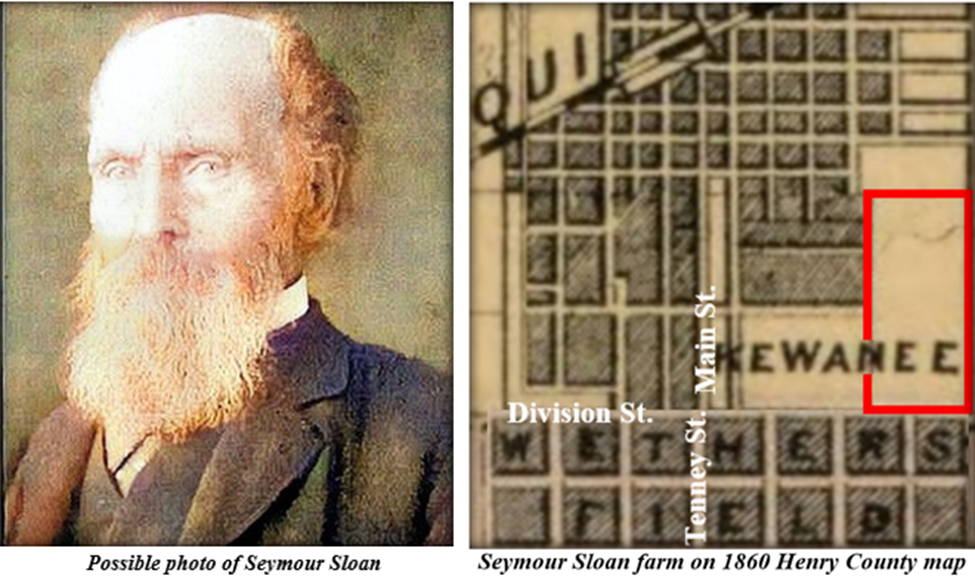
Horace Sloan married Eliza Agnes Castle in Ashtabula in 1854 and the couple moved to join his family. Junius Sloan, developing into a fine landscape painter, followed his parents a year later. Louise Anna Sloan came with the family, and the next year, married Norman Hyde Pratt of Wethersfield. William Sloan also joined his family, and married Helen Bassett, daughter of newspaperman Chauncey Bassett in 1860. Likewise, Henry Sloan made the journey, as did Mary Sloan.
The Ashtabula connection continued. Julia Anna Castle, Eliza Castle’s sister, had married John Homer Howe back in Ohio. When Horace Sloan married Eliza and moved to Kewanee, Julia and John Howe followed them.
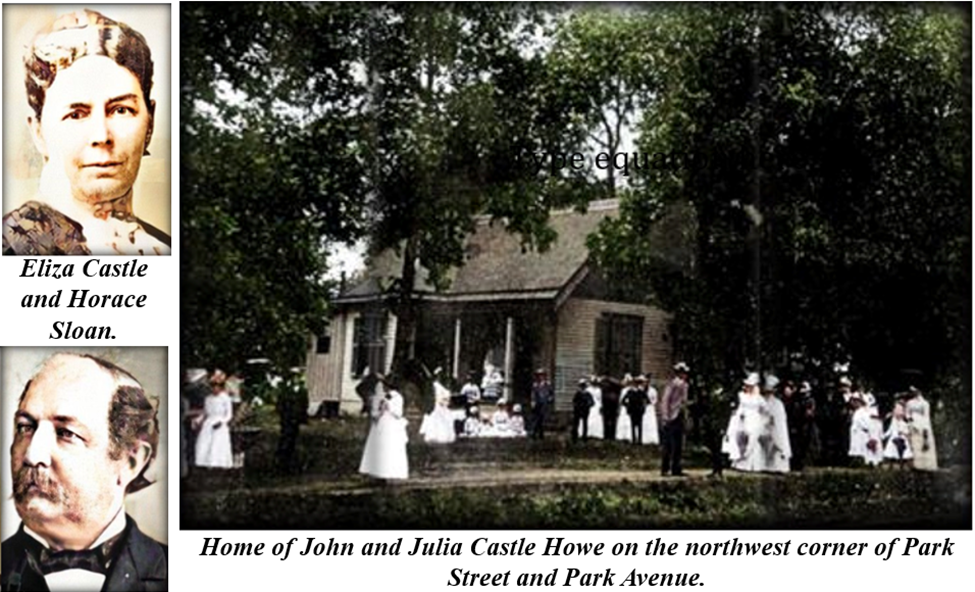
Others from Ashtabula and the surrounding area eventually made their way to Kewanee as well. Those folks, including the Sloan extended family are but one example of how Kewanee grew so fast in just the few years after its founding.
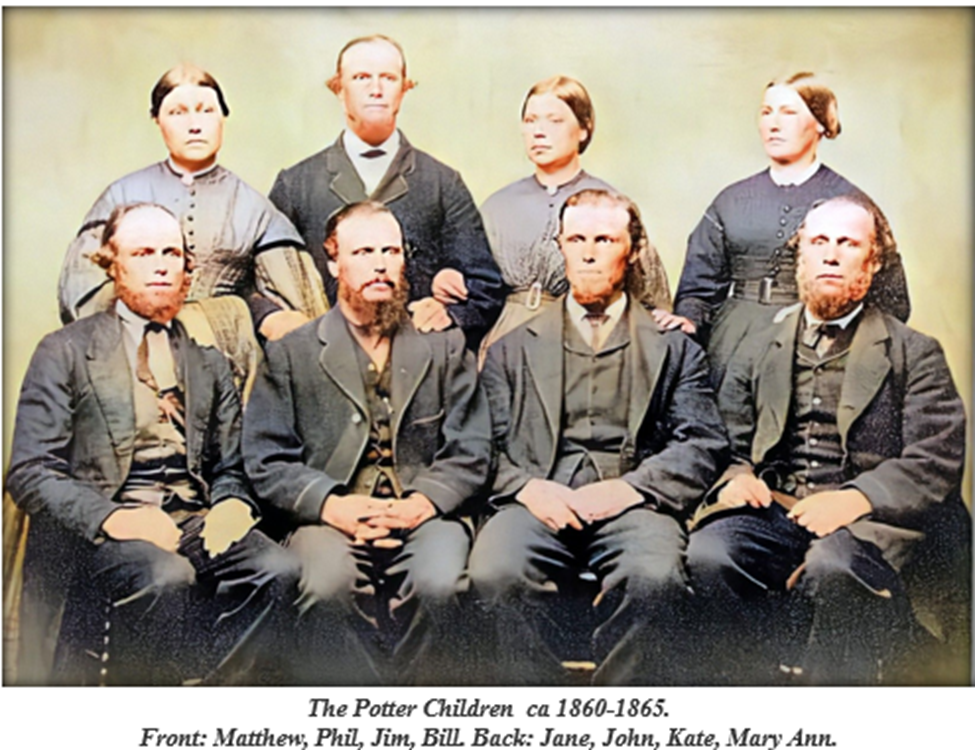
Another example of chain migration to Kewanee is the Potter family.
In the fall of 1838, new arrivals to the Wethersfield colony included Pennsylvanians (via Ohio) David Potter, his wife Elizabeth Cosner, and eight children, including 17-year-old Matthew and 15-year-old John. Around 1850, the latter two built the first house in what became the village of Kewanee.
Eventually, David’s older brother, Isaac, and his family found their way to Kewanee.
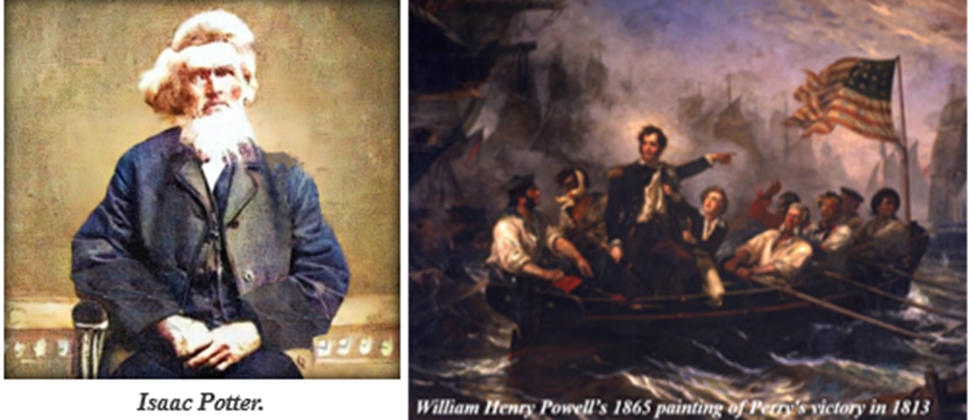
Isaac was born in 1793. When he was 19 years old, the War of 1812 broke out. Young Isaac joined the 134th Regiment of the Pennsylvania Militia. One of its assignments was to protect Presque Isle, a peninsula jutting out into Lake Erie, a location which played a vital role in the victory over the British in the Battle of Lake Erie.
While 15,000 Americans died in the war, Isaac survived and was mustered out. During his time in service, he had earned a whopping ten dollars a month. Isaac then returned to western Pennsylvania.
In 1816, he married Catherine Hixenbough in Pittsburgh. But by 1818, Isaac moved his young family to Coshocton County, Ohio, where they continued to live until the middle of the century.
After hearing his younger brother’s experiences in the Wethersfield colony, Isaac and his family joined his brother and his family in the early 1850s. He eventually began farming land spanning Burns and Kewanee Townships, northwest of the new village of Kewanee. Isaac’s son, also named Isaac, eventually took over the family farm.
Isaac and his wife continued to live on the family farm until their deaths, hers in 1865 and his in 1884, at the age of 90 years, 9 months and 11 days.
(Other Kewaneeans who fought in the War of 1812 and were buried in those cemeteries include William Cosner, Jesse Dickenson, Jeremiah Lester, A. W. Matthews, and Adlja Wedge.)

I’m sure each reader has similar examples – foreign or domestic – of chain migration occurring among ancestors. Whether it’s good or bad, that’s how we all got to Kewanee.