(The story a few weeks ago on The Kewanee Voice, “HOMEOWNERS SAVED BY STRANGERS IN EARLY MORNING FIRE: ‘WE WOULDN’T BE HERE IF IT WEREN’T FOR THEM,’” resulted in a happy ending. But the same was not the case in a 1924 Kewanee fire. And, what followed was equally tragic for the hero and his family.)
It was a little past five early Friday morning, Dec. 5, 1924, in Kewanee. The temperature was hovering around freezing and the outlook for the day was for a slight warming.
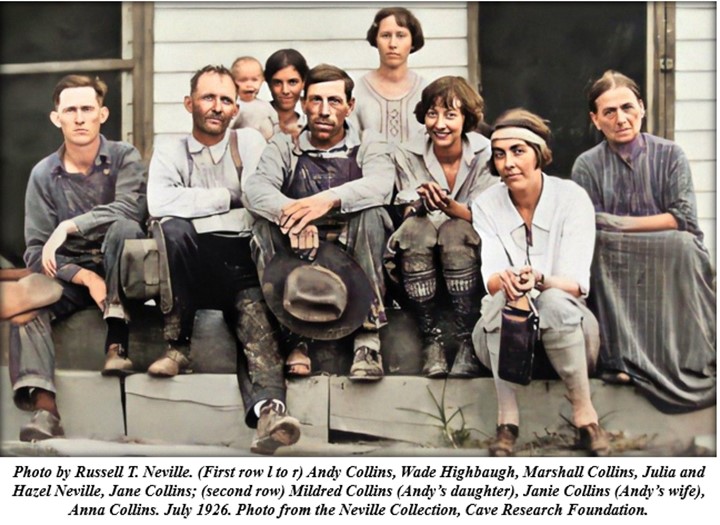
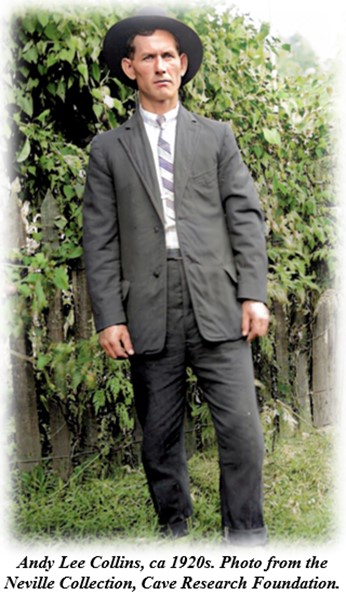
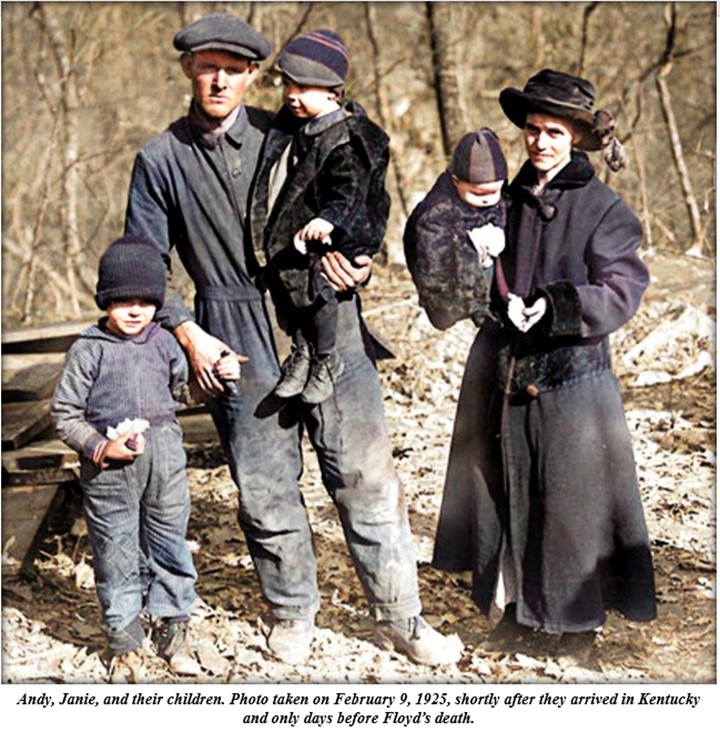
Andy Lee Collins, his wife, Janie, and their three small children lived at 618 W. Fifth St., at the intersection of Fifth and Cottage streets. The family had recently moved to Kewanee from the Mammoth Cave area in Hart County, Kentucky, where they were all born. Andy had found work at the Kewanee Boiler Company, and Andy and Janie were having breakfast before Andy took off for his shift at the nearby plant.
Across the street, James E. Burnett and his wife, Edna, were up early as well, at their house at 515 N. Cottage St. Burnett, who worked in the radiator department at Kewanee Boiler, was running late and skipped breakfast. But before he left, Burnett used kindling to start a fire in the heating stove. His wife told him she’d finish the job, and Burnett headed for work. A recently-filled kerosene can was on the floor, four or five feet from the stove.
As Andy and Janie were finishing their breakfast, they looked out the window and saw what looked like a pile of burning paper in the Burnetts’ backyard. The couple ran to the Burnett home to see what was happening, only to realize that it was Mrs. Burnett with her clothes afire.
Andy immediately tore off Mrs. Burnett’s burning clothing. But she had already suffered severe second and third degree burns from head to foot. The only part of her body which had escaped damage were the soles of her feet.
As Mrs. Burnett cried out from the pain, she begged Andy to save her children.
Andy quickly ran to the Burnett’s front door. As he opened it, the house burst into flames. Seeing a baby buggy on fire and thinking it held the Burnetts’ new-born baby, Andy quickly dragged it outside, but then saw that the buggy was empty. He rushed back inside and rescued the four younger Burnett children, one of which was the six-week-old baby. The children were frightened but unhurt.
In the meantime, the oldest Burnett boy, only six-years-old, had broken a window with his hand as he tried to escape the growing flames. Janie saw him and pulled him out. The boy suffered bad cuts on his hand and his face was considerably burned.
What had happened? Apparently, there had already been a hot fire in the stove when Mrs. Burnett threw in some coal slack. Suddenly, there was an explosion, and the lashing flames reached the kerosene can, the bottom of which was blown out by the explosion, spreading the kerosene and setting the entire house on fire.
The fire department arrived quickly and was able to extinguish the fire with little additional damage. Mrs. Burnett was rushed by ambulance to St. Francis Hospital, where she died around noon.
As the newspaper reported, Andy’s friends said he was “very modest, and he does not know that he is a hero.” But he suffered badly blistered hands as the result of his rescue efforts. Fully encased in bandages, he was unable to use his hands.
After his heroic rescue, Andy could not return to work. He and his family found themselves, as the paper reported, “without means, and as a result of his injuries his family has been in straightened circumstances . . . .” Andy was a true hero, but he and his family were nearly destitute.
Then further tragedy struck Andy and his family.
William Floyd Collins, Andy’s brother, was a well-known and respected cave explorer in and around the Mammoth Cave area in Kentucky. Kewanee attorney and amateur cave photographer Russell T. Neville had become friends with Floyd. Neville, his sister, Hazel, and his daughter, Julia, had explored numerous Kentucky caves with Floyd by their sides.
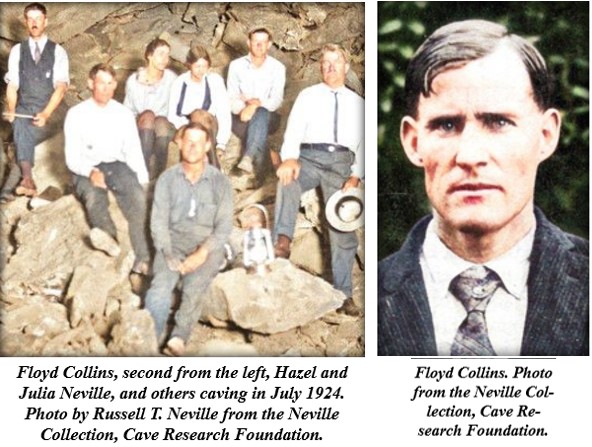
On January 30, 1925, Floyd was exploring a new area of a cave. He became trapped in a tight passageway when a 27-pound rock dislodged and pinned his foot. Floyd was unable to reach the rock in the tight space to remove it.
The next day after Floyd was discovered missing, a 17-year-old boy crawled in the cave and found Floyd alive. Soon, one of Floyd’s brothers was able to reach Floyd but could not reach around him to remove the rock. However, the would-be rescuers could bring Floyd food and water.
Newspapers nationwide followed the story, giving daily accounts of Floyd’s entrapment on their front pages, including full layouts and photographs.
The Kewanee Star Courier was no exception.
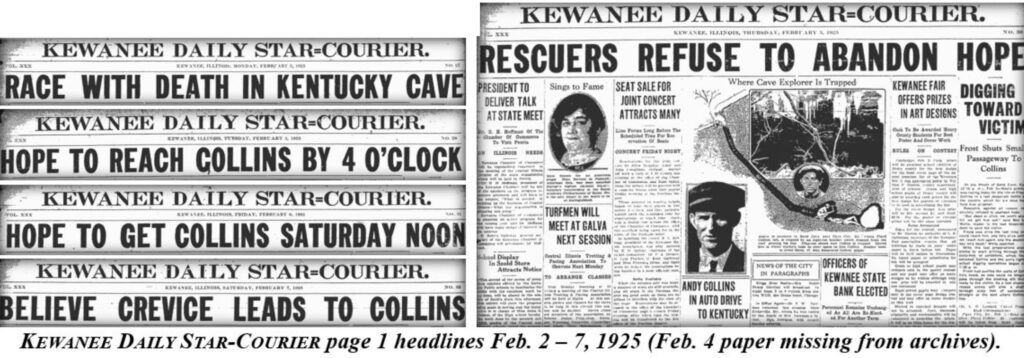
Within a day of Floyd’s entrapment, Andy found out about it. He desperately wanted to go to Kentucky, but he had no money, so he decided to hitchhike. However, when the Central Welfare Council of Kewanee learned of the tragedy, it drew upon a special fund to cover the cost of Andy’s transportation to be with his Kentucky family. (On the way while driving, Andy was involved in two minor automobile accidents, likely due to his still-hurting hands.)
Soon, Andy, Janie, and the children arrived on the scene and stood vigil with the rest of the Collins family as rescue attempts continued.
Multiple attempts failed to free Floyd using the tunnel he had used to enter the cave. Although rescuers could talk with Floyd and bring him food and drink, subsequent small cave-ins furthered the distance between him and the rescuers. By February 4, the rescuers could no longer hear Floyd’s voice.
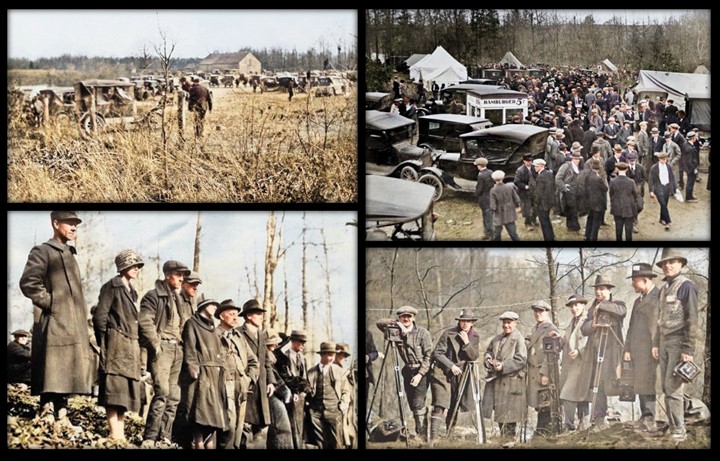
The scene above the cave in which Floyd was trapped soon took on a circus-like atmosphere. National Guardsmen were summoned to control the crowds as they grew in size. The Red Cross arrived to feed the workers. Medical supplies and services arrived. By Feb. 7, the crowd grew to 2,000 gawkers and over 400 automobiles, with license plates from 20 states. Cars were parked for over four miles in each direction. The local railroad added additional passenger coaches. Vendors set up to sell food, balloons, and more – including illegal moonshine. Of course, dozens upon dozens of reporters and photographers continued to report the story, some adding embellishments and outright falsehoods to sell the story.
On Feb. 16, after a vertical shaft with a lateral tunnel was completed, rescuers finally reached Floyd, but they found him “cold and apparently dead.” A doctor on the scene estimated that Floyd had died between three and five days earlier. However, due to the instability in the cave, it was not until April 23 that Floyd’s remains were retrieved.
After Floyd’s death, Andy, Janie, and their kids stayed in Kentucky. Over the next decade and a half, Andy, his father, and a couple of his brothers tried to operate caves in the area and give tours. But none of the ventures were successful. Andy also tried selling mastodon bones, but sales never amounted to much.
[Insert ALCe.jpg here]
Andy died in 1941, never particularly successful at much, at least financially. He certainly never achieved the fame of Floyd, albeit a fame gained only through Floyd’s tragic death.
But on a winter morning in late 1924, Andy successfully saved the children of James and Edna Burnett. Andy Lee Collins was a true hero in our hometown.
Perhaps Andy was a success after all.