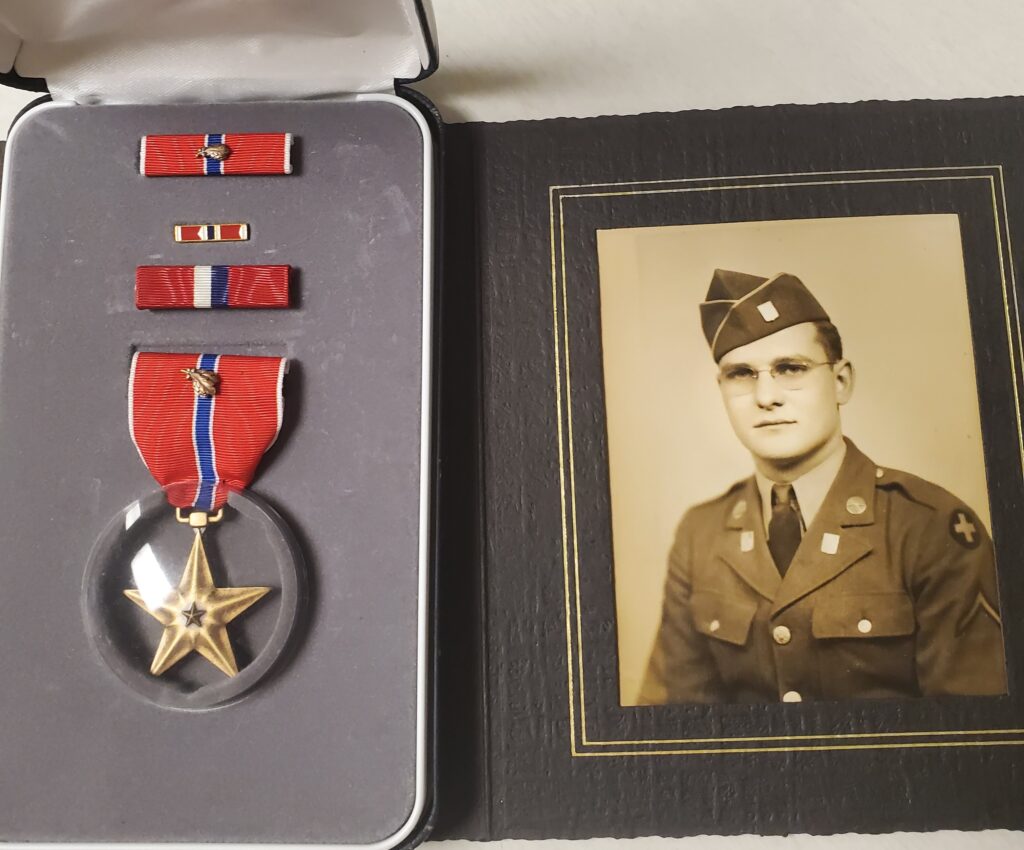
GENERAL ORDERS NUMBER 270
“Staff Sergeant LYMAN B. ROLLINS, 36 027 284, Infantry, United States Army. For heroism in action against the enemy…”
That’s how it starts, the story of how young, calm, quiet Lyman Rollins, son of a beloved Neponset grocer, and a mess sergeant in the U.S Infantry, won the Bronze Medal for volunteering to “lead a night-time litter team to the forward lines under heavy mortar fire, bringing wounded soldiers back to the aid station.” The aid station near Luzon, Philippine Islands, that is, on March 29, 1945.
Anyone who knows WW II history knows the viciousness of the war in Europe, and in the South Pacific–jungles, malaria, snipers, dive bombers, bayonets, prisoner concentration camps—the Bataan Death March…Hell can indeed exist on earth. That’s what this goodlooking guy, formerly a high school athlete, musician, and all-around “average American,” volunteered to face in order to rescue fellow soldiers.
Lyman joined the service in April 1941 and was honorably discharged in October 1945, just seven months after his medal-winning action. He came home to Neponset, eventually taking over the family grocery store. Besides being an expert meat cutter, Lyman, like his father, was generous with those who had to run a bill, paying “when they sold the cattle,” or got their monthly paycheck.
He also worked as a mail carrier, a school bus driver, and a trumpet player in a local jazz band, probably because some customers never quite got around to “settling up.”
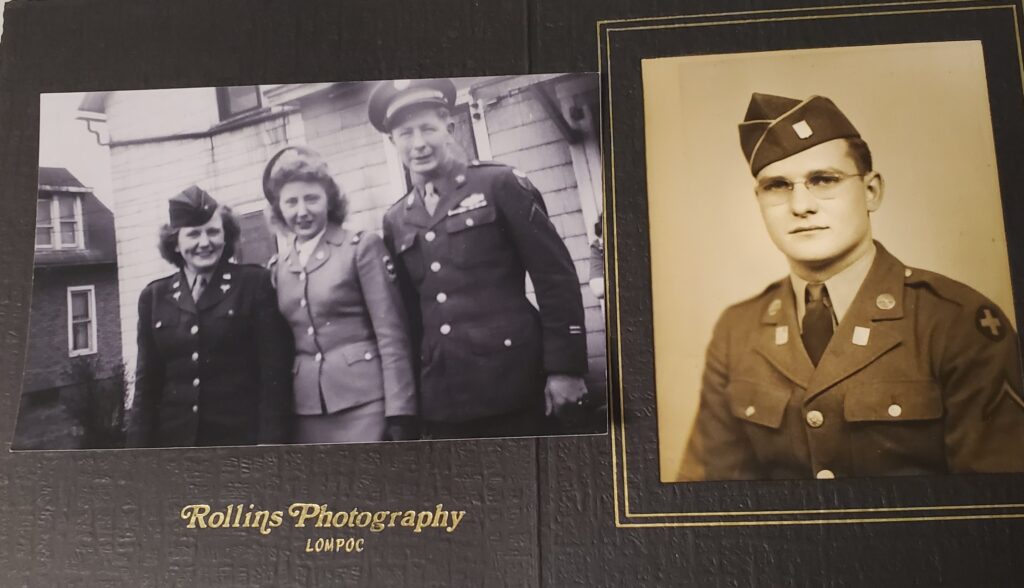
And oh, yes—he became a husband and father. In 1946 he married Edith Marie Nelson, a cute little redhead from Kewanee. Edith, a graduate of St. Francis School of Nursing and former 2nd Lieutenant in the Army Nurse Corps, had also served in the South Pacific arena. Edith was a well-known surgical nurse in both St. Francis and Public hospitals. As far as I know, she and Lyman didn’t meet until after the war.
A kind, lively wife, two sons, a nice home, a reasonable income—isn’t that what just about any young American engaged in warfare looks forward to “when it’s over”? Edith and Lyman had all that plus the friendship and respect of the community.
Edith died in May of 1992, and Lyman in October of the same year. To me, they symbolize the thousands of service men and women who live a steady, sturdy life after war experiences they don’t want to talk about. Some are recognized with a medal; all are a blessing to the human race.