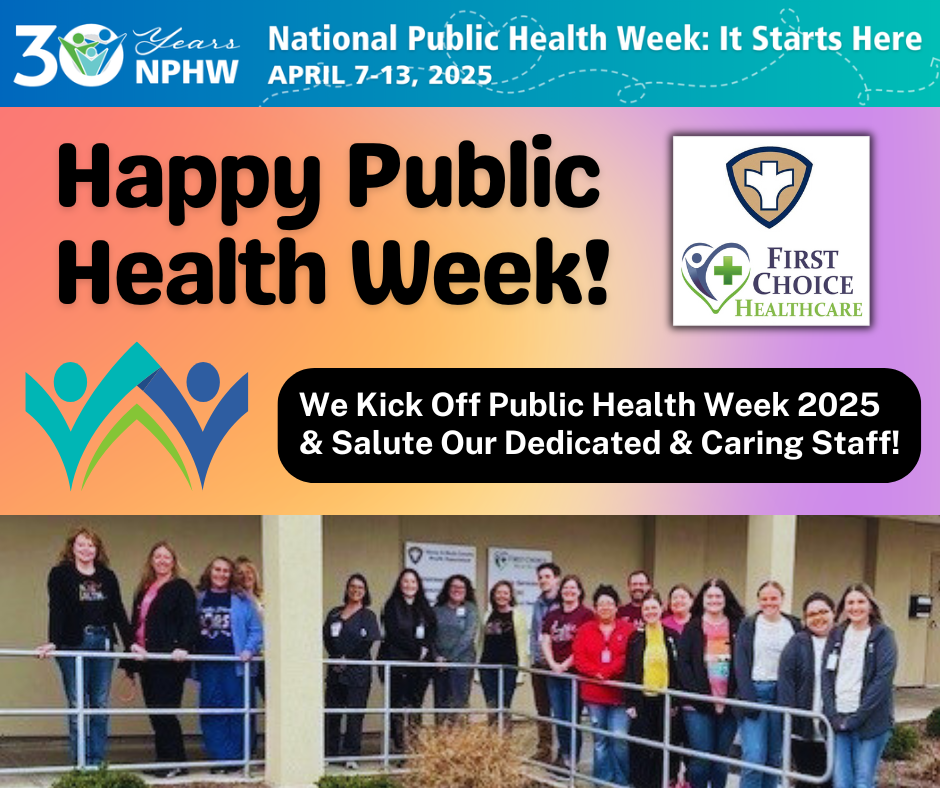
Each year officials at the Henry and Stark County Health Departments showcase the many services they provide to protect the health of our communities as a part of National Public Health Week. This year National Public Health Week will take place from April 7-13.
During National Public Health Week (NPHW) 2025, it is celebrating its 30th anniversary of the designation and rallying around a theme of “30 Years – Public Health Week It Starts Here.”
Duane Stevens, public health administrator of the Henry and Stark County Health Departments said, “This year’s theme notes that public health starts with each of us making a difference in our homes and communities. It’s how the places where we live, work and play affect our well-being. It’s the way we are all stronger and healthier through the efforts of organizations like the American Public health Association and others that advocate for healthy communities.”
Join the Health Department for the 30th anniversary of National Public Health Week to celebrate successes, look ahead to upcoming challenges and create a vision for the future.
“Join us in observing NPHW 2025 and become part of a growing movement to create the healthiest nation in one generation. ” said Stevens. During the week, they will celebrate the power of prevention, advocate for healthy and fair policies, share strategies for improving both the physical and mental health of the residents, and champion the role of a strong public health system.

“People often do not realize the full impact of the health department’s programs and services. This Public Health Week please take a moment to remember how the Health Department is continuously striving to create healthier communities. Our staff of 56 full-time employees are dedicated to making a difference in the health of 60,000 area residents each and every day,” said Stevens.
For more information on the programs and services available through the Henry & Stark County Health Departments in Kewanee 309-852-0197 -Main Office; Colona 309-792-4011; or Toulon 309-852-3115 or visit their website at www.henrystarkhealth.com.
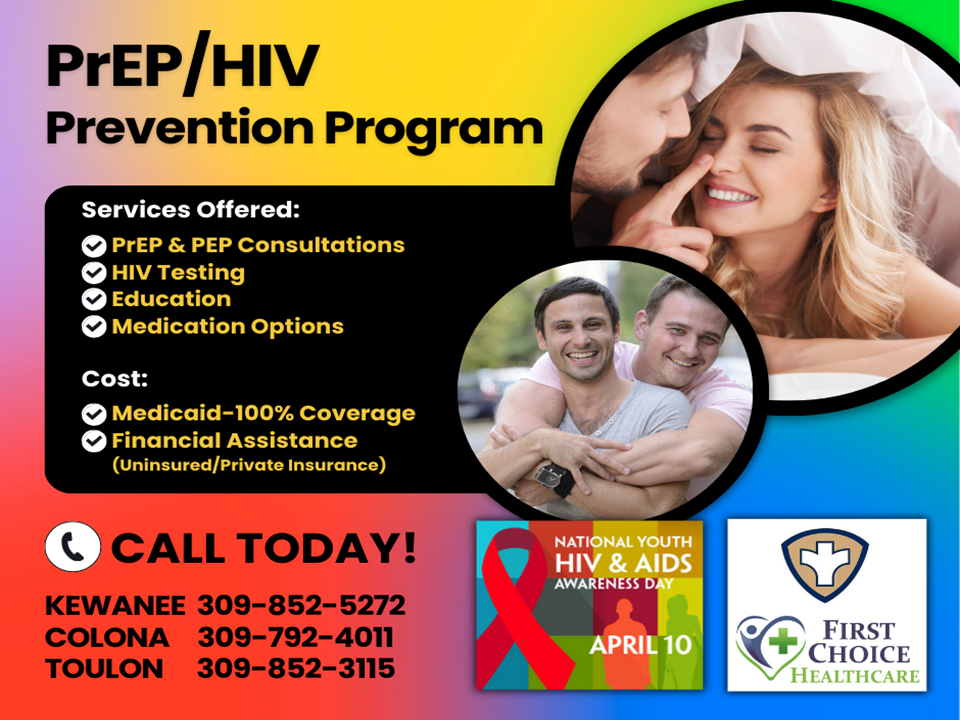
April 10 has been designated as National Youth HIV/AIDS Day, therefore the Henry & Stark County Health Departments reminds local residents of their PrEP/HIV Prevention program and services.
This PrEP/HIV Prevention grant includes and provides to local residents:
● Completely confidential and inclusive safe sex education, including how to reduce risk of HIV transmission
● HIV testing for general screening or post-exposure to HIV
● Assessment of individual risk and potential need for PrEP or PEP treatment
● Counseling about PrEP and PEP treatment and necessary monitoring
● Prescribing prophylactic PrEP medication (Oral or Injectable) OR
● Prescribing PEP medication, to reduce risk of HIV after a possible exposure
Another aspect to this important health grant and initiative is that funds are available to help participants to receive services and needed medications. First Choice Healthcare Clinic staff can help participants navigate financial assistance, for different types of insurance (or lack of insurance):
● Medicaid insurance – covers treatment 100%
● No insurance or private insurance? Financial assistance is available easily through the state.
For more information, call the First Choice Healthcare Clinic nearest you. Kewanee 309-852-5272; Colona 309-792-4011 or Toulon 309-852-3115 or visit their website at www.henrystarkhealth.com.
RaeAnn Tucker, director of Health Promotion for the health department, said, “In the battle against cancer, over decades, our nation has made extraordinary progress. The overall rates of cancer deaths are decreasing for both women and men, and most survivors live longer and enjoy a better quality of life than ever before.”
Still, cancer remains the second most common cause of death in America, and there is more work to do. “This month, we stand with all those touched by cancer and redouble our efforts to prevent, detect, and treat this disease.”
While it is impossible to completely eliminate the risk of cancer, actions can be taken to reduce our chances of developing this disease. To beat this disease, prevention is the key.
Today, scientists think most cancers may be related to lifestyle and environment – what you eat, drink, if you smoke and where you work and play. So, you can help reduce your own cancer risk by taking control of things in your daily life.
The Health Department and their First Choice Healthcare, along with the American Cancer Society, offer the following 10 steps you can take to a healthier life and reduced cancer risk:
1) If you smoke or chew tobacco, stop! Smoking is a major cancer risk to smokers and everyone near them. If you are going to have a baby and you smoke, you pass the smoke and the risk right on to your baby. The combination of smoking and drinking alcohol is even riskier.
2) Get Vaccinated. Cancer prevention includes protection from certain viral infections. Talk to your doctor about vaccination against HPV and Hepatitis B.
· Human papillomavirus (HPV). HPV is a sexually transmitted virus that can lead to cervical and other genital cancers as well as squamous cell cancers of the head and neck. The HPV vaccine is recommended for girls and boys ages 11 and 12. The U.S. Food and Drug Administration recently approved the use of vaccine Gardasil 9 for males and females ages 9 to 45.
· Hepatitis B can increase the risk of developing liver cancer. The hepatitis B vaccine is recommended for certain adults at high risk — such as adults who are sexually active but not in a mutually monogamous relationship, people with sexually transmitted infections, people who use intravenous drugs, men who have sex with men, and health care or public safety workers who might be exposed to infected blood or body fluids.
3) Have regular check-ups. Ask your health care provider about the American Cancer Society’s guidelines for early detection screenings.
4) Maintaining a healthy weight will help you reduce your risk of cancer – as well as heart disease and diabetes. Watching your portion sizes – especially of foods high in fat and sugar – is an important way to help watch your weight.
5) Enjoy more fruits, vegetables, whole grains, and legumes. Eat at least five servings of colorful fruits and vegetables each day. They are packed with disease-fighting nutrients, are generally low in fat and calories, and may help you control your weight. Try to eat at least three servings of whole-grain products each day.
6) Limit how much saturated fat you eat by cutting back on red meats (beef, pork, and lamb), processed meats (bologna, salami, and hot dogs), and high-fat dairy products.
7) If you drink alcohol, limit yourself to one drink a day if you are female and two a day if you are male.
8) Get some physical activity like walking, gardening, or dancing for at least 30 minutes or more on five or more days of the week. Check with your health care provider before you begin an exercise routine.
9) Protect your skin from UV rays. Stay out of the sun as much as you can between 10am and 4pm, when the sun’s UV rays are the strongest. When you are outside, cover up with clothing. Wear a hat with a brim that shades your face, ears, and neck. Use sunscreen with SPF 15 or higher on all skin not covered with clothing. Wear sunglasses with UV protection. Don’t use sunlamps or tanning salons.
10) If you work with harmful chemicals or fibers like asbestos, wear protective clothes and follow directions exactly. Be sure to learn emergency procedures.
For information about cancer, contact the American Cancer Society anytime at 1-800-ACS-2345 or www.cancer.org or visit the Health Department’s website at www.henrystarkhealth.com.