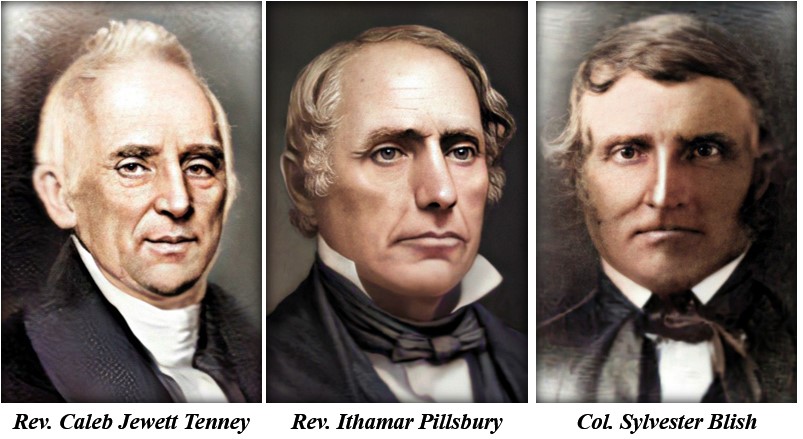
The Rev. Caleb Jewett Tenney, considered by many to be the father of Wethersfield, Ill., was a strong advocate in the temperance movement. But when temperance turned to prohibition, the latter became the enemy of the former, and it failed, at least in early Kewanee.
Alcohol consumption in America began as early as the Mayflower, which carried beer to Plymouth Rock. Alcohol was seen as a healthy alternative to poor water supplies, and was also considered medicinal.
By the 18th century, colonists’ tastes turned to rum. But drinking rum became unpatriotic during the American Revolution because it was a by-product of British sugar plantations. So, whiskey, distilled from American-grown grain, became favored.
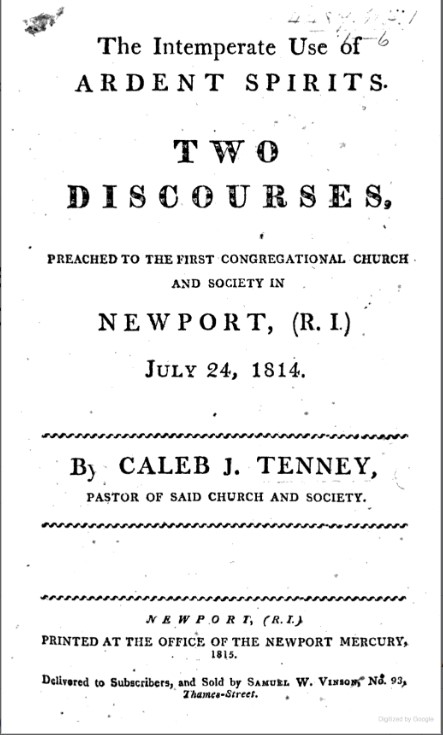
The war ended, and migration to the west exploded a few decades later. Farmers found that whiskey was a good use of the extra grain that couldn’t be shipped to market.
By 1830, whiskey could be purchased for 25 cents a gallon, cheaper than coffee, tea or milk. The average American drank the equivalent of 90 bottles of standard 90-proof liquor per year.
By the 1830s and 40s, in response to this increased drinking and the perceived societal problems resulting from it, temperance societies found footing. They saw intemperance as a sin, like slavery, and sought, if not an end to all consumption, then at least restraint.
But persuasion from the pulpit and the societies was not as successful as desired. Thus, by the 1850s, the temperance movement lobbied for statutory assistance. For instance, in 1851, the Illinois legislature banned the sale of alcohol in quantities less than a quart, barred any consumption where sold, and forbade the sale to anyone under 18 years old.
Changing demographics, however, resulted in pushback. In the two decades before the Civil War, almost 4 million immigrants had arrived, most of whom were Germans and Irish, each with deep-seated cultural norms of beer and whiskey accompanying social life. That was the backdrop for what happened in Kewanee beginning shortly after its founding.
In 1836, the Wethersfield colonists brought with them the views of Rev. Tenney and the temperance movement. Many of those same settlers also founded Kewanee in 1854, and those views accompanied them to the new village. But they soon faced a fast-growing population of immigrants and others with differing views on alcohol. Kewanee became a boom town.
By the spring of 1856, Kewanee boasted a population of around 1,200 souls. It supported a bank, a wide variety of mercantile stores, lumberyards, warehouses, manufacturers and professionals. And, according to the HENRY COUNTY DIAL newspaper, there also were “four or five individuals, who have persisted in keeping in our midst their infernal dens of licentiousness, drunkenness and crime, which were fast drawing into our fatal snares our young men and women.” That is, there were liquor-serving saloons in the village.
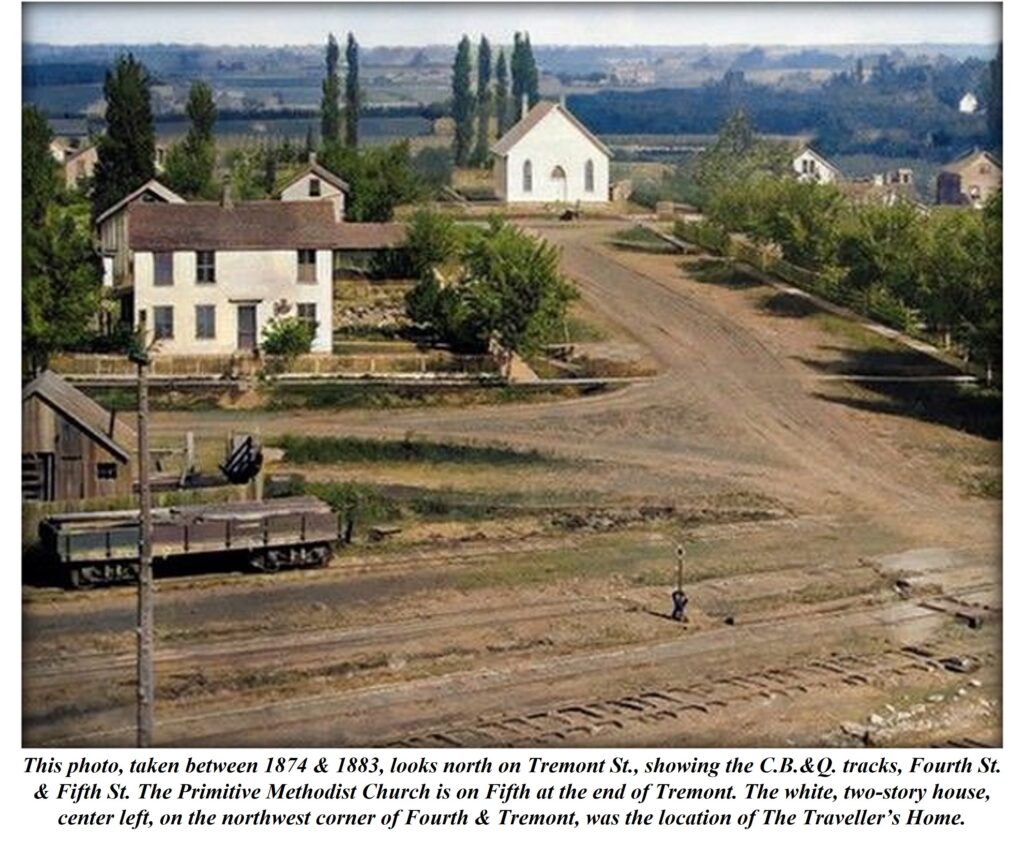
James Gallagher, an Irishman, was a founding member of St. Mary’s Catholic congregation, organized in 1854. But “Jimmy” also operated a business which sold liquor. Called “The Traveller’s Home,” it was located across the tracks at the northwest corner of Fourth and Tremont streets.
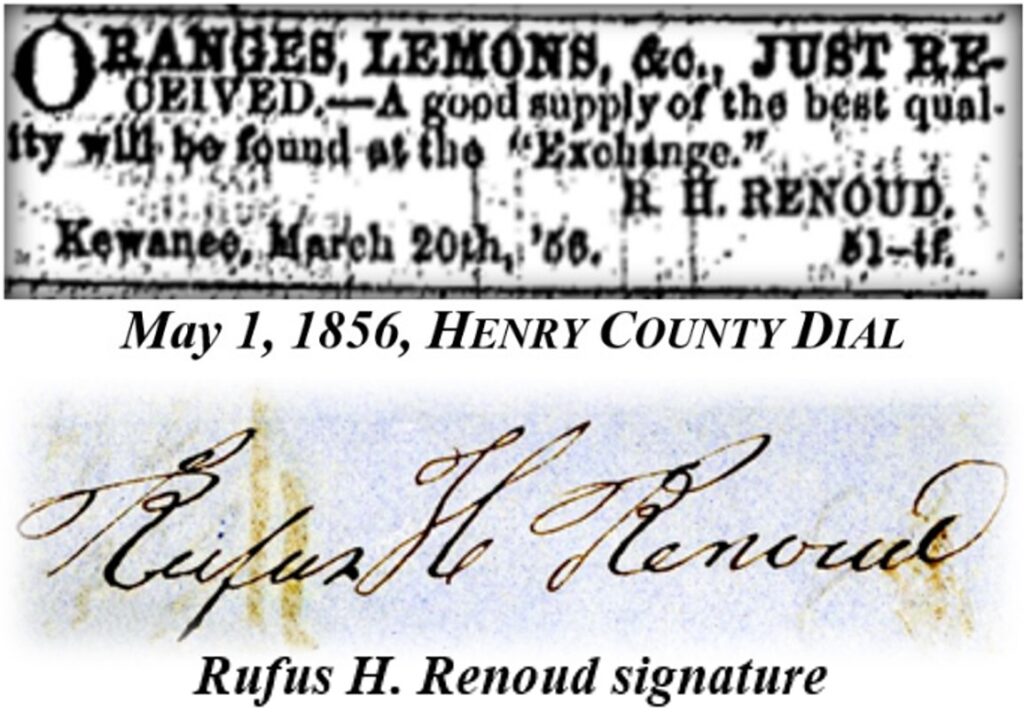
Rufus H. Renoud had purchased a lot in the middle of the east side of Tremont St. in 1855, and put up a store, The Exchange, in which he sold fruit and produce. He also was a cooper. But what got him into trouble was that he used his shop as a tavern in which he sold whiskey and encouraged its consumption on the premises. (At that time, the center of business was along Main Street, and Tremont was only a muddy morass, particularly when it rained.)
Temperance elements in Kewanee took umbrage with the operation of those dens of iniquity in their midst. A group of Kewanee’s leading women first demanded that Renoud stop the sale of liquor. When he refused and taunted them, “they brandished their hatchets and proceeded to open his cellar door and enter the room where his liquor was concealed. Renoud then walked into a back room, seized a double-barreled gun, loaded with ball, and entering the cellar, where the ladies by this time had commenced in earnest the work of cutting up hoops and staving-in heads, drew up his gun, took deliberate aim, and ordered them out of his cellar. Some of them complied with this order, and he followed them up into his barroom, which, by this time, filled with gentlemen who were attracted by the cry of the ladies, and who at once seized and disarmed him. The ladies then returned to the cellar and finished the utter demolition of every cask, jug and bottle supposed to contain the ‘critter.’”
Renoud obtained a criminal indictment for the perpetrators, whose number included Mrs. H. L. Sloan, Mrs. G. W. Foote, Mrs. E. V. Bronson, H. G. Little, J. H. Howe, A. H. Pratt, J. V. Montgomery, George Rogess, Thomas Wiley, A. Thornton, Sr., Abram Thornton, Jr., Jon Maxon, and John Farmer.
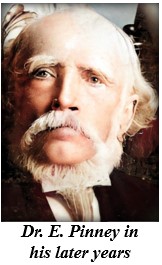
But on the day those citizens were to appear at the courthouse in Cambridge, Renoud was indicted for selling liquor without a license and for keeping a gambling house, and Dr. E. Pinney, E. S. Church, A. D. Carson, W. S. Bryan, and James Collins were indicted for gambling at Renoud’s establishment.
In April, a large meeting of Temperance supporters passed a resolution to “withdraw all patronage and employment from those who will either drink or sell intoxicating liquors under any pretense whatsoever [except for medicinal purposes,] . . . . [to] wage an increasing war of utter and entire ANNIHILATION of liquor traffic in this community . . . . first by any legal means within our power, moral suasion, and ANY and ALL means which God has given us . . . .”
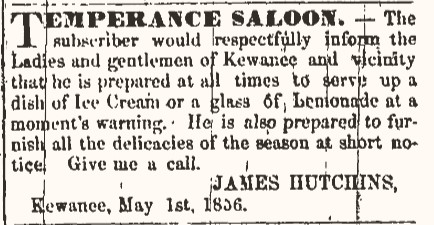
That same month Renoud gave up and sold his store to James Hutchins, who subsequently opened a “Temperance Saloon,” where he continued selling fruit and produce while adding ice cream and lemonade to replace whiskey.
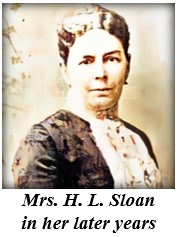
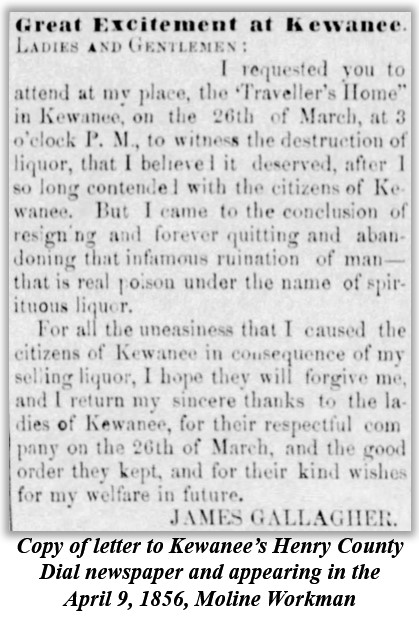
Meanwhile, Gallagher witnessed what happened to Renoud, and tried to avoid the same fate. He invited the temperance women to come to The Traveller’s Home to see him pour out his whiskey. They accepted the invitation and saw Gallagher dump his barrels.
Gallagher, however, had filled those barrels with water, and he continued to sell his whisky. Ultimately, Gallagher was forced to quit selling liquor in his establishment, which he announced in a letter sent to the HENRY COUNTY DIAL newspaper. Some report that he may have been “given a free ride on a rail and tarred and feathered.” In any event, Gallagher eventually left Kewanee to go west.
But others, including James and Ann Stratten and George Moody, also operated liquor-serving saloons within the village. Later in 1856, the village’s first board of trustees passed a charter prohibiting the sale of intoxicating liquors within the corporate limits. After appeals, the charter stood, forcing such establishments out of the village. But as the newspaper reported years later, “[i]t might be thought that this would have squelched the liquor traffic, but it did not; the number of doggeries increased, and the fight went on in one form or another . . .”
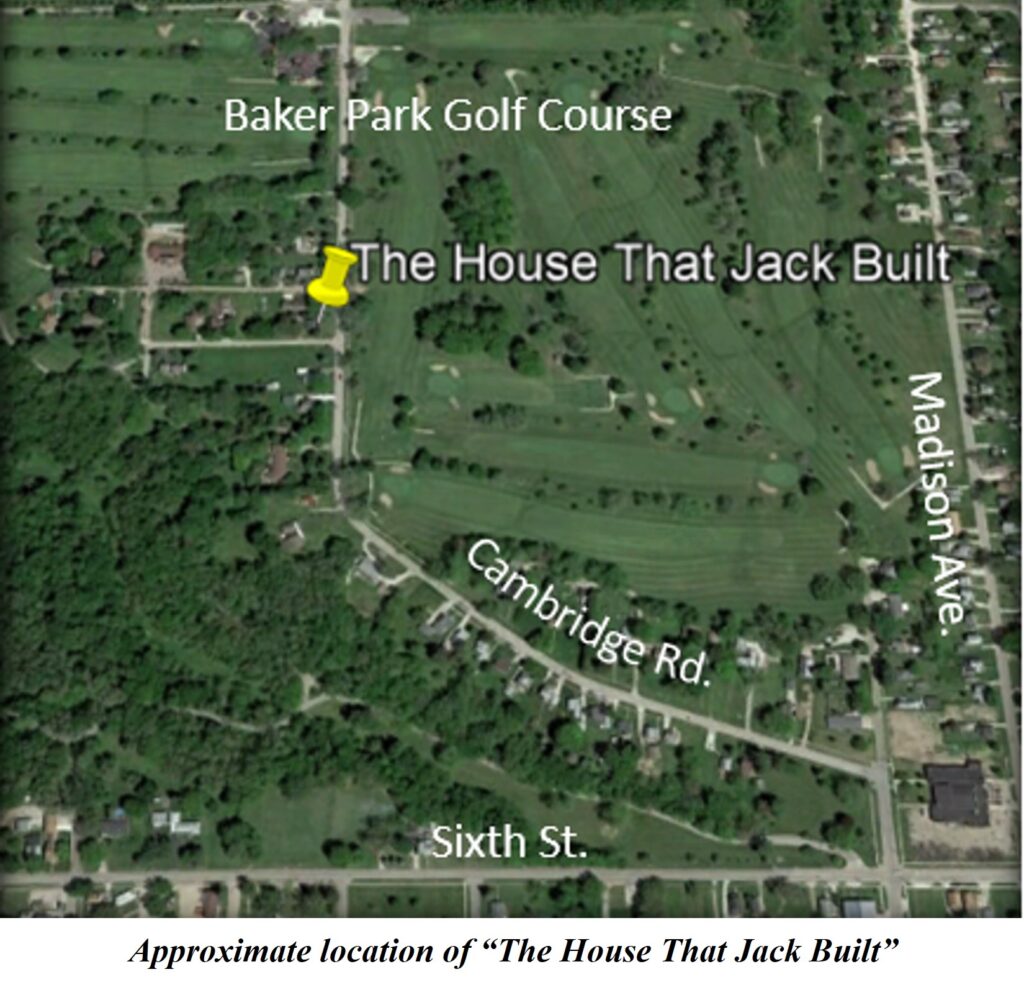
At about this time, a Jack Hill put up a building to the north of the corporate line. It became a notorious drinking house called “The House that Jack Built.” Initially, he built it down in a hollow along Coal Creek to avoid watchful eyes. But Hill soon moved it up to the west side of Cambridge Rd. to accommodate the growing number of coal miners and others seeking relief from the now-temperance town of Kewanee.
And the battle continued.
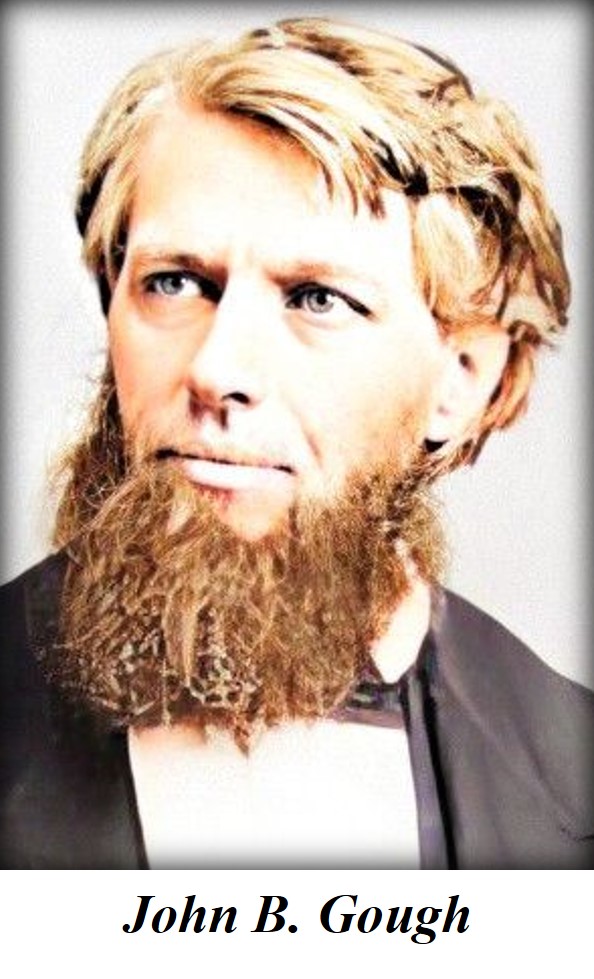
In January 1857, the world-renowned Temperance lecturer, John B. Gough, delivered one of the first talks at the Union Lyceum at the new Academy on South Chestnut St., filling the house. In March, inspired by Gough, a Temperance Society was formed in Kewanee.
The newspaper wrote that “[w]e cannot but think that with the present facilities for the suppression of the liquor traffic, the general interest for it, and the well-known qualifications of the President of the Society for ferreting out the dealers in the liquid poison in dark cellars and other out of the way places, that the evil will be eradicated, and the air of Kewanee be relieved from the blot of a single liquor shop within its borders.”
Of course, the tension was not resolved, and continued to fester. During this time, the pastor of St. Mary’s was heavily criticized for not reigning in the liquor sellers and hard drinking Catholics in his congregation. In response, Rev. Father Powers issued an edict, that “[h]e will not administer the Sacrament of the Altar to any Catholic in Kewanee, while engaged (without license) in the traffic of intoxicating liquor, to any who visit or patronize those engaged in the traffic, [and] to any who will not, finally, give up the habit of drinking intoxicating liquors.”
That still did not resolve the issue as it continued to haunt Kewanee politics. Soon, a “license ticket” (so named for supporting the sale of intoxicating liquor through the issuance of licenses) took control of the village. Subsequently, the village was governed by temperance boards only during two later, short periods over the balance of the century. In 1867 and 1868, no-license boards were elected, but the prohibition led to a license board being elected in 1869. Again in 1879, a no-license board was elected, but the next year another license ticket took control.
An 1893 liquor-induced riot found temperance folks lobbying for more restrictions on saloons. (See THE 1893 KEWANEE RIOT, found on Dusty Roads® at https://www.facebook.com/dusty.roads.kewanee/posts/225241499087010). Then, in 1906, nationally-renowned preacher Billy Sunday came to Kewanee for a 30-day revival that included an all-out attack on “demon rum” and the saloons. Subsequently, Kewanee held three votes on going “dry.” Finally, in 1914, Kewanee voted dry by a margin of 98 votes, 2,819 to 2,721.
When Prohibition began in 1920, schemes of many sorts were devised by Kewaneeans to produce beer, wine, and liquor, but only on a small scale.
When Illinois sought a state-wide prohibition of alcohol in the middle of the 19th century, Abraham Lincoln reportedly said that “prohibition goes beyond the bounds of reason in that it attempts to control a man’s appetite by legislation and makes a crime out of things that are not crimes. A prohibition law strikes a blow at the very principles upon which our government was founded.”
Early Kewanee temperance supporters sought prohibition instead of moderation. Every one of their attempts to stop all consumption of liquor ultimately failed – again and again and again.