For anyone who loves watching birds, a walk through the forest can be a frustrating experience.
You know the birds are out there, somewhere in the murky underbrush or deep in the leaf-cloaked branches. Fleeting glimpses of little feathered bodies catch your eye from time to time. Yet you never seem to get a good, long look at any of them.
In the past, moments like this have made the woods feel empty to me: if I couldn’t see the birds, then they weren’t really there. That perspective began to change one day, years ago, when I was out with my dad.
It was May, when many bird species were migrating north for the summer. Dad and I were walking through the woods when he paused, his attention drawn by a lilting three-note melody. “Drink your teeeeeeeeea!” the song seemed to urge. “That’s an eastern towhee!” Dad said happily.
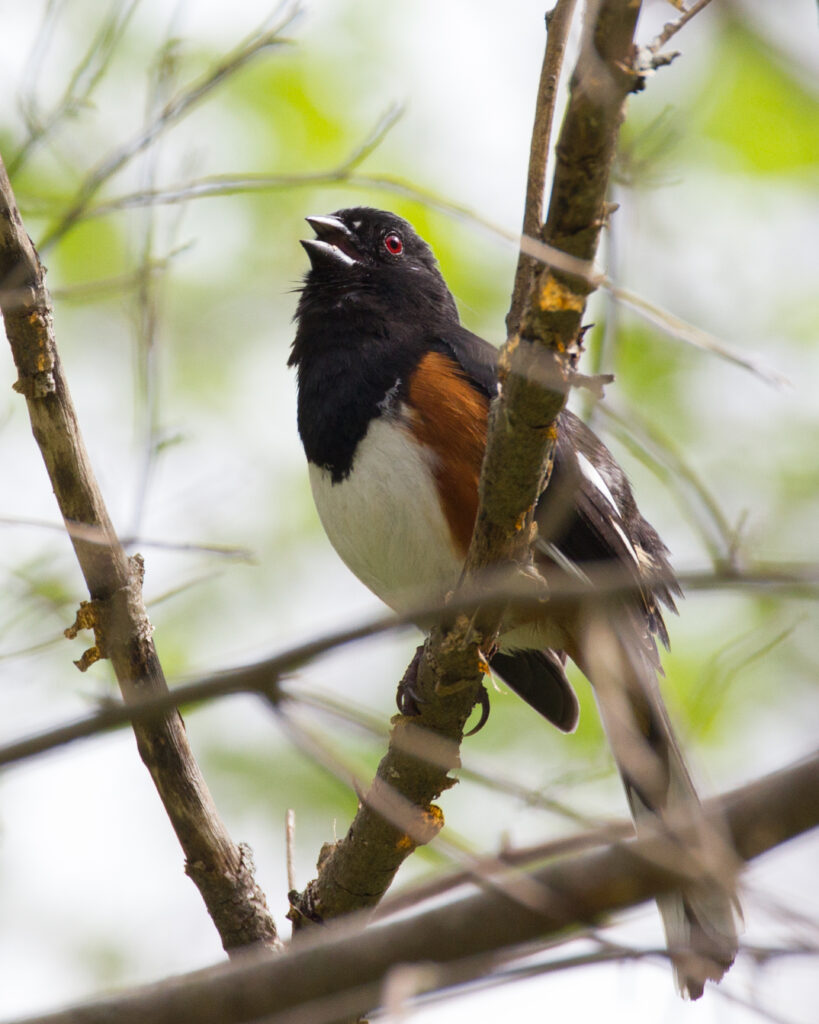
We looked in the direction of the sound, finally locating a black, white, and orange songster at the top of a tree. I was intrigued. I hadn’t known what a towhee looked like until that moment. And while I knew the songs of many common backyard birds, I hadn’t really thought about using sound to help me see birds out in the forest.
My dad taught me several other woodland bird songs, using the well-known robin song as a basis for comparison. Rose-breasted grosbeaks, he said, sound like robins who have had voice lessons; their songs rise and fall like a robin, but are quicker and more ornate. Scarlet tanagers, too, have a robin-like song, but scratchier. Wood thrushes, who are closely related to robins but even more accomplished vocalists, sing a silvery, haunting, “Eee-oh-lay!”
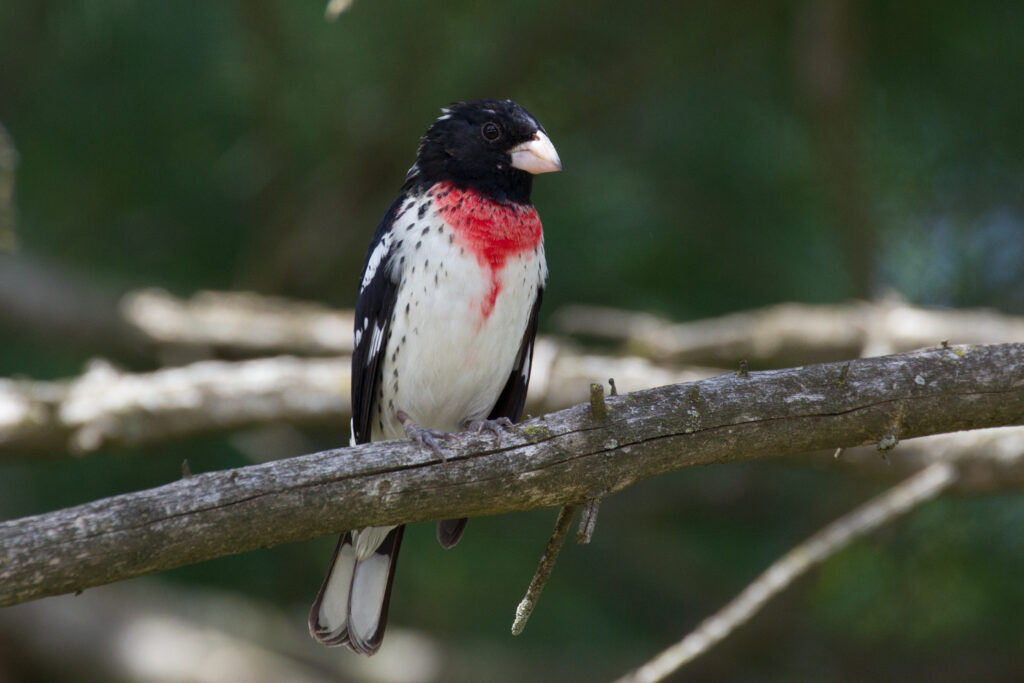
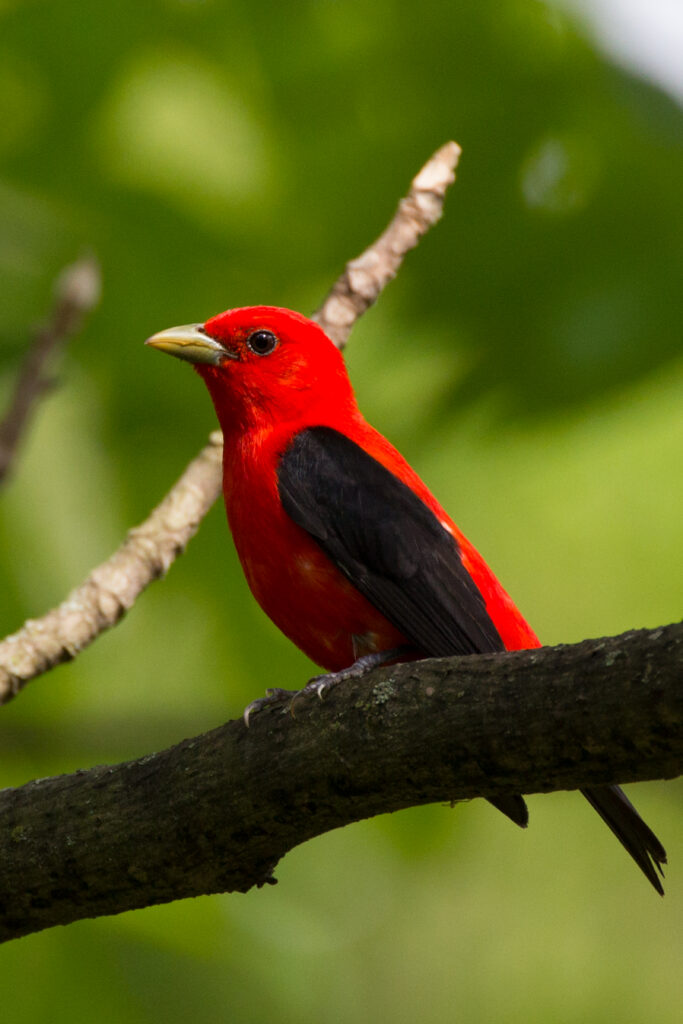
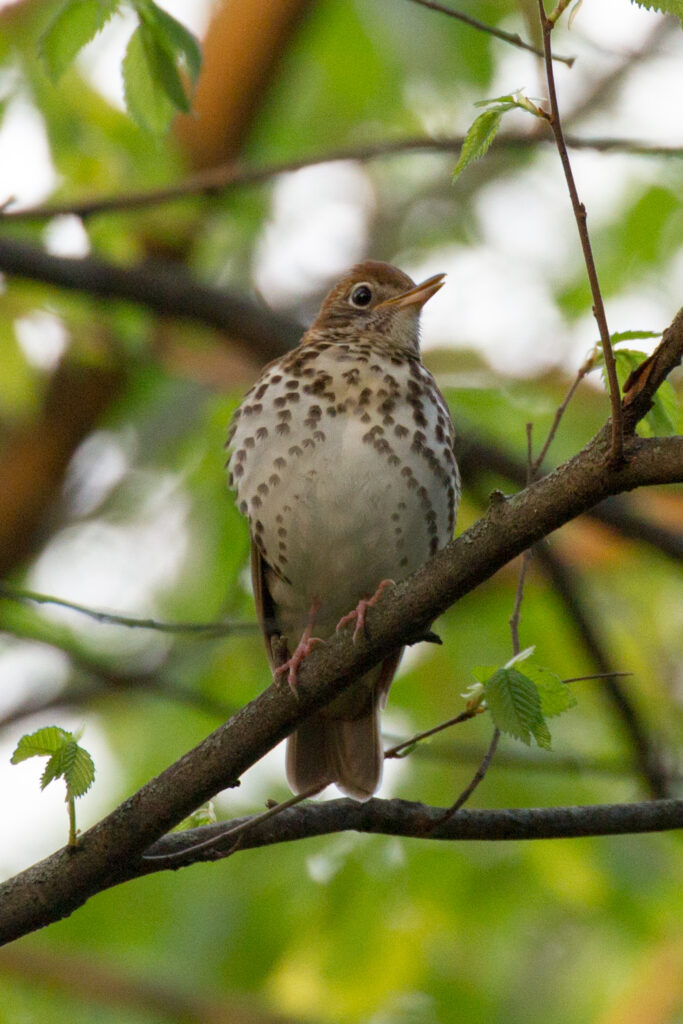
With those tips, I began hearing—and then seeing—many more of my favorite little birds out in the woods. Of course, this was most easily done before the trees had fully leafed out. It’s astonishing how well a bright red tanager can hide among green leaves, even when he’s singing stridently!
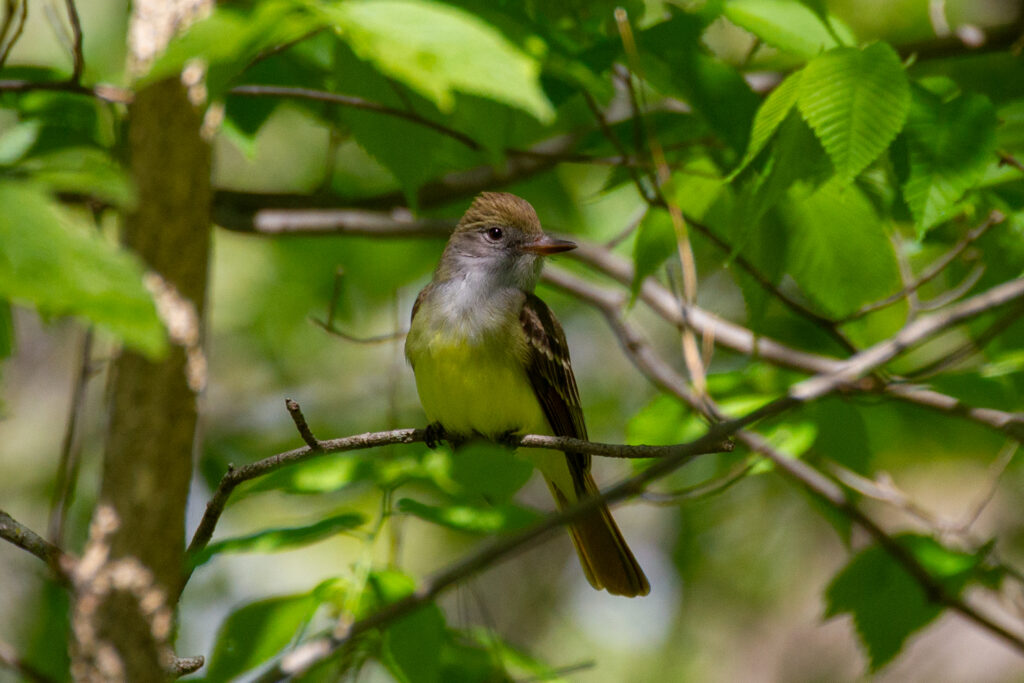
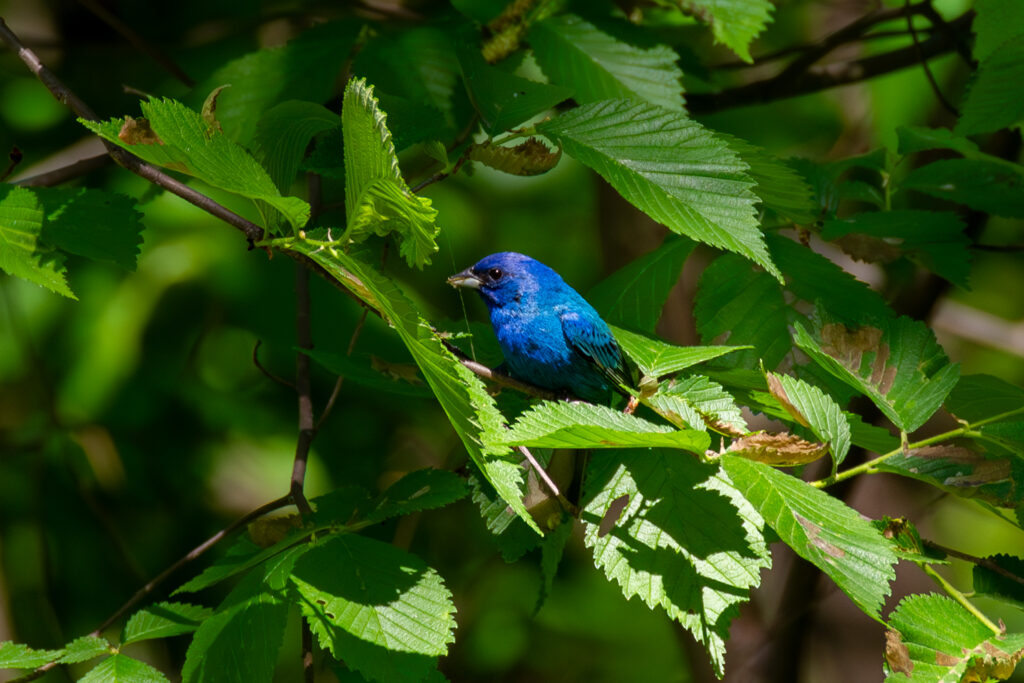
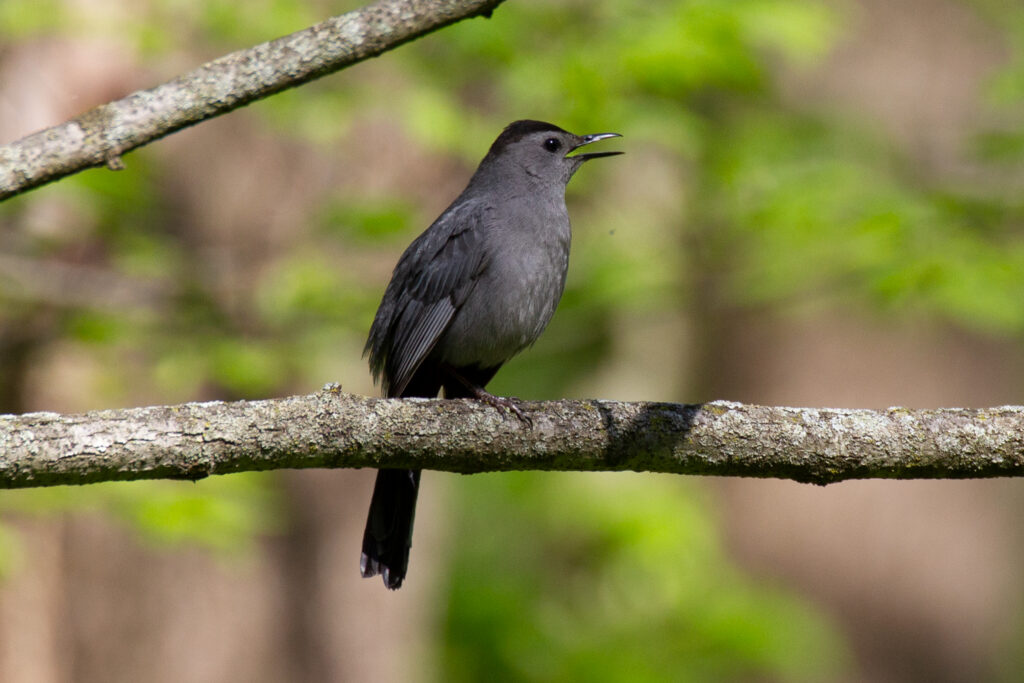
My newfound interest in sound helped me to identify more and more birds. On morning walks out at Johnson-Sauk Trail, I kept hearing a frog-like call. After many attempts, I finally snapped a photo of a bird in the act of making that sound. He had brownish-red wings and a lemon-yellow belly and turned out to be a great-crested flycatcher. The source of a high-pitched cadence of doubled notes was an exquisite blue indigo bunting. The complex series of mews and warbles came from a soft gray catbird.
Smartphones have also proved invaluable in my quest to learn more bird songs. An app called Merlin (from the Cornell Lab of Ornithology) allows the user to make a sound recording, and then identifies which bird species it “hears.” When properly updated, this app is very accurate and helpful for learning or confirming new songs.
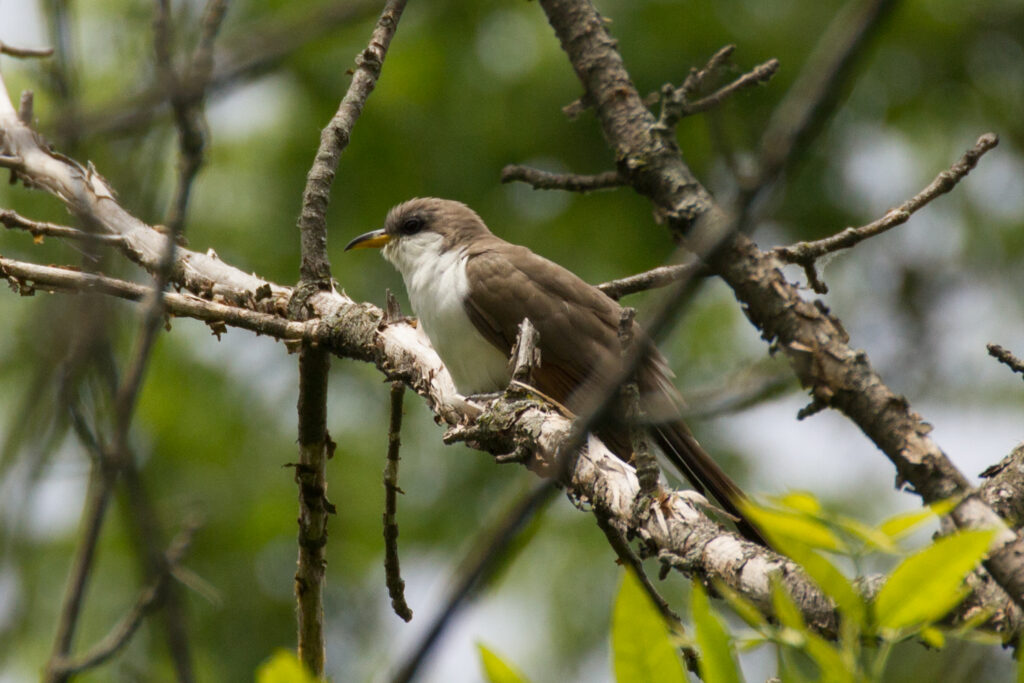
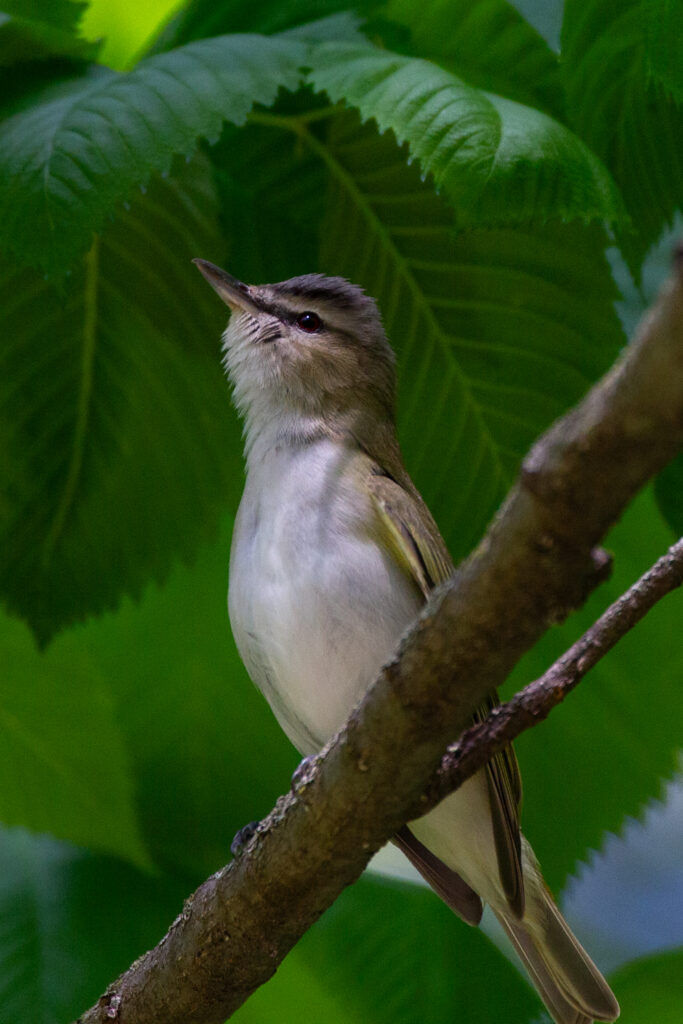
Knowing songs has helped me see more birds, which I love. At the same time, I don’t feel as disappointed even when I don’t see them. Sometime this past spring, I was out walking early one morning. I couldn’t see any birds, but I could hear their voices all around me, and I knew who they were. “Hello, yellow-billed cuckoo,” I said to a tock, tock, tock call from deep in the forest. “Hello, red-eyed vireo,” I said in response to a pattern of sweet chirps. It almost felt like we were having a conversation. A whole new dimension opened in the woods that day as I sensed a community, the friends I’d come to know. How could I ever have walked here and found it empty?
I am a newcomer, a novice in this richer world. I’ve walked with local guides in Panama and Ecuador who knew hundreds, perhaps thousands of bird songs and calls. Even the thickest tropical forest could not hide the wealth of bird life from them. A scrap of song, a note or two, and these guides were sensing a multitude of winged, be-jeweled creatures flitting through the leaves around them. I was in awe.
I still have so much to learn, but already my life is fuller, and it will never be the same.
For more information on the Merlin app, go to this site: https://merlin.allaboutbirds.org.