When Marc and I moved to our new place eight years ago, there were neglected flower beds up against the house, but no real garden. That first spring, I planted some ornamental flowers for a touch of color, and I also planted milkweed seeds. I didn’t know if they would grow—from everything I had heard, fall is a better time to sow milkweed—but I thought it was worth a try.
I very much wanted to help monarch butterflies by providing the food plant for their caterpillars. As it turned out, the plants grew tall and robust, bloomed and, in the fall, developed pods bursting with new milkweed seeds.

The following spring, I noticed several spears of milkweed poking up through the lawn. I mowed around these volunteers and eventually removed sod to create garden plots around them. Over the years, the garden has grown and expanded as I linked one plot to the next and added other plants, mostly native wildflowers. The yard has undergone a complete metamorphosis.
Washing dishes has become my favorite chore. Right outside the kitchen window, there are constant, unfolding dramas.
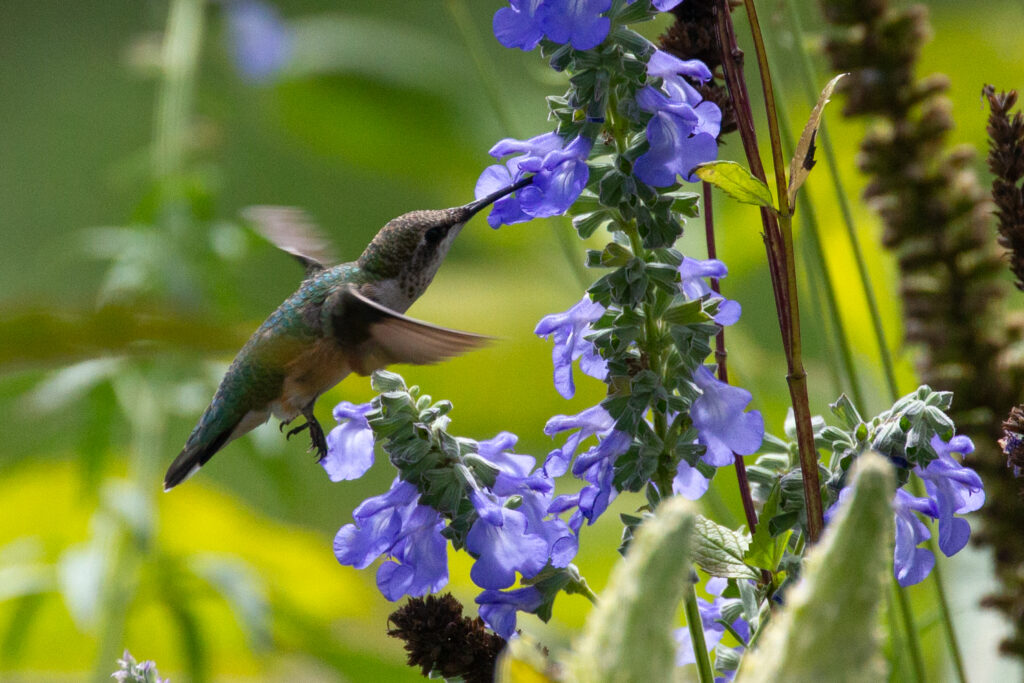
Hummingbirds whiz from bloom to bloom of bergamot, blue sage, or hyssop. For the most part, they are a constant blur of energy, but I have occasionally seen them rest in the shade on bending flower stalks.
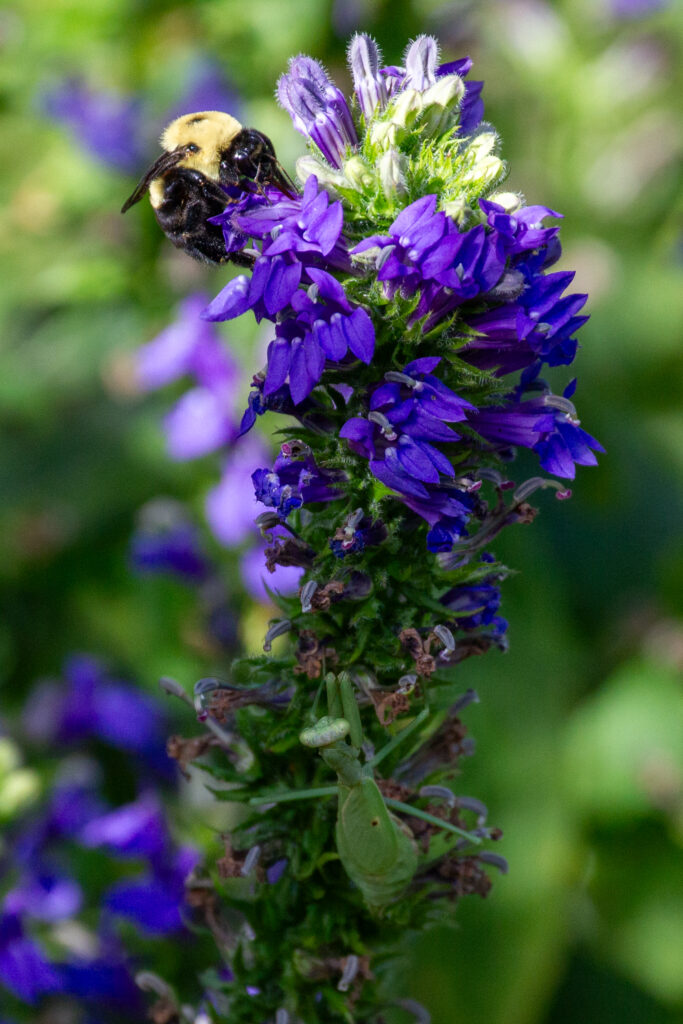
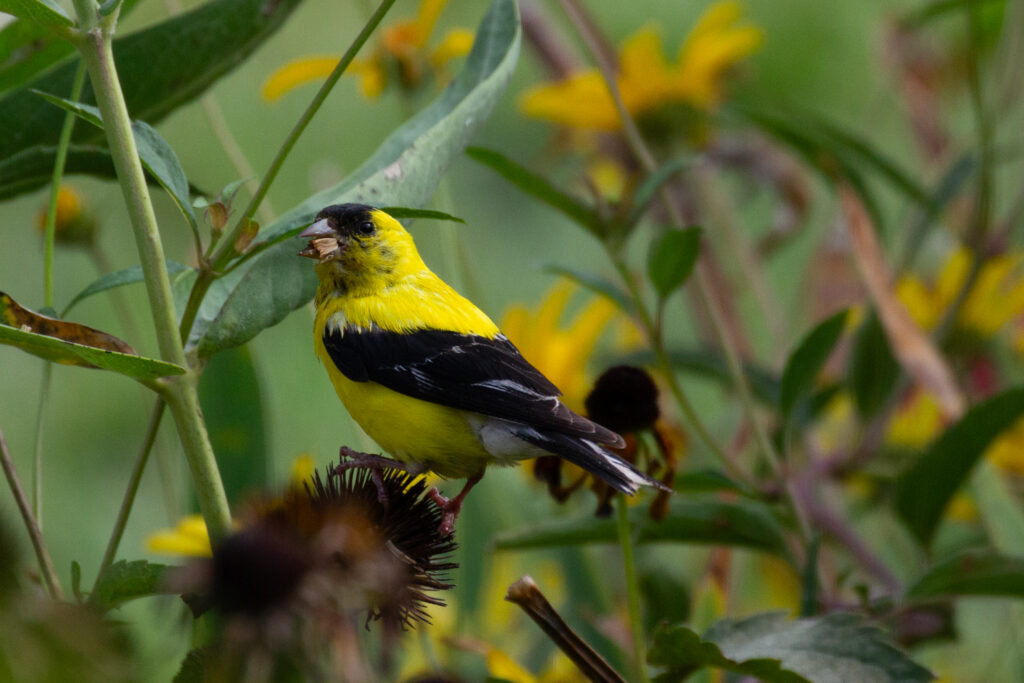
Praying mantises hide amongst the leaves and petals, waiting for a meal. They hold cautiously still when large insects, such as bumblebees, visit the flowers. They might be hungry, but they know their limits! House finches and goldfinches drink from the bird bath, and all winter long, they feast on seeds from purple coneflowers and black-eyed Susans. Rabbits take shelter from the blazing summer sun. Dragonflies patrol the skies above.

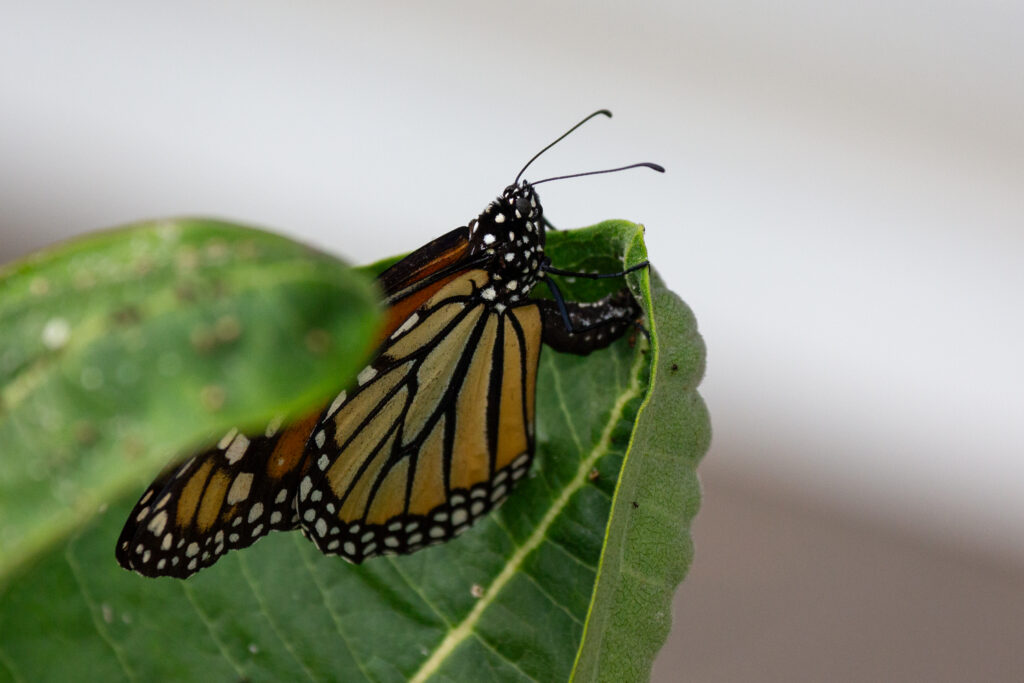
And then there are the moths and butterflies. The milkweed I originally planted to attract monarchs has certainly done so. In summer and especially in fall, I often see their vibrant wings floating through the yard.
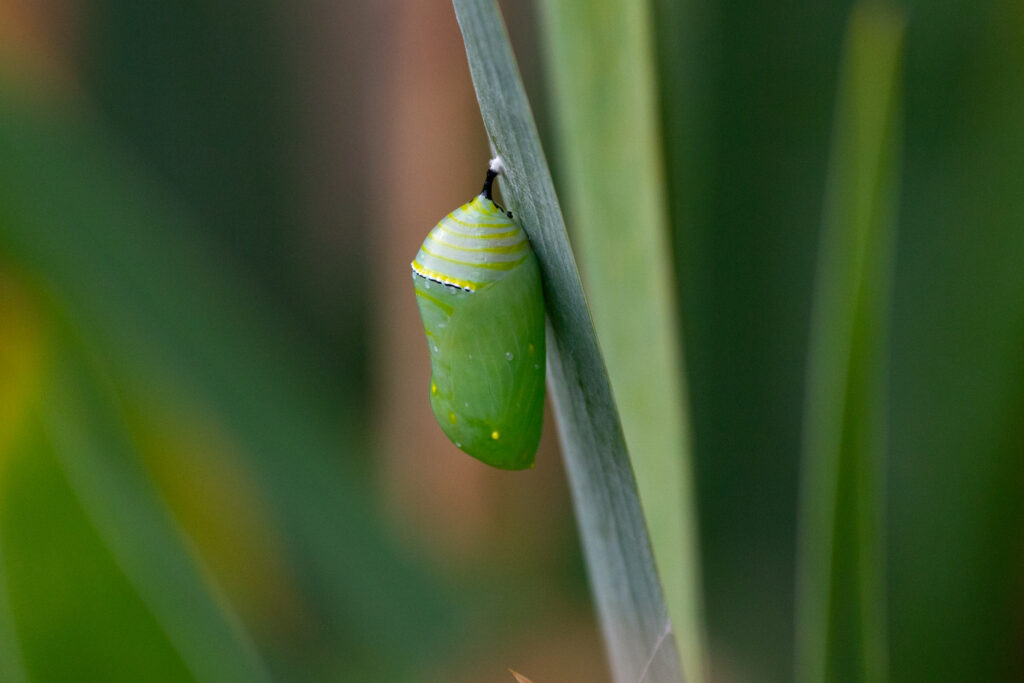
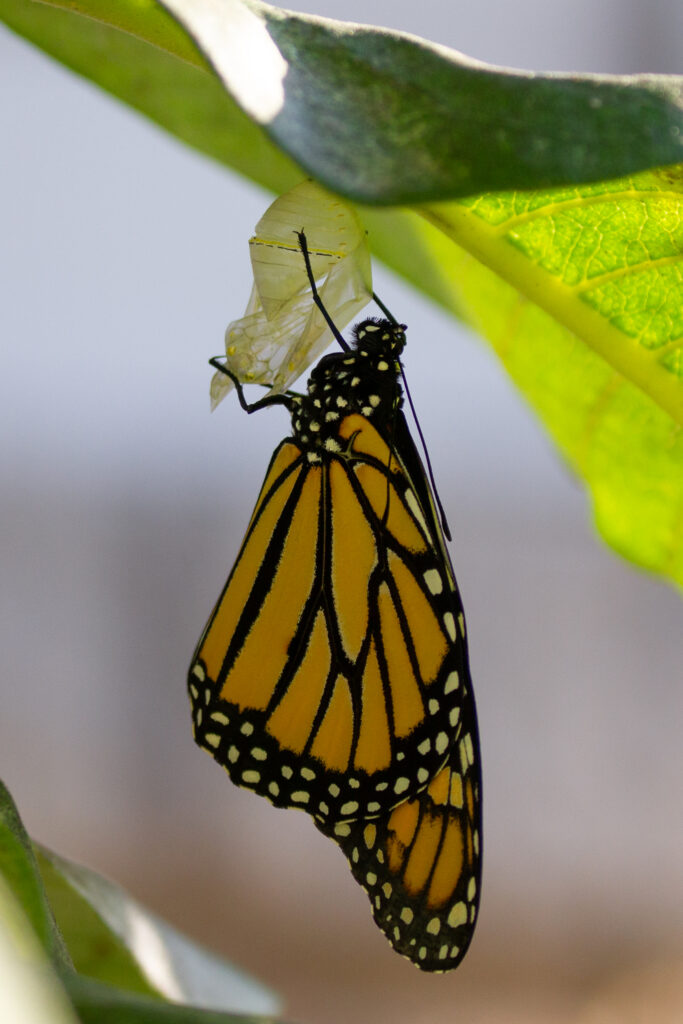
Female monarchs lay eggs on my milkweed plants, so I have the excitement of watching the butterflies’ entire life cycle—from the infinitesimal egg, to the black-and-white striped caterpillar, to the glass-green chrysalis, to the magnificent orange-and-black adults.
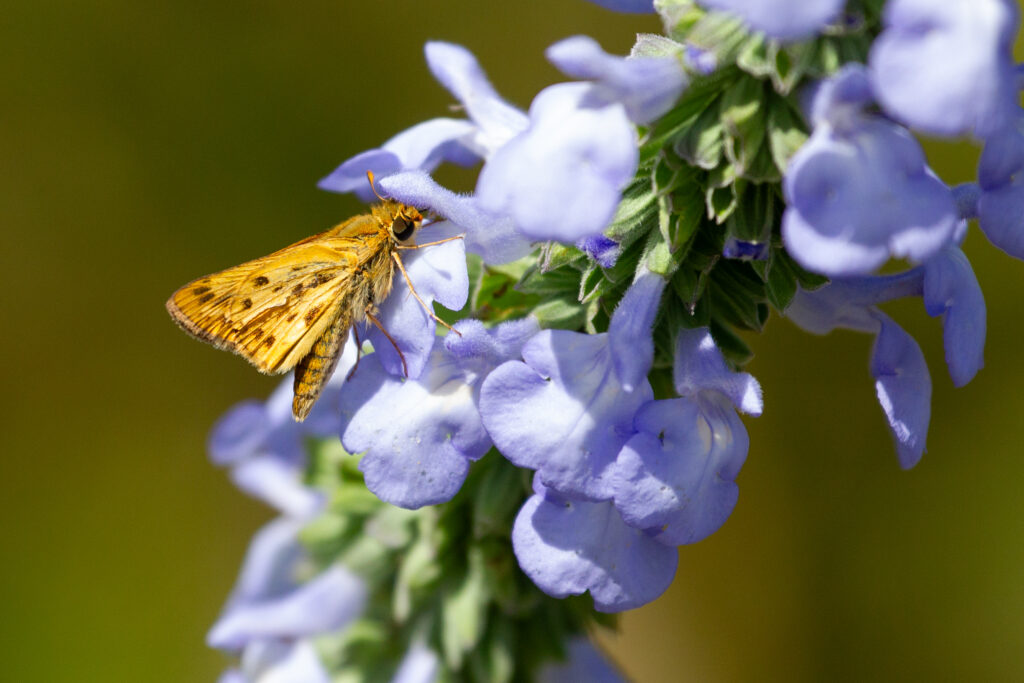
Along with monarchs, the milkweed—and other plants I’ve added since that first year—have drawn in numerous other winged beauties. Some, like the zebra swallowtail, are rare visitors, while others come reliably each year, or even each day.

This summer, a duo of silver-spotted skippers spent their afternoons dancing from flower to flower in my front garden. Overall, I have seen at least thirty different species of butterflies in my yard, as well as many species of moths, including hummingbird-like sphinx moths.

This summer, I decided to have my garden certified. There are several programs that offer certification, such as the National Wildlife Federation (https://www.nwf.org/Native-Plant-Habitats/Create-and-Certify) and the University of Illinois Extension (https://extension.illinois.edu/cfiv/pollinator-pockets ). I chose to go through the North American Butterfly Association (https://naba.org/butterfly-gardens/certification-program/ ). There is typically a fee for certification, especially if you choose to order yard signs, as I did—but the fee goes to organizations that do important work, and the signs help spread awareness.
Each of the certification programs has different criteria, and one might be more or less appropriate for you depending on your own yard. For example, the NABA program requires at least three flowering native plants to provide nectar for butterflies, and at least three other native species that serve as caterpillar host plants.
The nectar plants were easy for me to establish, but the caterpillar host plants took longer. In any case, I encourage anyone who might be interested to look into the certification programs. They all benefit butterflies, bees, birds, and other wildlife by inspiring people to provide habitat. Even a little goes a long way!

My garden was originally born to help butterflies, and now it is officially dedicated to them—but no matter what kind they are, all of my little wild neighbors are welcome to explore it!