(From the Laurel and Hardy movie.)
(This is a chapter from my upcoming book, Kewanee, Illinois – Reflections on its First Years – 1854-1865.)
It wasn’t all just peaches and cream in early Kewanee. Like all places, Kewanee had its share of people on the wrong side of the law. Here are a few stories of the seamier side of life in Kewanee soon after its birth.
William Whiteford lived in or around Kewanee. He often posted an advertisement in the local paper for the sale of fence posts, but there are no other references to him before the following events.
A warehouse built by the Pratt brothers in 1855 was destroyed by a fire in 1857. William Whiteford was held and tried for arson in September 1858, with John H. Howe serving as the prosecuting attorney. Whiteford was convicted by a jury and was sentenced to nine years in the penitentiary for setting fire to the building.
However, Whitehead was involved in other crimes.
In mid-January 1858, after the Pratt brothers’ fire but before Whiteford was tried for it, the Chicago Tribune reported that Whiteford was arrested in Kewanee and charged with another arson. He set fire to the house he was living in, owned and also occupied by Samuel Alexander, an early pioneer of the area. Whiteford didn’t have the $1,000 bail so he was held in jail.
In October 1857, between the two arsons, numerous newspapers across the state and surrounding states (but no stories were found in the Kewanee press) reported that some members of the Sackrider family in Kewanee were to be witnesses against Whiteford in a larceny case pending in Cambridge.
But just before they were to appear in court, the family was suddenly taken ill while at breakfast. They experienced intense pain, vomiting, and other symptoms of poisoning. After aid arrived, it was discovered that only those who drank coffee were affected, coffee which was ground on an open porch and thus accessible by others. When examined, the mill contained a corrosive sublimate.
Whiteford and Thomas Young had purchased both the sublimate and arsenic at local drug stores a few days prior to the poisoning. They were detained and were to appear before Kewanee justice of the peace Austin Sykes. Samples were being taken for examination at Knox College in Galesburg. There seems to be no further information on the outcome.
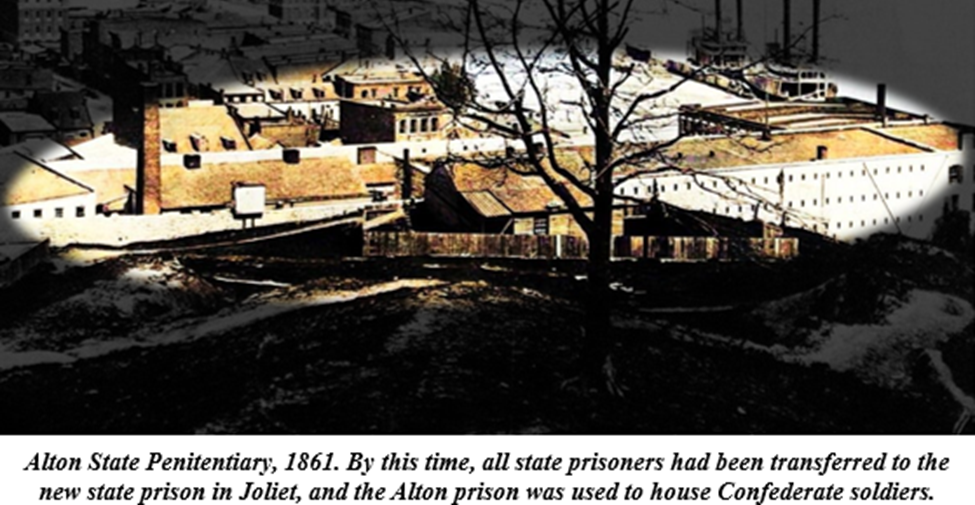
However, the first story indicates that Whiteford spent significant time in the Alton State Penitentiary for one of his crimes, and he would have ended up finishing his time in Joliet. The Alton prison was first opened in 1833 (there are stories of Wethersfield’s Henry G. Little taking prisoners to Alton when he was the Henry County sheriff). In 1858, it was reported that the prison housed around 600 convicts, including two females. The prison was closed by 1860 when the new Joliet State Penitentiary was completed.
Early Kewanee vacillated between temperance and the indulgence of liquor, and upstanding citizenry populated both sides of the divide.
William and Charles Goodrich were sons of missionary Joseph Goodrich, and all were original Wethersfield pioneers. By 1858, William was running a grocery store and restaurant across from Kewanee’s railroad depot.
But in early June 1858, there was considerable excitement in Kewanee by the arrest of William and Charles for selling beer or ale in violation of the village’s temperance ordinance.
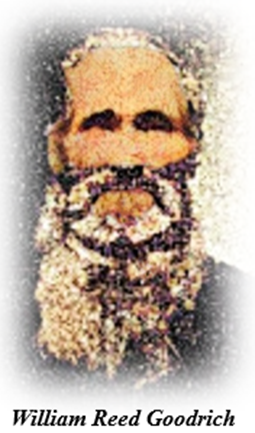
William was first arrested and brought before Justice of the Peace F. Loomis and tried by a jury. The firm of Howe & Reed acted as prosecutors and Mark L. Easton represented the defendant. After the case was “warmly contested” for about 12 hours, the jury was given the case at about 10 p.m. By 2:30 a.m., the jury was split six and six, they agreed to disagree, and William was discharged.
The following day, both William and Charles were arrested on similar charges. The defendants asked for a continuance to procure an important unknown witness and new counsel. The continuance was granted, but the defendants decided to settle the case by pleading guilty and paying a fine.
In November 1857, the Henry County Dial (published in Kewanee) reported that burglars appeared to be busy around Kewanee. The paper reported on several residences that were entered and rummaged for valuables. Then the Pratt Bros. safe was blown open. Fortunately, those events did not result in any significant losses.
But subsequently, at the Kewanee House, they entered jeweler J. W. Eddy’s sleeping quarters, after he had just returned from a wedding tour. The thieves absconded with two gold watches and cash. The thieves then went to the Carson House hotel, and similarly broke into a room and made off with valuable papers and cash.
To top off the night, the burglars tried to break into Mr. Morrill’s store in Wethersfield but were unsuccessful. They actually broke the lock such that the door would not open, necessitating Mr. Morrill to break into his own store the next day.
The Henry County Dial reported on particularly sad story in February 1858.
Mr. and Mrs. A. H. Norcutt’s 13-month-old child, Frances Henrietta, slept between them in their bed. One night, Mr. Norcutt was awakened by a gurgling noise from the child and, supposing it to be choking, lit a lamp to see. He found that the infant’s throat had been cut. He also found a butcher knife lying on the floor. His young wife, Artha, would say nothing, and she continued to remain speechless from that point forward. It was later learned that Mrs. Norcutt had had spells of mental aberration for the prior two weeks. The family had been in unfortunate financial circumstances and were reduced to want. When her mind was wandering before she cut her child’s throat, Mrs. Norcutt often expressed that she wished to die with her child.
The coroner’s jury was of the opinion that Mrs. Norcutt was insane at the time she took her child’s life. It appears that Artha Norcutt died a short time later.
A June 1859 Kewanee Advertiser story cautioned the Masonic fraternity to beware of a man called Daniel Barber. The paper described him as proprietor of the Clinton House in Galesburg and claiming to be a Royal Arch Mason. The paper wrote that
“[h]e is in the habit of traveling about the country, and under one pretext or another, borrowing money of the members of the Masonic order, which he universally forgets to repay. . . He is an expelled Mason.”
Then the paper discovered a copy of the October 1857 Masonic Review, which included the following:
“An Imposter. – There is a man traveling through the West, and procuring contributions from the Lodges and brethren, who is an expelled Mason. He goes by different names; sometimes James Fince, again as Daniel Barber, and perhaps others. His real name is Daniel Barber, was formerly member of Fidelity Lodge, No. 127, Ithica, New York. He may be known by having a cut across the palm of the right hand. He has swindled a good many lodges in Ohio, and it is hoped someone will detect him and have him punished.”
It sounds as though Kewanee’s Masonic Lodge may have met Mr. Barber.
A June 1859 story in The Rock Island Argus reported this:
“The Port Byron Times says that Saturday last Deputy Sheriff Webster arrested three men on a charge of stealing. They were shackled and conveyed to Henry County, where the theft was perpetrated. These men are named. respectively, Alexander Burrell, Smith, and Johnson. They have been carrying on a large business in and around the town of Kewanee, during the past winter, in the way of stealing, but being thwarted in one of their grand schemes of robbery, they struck for tall timber, and on arriving at Port Byron. were collared and made io trot back in a different style of harness to that they had previously stolen in the town of Kewanee. The probability is that their next few years’ operations will be carried on at Alton.”

Richard Garretson was in banking in Kewanee, and Henry Dodge deposited $800 with him. In the spring of 1861, Dodge demanded his money, which Garretson was unable to pay. Garretson variously offered notes and corn in lieu of payment, but Dodge refused.
When Dodge demanded Garretson to unequivocally secure the money, Garretson refused. So, Dodge drew his pistol and shot Garretson in the lower abdomen, and then took aim at Garretson’s breast, but Garretson caught Dodge’s arm and avoided a second shot. As Dodge tried to re-cock his pistol, bystanders were able to wrest the pistol from him.
From a May 1855 issue of the Henry County Dial:
“On Saturday night, or Sunday morning last, George Langford, who was sleeping in the room with the bookkeeper for Howard & Tenney, merchants in Kewanee, took the key of the safe, and opening it, abstracted eleven hundred dollars in gold and bills. The money was missed Monday morning, and suspicion fastening upon Langford, he was arrested. He confessed his guilt and restored the money. The examination was had before the justices. C. B. Miner and Julius A. Pratt. Langford plead guilty, and was committed to jail in default of $500 bond, to appear for trial at the next term of the Circuit Court.”
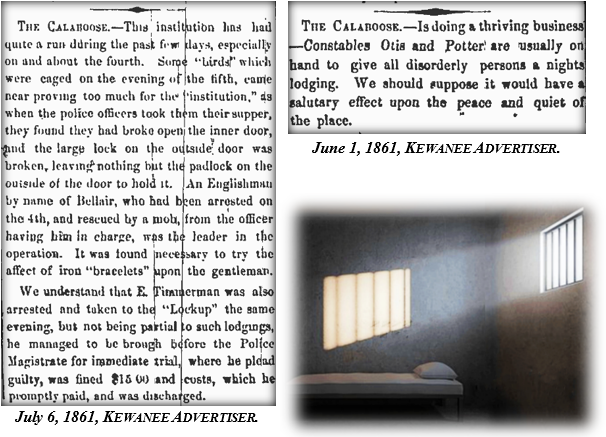
Every growing village needs its law enforcement officers, judges and, of course, a place to put law breakers while they are awaiting their just rewards. Apparently, Kewanee had the latter, although where it was located is not known.
Here are a couple of short newspaper paragraphs about it. Apparently, Kewanee’s calaboose needed replacement. In February 1863, the Illinois legislature considered a bill to authorize Kewanee to provide and maintain a calaboose.