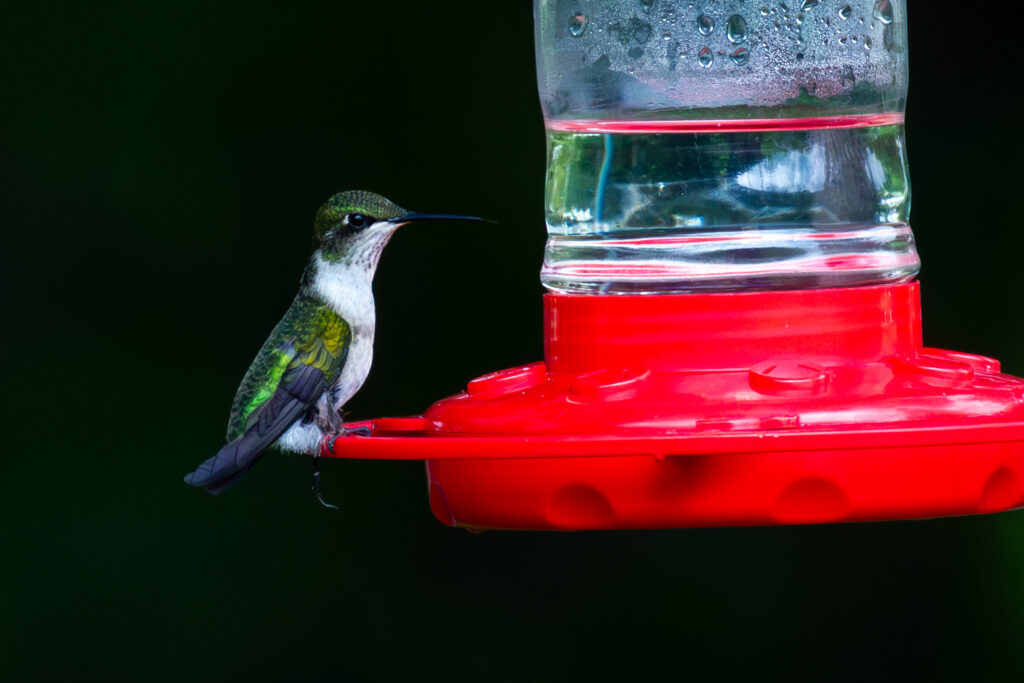
People sometimes ask me if I have a favorite bird. The truthful answer is no. How could I possibly pick a favorite amongst all of the beautifully diverse birds in the world? I love them all. That said, I’ll admit that I find hummingbirds especially captivating to watch.
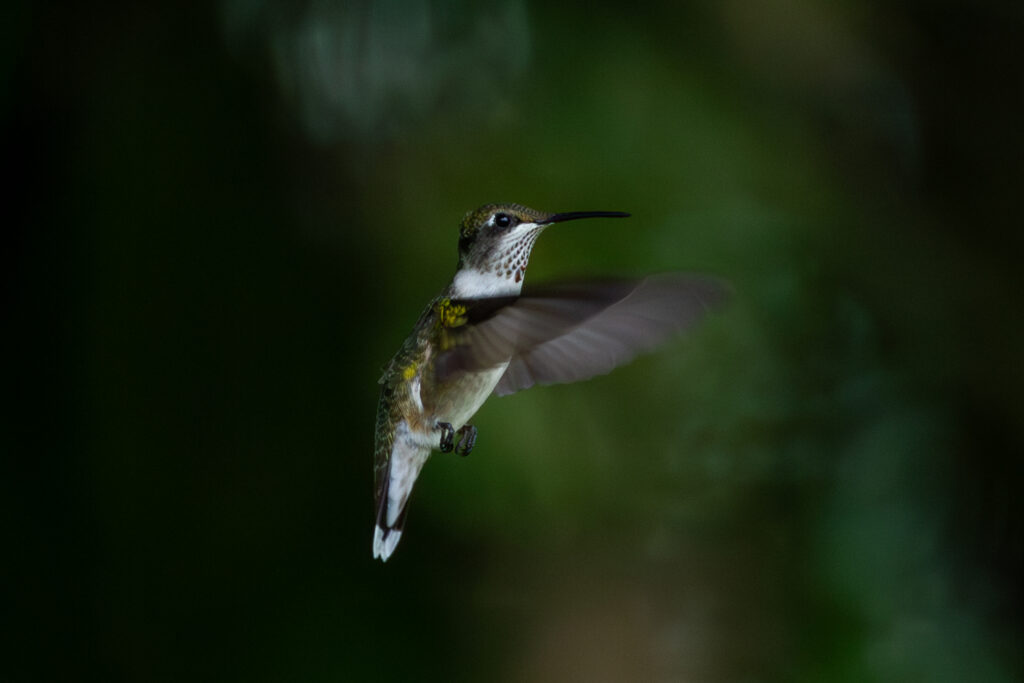
Hummingbirds seem impossible. The species that breeds in our area, the ruby-throated hummingbird, weighs less than a nickel. They’re so small that with a quick glance, it’s easy to mistake one for a moth or a bee—so small that they can become trapped in spider webs (I once had to rescue one in my garage). Yet twice each year, these miniscule birds cross the Gulf of Mexico in a single, grueling flight while going between their breeding grounds in eastern North America and their wintering grounds in Central America. Once safely on land again, their marvelous feats continue. They can fly backwards and even upside down. By flapping their wings an astounding 80 times per second, they can hover midair.
My childhood home was out in the country, surrounded by woodlands. It was a hummingbird haven, which my parents enhanced with several nectar feeders. At times, especially in the late summer, our back deck became a circus, with half a dozen or more tiny birds zipping around, landing on feeders, jostling each other for position, or chasing each other away. The air filled with their little chirps, the buzz of their wings, and the flash of their gem-green feathers. They were never still for more than a few seconds, unless they were perched on a branch above the feeder, guarding it against intruders. Over the years, I spent many hours watching these avian dramas.
As an adult, I fervently wanted hummingbirds in my own backyard. At each place my husband and I have lived, including our current home, I’ve hung nectar feeders. Every year, hummingbirds have appeared sometime in May—never in the numbers of my childhood home, but always a few, keeping me company throughout the summer. When I’m sitting still out in the yard, I can hear the buzz of tiny wings flying past me, to the feeder. I can see the glints of green and ruby red.
Hummingbirds are wary, as I’ve learned the hard way. Their jewel-toned beauty makes them a tempting subject for photos—but if they see the movement of the camera, their lightning wings can whisk them out of the frame faster than a blink. I’ve captured dozens of photos of empty feeders, hundreds of blurry little blobs.
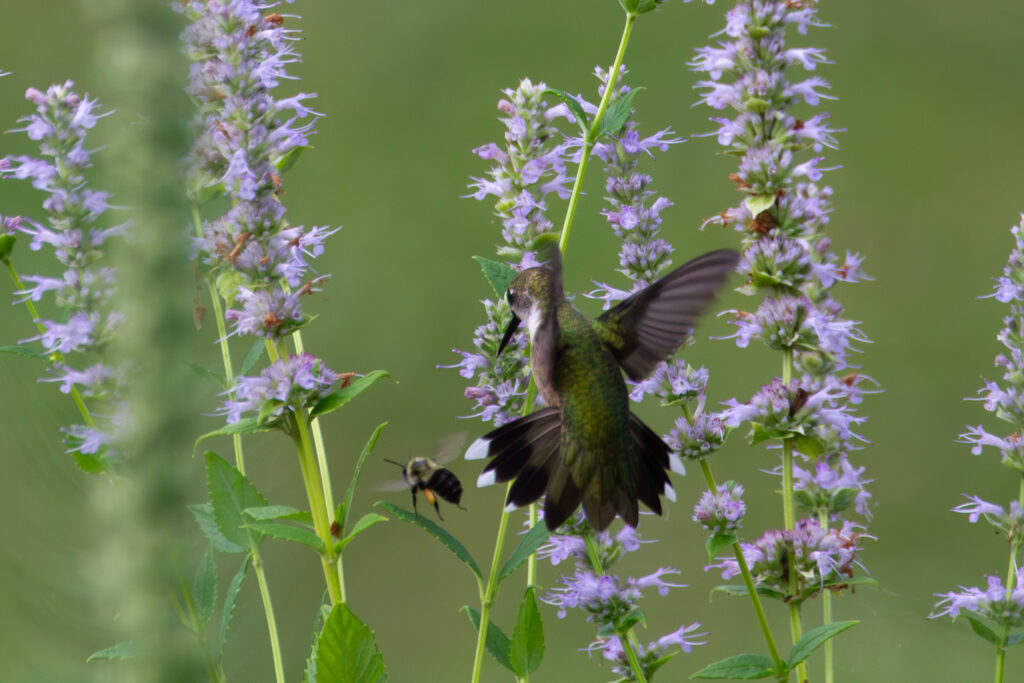
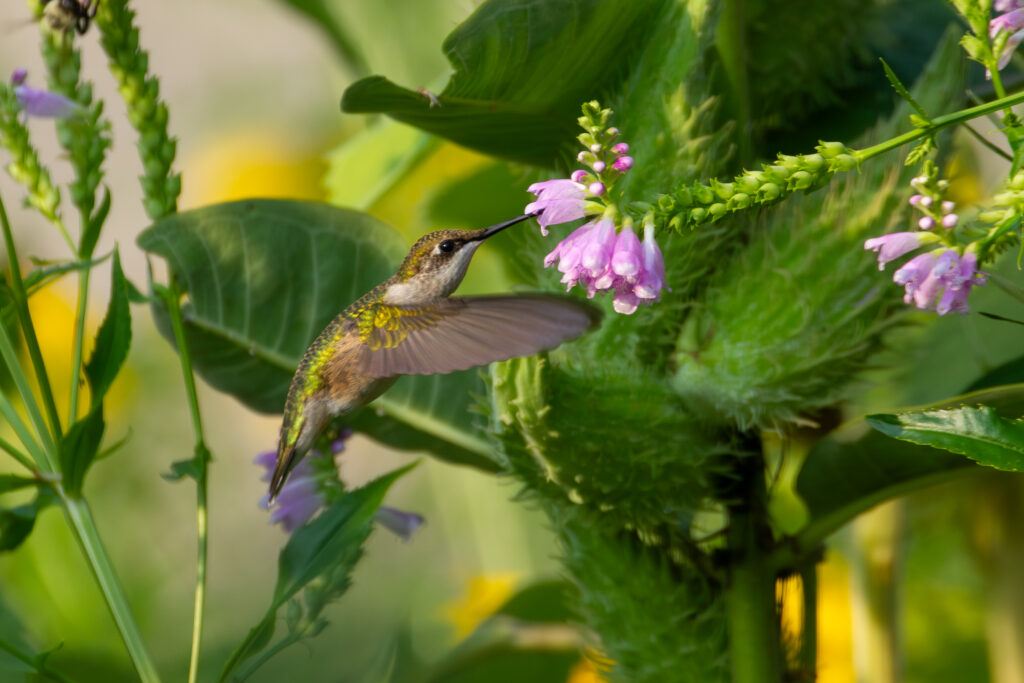
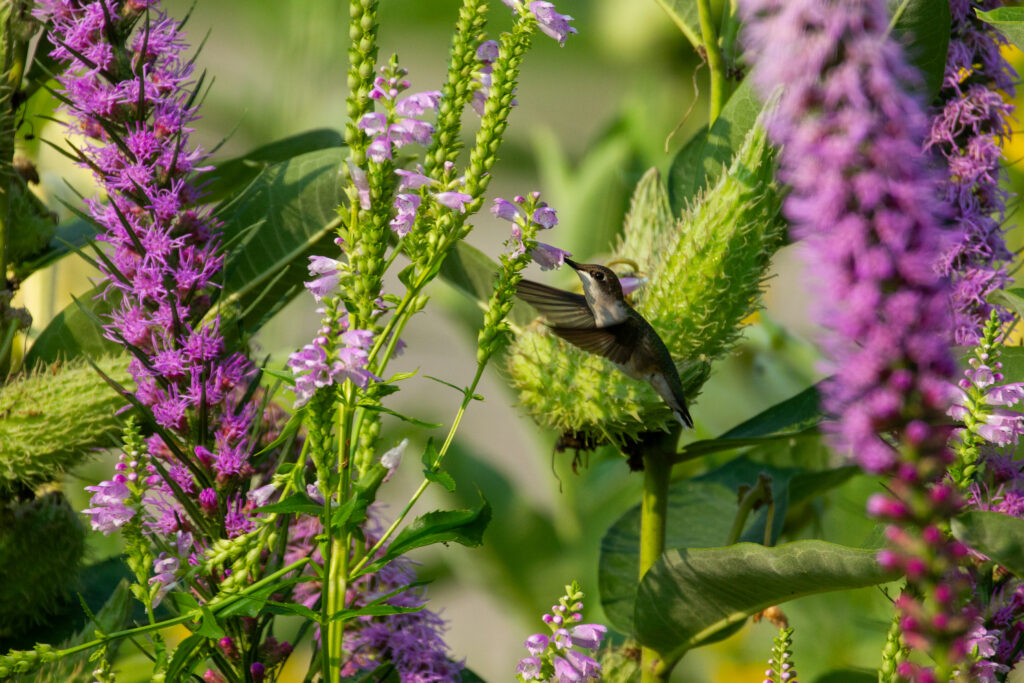
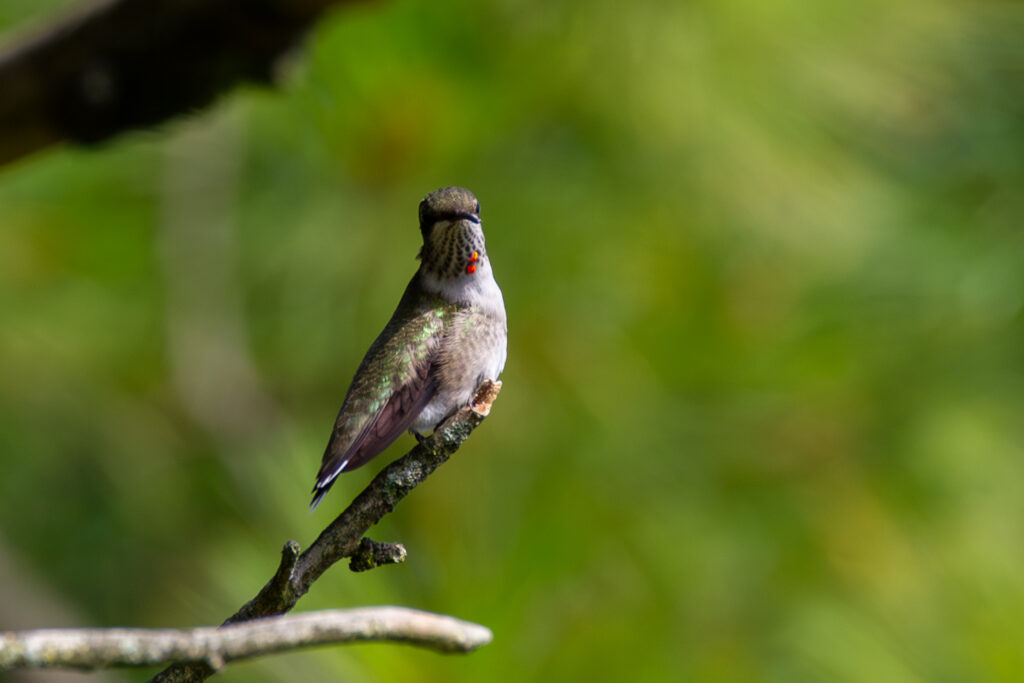
But then, there come those moments when everything works just right. On a September afternoon in 2023, I spent hours out in the yard, watching as one hummingbird made visit after visit to the feeder. At first, I thought it was a female because it seemed to have a white throat—only male ruby-throated hummingbirds have the bright red feathers for which the species is named. Eventually, though, in the right light, I noticed a few bright red feathers. The bird was a juvenile male, that summer’s chick. Somewhere near my house, he had hatched from an egg the size of a jellybean and been raised in a nest made from spider silk and lichens. He seemed like something out of a fairytale, yet there he was, right near me.
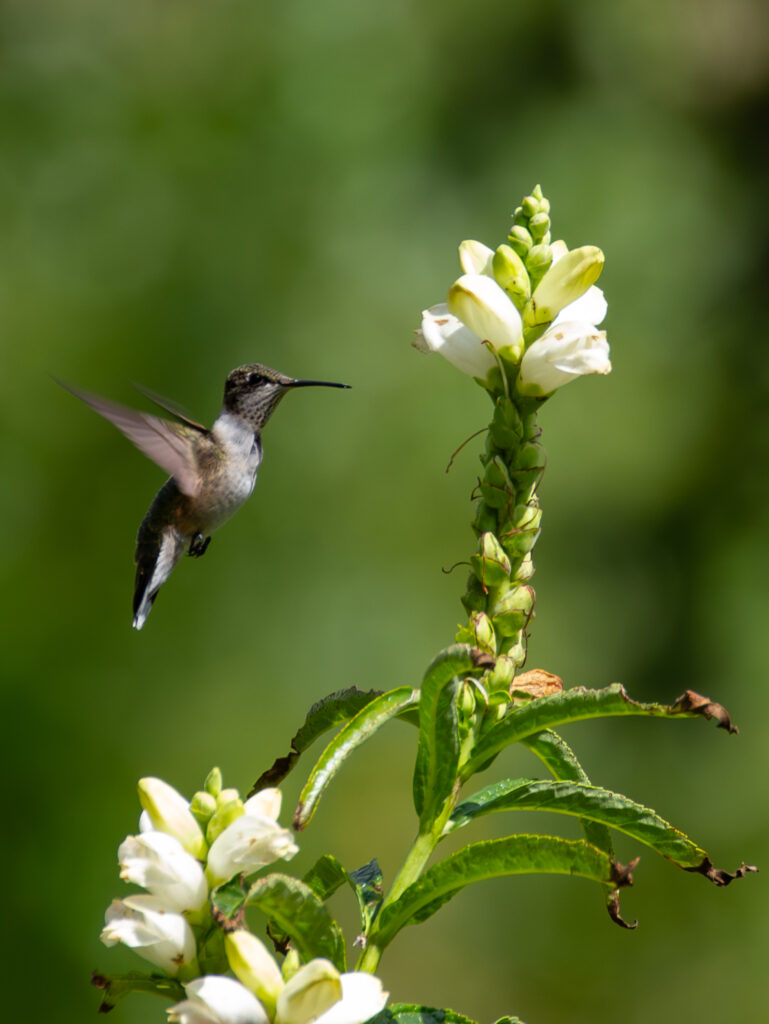
Until this summer, the hummingbirds’ preferred fueling station in my yard was the sugar-water feeder. I even felt guilty whenever we went out of town for more than a day because I had to pull the feeder inside—the nectar spoils quickly in summer heat, and I change mine daily. This year, though, my garden has finally matured to the point where it offers hummingbird-friendly flowers all summer long.
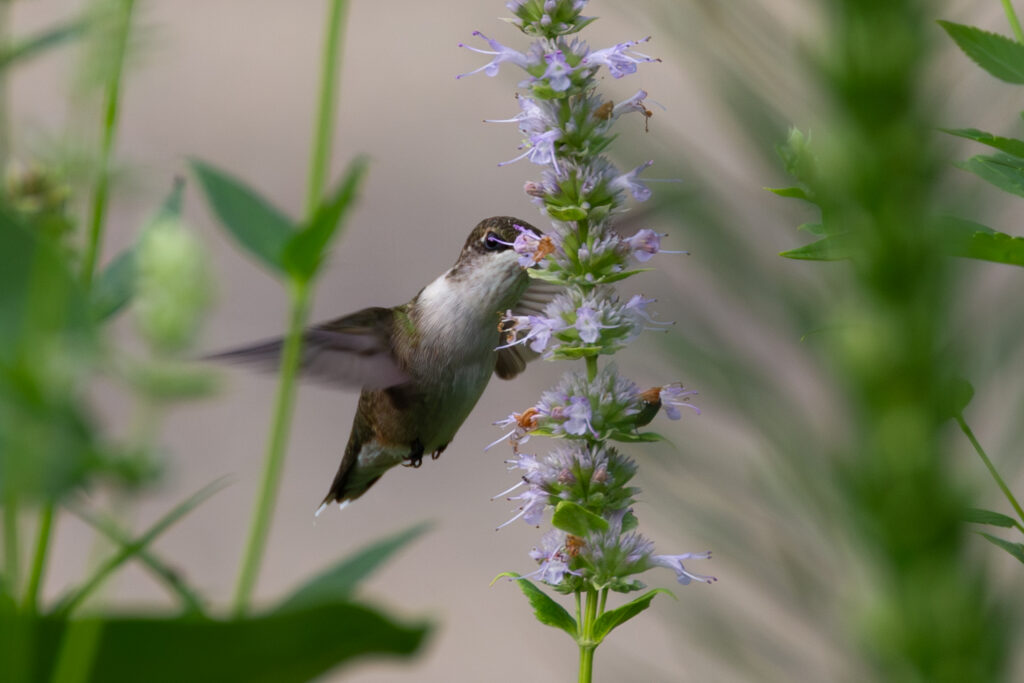
In June, the fragrant pink blooms of milkweed flowers started opening. By July, the hyssop and obedient plants (both in the mint family) had bloomed in pink and purple splendor, and they continued providing nectar well into August. In late August and early September, larkspur and turtlehead were going strong. My hummingbirds made rounds to all of these flowers, and I watched them every moment I could. The garden plot that they liked best happened to be outside our kitchen window, so as I was washing dishes or making dinner, I often spotted one of them flitting about my garden. It was pure delight to see them relishing the nectar of flowers I had planted.
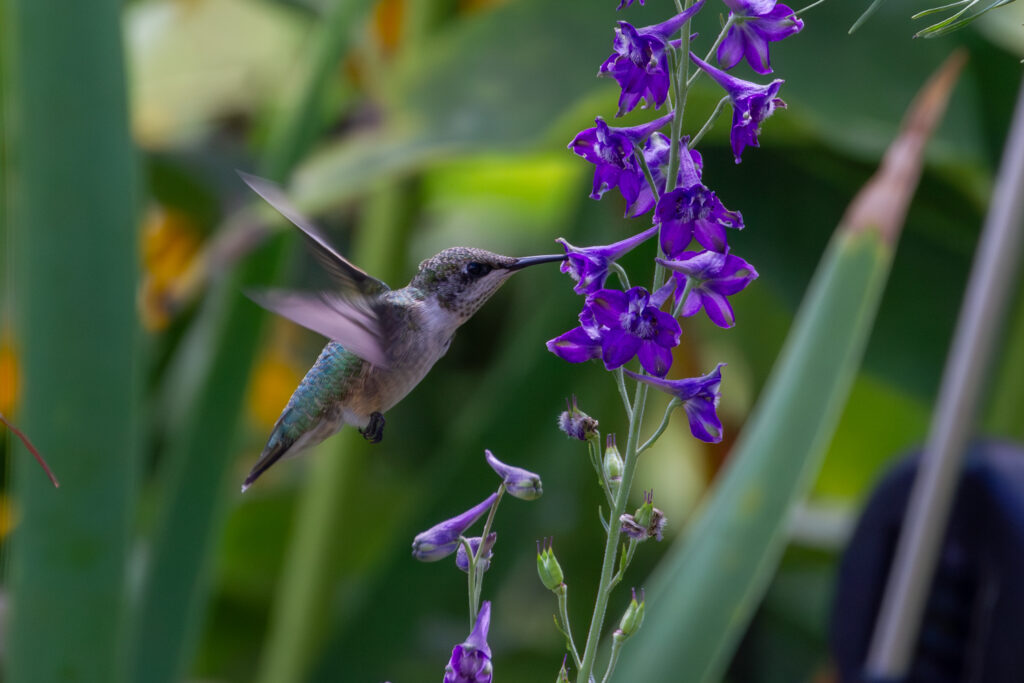
In those moments, I usually abandoned the dishes in favor of my camera. The allure of hummingbirds was far stronger. Dishes could always be done later, and if they weren’t, who cared anyway? What would bring more warmth and light come winter—the memory of a well-scrubbed bowl, or the memory of a glimmering, dancing little bird?
For me, there is no contest.