This is the time of the year when holiday tunes play all around us. TV commercials use them. Shopping centers and grocery stores pipe them through speakers. Radio stations broadcast them. Cantatas at churches, school programs, and outside light shows provide seasonal music. Not to mention that much of it starts immediately after Halloween, with little or no reprieve during Thanksgiving dinner.
Now, I am not opposed in any way to the tunes that swirl around us for a good six weeks. About this time of year, I’m searching my car radio for classic tunes such as “I’ll Be Home for Christmas,” “Have a Holly Jolly Christmas,” and my guilty favorite about the night Grandma collided with a reindeer. After scrolling through the channels, trying to avoid all the country singers (more on that another time), WHAM, and Mariah Carey’s constant (I mean constant) “All I Want for Christmas,” I can usually find some holiday favorites right before I pull into my driveway.
Today was a little different. I could watch my Wisconsin granddaughter’s piano recital on my laptop, avoiding the icy cold roads that greeted us this morning. As always, her recitals are wonderful. And not just because she’s my granddaughter (well, maybe a part of the reason), but over the years she has grown to be quite an accomplished pianist. Something she did not inherit from me. I have about as much musical ability as a dead house plant.
Her piece “Linus and Lucy” from the classic Charlie Brown Christmas Dance Party was sweet, lovely, and perfect. It was easy to visualize all the Peanuts characters dancing around while Schroeder played his piano and Snoopy strummed his guitar. I hope she was proud of her performance. I certainly was.
The others in the program did a great job as well. Coming in all sizes and shapes, they provided a wide range of contemporary and classical holiday pieces. Several students were so small they almost needed help climbing up onto the bench. One father-daughter duo shared a piece, and every one of them gave a graceful bow once they finished their number. It was very special.
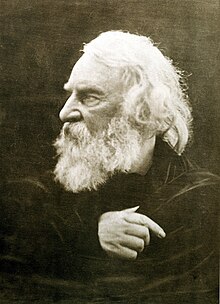
Lovely Ms. Mazer, the patient and talented music teacher complimented her students and, just as she always does, treated us to her piano selection. She chose the carol, “I Heard the Bells on Christmas Day,” inspired by Henry Wadsworth Longfellow’s poem “Christmas Bells.”
Mazer shared the backstory of this famous carol, adding to its meaning. The poet’s wife of 18 years, Fanny, had died in a fire two years before, which left him bereft and depressed – with four motherless children still at home to raise. Adding to his heavy heart, he had received news earlier that month that his eldest son, Charles, had been severely wounded in the Civil War’s Mine Run Campaign in Orange County, Virginia.

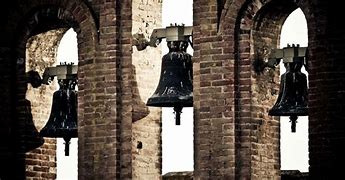
As he sat alone on Christmas Day in 1863, feeling the weight of his sorrows, the church bells in his neighborhood of Cambridge, Massachusetts began to ring. Moved by a mixture of great sadness and renewed optimism, he created one of his most famous works.
In reading the first sections, they are cloaked with optimism. As the bells announce the joyful message of Christmas and the peace and goodwill that it encompasses, the heart swells. As the poem progresses, however, its tone becomes more somber, alluding to disillusionment with the state of the world – no doubt due to the war raging between the states. His wording questions, “Is peace possible?” The references to cannons thundering, earthquake-like renderings, and rampant hate appear that it’s not.
However, in the final stanzas, there is a renewed sense of hope. The bells peal consistently, indicating that persistent faith will overcome the suffering. In the end, good will triumph over evil. The message of Christmas is restored.
Son Charles survived his injuries and four of his other five children lived and had families of their own. Perhaps a good measure of happiness prevailed for Longfellow, echoing the positive refrains in his poem.
Longfellow’s poem has been set to music by several composers throughout the years, beginning in the late 1800s. The one by Richard Marx, who created holiday standards for Brenda Lee, Burl Ives, and Gene Autrey, created the carol most familiar to the public. Bing Crosby, Harry Belafonte, Johnny Cash and Andy Williams have all made it one of their standards, hitting high numbers on the billboard charts with their renditions. Ray Bradbury’s book “Something This Way Wicked Comes” also features several lines from the carol. As with almost all of Longfellow’s work, this work has inspired generations.
With war’s horrors affecting so many countries right now, the world’s population has plenty of reasons to despair. Many hearts are heavy at this time of year, with peace and comfort far beyond the horizon. Perhaps Longfellow was telling us to recognize that faith and a whole lot of goodwill towards others is what we need. I’m betting the Peanuts gang would agree.
In some instances, not all the stanzas are used. Because of the complexity of the words, and the references to sad events and emotions, some wording is often omitted. Here it is in its entirety:
I heard the bells on Christmas Day
Their old, familiar carols play,
And wild and sweet
The words repeat
Of peace on earth, good will to men!
And thought how, as the day had come,
The belfries of all Christendom
Had rolled along
The unbroken song
Of peace on earth, good will to men!
Till ringing, singing on its way,
The world revolved from night to day,
A voice, a chime,
A chant sublime
Of peace on earth, good will to men!
Then from each black, accursed mouth
The cannon thundered in the South,
And with the sound
The carols drowned
Of peace on earth, good will to men!
It was as if an earthquake rent
The hearth-stones of a continent,
And made forlorn
The households born
Of peace on earth, good will to men!
And in despair, I bowed my head;
“There is no peace on earth,” I said;
“For hate is strong,
And mocks the song
Of peace on earth, good will to men!”
Then pealed the bells more loud and deep:
“God is not dead, nor doth He sleep;
The Wrong shall fail,
The Right prevail,
With peace on earth, good will to men.”
My wish to you all for a holiday full of happiness and hope.