A large crowd braved the chilly temperatures and light snowfall Monday to watch the ribbon cutting by officials, signaling the completion of the historic village fencing.
The reconstructed fence was done through the cooperation of several organizations and many volunteers. A dream, first introduced by Galva’s Mike Massie several years ago, the combined efforts of the Galva Rotary Club, the Kewanee Life Skills Re-Entry Center, the IDNR, and a host of volunteers made that dream come true.
The wooden fence was an exact replica of the current one that had encircled the park for decades. Consisting of 101 panels and 4,000 pickets, it was produced by the men at the Kewanee Life Skills Re-Entry Center in just under four months.
John Moraski was the lead carpenter, with assistance from Jeff Olson and site manager Randy Morrison. Nearly 80 men from the Re-Entry Center also helped to put the fence together, working almost every day to complete the project.
A reception at the Colony School followed the ribbon-cutting ceremony. Several spoke about the importance of the fence, and what such a structure meant to the community.
“When the Swedes first came to Bishop Hill, there was a ravine in the middle of the park. They dug out sections of that ravine and covered the fronts with pieces of wood,” said Joella Krause, Bishop Hill descendant and president of the Old Settler’s Association. “This whole reconstruction is personal. This park is where our forebears spent their first winter. Babies were born, people died and those that survived went on to build a community in this new world.”
Eva Harlan, whose great-grandmother was the first child born that winter, said that legacy should be honored, and the restored fencing will help preserve it for many years to come. “I think my great-grandmother would be very proud.”
Jeff Olson, another descendent, and one of the main supervisors of the fence project, noted that his great-grandmother was also born that first winter and lived to be 91. “This park and its fence is more than just a piece of ground. It’s a testament to the strength and foresight of those first settlers. Preserving it honors them,” said Olson.
Moraski commended the prison officials for allowing the group to “think outside the box,” telling the crowd, “The men who did the work used their skills to give back to the community, all the while building confidence and self-esteem,” adding that “being involved in changing the lives and direction of the Re-Entry volunteers was the icing on the cake for me. I couldn’t be prouder of them.”
Warden James Carothers Jr. echoed many of Moraski’s sentiments, stating that “by opening their arms this community allowed these men to show the great work they can do, and to feel appreciated by the outside world.”
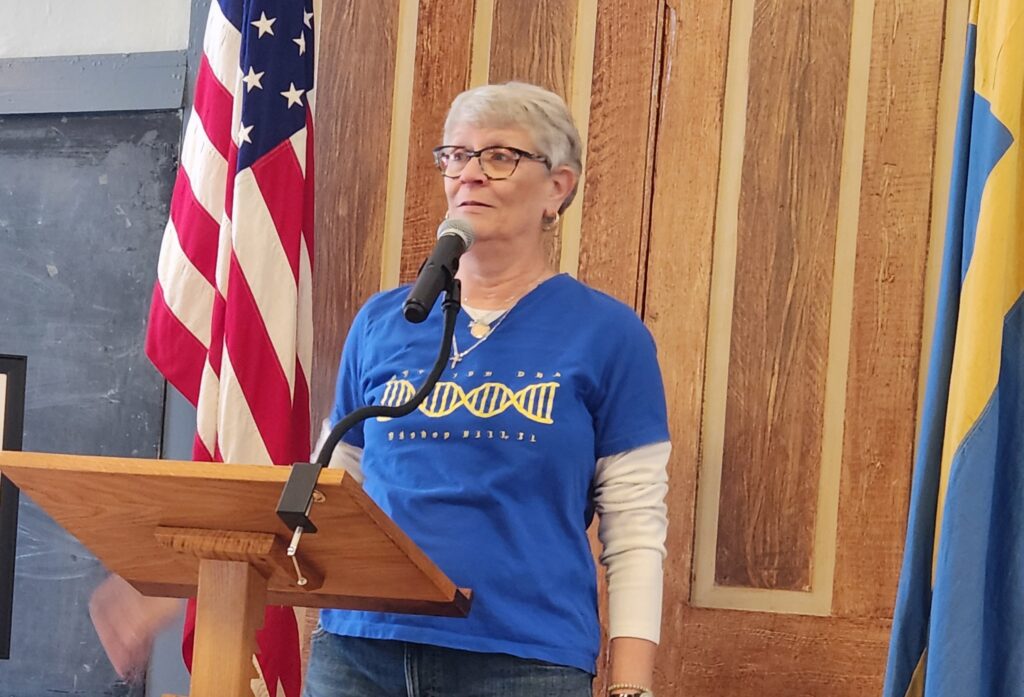
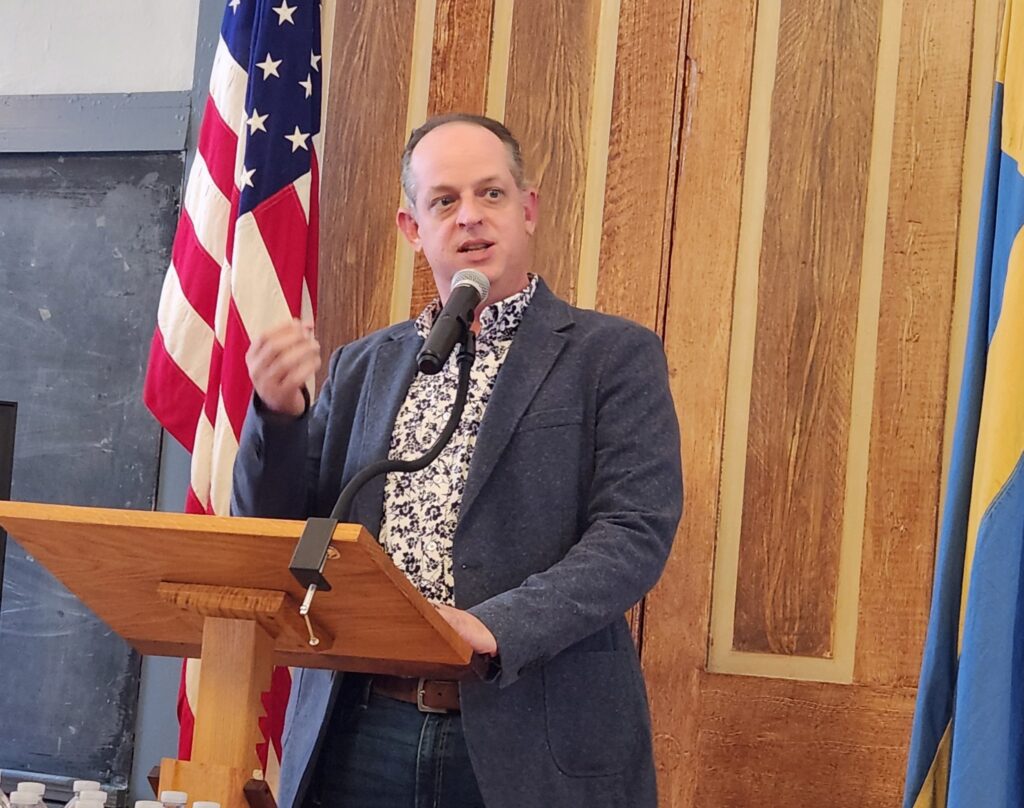
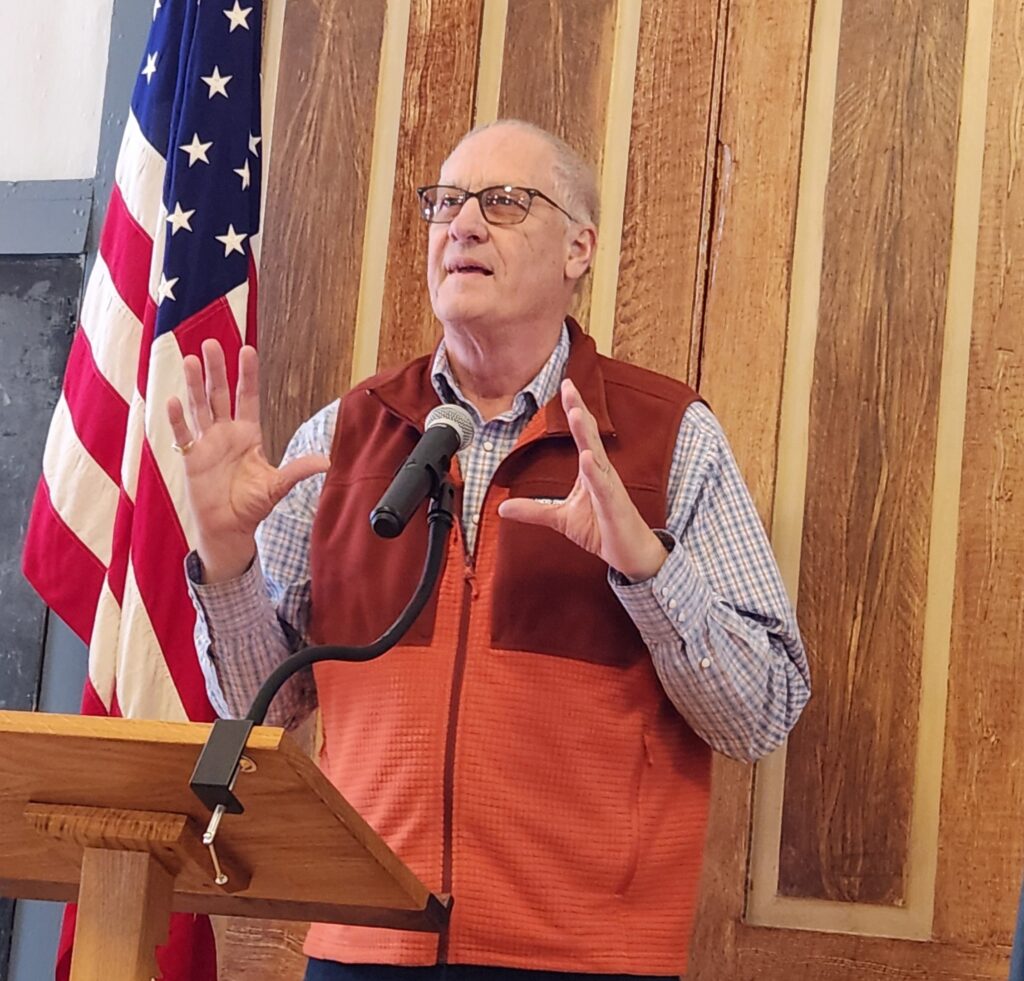
Representative Travis Weaver, just one of many officials who turned out for the event, addressed the crowd, saying the fence is “simply amazing” and that the work done by everyone is inspiring. “These are success stories that won’t be forgotten.”
Jeff Nevins, IDNR State Director of Historic Sites, said that the best part of his job was meeting people who are passionate about their local history. “This fencing project in Bishop Hill will allow everyone connected to continue telling its story to future generations,” said Nevins. “And I hope that the men from the Re-Entry Center will be able to bring their families back here someday to see the work they did.”
The Rotary District Governor Dan O’Brien traveled from Carlinville to be on hand for the ceremony. He praised Mike Massie and the Galva Rotary Club for their efforts in making the fencing possible.
“Not only did this group form a very successful Community Corp Rotary Club inside the Re-Entry Center, it raised the money needed to purchase the lumber and other needed supplies,” said O’Brien and reiterated the Rotary’s mission is to provide meaningful community service. “I urge them to continue their great work and grow in service for another 100 years.” In response to those words, Massie responded. “It was an honor and a privilege.”
During the months of work, several organizations provided meals for the Re-Entry men. According to Krause, the men were not used to such generosity, and it took them a while to warm up to the idea of being fed home-cooked meals. “They would often tell us, ‘this is the best meal I’ve ever had.’” She was quick to add that all those providing meals helped give these men a kindness that they had not experienced before. “We hope it helped them know there are people who want them to succeed.”
A poster listing many of the sponsors was on display. It included:
Jeff Olson, Volunteer Lead Bishop Hill Fence Project/Community Meal
Providers
Ben Endress, MTM
Darwin Stahl
Bell Trucking
John H Best
Jack Hawkins
Bishop Hill Fence Project/Community Meal
Bishop Hill Old Settler’s Association
Bishop Hill United Methodist Church
Special Kneads Bakery
J Goard Pottery
PL Johnson’s
The Filling Station
Bishop Hill Community Coffee Club
Jerry Kuster
Chris Wexell
Christien Wexel